Google: 4.6 · 2,006 reviews

On a narrow Barri Gòtic street, Rasoterra has become the reference point for serious vegetable-forward dining in Barcelona. Organic, seasonal produce drives a menu where vegetables carry every course through to dessert, with vegan options available throughout. The restaurant is also recognised as a pioneer of the Slow Food movement in the city, drawing both local regulars and international visitors at a price point that makes it difficult to argue with.
 Discover on Pearl
Pearl is the En Primeur Club membership app — saves, bookings, and concierge access live there. Same editors, same standards.
A Street, a Room, and the Argument for Vegetables
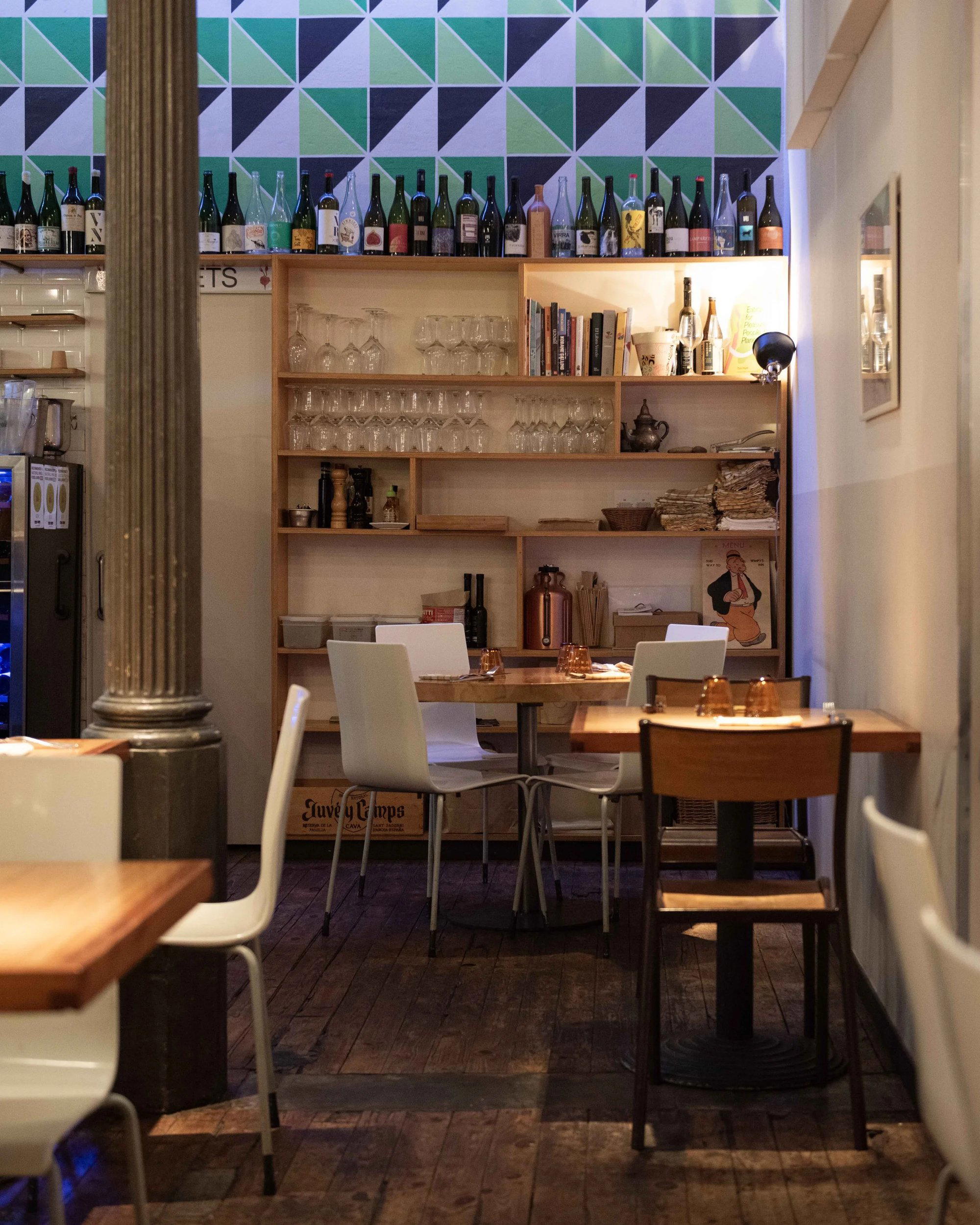
Carrer del Palau is a narrow cut through the Barri Gòtic that most visitors pass without stopping. The buildings press close, the light arrives at an angle, and the street operates at the quieter register that Ciutat Vella reserves for its residential corners rather than its tourist corridors. Rasoterra sits in this context without ceremony: a small dining room that reads more like someone's considered idea of a neighbourhood space than a statement venue. That lack of theatre turns out to be precisely the point.
Barcelona's restaurant conversation tends to run toward the technically ambitious. Disfrutar, Enigma, and Cocina Hermanos Torres operate at the high end of progressive cooking, where format, price, and spectacle are all part of the proposition. Rasoterra belongs to a different and, in its own way, equally demanding tradition: direct good food, grown with care, cooked with enough restraint to let the ingredient be the subject. In a city with no shortage of elaborate tasting menus, that clarity carries its own authority.
The Room as an Editorial Statement
The interior at Rasoterra reflects the same logic as its menu: nothing is over-explained. The space is compact and unfussy, with the kind of arrangement that prioritises the conversation at the table rather than the room as spectacle. There is no design feature competing for attention, no lighting scheme calibrated for photographs. What the space does instead is create conditions for eating: it is quiet enough to talk, close enough to feel convivial, and simple enough that the food itself carries the visual weight.
This approach connects to a broader pattern in European neighbourhood dining where the physical container is deliberately modest, placing all emphasis on what arrives from the kitchen. The Slow Food movement, which Rasoterra is credited with pioneering in Barcelona, has always understood the room this way: the space should support the meal rather than perform alongside it. Restaurants in that tradition tend to look like Rasoterra looks, because the philosophy produces the aesthetic as a natural consequence.
The atmosphere the room generates is local in the most precise sense. It is not decorated to suggest locality; it actually functions as a local restaurant, serving the neighbourhood and receiving the international crowd that has followed. That the dining room can hold both without adjusting its register is a function of how the space was conceived in the first place.
Vegetables in the Lead, All the Way Through
The menu's structure is seasonal and organic, built around produce rather than protein, with vegetables carrying every course from the opening through to dessert. This is not a restaurant that accommodates vegetarians alongside a meat-forward programme. The vegetable is the frame, the argument, and the execution. Vegan options are available throughout, making the menu genuinely navigable rather than nominally inclusive.
What the kitchen produces under that framework, according to those who track it, are combinations that read as fun and surprising without being arbitrary. Seasonal discipline keeps the menu honest: what is on the plate reflects what is available rather than what is convenient. Organic sourcing places the restaurant within a supply chain that the Slow Food designation requires, meaning the ingredients carry provenance as well as flavour.
The price positioning is worth noting as a category signal. At the high end of Barcelona's dining spectrum, restaurants like Lasarte and ABaC operate at the €€€€ tier, where a meal represents a significant financial commitment. Rasoterra holds a competitive price point that makes the quality-to-cost ratio one of the most favourable arguments for the restaurant in the city. That positioning has drawn a broad audience: locals who use it as a regular rather than a special occasion, and international visitors who find it through reputation rather than a tourist circuit.
The Slow Food Pioneer Position
Being credited as a pioneer of Slow Food in Barcelona is a specific designation, not a general claim about ethos. The Slow Food movement operates with criteria around biodiversity, regional supply chains, traditional knowledge, and producer relationships. A restaurant identified within that framework has made structural commitments, not stylistic ones. That puts Rasoterra in a peer set that includes a relatively small number of Spanish restaurants operating under comparable principles.
For context, Spain's most recognised restaurants internationally, including El Celler de Can Roca in Girona, Arzak in San Sebastián, Azurmendi in Larrabetzu, and Martin Berasategui in Lasarte-Oria, operate at the high-technique, high-investment end of the spectrum. Rasoterra occupies a different register entirely, one where the Slow Food credential functions as the trust signal rather than a Michelin star. Those are not comparable currencies, but within a specific audience that values provenance and producer transparency, the Slow Food position carries genuine weight.
The international recognition the restaurant has accumulated, growing beyond its original neighbourhood function, confirms that the positioning translates across cultural contexts. Visitors arriving from food cultures where vegetable-forward cooking has become sophisticated and credentialed, as it has in London, New York, and Copenhagen, find in Rasoterra a Barcelona equivalent operating with comparable seriousness at a fraction of the price.
Getting There and Planning the Visit
Rasoterra is located at Carrer del Palau, 5 in Ciutat Vella, within the Barri Gòtic. The address is walkable from the central Gothic Quarter and accessible from the broader Barcelona restaurant geography. Given the restaurant's reputation and its compact room, booking ahead is the sensible approach, particularly for dinner service and weekend slots. The restaurant draws a mix of locals and international visitors, and the combination of a modest seat count with strong word-of-mouth means availability at short notice cannot be assumed.
For visitors building a broader Barcelona itinerary, the full hotels guide, bars guide, wineries guide, and experiences guide provide context across the city's full range. Those whose appetite runs to the high-investment end of Barcelona's restaurant scene can find the relevant options, including Lasarte and Disfrutar, through the broader Barcelona restaurants guide. For international comparison points in the vegetable-forward and produce-driven space, Aponiente in El Puerto de Santa María and Azurmendi in Larrabetzu represent different applications of the same underlying commitment to ingredient integrity, operating at a different price tier.
Recognition, Side-by-Side
A quick peer snapshot; use it as orientation, not a full ranking.
| Venue | Awards | Cuisine | Notes |
|---|---|---|---|
| Rasoterra | Price-quality wise, this is definitely the best vegetarian restaurant in Barcelo… | This venue | |
| Cocina Hermanos Torres | Michelin 3 Star | Creative | Creative, €€€€ |
| Disfrutar | Michelin 3 Star | Progressive, Creative | Progressive, Creative, €€€€ |
| Lasarte | Michelin 3 Star | Progressive Spanish, Creative | Progressive Spanish, Creative, €€€€ |
| Cinc Sentits | Michelin 2 Star | Modern Spanish, Creative | Modern Spanish, Creative, €€€€ |
| Enoteca Paco Pérez | Michelin 2 Star | Modern Spanish, Modern Cuisine | Modern Spanish, Modern Cuisine, €€€€ |
Continue exploring
More in Barcelona
Restaurants in Barcelona
Browse all →
Bars in Barcelona
Browse all →
Hotels in Barcelona
Browse all →

At a Glance
- Cozy
- Intimate
- Elegant
- Sophisticated
- Date Night
- Special Occasion
- Celebration
- Group Dining
- Standalone
- Open Kitchen
- Natural Wine
- Sommelier Led
- Farm To Table
- Local Sourcing
- Organic
- Natural Wine
Relaxed yet refined atmosphere with cozy, intimate setting; warm lighting and welcoming decor that feels unassuming despite high-quality gastronomy.