
Tabelog 100 #11
Our verdict
Raofu Tsai Hanshin umeda ten brings Chinese and Sichuan cooking into Umeda’s department-store dining circuit, a setting where convenience and serious kitchen work often share the same floor. Its 2026 Tabelog 100 Chinese WEST selection, 34-seat scale, and mid-range pricing put it in a useful bracket for travelers who want a recognized Osaka table without committing to a formal tasting-menu night.

Pearl is the En Primeur Club membership app, where members save venues, book tables and use the concierge.
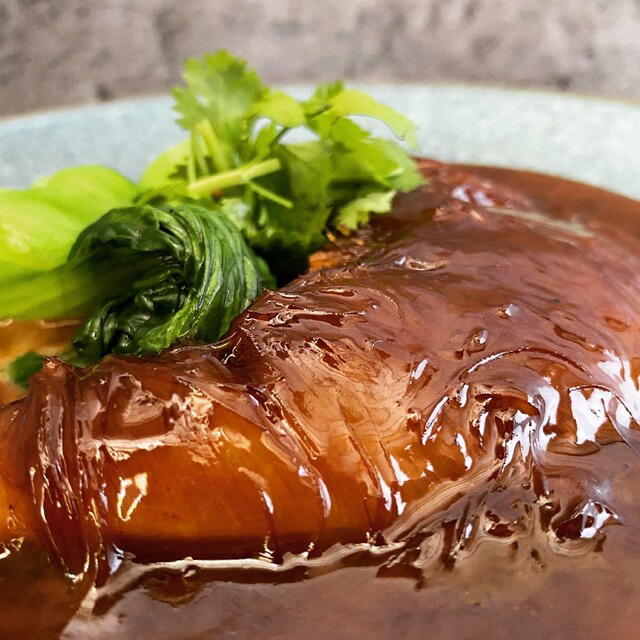
The menu
What to order
- Sichuan Chili Shrimp
- Tomato Shumai
- Mapo Tofu (Sichuan-style)
- Saliva Chicken
- Braised Pork Belly
- Shark Fin Soup with Rice
The approach is pure Osaka: railway concourses, retail escalators, and dining floors where shoppers, office workers, and destination diners converge. In Osaka, that matters. The city’s food culture is often framed through street-side immediacy, but central retail dining has also become a serious part of the map, where transit density turns restaurants into practical stages for polished lunch and dinner.
Raofu Tsai Hanshin umeda ten fits that pattern. In Osaka, it places Chinese and Sichuan cooking in a setting built for access, not ceremony. It suits a specific Osaka meal: recognized for a 2026 Tabelog Hyakumeiten Chinese selection, approachable enough in price to work for lunch or dinner, and clearly positioned for diners who want a vetted table without turning the meal into a grand occasion.
Chinese and Sichuan cooking in Osaka’s accessible dining tier
Osaka rewards restaurants that serve several audiences at once. Central dining rooms must handle weekday lunches, family meals, reservations, and after-work dinners without losing identity. Chinese restaurants fit because the cuisine scales from set lunches to shared plates, while Sichuan seasoning gives a kitchen a sharper point of view than generic banquet-style cooking.
The recognition is the signal. A Tabelog Hyakumeiten Chinese selection in 2026 places the restaurant in a regional conversation, not just a casual dining directory. Tabelog’s Hyakumeiten lists are not Michelin stars and should not be read as the same currency, but in Japan they indicate sustained diner attention within a category. For travelers, the distinction is practical: this is not a luxury Chinese room built around spectacle, but a vetted urban table in a city where strong restaurants often sit above or within busy retail flows.
The price band reinforces that. Dinner sits around JPY 5,000 to JPY 5,999, while lunch is listed at JPY 1,000 to JPY 1,999. That puts it above quick refuelling and below Osaka’s more formal special-occasion dining. In the same Osaka planning set, CHIKICHIKI Hanshin umeda ten, Donostia Comeru. and LACERBA offer different ways to structure a meal, while Raofu Tsai Hanshin umeda ten is strongest when readers want award-recognized Chinese cooking with less friction than a destination-only reservation.
Drinking is pragmatic, not cellar theatre
The more interesting drinks story is what the format suggests rather than what it needs to prove. Osaka has serious wine rooms, sake bars, and cocktail counters, but not every good meal needs to orbit a cellar. Here the better read is practical: the restaurant is useful for lunches, dinners, and shared meals where pacing and food may matter more than a long beverage narrative. That says more than a decorative wine paragraph.
Wine-focused diners should calibrate expectations. This is not framed as the Osaka stop for a sommelier-led pairing sequence; it is a Chinese and Sichuan restaurant where diners who care about drinking should think carefully about the table. Sichuan seasoning can challenge alcohol, especially where chilli heat, peppercorn aroma, sweetness, vinegar, and fermented notes intersect. Think structure rather than prestige: aromatic whites, off-dry bottles, chilled low-tannin reds, sparkling wines, and sake with enough texture can make more sense than heavy oak or high alcohol.
That matters in Osaka because many travelers use the city’s central zones as a hub rather than a slow dining district. A meal can happen before a train, after shopping, or between hotel check-in and a later bar. Readers building an Osaka itinerary can place this alongside Our full Osaka restaurants guide, then decide whether the evening continues through Our full Osaka bars guide or folds back toward a hotel from Our full Osaka hotels guide. The format suits that movable evening.
Who should book it, and how to read the room
The restaurant works best for diners who want recognizable quality without excessive ceremony. Its listed Tabelog score of 3.70 and 2026 Hyakumeiten recognition give it a clearer signal than an anonymous casual stop, while the lunch and dinner budgets keep it within reach for a planned meal. In Osaka’s busy dining ecosystem, that balance is useful: a restaurant can be award-listed and still function as an accessible choice.
Planning matters less as theatre than as common sense. A spontaneous lunch will feel different from a dinner arranged around a fuller table and shared plates. The broader point is to read the restaurant through its category: Chinese and Sichuan cooking, mid-range dinner pricing, and a city setting where convenience and credibility can matter as much as spectacle.
Compared with Umeda Mix Juice Honten, this is a seated restaurant decision. Considered alongside Naniwa Menjiro Zen or Donostia Comeru. it is best read through its own strengths rather than as a substitute for another kind of Osaka meal. Choose it when the occasion calls for centrality, spice, shared plates, and enough recognition to justify planning ahead, not for a chef-counter performance or deep cellar.
For wider city mapping, Osaka pairs naturally with casual daytime stops, bakery detours, local staples, and other dining rooms across the city. Broader planning can extend through Our full Osaka wineries guide and Our full Osaka experiences guide. For Japan-wide context, the same practical dining logic appears in many forms across other cities: the strongest choices are often the ones that match the meal’s real purpose, whether that means speed, comfort, price, recognition, or a specific cuisine.
Frequently asked questions
What should I budget for a meal at Raofu Tsai Hanshin umeda ten?
Pricing at Raofu Tsai Hanshin umeda ten is listed as dinner at JPY 5,000 - JPY 5,999 and lunch at JPY 1,000 - JPY 1,999.
What's Raofu Tsai Hanshin umeda ten's location?
Osaka.
How hard is it to get a table at Raofu Tsai Hanshin umeda ten?
The available signal is that Raofu Tsai Hanshin umeda ten is a recognized Chinese and Sichuan restaurant in Osaka, with a listed Tabelog score of 3.70 and 2026 Hyakumeiten recognition. Plan ahead when timing matters, especially for dinner.
What do critics highlight about Raofu Tsai Hanshin umeda ten?
Its clearest signal is the Tabelog Hyakumeiten Chinese 2026 recognition, which places it in a formal shortlist rather than a generic dining option. The draw is the combination of Chinese and Sichuan cooking, a 3.70 Tabelog score, dinner pricing from JPY 5,000–JPY 5,999, and lunch pricing from JPY 1,000–JPY 1,999 in Osaka.
Can Raofu Tsai Hanshin umeda ten accommodate dietary restrictions?
Dietary accommodations are not specified in the provided venue details. Guests with allergies or other specific needs should contact the restaurant directly at +81-80-9554-9872 before booking or visiting.
Cuisine and Recognition
Comparable venues at a glance for context.
| Venue | Cuisine | Price | Awards | Notes |
|---|---|---|---|---|
| Raofu Tsai Hanshin umeda tenThis venue (the venue you are viewing) | Modern Sichuan Chinese | $30–50 | Tabelog 100 #11 | Not listed |
| Fukushima Koto | Cantonese Chinese | Not listed | Tabelog 100 #89 | Kita |
| Shokudo Kuro Usagi | Modern Chinese Izakaya | $30–50 | Tabelog 100 #54 | Kita |
| Kitashinchi Gyoza Ya Honten | Gyoza & Chinese Izakaya | Not listed | Tabelog 100 #39 | Kita |
| Yokobori | Creative Chinese Stand-up Bar | $30–50 | Tabelog 100 #46 | Chūō |
| 551 Horai (551蓬莱) | Traditional Chinese Dim Sum & Pork Buns | $1–10 | Not listed | Namba |
Recognition history
Dated appearances from independent guides and award organizations, with the underlying list record or original source where available.
Tabelog 100 #11 · No. 11
Tabelog · Tabelog 100 - Chinese cuisine - WEST - 2026
Continue exploring
More in Osaka
Restaurants in Osaka
All restaurants in Osaka →




Bars in Osaka
All bars in Osaka →



Hotels in Osaka
All hotels in Osaka →




Wineries in Osaka
Browse all →
Details
- Modern
- Lively
- Trendy
- Energetic
- Group Dining
- Business Dinner
- Casual Hangout
- After Work
- Celebration
- Family
- Open Kitchen
- Private Dining
- Design Destination
- Hotel Restaurant
- Extensive Wine List
- Beer Program
- A La Carte
- Set Menu
- Small Plates
- Wine
- Chinese Liquor
- Beer
- Allergy Accommodating
A contemporary gray‑toned dining room with a lively open kitchen and a calm but energetic department‑store setting, suitable for casual meals, dates, and business gatherings, plus a semi‑private room for more intimate group dining.