Tabelog 100 #25
Our verdict
Ramen MAIKAGURA belongs to Tokyo’s serious suburban ramen circuit, where counter seats, repeat Tabelog 100 recognition, and low ticket prices sharpen the lunch-versus-dinner calculation. The Chitose-Funabashi address puts it outside the central hotel path, but the value proposition is clear: a small ramen and tsukemen shop with sustained local critical traction.

Pearl is the En Primeur Club membership app, where members save venues, book tables and use the concierge.
The menu
What to order
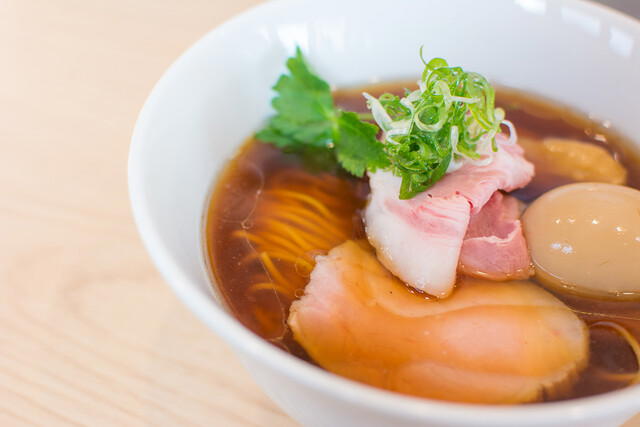
- Tori paitan ramen
- White truffle oil ramen
- Tsukemen
Tokyo moves at more than one dining rhythm: central compression, quieter local routines, modest shopfronts, and queues formed by people who know what they came for. Here, ramen is not a reservation game or luxury tasting format; it is a focused counter meal where timing, turnover, and noodle style matter.
Tokyo ramen now runs in several lanes: central-city shops for visitors, specialist counters locals cross town for, and addresses whose reputations travel through rankings, repeat regulars, and word-of-mouth loyalty. Ramen MAIKAGURA belongs in that conversation. Its 2025 Tabelog Hyakumeiten recognition and Tabelog score of 3.86 give it a clear signal in a category where decimals matter.
Daytime value, evening discipline, and the ramen counter calculation
The lunch-versus-dinner divide matters especially at ramen shops. Lunch turns the counter into a working-day ritual: fast decisions, compact budgets, and practical urgency before the afternoon resumes. Dinner slows the tempo. The same price band feels more deliberate after work, when tsukemen and ramen become a destination rather than convenience.
That is the useful read here. Average spend is listed at JPY 1,000 to JPY 1,999 for both lunch and dinner, keeping the evening proposition unusually efficient by Tokyo standards. Where premium sushi, French, and other formal categories can make dinner a financial commitment, ramen preserves a democratic counter economy. The difference is mood and intent, not price: lunch rewards tactical timing; dinner rewards the diner willing to make a short, specific meal the point.
The menu category is ramen and tsukemen, placing the shop in Tokyo’s specialist noodle tradition rather than an old-school broad diner format. Without naming a signature bowl where none is listed, the format is the point: ramen resolves broth, tare, fat, noodle texture, and toppings into one composition; tsukemen separates noodles and dipping broth, exposing temperature, thickness, and seasoning balance more plainly. Shops listing both are judged by how well they handle two related but distinct tests.
The comparison helps when kept within Tokyo’s broader dining map. Chuka Soba Nishikawa operates in a related ramen conversation, while the city’s wider mix reaches from Quatre Vingt Douze to Kalpasi and Sri Mangalam A/C Soshigaya-Okura Soshigaya ookura ten. The appeal is not a single-theme dining district, but a city where specialists earn attention without needing tourist density.
Recognition here means consistency, not ceremony
Tabelog’s Hyakumeiten lists matter for ramen because Michelin-style ceremony is not the dominant language. A ramen counter needs no white tablecloths to be a serious critical object; it needs repetition, precision, and enough public consensus to withstand comparison across hundreds of shops. Selection for Tabelog’s 2025 ramen recognition gives Ramen MAIKAGURA the kind of signal this category values.
The format sharpens that signal. Ramen and tsukemen are compact tests of execution rather than long-form tasting menus, and the experience depends on the shop’s pace as much as the bowl itself. The choice is operational as well as culinary: arrive with patience, expect the meal to set its own rhythm, and treat the visit as a focused stop, not a lingering session.
The price discipline also fits the genre. With lunch and dinner both listed in the JPY 1,000 to JPY 1,999 band, the appeal is not extravagance but clarity: serious food, low spend, minimal ceremony, and a narrow brief. That is the Tokyo everyday-dining combination at its most persuasive.
For visitors, this is not the same decision as chasing a central counter near a hotel or a reservation-only dining room. It asks diners to prioritize local recognition over spectacle. The location is Tokyo, making it best understood as part of the city’s larger ramen field rather than as a landmark-driven stop.
Where it fits in a Tokyo itinerary
The smarter play is to treat the meal as part of a broader Tokyo eating map, not an isolated pilgrimage. Ramen MAIKAGURA suits diners comparing low-cost, high-signal Japanese formats before moving into other categories: sushi at Sushi Ikki, or other Tokyo dining rooms across grilled, curry, seafood, cafe, and casual formats. The point is contrast: Tokyo’s casual scene can be as concept-driven as its counters are technique-driven.
Travellers extending the comparison across Japan can set Tokyo ramen against other regional formats, from formal Japanese cooking to cafe culture, contemporary dining, curry, and casual regional specialties. Japanese food abroad can also be a useful mirror, but the most useful comparison for this stop remains other dining in Tokyo and the way the city turns modest formats into destination meals.
For the larger trip, use Our full Tokyo restaurants guide to place this stop among the city’s dining categories, then cross-check movement with Our full Tokyo hotels guide. The surrounding night can be built through Our full Tokyo bars guide, while category completists can scan Our full Tokyo wineries guide and Our full Tokyo experiences guide. The editorial answer is simple: this is a compact, recognized ramen stop where lunch offers speed and value, and dinner turns the same format into a deliberate Tokyo choice.
Frequently asked questions
What price level is Ramen MAIKAGURA?
Pricing at Ramen MAIKAGURA is listed as JPY 1,000 - JPY 1,999 JPY 1,000 - JPY 1,999.
What's the address for Ramen MAIKAGURA?
Tokyo.
Is Ramen MAIKAGURA reservation-only?
The provided listing does not give a reservation-only status. The price sits at JPY 1,000–1,999 for both lunch and dinner, which keeps it firmly in everyday ramen territory rather than a luxury format.
What do critics highlight about Ramen MAIKAGURA?
The strongest signal is recognition: it was selected for Tabelog Hyakumeiten in 2025 and carries a Tabelog score of 3.86. The listed categories are ramen and tsukemen, giving the shop a tighter brief than broader noodle houses in Tokyo.
Peers You’d Cross-Shop
Comparable venues at similar price and category levels.
| Venue | Cuisine | Price | Awards | Notes |
|---|---|---|---|---|
| Ramen MAIKAGURAThis venue (the venue you are viewing) | Modern Tori Paitan Ramen | $1–10 | Tabelog 100 #25 | Not listed |
| Quatre Vingt Douze | Modern French Fine Dining | Not listed | Michelin Plate | French |
| Chuka Soba Nishikawa | Japanese Ramen | $1–10 | Tabelog 100 #90 | JPY 1,000 - JPY 1,999 |
| Sushi Ikki | Authentic Edo-mae Sushi Omakase | $100–150 | Michelin Plate | Sushi |
| Kalpasi | Freestyle Japanese-Indian Curry | $30–50 | Tabelog Bronze #157 | Not listed |
| Sri Mangalam A/C Soshigaya-Okura Soshigaya ookura ten | Indian Curry | Not listed | Tabelog 100 #82 | JPY 1,000 - JPY 1,999 JPY 2,000 - JPY 2,999 |
Recognition history
Dated appearances from independent guides and award organizations, with the underlying list record or original source where available.
Tabelog 100 #25 · No. 25
Tabelog · Tabelog 100 - Ramen - TOKYO - 2025