
Tokyo ramen culture has many branches, but the Mita original of the Jiro style occupies a separate lane: low-cost, counter-only, rules-aware, and built around appetite rather than ceremony. Ramen Jiro Mita honten is selected for Tabelog Ramen TOKYO “Tabelog 100” 2025, with a 13-seat counter and a price band under JPY 999, placing it far from the city’s luxury dining economy.
Pearl is the En Primeur Club membership app — saves, bookings, and concierge access live there. Same editors, same standards.
- Address
- 2 Chome-16-4 Mita, Minato City, Tokyo 108-0073, Japan
- Website
- tabelog.com
 Saves & bookings on Pearl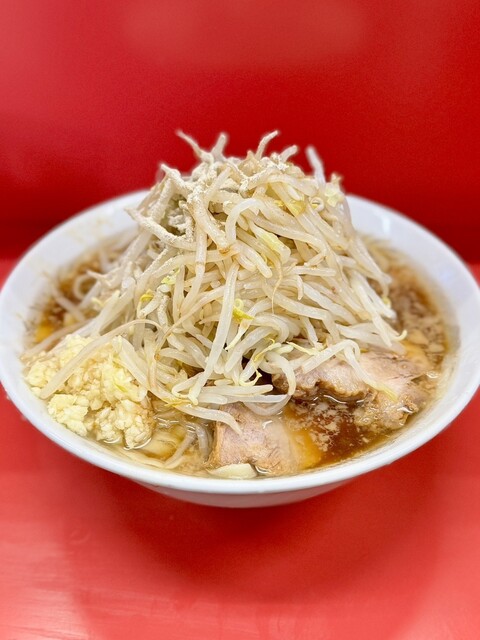
Approaching the Keio University side of Mita, the mood shifts from office-Tokyo polish to the more functional rhythm of a student-and-commuter food district. Ramen culture in this part of the city is not about linen, tasting menus, or the hush of Ginza counters. It is about speed, queue discipline, appetite, and a shared understanding that the room will do only a few things and do them with conviction. Ramen Jiro Mita honten belongs to that tradition: a 13-seat counter, no private rooms, no smoking, no reservations, and a price band that sits under JPY 999.
That combination explains why the address matters beyond nostalgia. Tokyo’s ramen scene now stretches from polished, ingredient-driven bowls to regional specialists, seafood broths, spice-led hybrids, and chef-driven counters that borrow the language of fine dining. The Mita original sits at the opposite pole. Its importance comes from format discipline and a style that has generated a recognizable ramen subculture, not from luxury signals. In a city where a sushi counter such as Sushi Mikata and a yakitori room such as Yakitori Katou occupy more formal restaurant categories, Jiro-style ramen remains democratic, physical, and intentionally compact.
Jiro-style ramen makes scale, not delicacy, the central argument
Tokyo ramen has long absorbed outside technique and local preference at once: Chinese noodle-shop ancestry, Japanese tare logic, domestic wheat culture, and the city’s demand for fast solo dining all meet in the bowl. Jiro-style ramen pushes that history toward abundance. The point is not refinement in the kaiseki sense. It is a dense, muscular interpretation of ramen built for diners who understand that volume, customization, and counter efficiency are part of the experience.
Within that broader category, Ramen Jiro Mita honten functions as a reference point rather than a museum piece. Its Tabelog Ramen TOKYO “Tabelog 100” 2025 selection and 3.77 score place it inside the city’s recognized ramen conversation, but the more telling signals are operational: counter seating only, no card or electronic payments, BYO drinks noted as a service detail, and a location tied to the main gate area of Keio University since the 1996 move. The address also carries an older thread, with a Mita relocation in 1973 and a sign-maker mistake around “Jiro” and “Niro” folded into the shop’s lore.
The local-ingredient, global-technique story here is less about named farms than about Tokyo’s capacity to domesticate imported food forms. Ramen began as an adaptation of Chinese wheat-noodle traditions, then became a Japanese urban staple shaped by regional broths, tare, toppings, and shop systems. Jiro’s branch of that evolution is blunt and influential: it treats the counter as an engine, the bowl as a test of appetite, and the customer as an active participant in the ordering ritual. That is a different kind of sophistication from the city’s tasting-menu restaurants, but it is sophistication all the same.
Mita's counter economy rewards diners who accept the rules
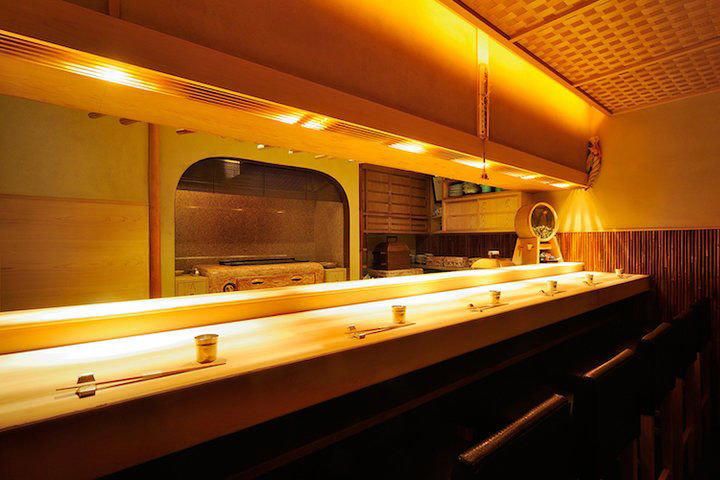
The room is designed around throughput and attention. This is not a place to stretch out with a group or negotiate special-occasion comforts. It is better understood alongside Tokyo’s compact specialist counters, where the constraints are part of the value proposition.
That value proposition is unusually sharp. A bowl under JPY 999 in a Tabelog-recognized Tokyo ramen shop makes the experience competitive with everyday lunch counters rather than destination dining rooms. Nearby Mita options such as Chuogo Hanten Mita and Chinese Hanten Mita ten sit in a broader Chinese and ramen orbit, while Zero One Curry A.o.D. shows how Tokyo’s casual specialist dining can also build loyal followings around a narrow format. The distinction at Mita is the combination of low price, cultural weight, and strict counter economy.
For travelers, the practical reading is clear without turning the meal into a checklist. The shop is close to Tamachi and Mita stations, runs daytime through evening hours on most operating days, and closes on Sundays and public holidays. Payment is cash-oriented, parking is not part of the setup, and the format suits solo diners or pairs who are comfortable with a fast counter meal. Those details matter because Tokyo ramen is often less forgiving than it looks from the outside: the difference between a smooth meal and an awkward one usually comes down to reading the room before entering it.
How it fits into a broader Tokyo eating itinerary
Ramen Jiro Mita honten is not the answer to every Tokyo dining question. It is the answer to a specific one: where to understand a forceful, appetite-led branch of ramen at its source, without the filter of luxury hospitality. Travelers building a wider food day should treat it as a counterpoint. Pair this kind of meal with more composed Tokyo formats, from yakitori at 124. KAGURAZAKA (Yakitori) to casual seafood and charcoal cooking at . 鮪と炭火焼き うお炭 秋葉原店, or with curry at 3 Chome no Curry Ya San and the visual-café end of the spectrum at 2D Cafe.
Tokyo’s strength is not a single dining identity but the coexistence of tightly coded formats. A Shinjuku address such as 12/10 Shinjuku ten belongs to a different urban rhythm, while the city guide layer helps connect restaurants with hotels, bars, wineries, and experiences: Our full Tokyo restaurants guide, Our full Tokyo hotels guide, Our full Tokyo bars guide, Our full Tokyo wineries guide, and Our full Tokyo experiences guide. For a wider Japan-and-beyond comparison of compact specialist food formats, see -Grilled beef Sukiyaki- KAMAKURA TANUKIAN 鎌倉 たぬき庵 in Kamakura.cafe in Osaka.know in Kumamoto, (Shoku) Vietnam in Kawasaki, [Curry Senmon Ten] Maruyama Kyoju. in Sapporo, [ki:] in Kyoto, Jōdo Saké Bar in Los Angeles, and Onigiri Time in Pasadena.
The Short List
Comparable venues for context, by category and price tier.
| Venue | Cuisine | Price | Notes |
|---|---|---|---|
| Ramen Jiro Mita honten | Minato, Japanese Ramen | $ | Not listed |
| Shiroi Kuro | Not listed | $ | Minato, Modern Japanese sweets & roll cake café |
| Oniyanma Shimbashi ten | Minato, Stand-up Sanuki Udon | $ | Not listed |
| Kyokasuduke Uokyu Ginza ten | Not listed | $ | Chūō, Traditional Japanese kasuzuke fish teishoku |
| Nishi Mura | Chūō, Tonkatsu | $ | Not listed |
| Gekko Sabou | Not listed | $ | Shibuya, Japanese jazz kissaten & coffee shop |
Recognition history
Dated appearances from independent guides and award organizations, with the underlying list record or original source where available.
Tabelog 100 #86 · No. 86
Tabelog · Tabelog 100 - Ramen - TOKYO - 2025







At a Glance
- Well Known
- Energetic
- Classic
- Solo
- Casual Hangout
- Group Dining
- Historic Building
- Standalone
- Byob
Current opening hours
- Monday
- 8 AM–8 PM
- Tuesday
- 8 AM–8 PM
- Wednesday
- 8 AM–8 PM
- Thursday
- 8 AM–8 PM
- Friday
- 8 AM–8 PM
- Saturday
- 8 AM–8 PM
- Sunday
- Closed
Hours can change for holidays and private events. Last verified .
A small, no-frills, high-turnover ramen shop with a tightly run counter-service atmosphere and a focused, utilitarian feel.