
Tabelog 100 #66
Our verdict
Ramen Inoue puts Yokohama’s ramen culture in its most compressed form: a seven-seat, no-frills counter-and-table room in Tsurumi Ward with repeated Tabelog Ramen Hyakumeiten selections from 2017 through 2025. The draw is not luxury ritual but precision, scarcity, and the particular Japanese pleasure of a serious lunch counter operating at neighborhood scale.

Pearl is the En Primeur Club membership app, where members save venues, book tables and use the concierge.
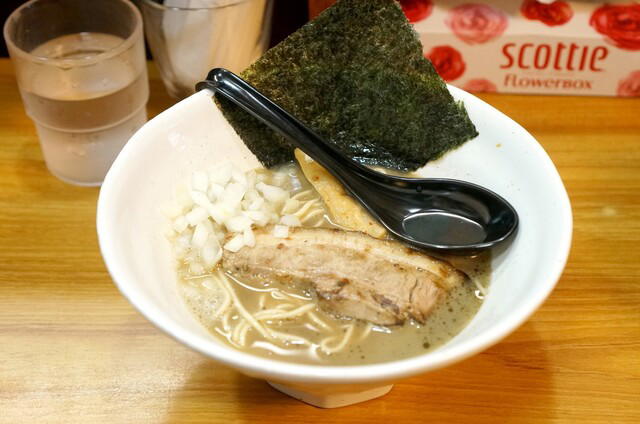
Approaching a small ramen shop in Yokohama differs from entering the city’s more polished dining rooms. The cues are quieter: modest frontage, practical room, lunch in disciplined waves rather than leisurely courses. Ramen Inoue belongs to that compact world. It makes ramen a close-range format where timing, turnover, and appetite matter as much as the bowl.
Yokohama is often read through its better-known visitor districts and waterfront dining, but its ramen identity is also local and commuter-driven. Serious ramen in Japan rewards travelers willing to leave obvious dining zones, and Ramen Inoue fits that pattern: focused format, direct service, and customers treating ramen as a purposeful meal, not an evening event.
A compact ramen room in Yokohama
The room’s compactness is the first editorial fact. Ramen Inoue sits in a category governed by flow. This is not the tasting-menu rhythm of Yokohama’s higher-spend dining rooms, nor the social breadth of izakaya and yakiniku. It is ramen at close range: arrive, wait if needed, eat with attention, leave the seat for the next guest.
That format makes planning matter even when the meal remains inexpensive by Japanese city standards. A small ramen counter can be less forgiving than a grand restaurant because there is little slack. Seats do not absorb groups easily, payment habits tend to be practical, and lunch-focused operations can compress demand into a narrow window. In Japan’s ramen culture, scarcity often comes not from luxury pricing but from serving a focused meal in a narrow format.
The category signal is clear. The restaurant is listed for ramen and tsukemen, placing it within Japan’s dipping-noodle tradition, where noodles and broth are separate points of concentration rather than one integrated bowl. Without named dishes or invented house signatures, that classification positions the shop inside familiar ramen grammar: noodle texture, soup concentration, portion pacing, and the choreography of eating quickly without rushing.
Recognition here comes from consistency, not ceremony
Kanagawa’s ramen field is competitive because it sits inside the Greater Tokyo orbit without copying Tokyo’s dining hierarchy. Yokohama and nearby cities support dense local ramen circuits, from station-adjacent counters to destination shops with award recognition. Ramen Inoue appears in the 2025 Tabelog Ramen Hyakumeiten recognition. For a small ramen shop, that kind of notice matters because diners compare bowls with forensic intensity.
The Tabelog score of 3.76 should be read in Japanese context. Ramen shops on Tabelog rarely need inflated numbers to build a following, and a score in that range, paired with Hyakumeiten recognition, places the restaurant in a serious local bracket. It is not competing with luxury restaurants on service theater or room design. Its peers are disciplined ramen shops where repeat customers, narrow specialization, and award-list visibility matter more than ceremony.
That distinction helps travelers map Yokohama meals. A day could run from a focused ramen lunch to a broader evening table elsewhere. Other Yokohama dining rooms show how varied the city’s casual dining map becomes beyond waterfront defaults, from grilled formats to everyday neighborhood counters and more relaxed local restaurants.
How to think about the meal before going
The useful mindset is precision over leisure. Ramen Inoue suits solo diners and pairs better than larger groups because ramen culture rewards a direct approach. Treat it as the anchor of a Yokohama lunch, not a flexible add-on between sightseeing stops. The city’s rail connections make the detour plausible, but the venue’s scale makes spontaneity a gamble during peak lunch demand.
Payment and pacing also shape the experience. Japan’s ramen shops often retain old-school habits after broader recognition, and this one sits in that practical register rather than the card-and-concierge world of premium dining. The compact setup reinforces the point: this is a focused noodle shop, not a lingering venue. Readers who prefer long conversations, large tables, or wine-led dining should place it in the day’s casual slot and save the evening for a room built around duration.
Within wider Yokohama, that makes the restaurant useful rather than merely collectible. It gives the city’s dining itinerary a sharper local edge, especially for travelers who know Tokyo ramen and want to see how Kanagawa’s shops hold their own. The comparison is not with high-spend beef rooms such as Yakiniku Horumon Beef Boss or Yakiniku Jingisukan Tsuruya, both in different meal-duration categories, but with small-format noodle counters where recognition depends on repeat performance.
For a broader city plan, Our full Yokohama restaurants guide is the natural next reference, while Our full Yokohama hotels guide, Our full Yokohama bars guide, Our full Yokohama wineries guide, and Our full Yokohama experiences guide help separate lunch logistics from the rest of the trip. Nearby regional references can be kept generic too: other dining in Yokohama and surrounding rail-linked areas may sit in more composed beef traditions or cross-cultural casual formats, while Ramen Inoue remains a focused noodle stop.
Travelers plotting Japan through specific food formats may compare it with city-to-city casual dining signals in general: seafood and charcoal restaurants, café culture, specialist counters, and the way Japanese formats travel outside Japan. Against that field, Ramen Inoue’s value is its refusal to expand the premise: a small Yokohama ramen room, recognized by Tabelog Hyakumeiten in 2025, built for a focused meal and not much else.
Frequently asked questions
Is Ramen Inoue expensive?
Pricing at Ramen Inoue is listed as JPY 1,000 - JPY 1,999.
Is Ramen Inoue open every day?
Specific opening hours are not provided here; check current details before going.
What part of town is Ramen Inoue in?
Yokohama.
What is Ramen Inoue known for?
Ramen Inoue is listed for ramen and tsukemen, and is recognized in the 2025 Tabelog Ramen Hyakumeiten.
Cuisine Lens
Comparable venues by cuisine and price in the same metro.
| Venue | Cuisine | Price | Awards | Notes |
|---|---|---|---|---|
| Ramen InoueThis venue (the venue you are viewing) | Ramen shop | Not listed | Tabelog 100 #66 | Not listed |
| Rishiri Ramen Miraku (利尻らーめん 味楽) | Rishiri-Style Yaki Shoyu Ramen | $10–20 | Not listed | Kohoku-Ku |
| Raamen Mu | Traditional Ramen & Tsukemen Counter | $10–20 | Tabelog 100 #7 | Kanagawa |
| Mendokoro Tatsunoki | Japanese Ramen | $10–20 | Tabelog 100 #11 | Hodogaya |
| Ramen Matsushin | Classic Japanese Ramen Shop | $10–20 | Tabelog 100 #86 | Tsurumi |
| Ryusei Ken | Japanese Ramen | $10–20 | Tabelog 100 #88 | Minami |
Recognition history
Dated appearances from independent guides and award organizations, with the underlying list record or original source where available.
Tabelog 100 #66 · No. 66
Tabelog · Tabelog 100 - Ramen - KANAGAWA - 2025
Continue exploring
More in Yokohama
Restaurants in Yokohama
All restaurants in Yokohama →

Bars in Yokohama
Browse all →



Details
- Cozy
- Solo
- Casual Hangout
- Late Night
- Chefs Counter
- Standalone
- Counter Dining
- A La Carte
Current opening hours
- Monday
- Closed
- Tuesday
- 11:30 AM–2 PM
- Wednesday
- 11:30 AM–2 PM
- Thursday
- 11:30 AM–2 PM
- Friday
- 11:30 AM–2 PM
- Saturday
- 11:30 AM–2:30 PM
- Sunday
- 11:30 AM–2:30 PM
Hours can change for holidays and private events. Hours as of .
Simple and compact ramen counter with a casual, no-frills atmosphere; it feels like a neighborhood low-profile address where guests eat quickly and leave, with a lively but intimate vibe rather than a leisurely sit-down restaurant.