
Tabelog 100 #88
Our verdict
Ryusei Ken puts Yokohama ramen into its compact, ritual-led form: counter seating, no reservations, short service windows, and a low price band that keeps the meal grounded. Its repeated Tabelog 100 ramen selections, including Kanagawa 2025, place it in the city’s serious noodle circuit rather than the casual fallback category.

Pearl is the En Primeur Club membership app, where members save venues, book tables and use the concierge.
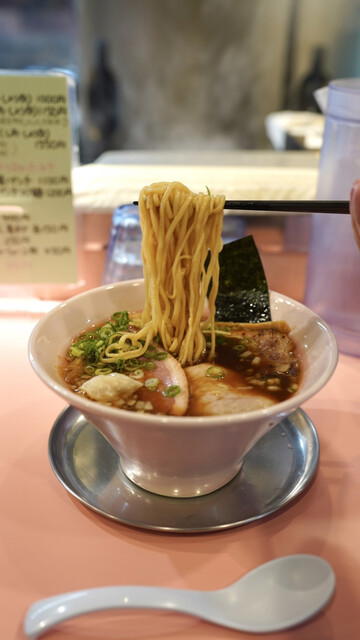
Approaching a focused ramen shop changes the meal before any bowl appears. The format reduces choice, conversation, and ceremony to a narrow sequence: wait, order, eat while the noodles hold texture, then clear the place for the next diner. In Yokohama, where ramen spans quick everyday meals and specialist shops with loyal followings, that compressed ritual is part of the appeal. Ryusei Ken belongs to that latter camp not by dressing ramen up, but by keeping the format disciplined.
Yokohama’s ramen identity is often framed through local styles and long-running preferences. That shorthand can miss the breadth of the scene. Kanagawa ramen culture also includes dipping noodles, lighter bowls, small shops, and places built through repeat custom rather than dining-room theatre. Ryusei Ken is listed for ramen and tsukemen, and its recognition in Tabelog 100 - Ramen - KANAGAWA - 2025 places it in a competitive prefectural category, not a general restaurant roundup. The distinction matters: ramen awards in Japan tend to reward specialization, consistency, and local consensus over luxury cues.
A focused format turns ramen into a timed ritual
The ramen-shop format is not a design flourish. In a focused ramen meal, pacing becomes part of the meal’s grammar. Ramen has a short window: noodles soften, soup temperature shifts, and a bowl that works at minute one may lose precision by minute six. Specialist shops make that urgency visible. Diners order with purpose, eat without delay, and avoid lingering after finishing. This is not austerity; it is etiquette shaped by the food.
That rhythm separates specialist ramen from broader casual dining in Yokohama. Other Yokohama dining rooms can carry a slower table cadence, with meals unfolding through shared plates, drinks, or multiple courses. Ramen compresses the encounter into one bowl and a few decisions, which is why the format remains one of Japan’s clearest dining styles. Ryusei Ken’s appeal sits in that directness: the food, timing, and turnover feel inseparable.
The comparison within Yokohama’s ramen tier is useful. Ramen Taiko, Yokohama Iekei Ramen Kogane Ya, Suzukiya Akebono chou ten, Ramen Torikku, and Ganso Juhachiban all help frame how much variety can exist inside a seemingly narrow category. Ryusei Ken’s listed - JPY 999 - JPY 999 price band places it among the city’s low-cost specialists, where value is the category norm rather than a discount strategy. At this level, the test is not luxury. It is whether a shop can turn a modest ticket into a repeatable bowl with enough identity to survive comparison.
Kanagawa recognition without fine-dining signals
Ramen’s credibility system differs from sushi, kaiseki, or French dining in Japan. It needs no tasting menu, wine pairing, private room, or long-form chef biography. Stronger signals are narrower: ramen-focused selection, a score reflecting broad diner judgment, and the constraints of a specialized service format. Ryusei Ken carries a Tabelog score of 3.76 and appears in the Tabelog 100 - Ramen - KANAGAWA - 2025 selection. Those are the relevant signals here: category-specific recognition, public scoring, and a clearly defined ramen identity.
The everyday logic of ramen should shape expectations. Quick, focused dining is central to the culture, but not the same as frictionless access. A short eating window and the popularity implied by recognition can make timing consequential. Treat this as a queue-and-turnover style meal, not a flexible dinner plan. For a traveler building a Yokohama food day, the practical move is to place ramen early in the route rather than after a long itinerary.
Location also shapes the experience, but Ryusei Ken is best understood simply as a Yokohama ramen stop rather than a landmark-driven dining room. That helps explain how serious ramen often operates: not as destination architecture, but as a focused shop with enough reputation to pull diners beyond their usual route. The setting is part of the appeal because it keeps attention on the bowl, the pace, and the local consensus around the shop.
How to fit it into a Yokohama dining day
Ryusei Ken works well as a focused stop rather than the centerpiece of a long evening. It is suited to diners who want a quick, purposeful meal built around ramen or tsukemen. The budget listed for both lunch and dinner is - JPY 999, which makes it easy to position between other Yokohama plans without turning the day into a formal restaurant itinerary. The key is to treat the meal on its own terms: arrive ready to order, eat while the bowl is at its best, and move on.
For visitors comparing Yokohama meals across formats, the contrast is instructive. Other local dining may speak to the city’s broader food culture, cafés, bars, or everyday Japanese meals. Ramen sits between those poles: fast, technical, and intensely local in how diners judge it. For broader planning, use Our full Yokohama restaurants guide, then layer in Our full Yokohama hotels guide, Our full Yokohama bars guide, Our full Yokohama wineries guide, and Our full Yokohama experiences guide for the rest of the day.
Regional comparisons sharpen the point without needing to turn Ryusei Ken into something it is not. A slower meal elsewhere asks diners to settle in; a drinking-led venue organizes the evening around shared plates and conversation. Casual specialist shops show how narrow formats can carry serious intent without formal service. Ryusei Ken belongs to that logic in Yokohama: the format sets the terms, the price stays modest, and diners who understand the pace tend to get more from the meal.
Frequently asked questions
How do I find Ryusei Ken?
Yokohama.
Is Ryusei Ken expensive?
Pricing at Ryusei Ken is listed as - JPY 999 - JPY 999.
Can I walk in to Ryusei Ken?
Ryusei Ken is a ramen and tsukemen venue in Yokohama. Plan around a focused ramen-shop style meal rather than a long dining session.
What is Ryusei Ken known for?
Ryusei Ken is known for ramen and tsukemen in Yokohama, with recognition in Tabelog 100 - Ramen - KANAGAWA - 2025 and a listed Tabelog score of 3.76.
Category Peers
Nearby venues at a similar price tier for orientation.
| Venue | Cuisine | Price | Awards | Notes |
|---|---|---|---|---|
| Ryusei KenThis venue (the venue you are viewing) | Japanese Ramen | $10–20 | Tabelog 100 #88 | Not listed |
| Baron Noodle | Ramen & Tsukemen | Not listed | Tabelog 100 #28 | Nishi |
| Menba Hamatora | Ramen | $1–10 | Tabelog 100 #50 | Kanagawa |
| Rishiri Ramen Miraku (利尻らーめん 味楽) | Rishiri-Style Yaki Shoyu Ramen | $10–20 | Not listed | Kohoku-Ku |
| Ramen Kujira Ken Yokohama honten | Traditional Yokohama ramen shop | $10–20 | Tabelog 100 #29 | Tsuzuki |
| Gumyoji Hekan | Ramen & Soba Izakaya | $1–10 | Tabelog 100 #44 | Minami |
Recognition history
Dated appearances from independent guides and award organizations, with the underlying list record or original source where available.
Tabelog 100 #88 · No. 88
Tabelog · Tabelog 100 - Ramen - KANAGAWA - 2025
Continue exploring
More in Yokohama
Restaurants in Yokohama
All restaurants in Yokohama →




Bars in Yokohama
Browse all →







Details
- Classic
- Cozy
- Solo
- Casual Hangout
- Late Night
- Standalone
- Counter Dining
- A La Carte
- Non Alcoholic
Small, no-frills, counter-only noodle shop with a simple neighborhood feel and a focus on the food rather than decor.