
Tabelog 100 #7
Our verdict
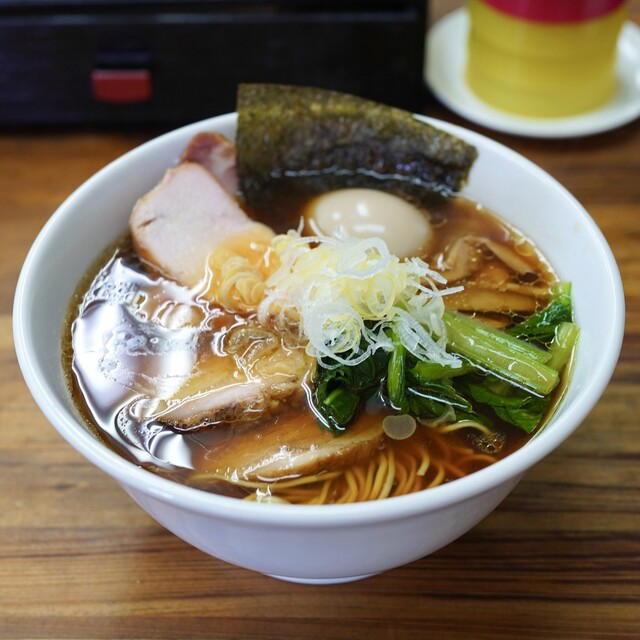
Raamen Mu is a small Yokohama ramen counter with serious local gravity: six counter seats, ramen and tsukemen, and repeated Tabelog 100 recognition from the EAST selections through the Kanagawa list. Its appeal is less about ceremony than repetition, the kind of place regulars return to because the format is narrow, the room is compact, and the margin for inconsistency is small.

Pearl is the En Primeur Club membership app, where members save venues, book tables and use the concierge.
The menu
What to order
- Shoyu ramen
- Tsukemen (dipping noodles)
- All toppings ramen
Approach Raamen Mu in Yokohama and the first signal is restraint rather than spectacle: a ramen shop with a room built for concentration. Yokohama’s ramen culture has long rewarded this kind of narrow focus. The city can carry both celebratory meals and station-side noodle counters, but the repeat customer often chooses the latter for one reason: ramen makes its argument quickly, and a small shop has nowhere to hide.
Raamen Mu belongs to that specialist tier. The format creates a different rhythm from larger casual dining rooms found across Yokohama. The meal is paced by the shop, not by a sprawling dining room; solo diners and pairs fit the category naturally, while groups need to think in smaller terms. That matters because loyal ramen clientele tend to be procedural: they know when to arrive, what the room can absorb, and how little patience a serious noodle shop has for indecision.
A Yokohama shop built around ramen and tsukemen
In Yokohama, ramen is not a single style so much as a daily habit divided into micro-preferences: soup weight, noodle tension, tare balance, and whether tsukemen makes more sense than a hot bowl. Raamen Mu’s listed categories, ramen and tsukemen, place it inside that practical split. The useful comparison is not with destination fine dining, but with other small-format specialists where the menu category is narrow enough that regulars can read small changes across repeat visits.
Recognition gives that habit a public frame. Raamen Mu is listed in the 2025 Tabelog Hyakumeiten recognition data, with a Tabelog score of 3.78. That matters more than a vague popularity claim because ramen audiences are unusually sensitive to consistency. A flash of attention can fill a queue for a season; a visible listing in a competitive regional field suggests a shop that has stayed relevant as local dining expectations keep shifting.
The price tier also explains part of the devotion, though the more interesting point is cultural rather than financial. Japanese ramen remains one of the few serious dining categories where technical specialization can sit beside everyday spending. That is why a focused ramen shop can compete for attention with broader Yokohama dining itineraries, including other casual counters, local specialists, and different styles of dining across the city. The city’s range is broad, but ramen keeps its own rules: short meals, high repetition, and a clientele that notices incremental discipline.
Why regulars return rather than merely check it off
The regulars’ perspective is the right lens here. Ramen loyalty rarely comes from novelty alone. It comes from the confidence that the next bowl will behave like the last one, with enough variation in choice, mood, or appetite to justify another visit. Tsukemen adds to that return logic because dipping noodles attract diners who want a more deliberate rhythm, while standard ramen suits a faster, integrated bowl. A shop listing both can serve different repeat cravings without becoming a generalist.
Yokohama’s ramen field is dense enough that recognition has to be read competitively. Peer names such as Shinachiku Tei and Ramen Hoshijirushi sit in a similar everyday ramen conversation, while a restaurant like INACASA occupies an entirely different spending tier. That gap clarifies the point: Raamen Mu is not trying to dress ramen in fine-dining language. Its credibility is built inside the category’s own hierarchy, where repeat appeal, public recognition, and specialist focus carry more weight than room design or ceremony.
There is also a local-navigation element to the appeal. Yokohama is not only polished destination dining; it is also rail-linked routines, residential streets, and modest rooms built for regular use. That kind of setting suits ramen better than a theatrical backdrop. The regular does not need a view or a long menu. The regular needs a reliable category and a shop compact enough in spirit that small lapses would be obvious.
How to place it within a Yokohama food day
Raamen Mu works well as a precise ramen stop rather than the anchor for a long meal. Build the day around Yokohama’s range: ramen in the city, then a different register elsewhere in Yokohama, from casual local dining to bar-led evenings. For wider planning, use Our full Yokohama restaurants guide, then pair it with Our full Yokohama hotels guide, Our full Yokohama bars guide, Our full Yokohama wineries guide, and Our full Yokohama experiences guide if the trip extends beyond one meal.
Travelers using Yokohama as part of a broader Japan dining route can also read the city against nearby and national contrasts: other regional dining rooms, casual counters, izakaya-style evenings, cafe stops, curry specialists, sake bars, and quick-service formats in other cities. The comparison sharpens what Yokohama ramen does well: it compresses local expertise into a fast, repeatable, specialist format.
Frequently asked questions
What's the price range at Raamen Mu?
Pricing at Raamen Mu is listed as - JPY 999 - JPY 999.
What's the address for Raamen Mu?
Yokohama.
Do they take walk-ins at Raamen Mu?
The public record provided for Raamen Mu lists its categories as ramen and tsukemen, with budget shown as Dinner: - JPY 999; Lunch: - JPY 999. For walk-in availability, seating, hours, and current service details, check the venue's official channels before visiting.
What has Raamen Mu built its reputation on?
Raamen Mu is listed in the 2025 Tabelog Hyakumeiten recognition data, with a Tabelog score of 3.78. It is categorized as ramen and tsukemen in Yokohama, giving it the kind of following associated with a focused noodle specialist rather than a broad-format restaurant.
Reputation First
Comparable venues for orientation by cuisine and category.
| Venue | Cuisine | Price | Awards | Notes |
|---|---|---|---|---|
| Raamen MuThis venue (the venue you are viewing) | Traditional Ramen & Tsukemen Counter | $10–20 | Tabelog 100 #7 | Not listed |
| Hi, How Are You | Pakistani-style Japanese curry house | $10–20 | Tabelog 100 #92 | Kōhoku |
| Menba Hamatora | Ramen | $1–10 | Tabelog 100 #50 | Kanagawa |
| Torakichi Ya Hikaru | Yokohama-style ramen shop | $10–20 | Tabelog 100 #95 | Kanagawa |
| Hanamichi | Traditional Japanese standing bar (tachinomi) | $10–20 | Tabelog 100 #52 | Naka |
| Kannai Motsu Niku Ten | Japanese Standing Bar / Yakitori & Offal | $1–10 | Tabelog 100 #82 | Naka |
Recognition history
Dated appearances from independent guides and award organizations, with the underlying list record or original source where available.
Tabelog 100 #7 · No. 7
Tabelog · Tabelog 100 - Ramen - KANAGAWA - 2025
Continue exploring
More in Yokohama
Restaurants in Yokohama
All restaurants in Yokohama →




Bars in Yokohama
Browse all →









Details
- Cozy
- Classic
- Intimate
- Solo
- After Work
- Casual Hangout
- Family
- Chefs Counter
- Standalone
- A La Carte
- Counter Dining
A small, counter-only ramen shop with six seats, non-smoking and simple decor, known more for its carefully crafted bowls than for design; it feels like a low-key neighborhood spot and a bit of a hidden destination, with a casual, focused atmosphere and likely moderate chatter during peak hours.