Radegast Hall & Biergarten
Our verdict
Radegast Hall & Biergarten on North 3rd Street in Williamsburg has anchored Brooklyn's German beer hall tradition since the mid-2000s, when the neighbourhood was remaking itself around industrial-scale social spaces. The cavernous hall and retractable-roof biergarten format sits at the intersection of old-world communal drinking culture and New York's appetite for large-format, low-pretension gathering. It remains one of the borough's most recognisable addresses for draft beer and Bavarian-leaning bar food.

Pearl is the En Primeur Club membership app, where members save venues, book tables and use the concierge.
The menu
What to order
- Munich Pretzel
- Angus Burger
- German Sausages
Where Williamsburg Found Its Beer Hall
The German beer hall is one of the more durable social formats in American urban history. Cities with significant nineteenth-century German immigrant populations, Milwaukee, Cincinnati, St. Louis, New York, built large communal drinking rooms that functioned as neighbourhood anchors: long shared tables, ceramic steins, brass-fitted taps, and enough ambient noise to make private conversation an act of will. Most of those original halls disappeared over the course of Prohibition, post-war urban renewal, and shifting demographics. What Radegast Hall & Biergarten represents, opening on North 3rd Street in Williamsburg during the mid-2000s, is a deliberate revival of that format at a moment when Brooklyn was absorbing a generation of residents with an appetite for exactly that kind of communal, low-formality space.
Williamsburg in that period was in the middle of a rapid identity shift. The neighbourhood had moved from post-industrial vacancy to artist enclave to a denser, more commercial character. Large-format hospitality venues fit the moment: they could absorb crowds, tolerate noise, and offer a social proposition that smaller bars and restaurants could not. Radegast arrived into that context at 113 N 3rd St and has remained there since, one of the more consistent addresses in a neighbourhood that cycles through venues at speed.
The Room Itself
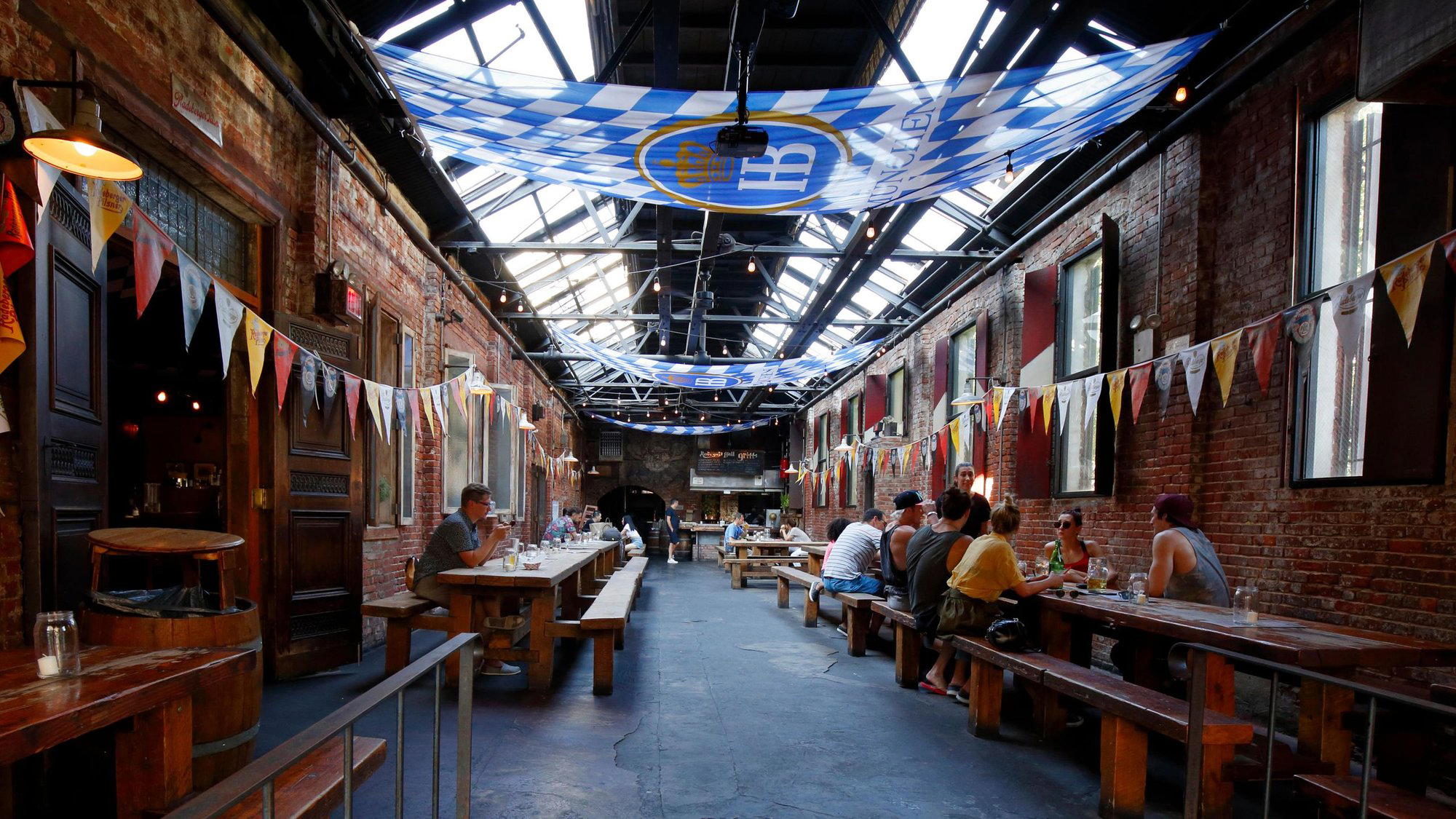
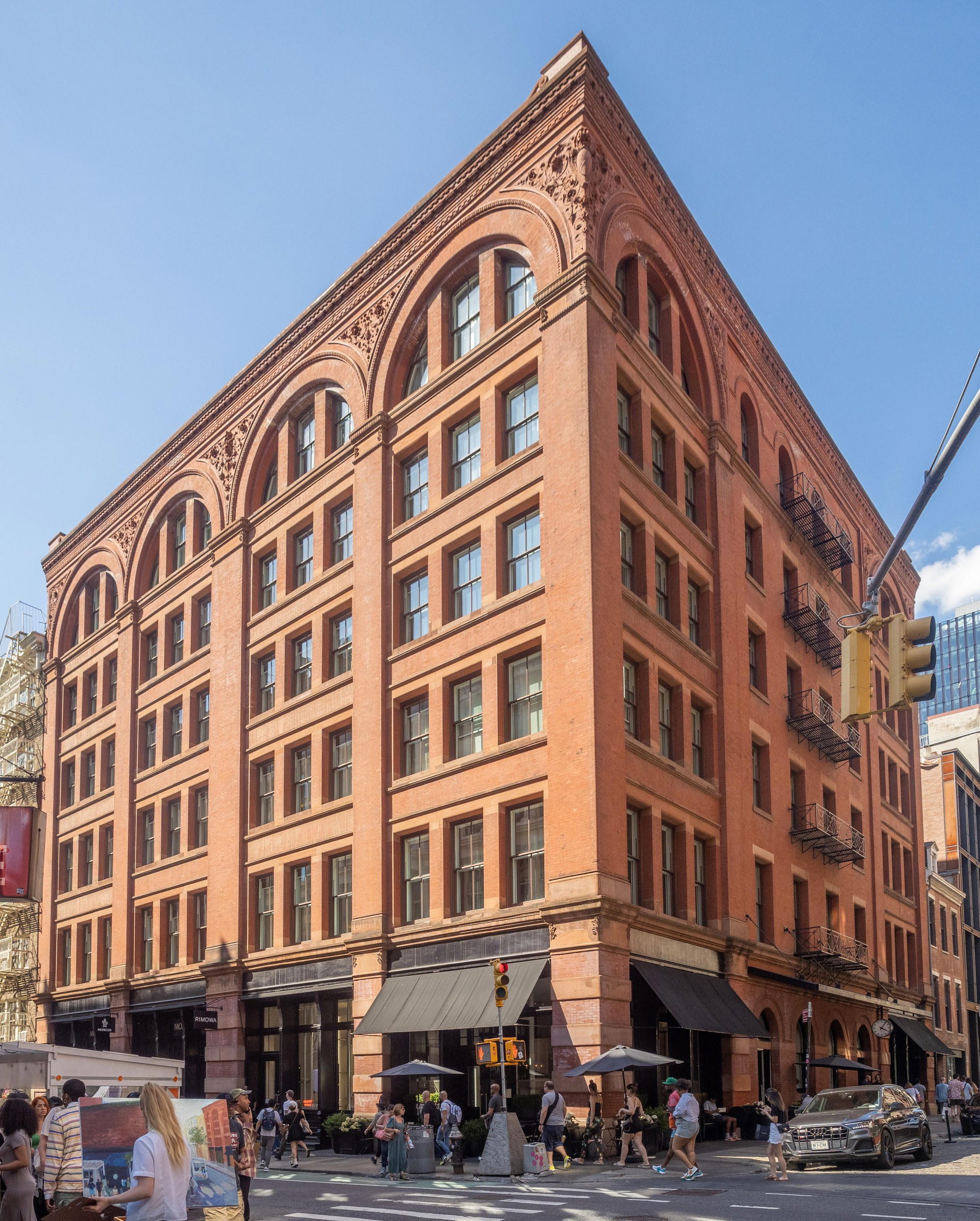
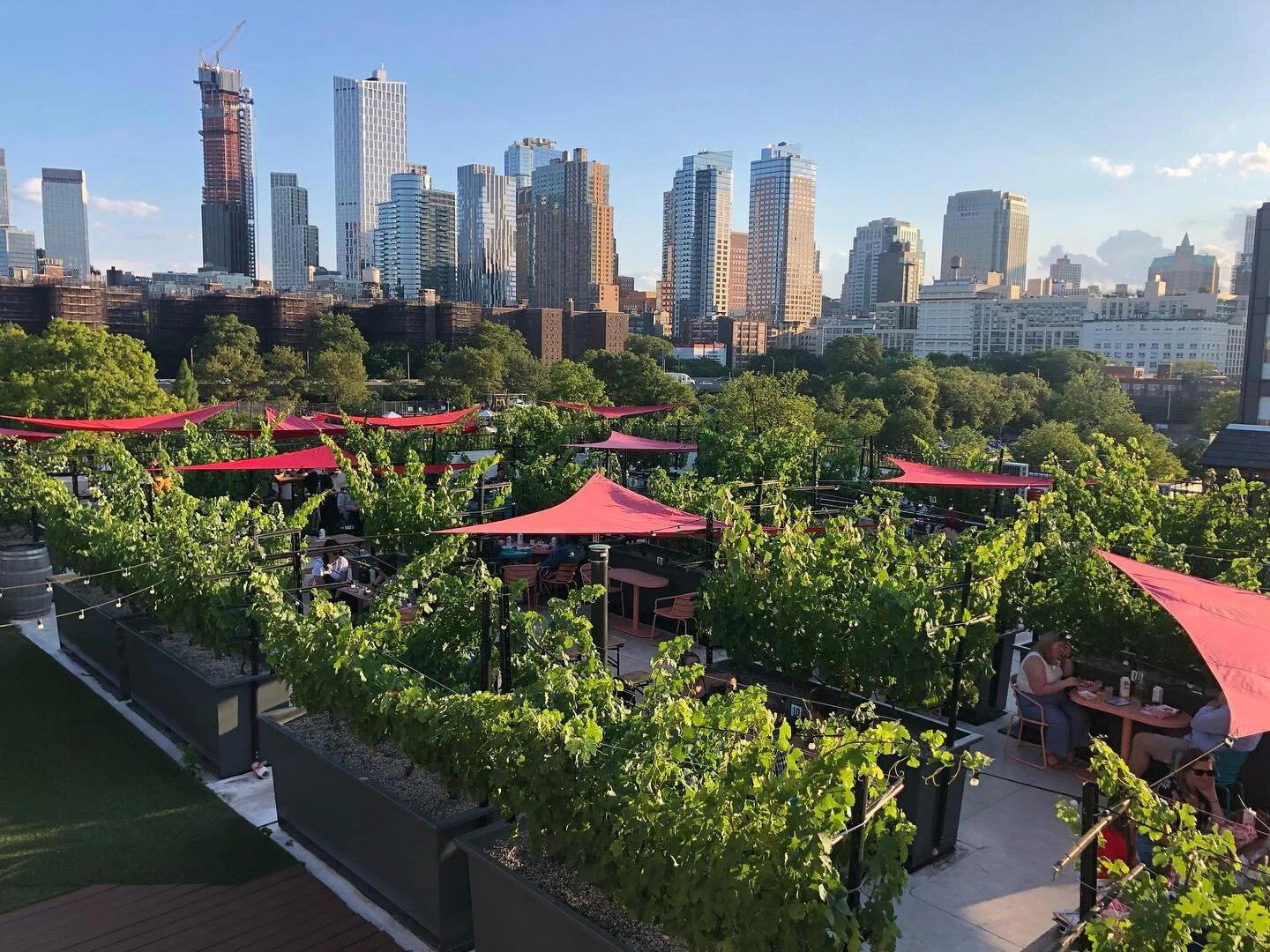
The sensory argument for a beer hall is almost entirely environmental. You do not go to Radegast for a quiet dinner or a focused tasting. The proposition is architectural: a vaulted interior with long communal tables, the kind of wooden construction that absorbs decades of noise without becoming oppressive, and a retractable roof over the biergarten section that opens the space to outdoor light and air when the season allows. The effect on a warm evening, when the ceiling pulls back and the street noise of North 3rd merges with the interior, is one of the more distinctive atmospheric experiences in Brooklyn's bar inventory.
Sound in a beer hall operates differently from a conventional restaurant. The long tables and hard surfaces push noise upward rather than across, so conversations at your bench feel contained even as the room itself runs loud. The smell of the space runs toward yeast, wood, and whatever is moving from the kitchen, a set of sensory cues that signal informality before you have ordered anything. Lighting tends toward warm and low in the evening, which softens the industrial scale of the room into something that reads as convivial rather than overwhelming.
This format sits at the opposite end of the New York dining register from the precision-driven tasting counter. The same city that supports Masa's eight-seat omakase and the exacting French technique at Le Bernardin also sustains communal beer halls where the social logic is horizontal rather than hierarchical. Both ends of that spectrum are legitimate; they answer different questions about what a night out is for.
Beer Hall Culture in a New York Context
The beer hall revival that Radegast represents was not isolated to Brooklyn. Across the country in the mid-2000s, large-format German and central European drinking formats were being revisited, partly as a reaction against the intimate, precious character of the cocktail bar wave, and partly because operators recognised that communal seating dramatically increased per-night capacity without requiring the service intensity of a full-service restaurant. In New York specifically, the format filled a gap: large groups, particularly in outer boroughs, had limited options for convivial, non-nightclub social spaces that could absorb eight to twenty people without a reservation infrastructure.
Williamsburg became a natural home for this. The neighbourhood's remaining industrial footprint, high ceilings, wide floor plates, loading-dock frontages, suited the beer hall typology in a way that, say, the West Village's narrow townhouse stock did not. Radegast's address on North 3rd sits in a corridor that connects the Bedford Avenue commercial strip to the waterfront, drawing foot traffic from multiple directions. For context on the broader New York dining picture, our full New York City restaurants guide maps the city's range from this kind of neighbourhood anchor to the highest-tier destinations.
The German beer tradition that Radegast draws from is itself a transport of central European brewing culture into a New York idiom. The tap list at a serious beer hall skews toward lagers, wheat beers, and dark Munich-style pours, formats that prioritise sessionability and food compatibility over the assertive hop character that defined American craft brewing's first decade. That distinction matters atmospherically: lower-bitterness, malt-forward pours work with communal eating in a way that high-IBU IPAs often do not.
Positioning in the New York Spectrum
New York's hospitality range runs from Per Se's formal tasting progression and the modern Korean precision of Atomix and Jungsik New York, down through neighbourhood restaurants, wine bars, and casual formats like Radegast. The beer hall occupies a specific social function in that range: it is where large groups self-organise without requiring a fixed menu, a dress standard, or a booking apparatus that demands planning weeks in advance. That accessibility is a feature, not a concession.
Across the country, the venues that EP Club tracks at the higher end of the register, Alinea in Chicago, The French Laundry in Napa, Blue Hill at Stone Barns in Tarrytown, Providence in Los Angeles, Single Thread Farm in Healdsburg, Lazy Bear in San Francisco, Addison in San Diego, Emeril's in New Orleans, Bacchanalia in Atlanta, and The Inn at Little Washington, serve a fundamentally different social purpose. Those venues demand attention, time, and significant pre-planning. Radegast asks none of that. The two ends of the spectrum are not in competition; they serve different moments in the same city's hospitality ecosystem. Internationally, the same contrast holds: the formal grandeur of Alain Ducasse at Louis XV in Monte Carlo or the precision of 8½ Otto e Mezzo Bombana in Hong Kong represents one pole; the communal beer hall represents another, and both are worth understanding on their own terms.
Planning Your Visit
Radegast Hall & Biergarten is at 113 N 3rd St, Brooklyn, NY 11249, in Williamsburg's southern stretch, walkable from the Bedford Avenue L train stop. The biergarten section is the seasonal draw: the retractable roof makes the space most compelling in the warmer months, from late spring through early autumn, when outdoor air circulation transforms the room's character. Weekday evenings run calmer than weekends, when the communal tables fill quickly and the ambient volume climbs considerably. Reservations: walk-in is the standard approach for this format, though large group arrangements may warrant contacting the venue directly. Dress: no standard applies; the format is deliberately casual. Budget: the beer hall price point is well below the tasting-menu tier; draft pours and shared plates form the core spend.
Frequently asked questions
Where is Radegast Hall & Biergarten in New York City?
Radegast Hall & Biergarten is located at 113 N 3rd St, Brooklyn, NY 11249, New York City.
Is Radegast Hall & Biergarten suitable for large groups in Brooklyn?
The beer hall format at 113 N 3rd St in Williamsburg is structurally well-suited to large parties: communal long tables absorb groups that would strain a conventional restaurant's reservation system. The retractable-roof biergarten section adds capacity in warmer months, making it one of the more practical large-group options in the Brooklyn beer scene. Walk-in access for smaller groups remains the norm, but larger parties benefit from reaching out in advance.
What do regulars order at Radegast Hall & Biergarten?
The draft list runs along German and central European lines: wheat beers, Munich-style lagers, and darker malt-forward pours are the format staples. Food at the Williamsburg address follows the beer hall model, with hearty central European plates designed for communal table eating rather than a tasting progression. The selection is built around volume and sociability, not flights or single-malt precision.
What's the best way to book Radegast Hall & Biergarten?
Radegast at 113 N 3rd St operates primarily as a walk-in venue, consistent with the democratic, low-friction logic of the beer hall format. For large groups or private events, contacting the venue directly in advance is advisable. Arriving early on weekend evenings reduces wait time for communal seating at the biergarten section.
What's the signature at Radegast Hall & Biergarten?
The defining feature is spatial: a cavernous wooden interior paired with a retractable-roof biergarten produces an atmosphere that shifts with the season without requiring guests to change venues. This indoor-outdoor configuration at the Brooklyn address is relatively rare in New York City and drives the communal, long-table social dynamic the space is known for.
Comparable Venues
Comparable venues nearby, for context on price, style, and recognition.
| Venue | Cuisine | Price | Notes |
|---|---|---|---|
| Radegast Hall & BiergartenThis venue (the venue you are viewing) | German Biergarten | $20–30 | Not listed |
| Rudy's Pastry Shop | German Bakery & Cafe | $10–20 | Ridgewood |
| Allegretto | Dining | Not listed | New York City |
| Afuri ramen + dumpling | Modern Japanese Ramen + Dumplings | $20–30 | Williamsburg |
| Sama Street | Thai | Not listed | Greenpoint |
| Malai Marke | Modern Regional Indian | $20–30 | East Village |
Continue exploring
More in New York City
Restaurants in New York City
All restaurants in New York City →
Bars in New York City
All bars in New York City →
Details
- Lively
- Rustic
- Industrial
- Energetic
- Group Dining
- Casual Hangout
- Late Night
- Celebration
- Live Music
- Open Kitchen
- Historic Building
- Beer Program
- A La Carte
- Small Plates
- Beer Program
- Vegetarian Friendly
Current opening hours
- Monday
- 12 PM–1 AM
- Tuesday
- 12 PM–1 AM
- Wednesday
- 12 PM–1 AM
- Thursday
- 12 PM–1 AM
- Friday
- 12 PM–3 AM
- Saturday
- 11 AM–3 AM
- Sunday
- 11 AM–1 AM
Hours can change for holidays and private events. Hours as of .
Industrial hangar-style hall with long communal tables, lively atmosphere, and a garden area with retractable roof.