Afuri ramen + dumpling
Afuri ramen + dumpling in Williamsburg, Brooklyn brings the Japanese chain's yuzu-forward broth style to New York City's increasingly crowded ramen tier. At 61 N 11th Street, it sits at a price point well below Manhattan's tasting-counter establishments, offering a structured, broth-led eating progression that rewards sequential ordering rather than single-bowl visits.
Pearl is the En Primeur Club membership app — saves, bookings, and concierge access live there. Same editors, same standards.
- Address
- 61 N 11th St, Brooklyn, NY 11249
- Phone
- +13475990092
- Website
- afuriramen.com
- Directions
- Get directions
 Saves & bookings on Pearl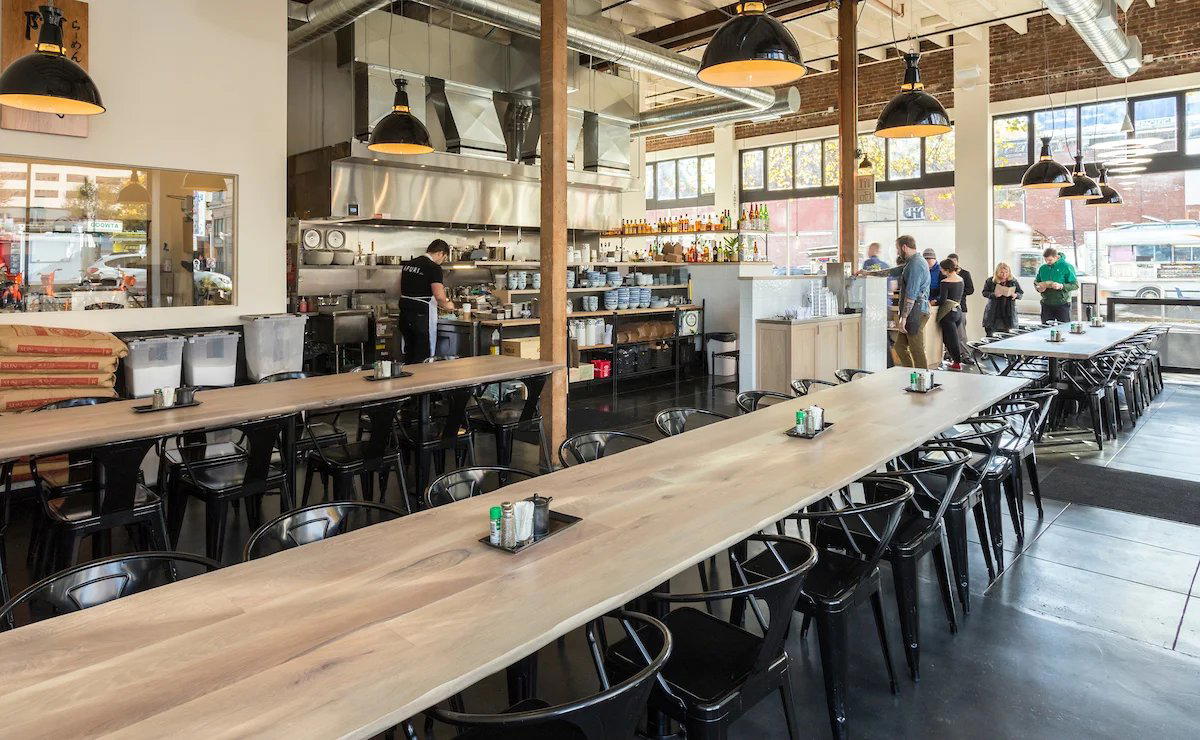
Ramen in New York: The Broth Tier That Sits Below the Counter
Afuri ramen + dumpling is a modern Japanese ramen and dumpling restaurant in Brooklyn, New York, priced at about $25 per person.
New York's Japanese restaurant spectrum spans an enormous range. At the upper end, counter omakase venues like Masa and progression-driven tasting rooms such as Atomix operate at price points where a single dinner routinely exceeds a few hundred dollars per person. Below that tier, but above fast-casual, sits a more interesting middle band: ramen-focused Japanese restaurants that take the bowl seriously without demanding a reservation window measured in months. Afuri ramen + dumpling, at 61 N 11th Street in Williamsburg, belongs to that middle band. It is the New York outpost of a Japanese chain that built its reputation around yuzu-inflected broth in Tokyo before expanding internationally, and its positioning in Brooklyn rather than Manhattan already tells you something about how the brand reads the city's dining geography.
What the Williamsburg Address Signals
Williamsburg has spent the better part of two decades absorbing the dining concepts that either can't afford Midtown rents or actively prefer a neighbourhood that skews younger, more design-conscious, and less corporate. The ramen category fits that profile cleanly. The area now hosts a density of Japanese food concepts that would have been unusual for any Brooklyn neighbourhood a generation ago, and Afuri sits within that cluster at 61 N 11th Street. The address places it close enough to the L train to draw from Manhattan, while retaining the walk-in energy that characterises Williamsburg dining rather than the advance-reservation culture of the island's leading tables. Venues like Le Bernardin and Eleven Madison Park operate in a different urban register entirely, where the dining room is its own destination and neighbourhood context is secondary. Afuri is more embedded, more neighbourhood-scaled.
The Progression: How a Ramen Meal Actually Works
The editorial angle worth establishing here is that ramen, at its most considered, functions as a structured eating sequence rather than a single dish. This is the tradition Afuri draws from. A well-constructed ramen order typically moves through several phases: a starter that prepares the palate, the bowl itself with its broth as the primary argument, supplemental toppings or side orders that modify the bowl mid-way, and then optional extras like dumplings that extend the meal without disrupting the broth's logic.
Afuri's menu architecture, as a brand, is built around yuzu shio ramen as its central reference point. The shio (salt-based) broth is lighter than tonkotsu, which means it functions better as the first significant flavour hit of an evening rather than the climactic one. The yuzu element introduces a citrus brightness that cuts through richer accompaniments and makes the bowl read as a complete course rather than a protein delivery mechanism. That architecture is a deliberate departure from the heavier broth schools that dominate parts of the New York ramen scene.
Dumplings, which appear in the venue's name alongside ramen, are best understood as a structural complement rather than a competing centrepiece. In the progression logic, they arrive either before the bowl as a textural contrast, or alongside it as an additional vehicle for the dipping and dressing flavours that the kitchen controls separately from the broth. The combination of ramen and dumpling in a single sitting is a well-established Japanese eating pattern; Afuri's inclusion of both on the same menu is a deliberate decision to support that full sequence rather than forcing diners to choose a single category.
This approach to sequencing is not distinctive to Afuri. Across the city's more considered casual Japanese restaurants, the trend has moved away from single-item specialisation toward menus that support a two or three-stage eating arc. That shift mirrors, at a more accessible price point, the multi-course logic that defines the city's fine dining tier, from the structured progression at Per Se to the course architecture at Eleven Madison Park. The difference is that Afuri compresses that arc into a bowl-and-plate format that costs a fraction of the price and takes a fraction of the time.
The Japanese Chain Question
Afuri is a chain, and that provenance is worth addressing directly rather than eliding. The original Afuri restaurant in Tokyo opened in 2003, taking its name from Mount Afuri in Kanagawa Prefecture, a reference that connects the brand's broth philosophy to the mountain spring water traditionally associated with that region. International expansion brought the concept to Portland, Los Angeles, and eventually New York, which puts it in the same category as several other Japanese regional specialists that translated successfully to American cities.
The chain question matters because it affects expectations. A chain with a coherent broth identity and consistent kitchen training operates differently from a single independent operator. At the ramen category's quality threshold, chain consistency is often a feature rather than a drawback: the broth recipe is standardised, the sourcing is deliberate, and the kitchen doesn't depend on one chef's presence on any given night. For context, the same argument applies to how Americans now approach Japanese convenience-store food culture, where standardisation and quality coexist without contradiction.
For comparison across the broader American dining scene, the calibration of expectations around chain versus independent varies significantly by category. The independently-driven, produce-focused model at Blue Hill at Stone Barns or the chef-anchored format at Smyth in Chicago both require the individual chef's presence as a trust signal. A ramen chain's trust signal is different: it's the reproducibility of the broth across locations and the brand's accumulated credibility in its home market.
Where Afuri Sits in the New York Ramen Tier
New York's ramen scene is not sparse. The city has hosted outposts of Ippudo and Ivan Ramen, alongside dozens of independent operators, for over a decade. Within that field, positioning comes down to broth school, price, and neighbourhood address. Afuri's yuzu shio orientation places it in the lighter-broth segment, which competes with a smaller number of direct peers than the tonkotsu-dominant segment. The Williamsburg address situates it in a neighbourhood where the competition is more diffuse across categories than in areas like the East Village or Midtown, where ramen density is higher.
For readers building a broader New York dining itinerary that includes the city's more formal Japanese end, the full spectrum runs from Afuri's bowl-focused casual format up through the omakase tier.
Planning Your Visit
| Venue | Category | Price Tier | Booking Window | Neighbourhood |
|---|---|---|---|---|
| Afuri ramen + dumpling | Ramen / Dumpling | Casual ($$) | Walk-in likely | Williamsburg, Brooklyn |
| Atomix | Modern Korean | $$$$ | Weeks to months ahead | Midtown East, Manhattan |
| Masa | Sushi Omakase | $$$$ | Months ahead | Columbus Circle, Manhattan |
| Le Bernardin | French Seafood | $$$$ | Weeks ahead | Midtown West, Manhattan |
| Per Se | French Contemporary | $$$$ | Weeks ahead | Columbus Circle, Manhattan |
Address: 61 N 11th Street, Brooklyn, NY 11249.
Price and Positioning
Comparable venues nearby, for context on price, style, and recognition.
| Venue | Cuisine | Price | Notes |
|---|---|---|---|
| Afuri ramen + dumplingThis venue — the venue you are viewing | Not listed | $$ | Not listed |
| Hide-Chan Ramen | Hell's Kitchen, Hakata Tonkotsu Ramen | $$ | Not listed |
| Kura | Not listed | $$ | East Village, Traditional Japanese Omakase |
| Cocoron | Lower East Side, Handmade Soba Noodles | $$ | Not listed |
| Fuji Hibachi - Times Square | Hell's Kitchen, Hibachi Japanese Grill | $$ | Not listed |
| Suzume | Williamsburg, Japanese Fusion Izakaya | $$ | Not listed |
Continue exploring
More in New York City
Restaurants in New York City
Browse all →
Bars in New York City
Browse all →
Hotels in New York City
Browse all →





At a Glance
- Modern
- Trendy
- Minimalist
- Casual Hangout
- Date Night
- Open Kitchen
- Sake Program
- Craft Cocktails
- Local Sourcing
- Waterfront
- Street Scene
Current opening hours
- Monday
- 11 AM–10 PM
- Tuesday
- 11 AM–10 PM
- Wednesday
- 11 AM–10 PM
- Thursday
- 11 AM–10 PM
- Friday
- 11 AM–11 PM
- Saturday
- 11 AM–11 PM
- Sunday
- 11 AM–10 PM
Hours can change for holidays and private events. Last verified .
Modern and minimalist atmosphere with moderate noise levels, offering river views across to Manhattan.