Que sits on the 17th floor of a Nangang District tower along Civic Boulevard, placing it in Taipei's upper tier of destination dining. Venue data is limited, but its address alone signals a deliberate remove from the central-city dining corridor — a pattern that, in Taiwan's fine-dining scene, often accompanies tasting-menu formats and advance booking requirements. Readers planning a visit should verify current details directly before booking.
Pearl is the En Primeur Club membership app — saves, bookings, and concierge access live there. Same editors, same standards.
- Address
- 115, Taiwan, Taipei City, Nangang District, Section 7, Civic Blvd, 8號17樓
- Phone
- +886 2 2653 2899
- Website
- amba-hotels.com
- Directions
- Get directions
 Saves & bookings on Pearl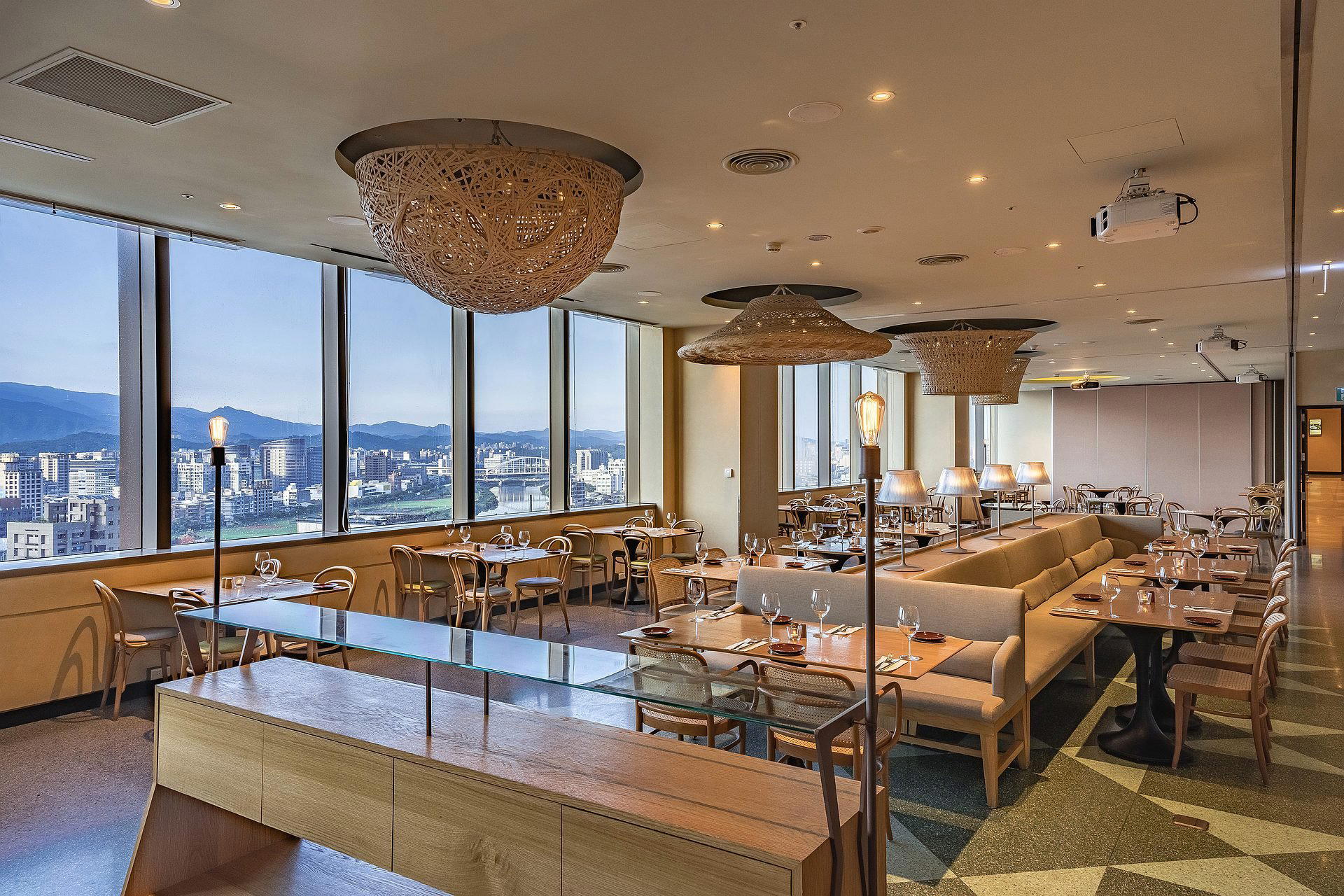
Nangang and the Geography of Taipei's Fine Dining
Taipei's serious dining scene has never been confined to the Da'an or Zhongshan corridors that most visitors instinctively target. Over the past decade, a secondary tier of destination restaurants has taken root in districts further from the tourist core, where floor space is more available, rents less punishing, and the clientele tends to arrive with intention rather than on impulse. Nangang District, once associated almost entirely with the Taipei Nangang Exhibition Center and the tech-company campuses along its eastern edge, has quietly become part of that expansion. Que sits at the 17th floor of a building on Section 7 of Civic Boulevard, a placement that tells you something before you know anything else about the food: you are going somewhere, and you are going deliberately.
The logic of the refined dining room is well-established across East Asia's premium restaurant tier. In Tokyo, Hong Kong, and increasingly in Taipei, the high-floor location signals separation from street-level noise and a certain theatricality on arrival. Whether the lift opens onto a counter format, a tasting room, or a more conventional table arrangement, the approach itself frames the experience. Que's address places it squarely inside that convention.
What the Address Signals About Format and Booking
With venue-specific data limited at this stage, the editorial approach requires honesty: what we can say with confidence is structural, not sensory. Que's Nangang location, its floor positioning, and its presence in Taipei's broader fine-dining conversation point toward a format that is unlikely to accommodate walk-ins. The restaurants that have emerged in Taipei's outer districts in the current decade — places that require a taxi or MRT transfer rather than a short walk from a hotel — almost universally operate on advance reservation systems, often with prepayment or deposit structures that reflect the tasting-menu model.
In Taipei's comparable tier, venues like logy (Modern European, Asian Contemporary) and Taïrroir (Taiwanese/French) operate with booking windows that regularly extend two to four months ahead, and both require reservation confirmation well before the meal date. Le Palais and L'Atelier de Joël Robuchon carry institutional weight that fills sittings on name recognition alone. Molino de Urdániz occupies the Spanish contemporary niche with similarly forward demand. Que enters this competitive field in Nangang rather than the center, which likely affects its booking dynamics, but does not soften the planning requirement for any visitor who arrives without a reservation in hand.
The practical instruction is simple: do not plan Que as a spontaneous addition to a Taipei itinerary. Establish contact through whatever current booking channel the venue uses, confirm availability before finalizing travel dates if the dinner is a priority, and treat the confirmation as the fixed point around which other evenings are arranged. This is standard operating procedure for Taipei's upper dining tier, and Que's positioning gives no reason to assume it operates differently.
Taipei's Outer-District Dining and What It Requires of the Visitor
Getting to Nangang from central Taipei is not complicated, but it takes longer than a Da'an restaurant. The Nangang station on the Taipei Metro's Bannan Line provides direct access to the district, and Section 7 of Civic Boulevard is navigable by taxi or rideshare from central hotels in under thirty minutes at most hours. The MRT option is cleaner for those unfamiliar with the city's taxi geography. The return journey, particularly after a multi-course dinner, is most practical by rideshare app, which operates reliably across Taipei and does not require Chinese-language proficiency to use.
Taiwan's dining scene rewards the traveler who plans beyond the city limits as well. JL Studio in Taichung, GEN in Kaohsiung, and Amei in Tainan represent the geographic spread of serious cooking across the island. Within the broader Taiwan culinary conversation, venues like Akame in Wutai Township and Shen Yen in Yilan demonstrate how far from metropolitan centers the most interesting meals can now be found. Que's Nangang location, relative to the Da'an core, is modest by comparison, but the principle is the same. The restaurant that requires effort to reach is often the one that expects the most from the visit. See our full Taipei restaurants guide for broader coverage across price tiers and neighborhoods.
For those building a multi-day Taipei itinerary around dining, the surrounding region also offers context. Chi Yuan in New Taipei and Bebu in Hsinchu County extend the table further from the urban core. The Volando Urai Spring Spa and Resort in Wulai District offers an overnight option for those combining dining with a longer stay outside the city. Taiwan's rail and highway network makes day-trip dining more practical here than in most comparable countries.
Planning Que: What to Verify Before You Go
The venue's address and floor position suggest a destination-format restaurant, but cuisine type, chef identity, and tasting-menu structure should be confirmed through current sources before any plans are finalized. International comparison points at a similar logistical position in the advance-planning spectrum include Lazy Bear in San Francisco and Le Bernardin in New York City, restaurants where the visit requires coordination, and where arriving without a reservation is not a viable strategy.
Check for updates on Que's website or booking platform before departure. If a phone number becomes available, a direct call remains the most reliable way to confirm a reservation and raise any dietary requirements in advance. Taipei's serious restaurants have, in general, become more accommodating of dietary restrictions at the high end over the past five years, but this should never be assumed, it should be confirmed at the time of booking, not on arrival. The same applies to questions of dress code and service language.
For reference, adjacent Nangang dining is less documented in international guides than the central city, which makes Que either a well-kept local address or an emerging destination depending on when you read this. Either way, the planning discipline is the same: book first, then build the itinerary around it. Taipei rewards that approach more than almost any comparable dining city in Asia. Nearby, Dongmen Rice Noodle Soup in Hsinchu City and Abura Yakiniku in Taichung City illustrate how Taiwan's food culture operates across register and region, from street-level bowls to refined tasting formats.
How que Taipei compares with similar nearby venues.
| Venue | Cuisine | Price |
|---|---|---|
| Fresh & Aged | Steakhouse | $$$$ |
| Izmir Turk Kitchen | Turkish | $$ |
Continue exploring
More in Taipei
Restaurants in Taipei
Browse all →
Bars in Taipei
Browse all →
Hotels in Taipei
Browse all →
Wineries in Taipei
Browse all →
At a Glance
- Modern
- Scenic
- Elegant
- Date Night
- Business Dinner
- Special Occasion
- Hotel Restaurant
- Panoramic View
- Open Kitchen
- Skyline
Current opening hours
- Monday
- 6:30–10 AM, 11:30 AM–2:30 PM, 6–10 PM
- Tuesday
- 6:30–10 AM, 11:30 AM–2:30 PM, 6–10 PM
- Wednesday
- 6:30–10 AM, 11:30 AM–2:30 PM, 6–10 PM
- Thursday
- 6:30–10 AM, 11:30 AM–2:30 PM, 6–10 PM
- Friday
- 6:30–10 AM, 11:30 AM–2:30 PM, 6–10 PM
- Saturday
- 6:30–10 AM, 11:30 AM–4 PM, 6–10 PM
- Sunday
- 6:30–10 AM, 11:30 AM–4 PM, 6–10 PM
Hours can change for holidays and private events. Last verified .
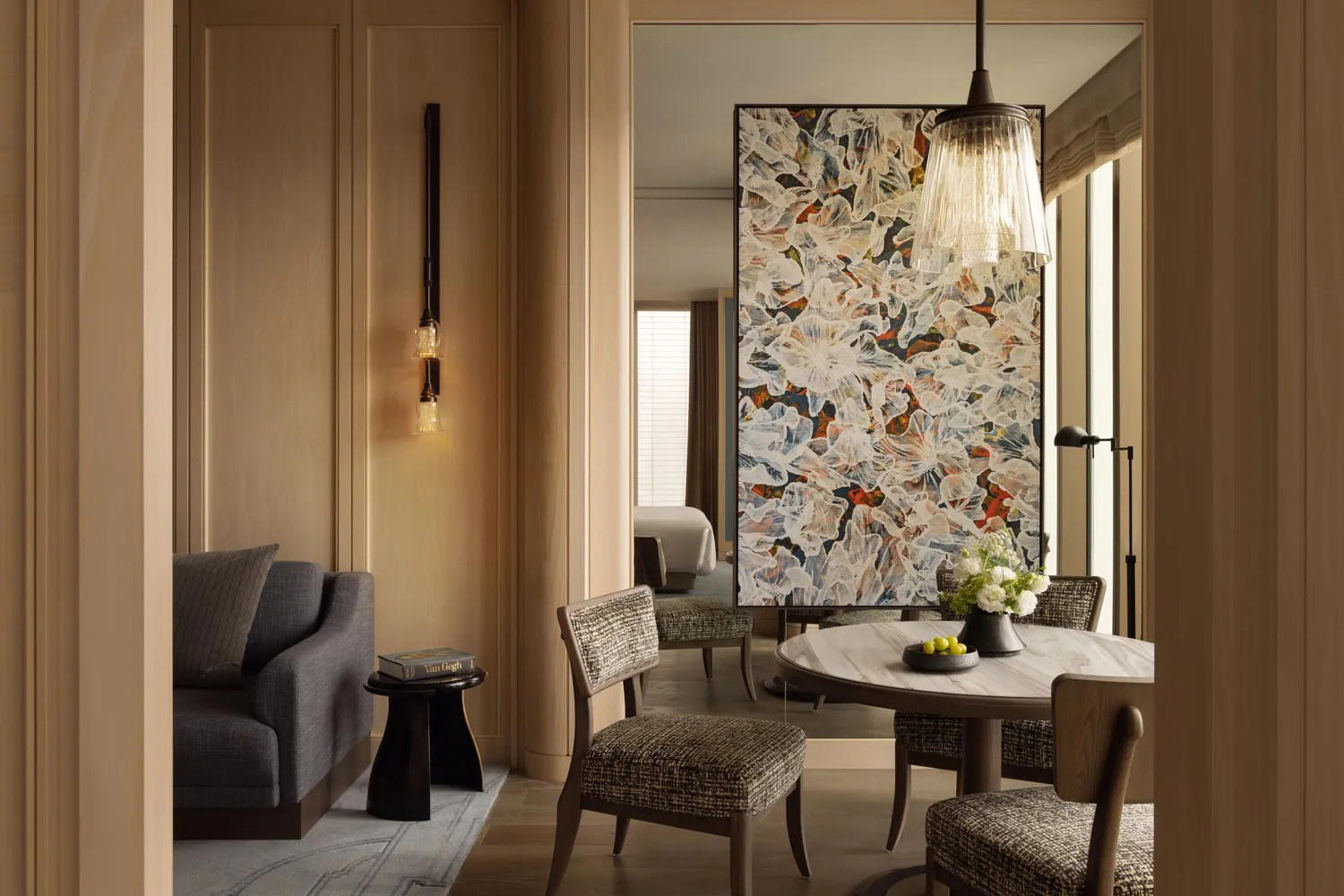
Warm lighting with huge artistic lanterns creating an inviting and refined atmosphere; floor-to-ceiling views of the city skyline.
Know Before You Go
- Getting there
- 115, Taiwan, Taipei City, Nangang District, Section 7, Civic Blvd, 8號17樓