
Michelin Plate
Our verdict
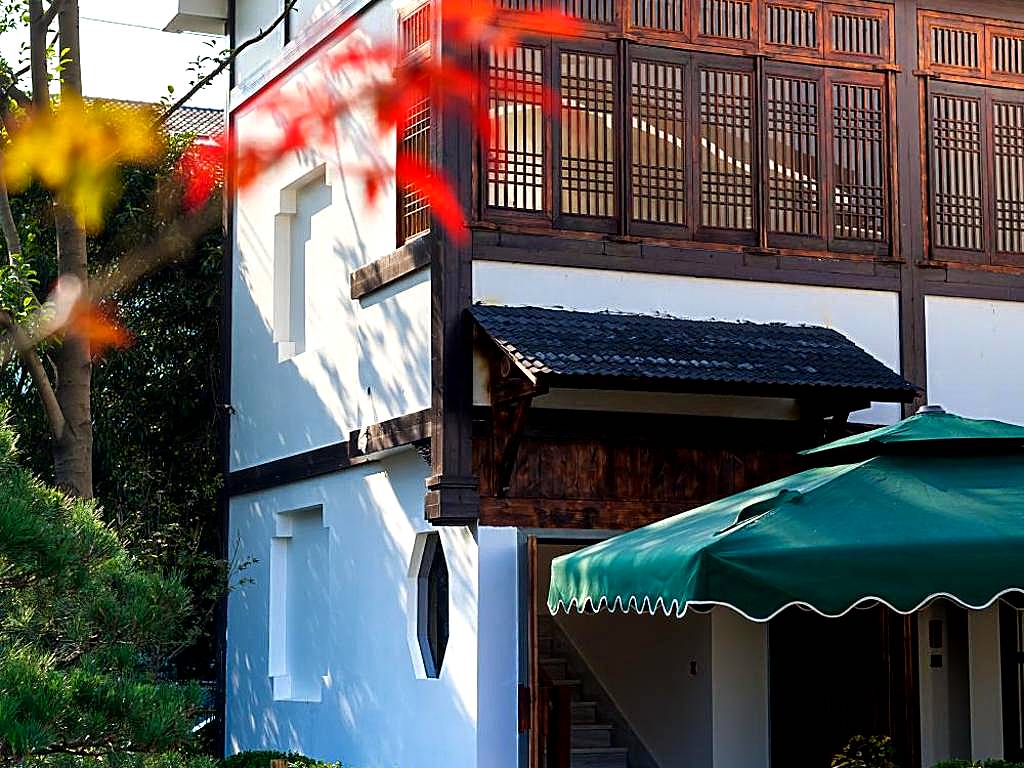
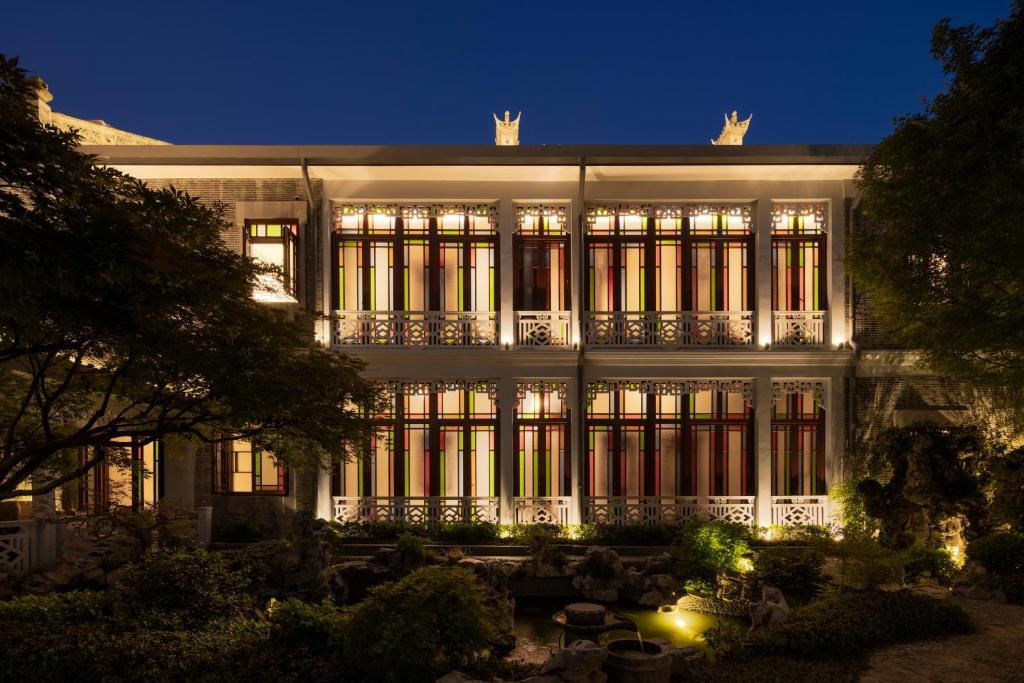
Pu Zhu occupies a Jiangnan-style villa next to Xiangji Temple in Gongshu, operating in Hangzhou's emerging plant-based dining tier. The format centers on seasonal Zhejiang produce and a garden setting that aligns the experience with the temple grounds nearby. It offers an alternative to the city's Michelin-tier conventional dining.

Pearl is the En Primeur Club membership app, where members save venues, book tables and use the concierge.
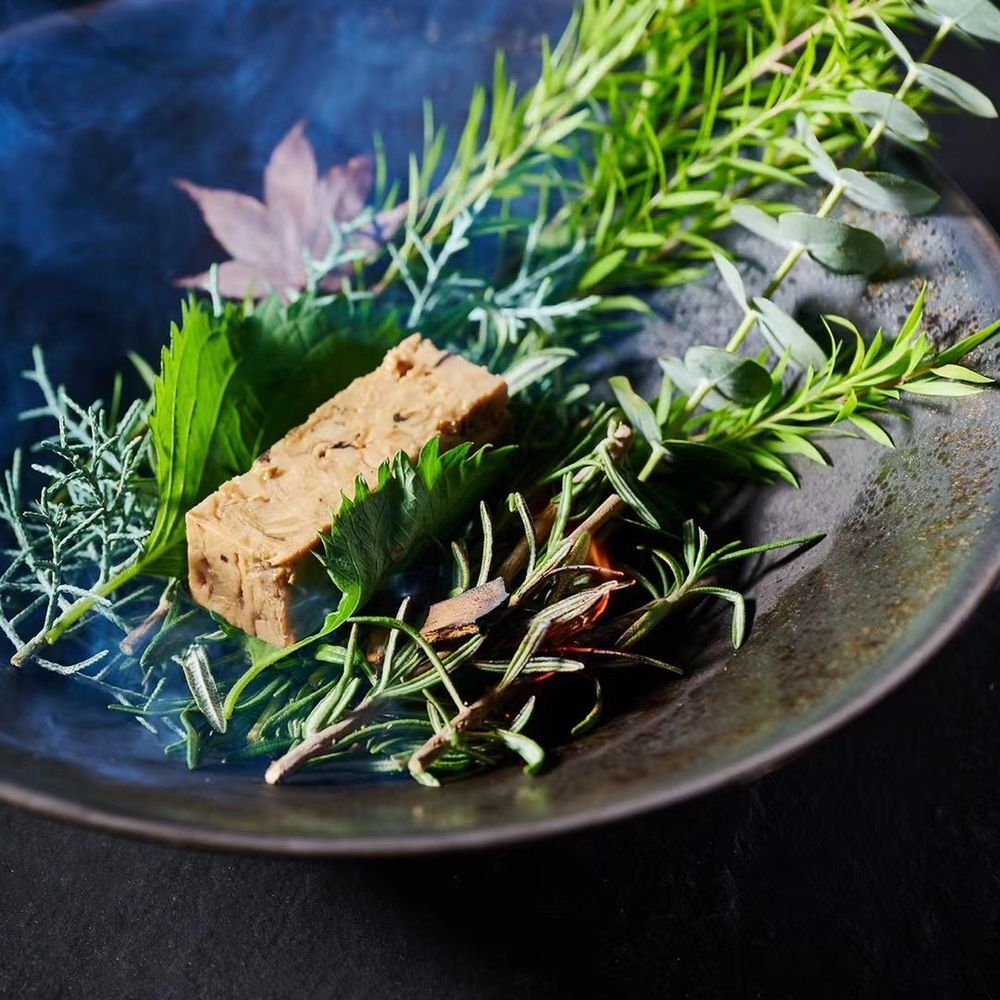
The menu
What to order
- Longjing tea-smoked tofu
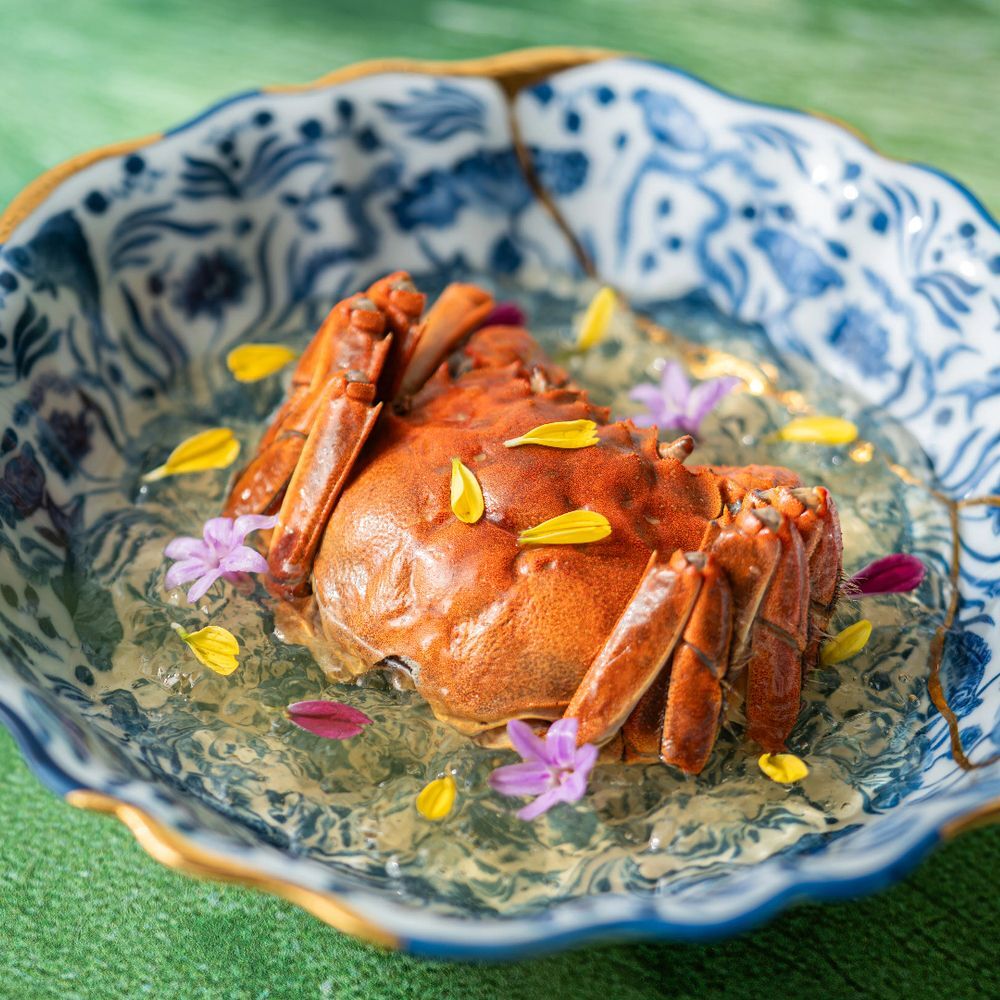
- Mandarin fish and lake crab stew
- Cheese-braised pumpkin
The approach to Pu Zhu runs alongside Xiangji Temple, where the villa's carved eaves and lattice windows mirror the architecture of Qing-era merchant houses common to the Gongshu district. The dining room opens onto a walled garden, and the interior retains wooden beams and stone floors that predate the restaurant's conversion. Hangzhou's plant-based dining scene has grown beyond Western-style vegan cafés in the past three years, and Pu Zhu sits in the narrower segment of venues that frame vegetable-forward menus through regional culinary grammar rather than imported formats.
Seasonal Zhejiang produce and Jiangnan technique
The kitchen draws from Zhejiang's agricultural calendar, spring bamboo shoots from Lin'an, winter radish from Shaoxing, lotus root from the West Lake basin, and applies Jiangnan techniques that prioritize texture and clarity over heavy seasoning. Braising, steaming, and quick stir-frying dominate the repertoire, methods shared with 28 Hubin Road and Amanfayun, though those venues anchor their menus in animal protein. Pu Zhu's sourcing model depends on direct relationships with small farms in the Zhejiang hill country, where traditional crop rotation and minimal pesticide use remain standard practice. Dishes often arrive with minimal garnish, the vegetable itself centered on white ceramic, a presentation strategy that aligns with Buddhist temple food aesthetics and signals restraint rather than elaboration.
Format is à la carte, with no tasting menu structure. Portions run smaller than typical Hangzhou restaurant servings, and the kitchen does not offer shared banquet-style platters. This positions Pu Zhu closer to the compact, course-driven model seen at Ambré Ciel, though without the French technique overlay. For travelers accustomed to the multi-course progression at 1913 or Bai Yun, the Pu Zhu experience reads as more spare, with fewer courses and a quieter flavor profile that may feel understated if you expect the wok-fried intensity common to Zhejiang kitchens.
The Gongshu setting and temple context
Gongshu district sits north of West Lake, historically a canal zone with less tourism density than Xihu or Shangcheng. The Xiangji Temple complex draws local Buddhist practitioners rather than international sightseers, and the surrounding streets retain a residential character. Pu Zhu benefits from this adjacency: the garden walls share a boundary with temple grounds, and the ambient sound carries temple bells during morning and evening services. The setting functions as part of the meal's framing, positioning the dining experience as an extension of temple quietude rather than urban dining theater.
The villa itself dates to the late Qing period, with renovations that preserve original structural elements while adding modern climate control and lighting. The dining room seats approximately twenty, with private rooms available for smaller groups. Natural light filters through paper screens during daylight hours, and the space transitions to candlelight after dusk. This design strategy aligns Pu Zhu with Hangzhou's heritage-villa dining category, a format also used by Amanfayun in a different district. For visitors prioritizing atmosphere over menu complexity, the villa and garden deliver a distinct sense of place that compensates for the narrower flavor range inherent in plant-based cooking.
Reaching Pu Zhu requires a taxi or ride-hail from central Hangzhou; public transit options involve a bus transfer from the metro network. The location at 122 Dadou Road is walkable from the temple entrance but sits outside the main tourist corridors. Plan for a 25-minute drive from West Lake during non-peak hours. No online booking platform is listed, and reservations likely require phone contact or in-person arrangement. This operational model is typical of independent Hangzhou venues operating below the Michelin tier, where digital infrastructure remains inconsistent.
For context within Hangzhou's broader dining landscape, consult our full Hangzhou restaurants guide, which maps the city's Michelin-starred tier, heritage villa category, and emerging plant-based segment. Accommodation options near Gongshu are covered in our full Hangzhou hotels guide. Pu Zhu does not compete directly with 1913 or 28 Hubin Road on technique or breadth, but it occupies a niche for travelers seeking a vegetable-forward menu in a heritage setting without Western vegan signaling.
The verdict: Pu Zhu delivers a coherent experience for diners who prioritize seasonal Zhejiang produce, temple-adjacent ambiance, and a plant-based format executed through regional technique. It works for those who understand the constraints of vegetable-only menus and do not expect the flavor depth or technical complexity of Hangzhou's Michelin-ranked kitchens. The villa and garden setting compensate for the narrower culinary range, and the temple context adds a layer of cultural resonance absent from most city-center dining. If your Hangzhou itinerary already includes 1913 or Bai Yun, Pu Zhu functions as a counterpoint rather than a substitute, a quieter, more restrained experience that trades spectacle for simplicity and benefits from the Gongshu district's lower tourist density.
Frequently asked questions
Does Pu Zhu work for a family meal?
The Jiangnan villa format at 122 Dadou Road accommodates groups without the formality of a tasting counter. Seasonal Zhejiang dishes, spring bamboo from Lin'an, winter radish from Shaoxing, translate well to shared plates, and the Gongshu location north of West Lake sees fewer tour groups than Xihu or Shangcheng.
What kind of setting is Pu Zhu?
The restaurant occupies a Jiangnan-style villa beside Xiangji Temple in Gongshu, a historically canal-linked district north of West Lake. The temple complex draws local worshippers rather than heavy tourist traffic, and the villa architecture follows traditional courtyard proportions typical of pre-modern Hangzhou merchant houses.
Is Pu Zhu Michelin-listed?
Pu Zhu has received recognition including: Adjacent to Xiangji Temple, this Jiangnan-style villa stands in....
Where is Pu Zhu in Hangzhou?
Pu Zhu is located at 122 Dadou Road, Gongshu, Hangzhou, Zhejiang, CHN, Hangzhou.
Comparison Snapshot
Comparable venues by cuisine and price in the same metro.
| Venue | Cuisine | Price | Awards |
|---|---|---|---|
| Pu Zhu | Modern Vegetarian Chinese | $200–300 | Michelin Plate |
| Hui Xin Xiao Chi Dian | Dim Sum | $1–10 | Michelin Bib Gourmand |
| Fu Xing Mian Wang (Gongshu) | Chinese Noodles | Not listed | Michelin Bib Gourmand |
| Puzhu - Plant - based | Plant-Based Chinese Fine Dining | $100–150 | Black Pearl 1 Diamond |
| Nature's Own | Plant-Based Vegetarian | $20–30 | Michelin Plate |
| Hotwoods | Latin American BBQ | Not listed | Michelin Plate |
Recognition history
Dated appearances from independent guides and award organizations, with the underlying list record or original source where available.
Michelin Plate
Michelin
Continue exploring
More in Hangzhou
Restaurants in Hangzhou
All restaurants in Hangzhou →
Bars in Hangzhou
All bars in Hangzhou →
Details
- Elegant
- Sophisticated
- Quiet
- Minimalist
- Business Dinner
- Celebration
- Special Occasion
- Group Dining
- Standalone
- Local Sourcing
- Set Menu
- A La Carte
- Tea
- Vegetarian Friendly
Refined and tranquil, with an emphasis on seasonal, artful presentation and a calm fine-dining atmosphere.