
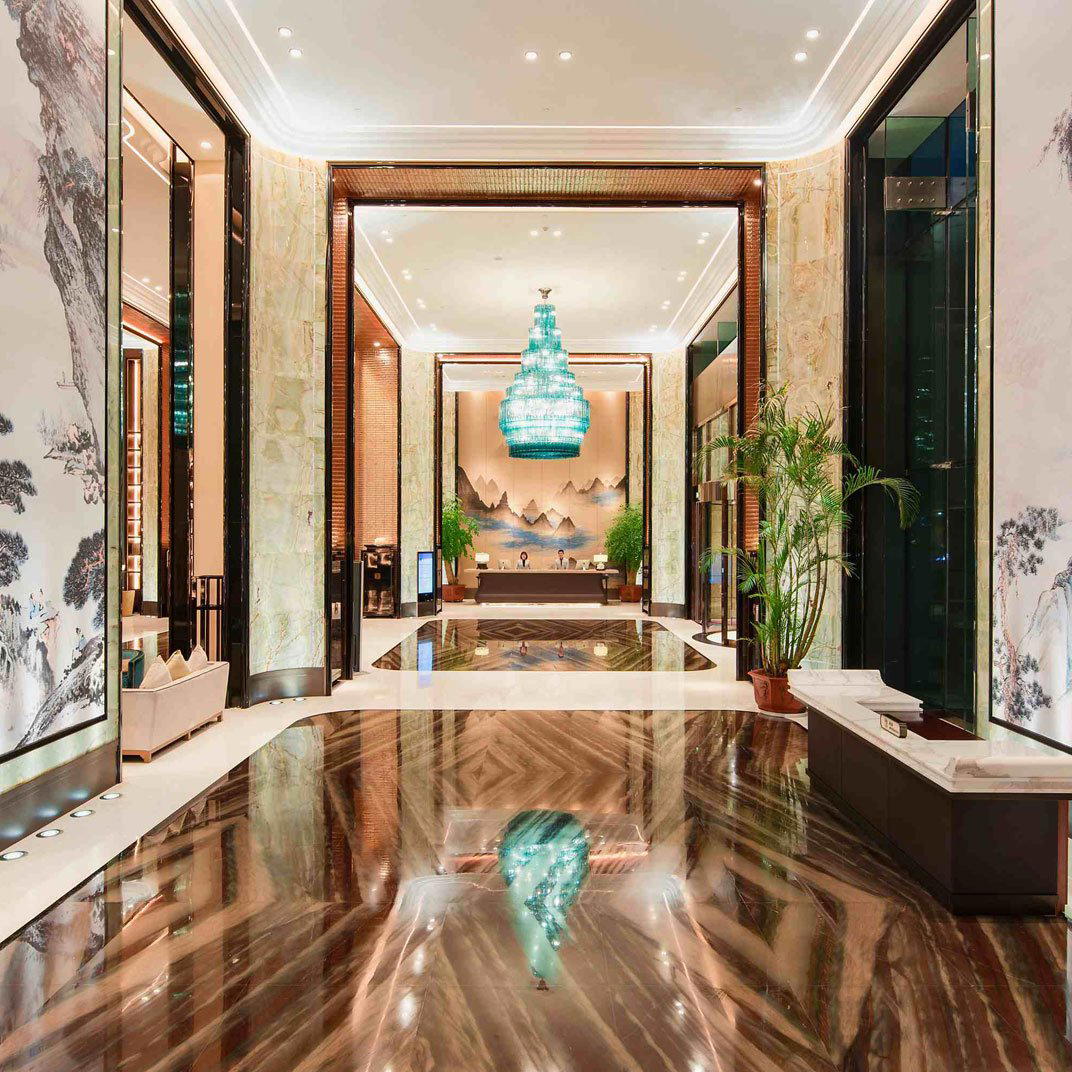
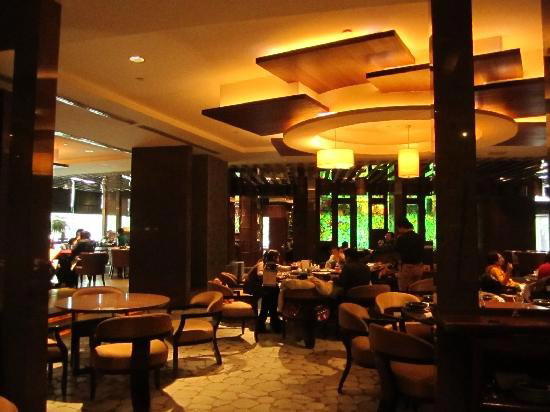
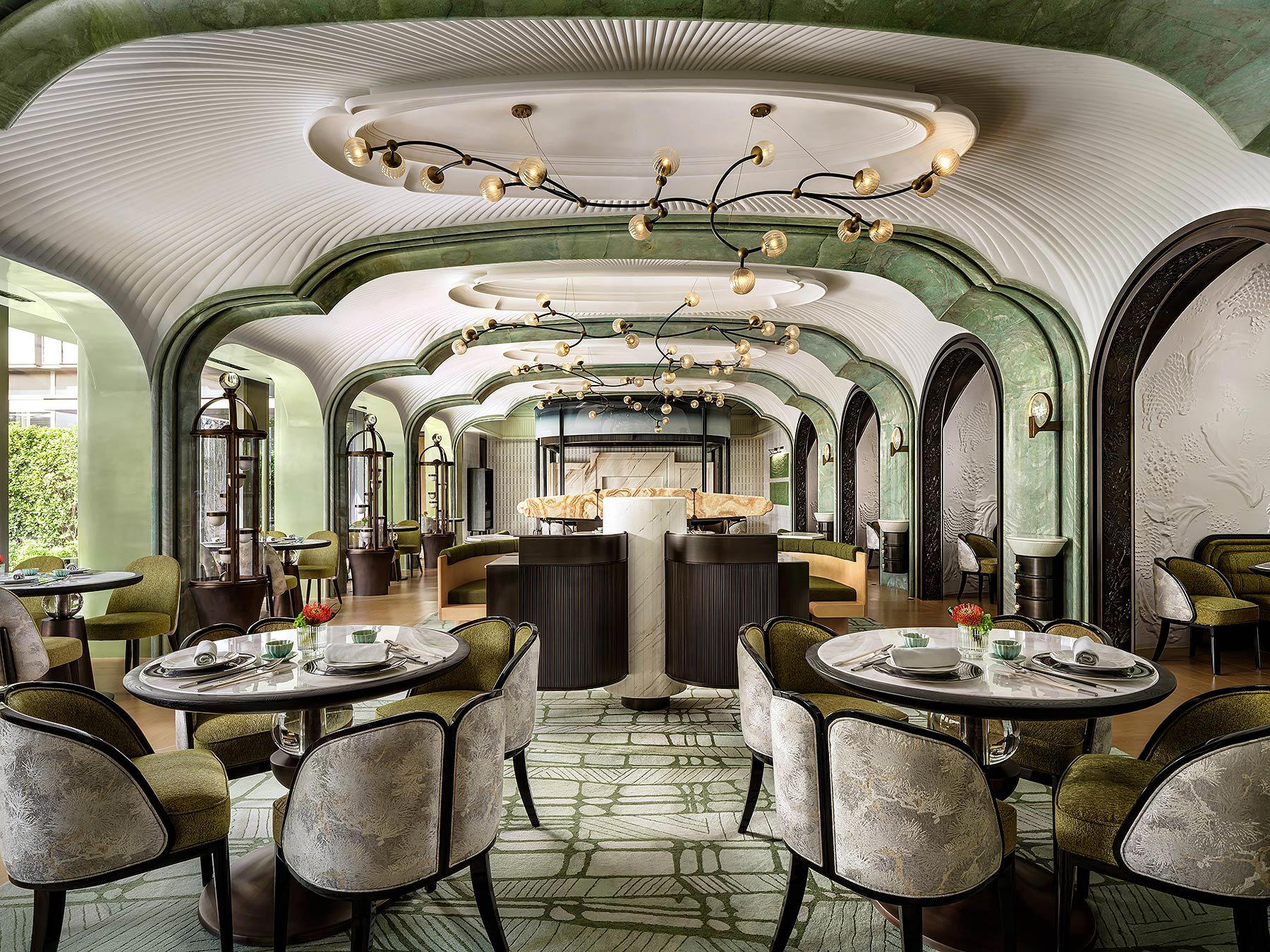
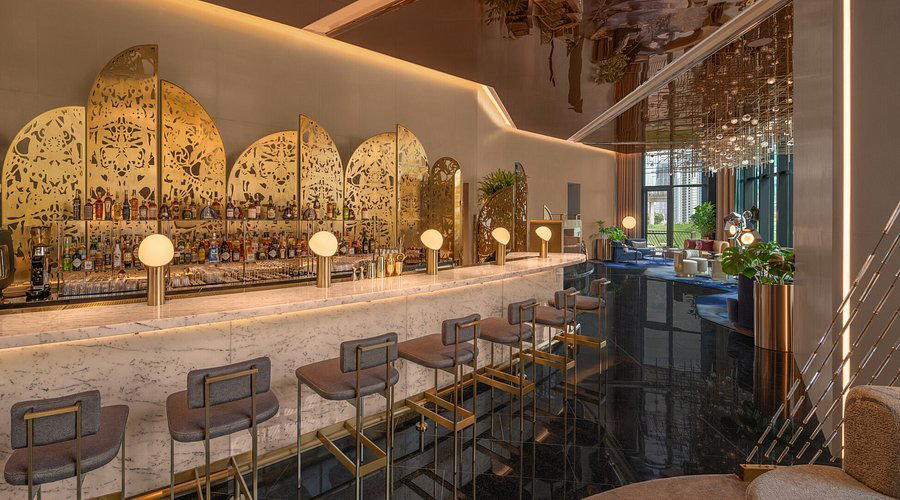
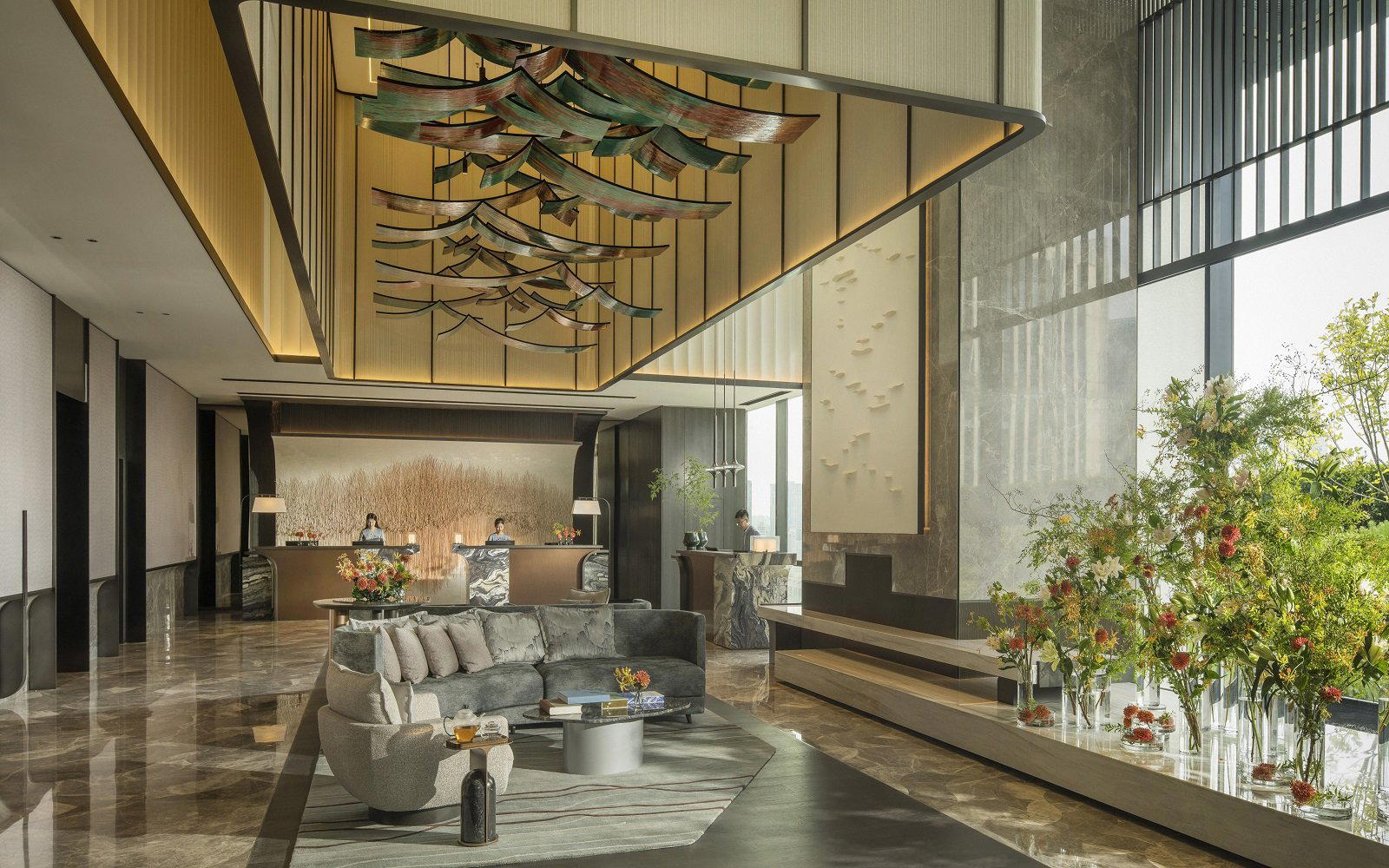
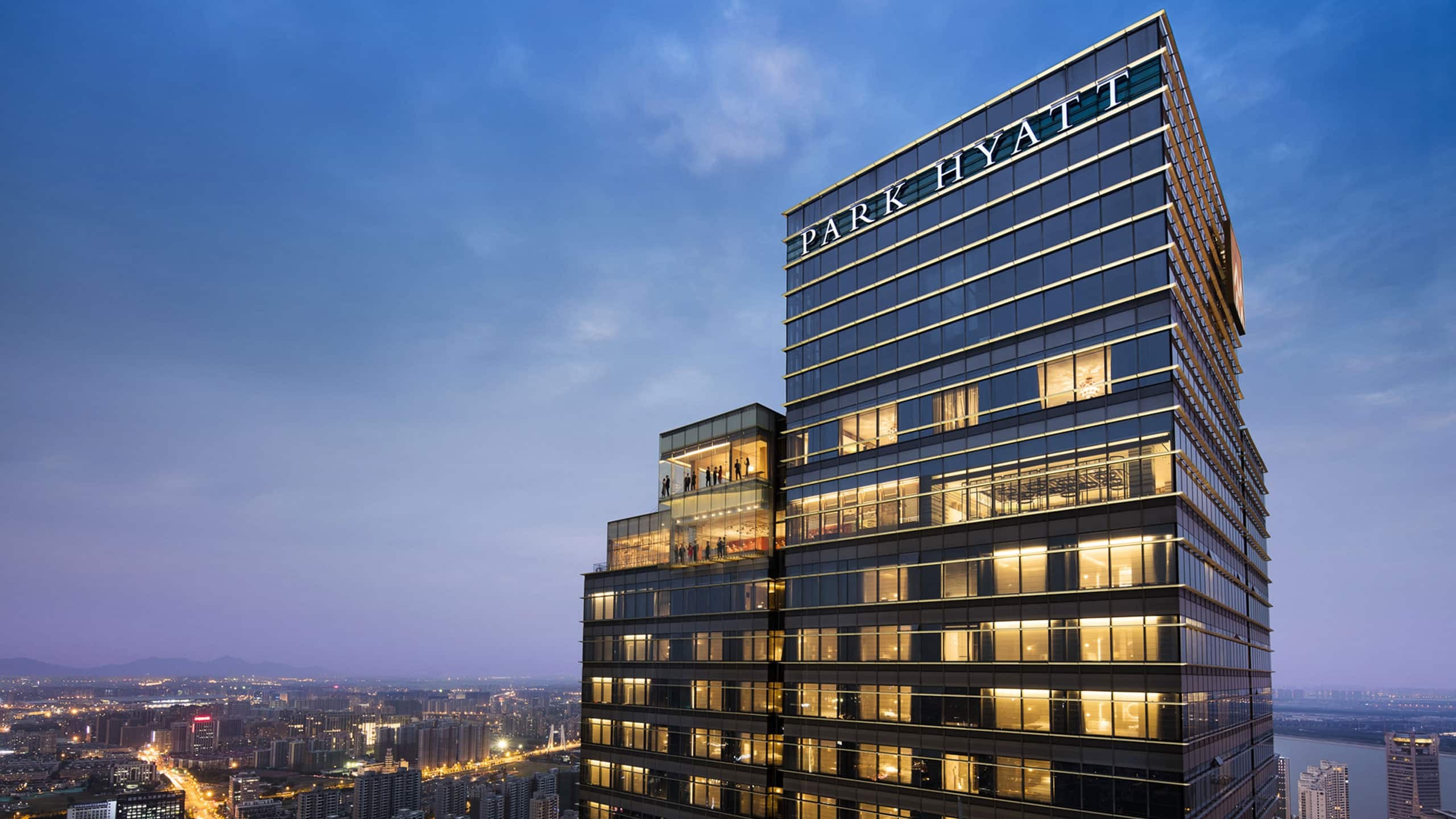
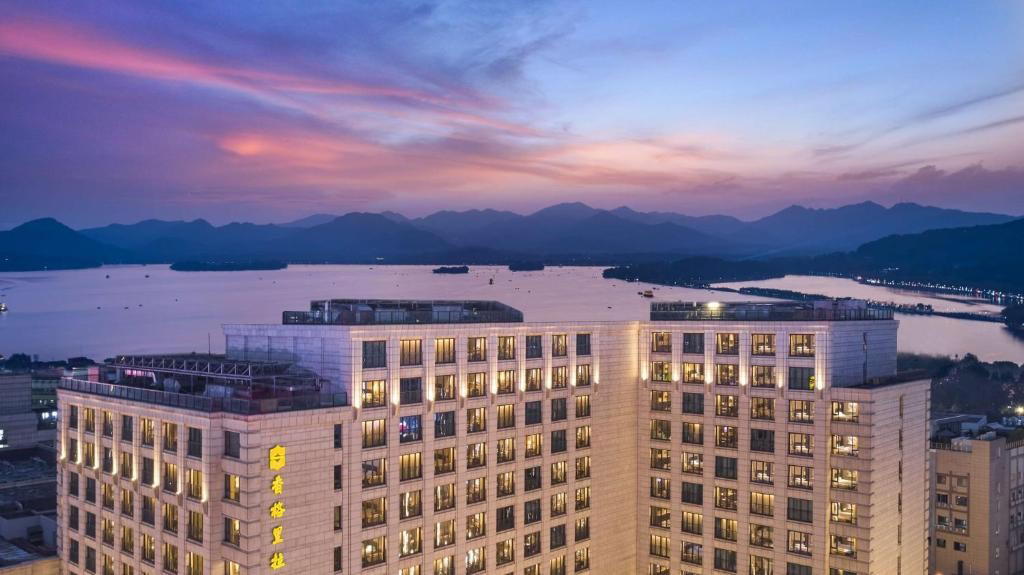
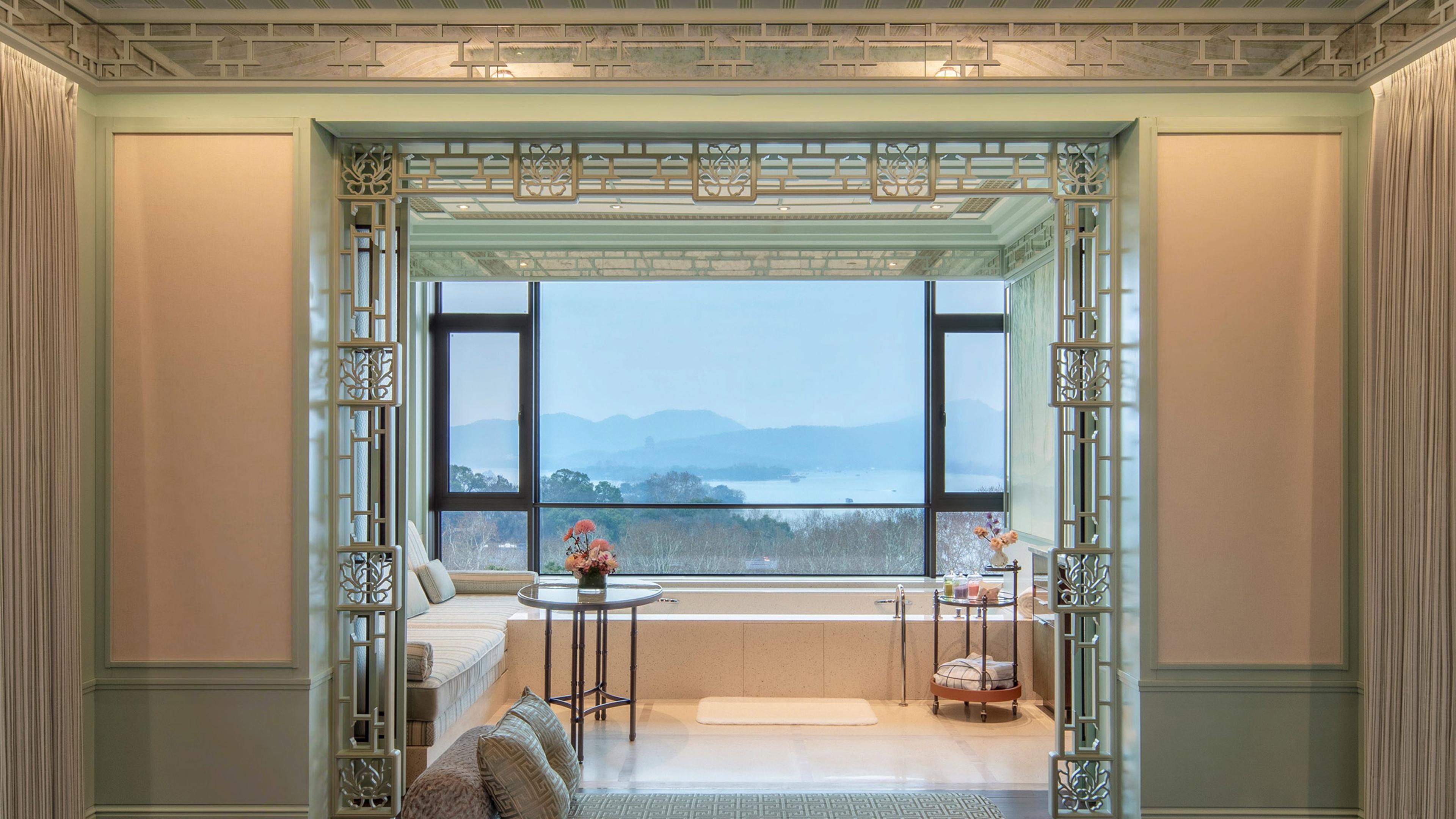
Song sits in Hangzhou’s luxury-hotel dining tier, where the room matters almost as much as the kitchen’s read on Zhejiang produce. Jade-coloured archways and silk-clad surfaces point to a polished, localised experience rather than a casual neighbourhood meal, with the Four Seasons Hotel at Hangzhou Center placing it firmly in the city’s central hospitality circuit.
Pearl is the En Primeur Club membership app — saves, bookings, and concierge access live there. Same editors, same standards.
- Address
- 8F, Four Seasons Hotel at Hangzhou Center, 493 Zhongshan North Road, Gongshu, Hangzhou, Zhejiang, CHN
- Phone
- +86 571 6095 2959
- Website
- guide.michelin.com
- Directions
- Get directions
 Saves & bookings on Pearl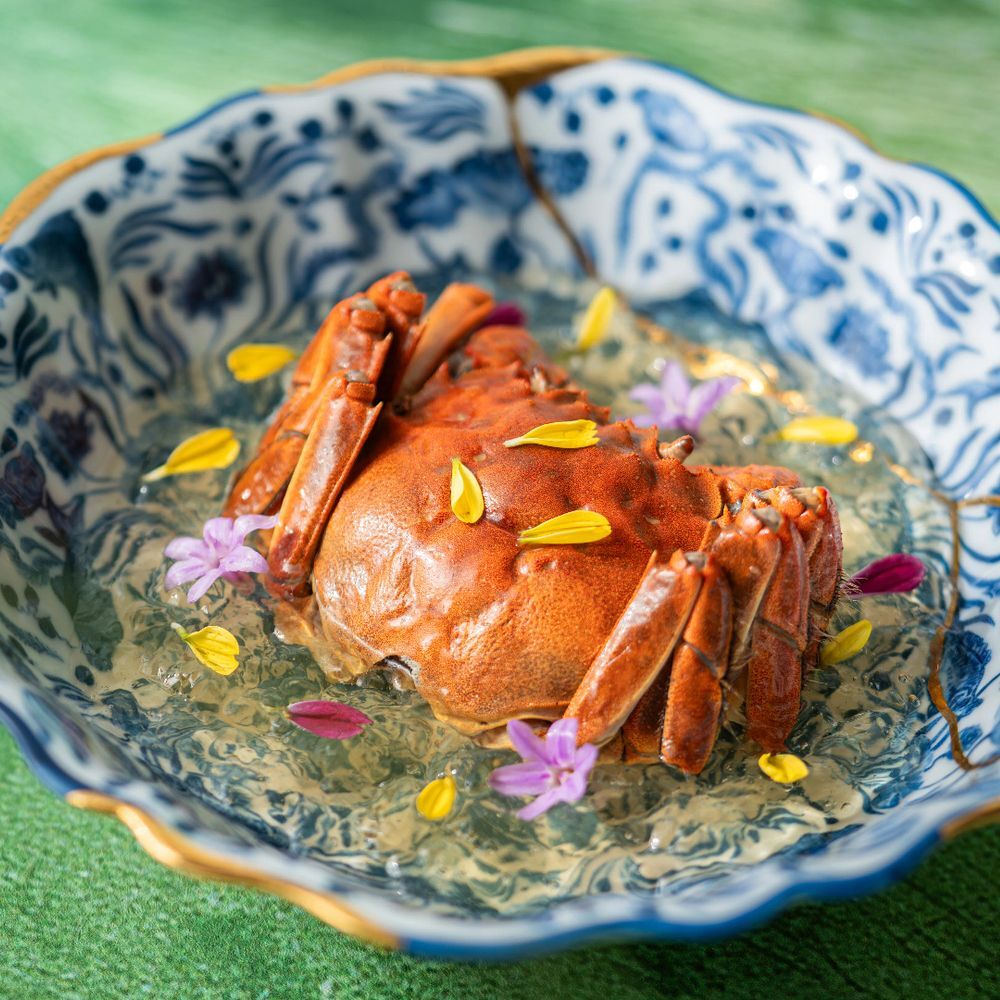
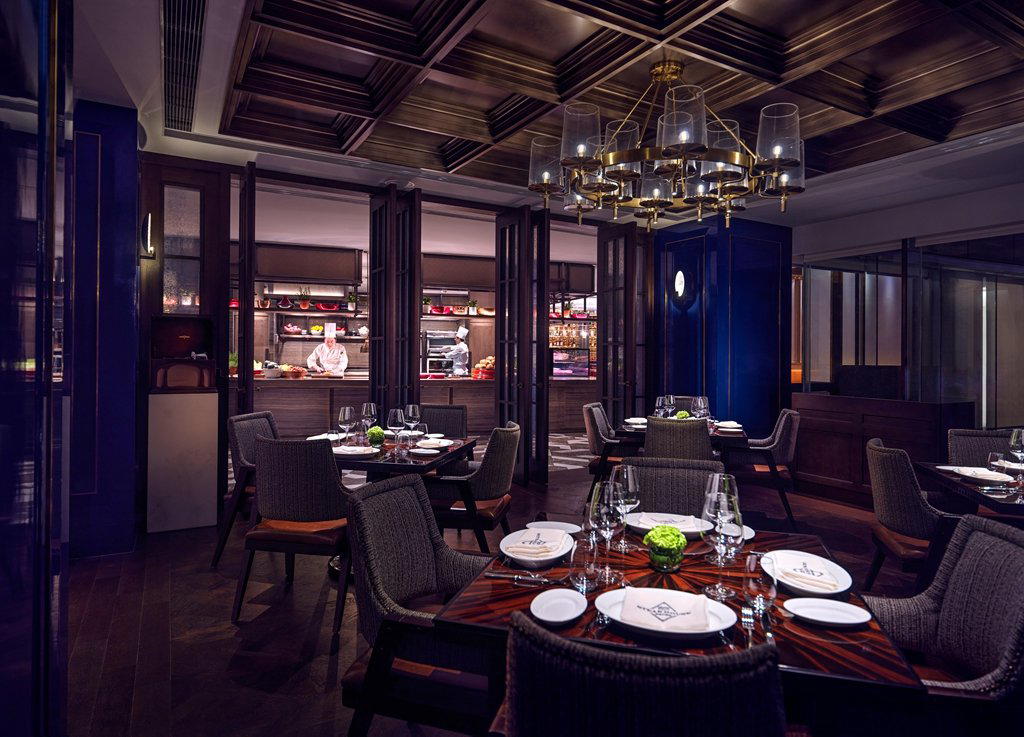
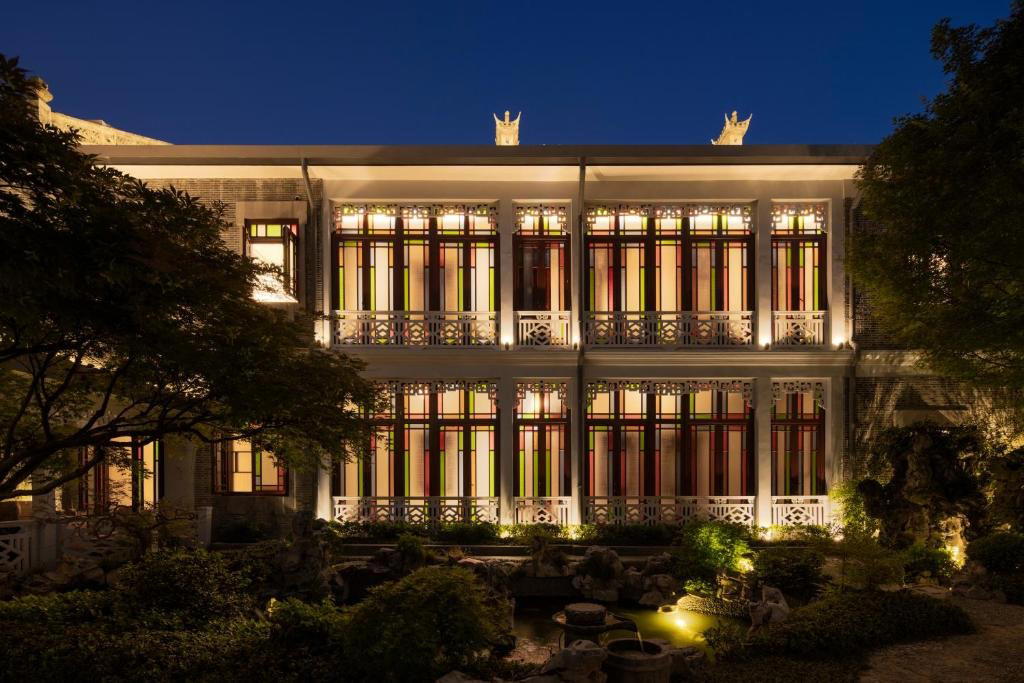
Jade-coloured archways and silk-clad surfaces set the tone before the meal has to explain itself. In Hangzhou, that visual language carries weight: this is a city where West Lake scenery, silk history, tea culture and river-fed produce have long shaped the way restaurants talk about place. Song works inside that frame rather than against it, using the controlled theatre of a luxury-hotel dining room to signal a more formal reading of Hangzhou and Zhejiang cooking.
The relevant comparison is not a street-side noodle shop or a casual family restaurant. Hangzhou’s dining scene divides sharply between heritage addresses, hotel dining rooms, and newer rooms that translate local ingredients for guests moving through the city’s commercial core. Song belongs to the latter camp: polished, central, and built for diners who want regional reference points without giving up the comfort and choreography of a high-end hotel setting.
Hangzhou produce, read through a hotel dining room
Ingredient sourcing is the useful lens here because Hangzhou cuisine has always depended on proximity. Freshwater fish, river shrimp, seasonal greens, bamboo shoots, lotus root, Longjing tea and Shaoxing-adjacent seasonings form the grammar of the region. A restaurant in this category is judged less by novelty than by how clearly it understands that grammar: sweetness should stay measured, texture should carry as much meaning as sauce, and the plate should not flatten Zhejiang food into generic hotel Chinese cooking.
That context matters when placing Song beside other Hangzhou addresses. 28 Hubin Road (Zhejiang) is often read through the lens of lakeside hotel dining and regional canon; Amanfayun (Chinese) sits closer to the retreat-like end of the city’s hospitality spectrum; 1913 (Hang Zhou) and Ambré Ciel (Innovative) point to different versions of local ambition. Song’s position is more urban and contained, with the Four Seasons Hotel at Hangzhou Center giving it a corporate-luxury context rather than a resort or heritage-house mood.
Within Hangzhou, the stronger dining rooms tend to reveal how flexible Zhejiang food can be. A modest counter might make its argument through noodles, cured fish or a single seasonal vegetable; a hotel restaurant has to make the same argument with service pacing, room design and sourcing discipline. That is where Song’s promise lies. The room’s silk-and-jade vocabulary can feel decorative, but in Hangzhou those materials are not empty signals. They point back to the city’s old trades and to a dining culture that values finish, restraint and seasonal timing.
Why the comparison set matters in Hangzhou
The city’s regional restaurants do not compete on one axis. Ming Kitchen and Hangzhou House, for instance, sit in the Zhejiang conversation at different price tiers, while Kui Yuan Guan on Jiefang Road represents the durable everyday end of the spectrum. Datou Yingshi Xiaoguan carries a more local Hang Zhou identity. Song should be read against that spread: not as the place to measure rusticity, but as a controlled interpretation of local material for diners who want the city translated through a composed dining room.
This is also why the chef biography matters less than the supply chain and the edit. In Zhejiang cooking, the kitchen’s authority often comes from what it chooses not to overwork. Tea, river fish, freshwater crustaceans, spring shoots and leafy vegetables lose their point when pushed into heavy luxury cues. A serious Hangzhou hotel restaurant has to resist that pressure. The better move is calibration: clean seasoning, seasonal sourcing, and enough regional specificity that the meal could not be mistaken for a generic Cantonese or pan-Chinese hotel menu.
For travellers building a wider dining map, Song makes sense as one polished anchor rather than the whole story. Broader context sits in Our full Hangzhou restaurants guide, while the city’s hospitality patterns are easier to read alongside Our full Hangzhou hotels guide, Our full Hangzhou bars guide, Our full Hangzhou wineries guide, and Our full Hangzhou experiences guide. Cross-city comparisons also help: 100 Century Avenue Cantonese in Shanghai shows how hotel Cantonese can operate in a financial-district setting, while 1949 - Duck de Chine in Beijing belongs to a different northern capital tradition entirely.
A central address for a formal read on the city
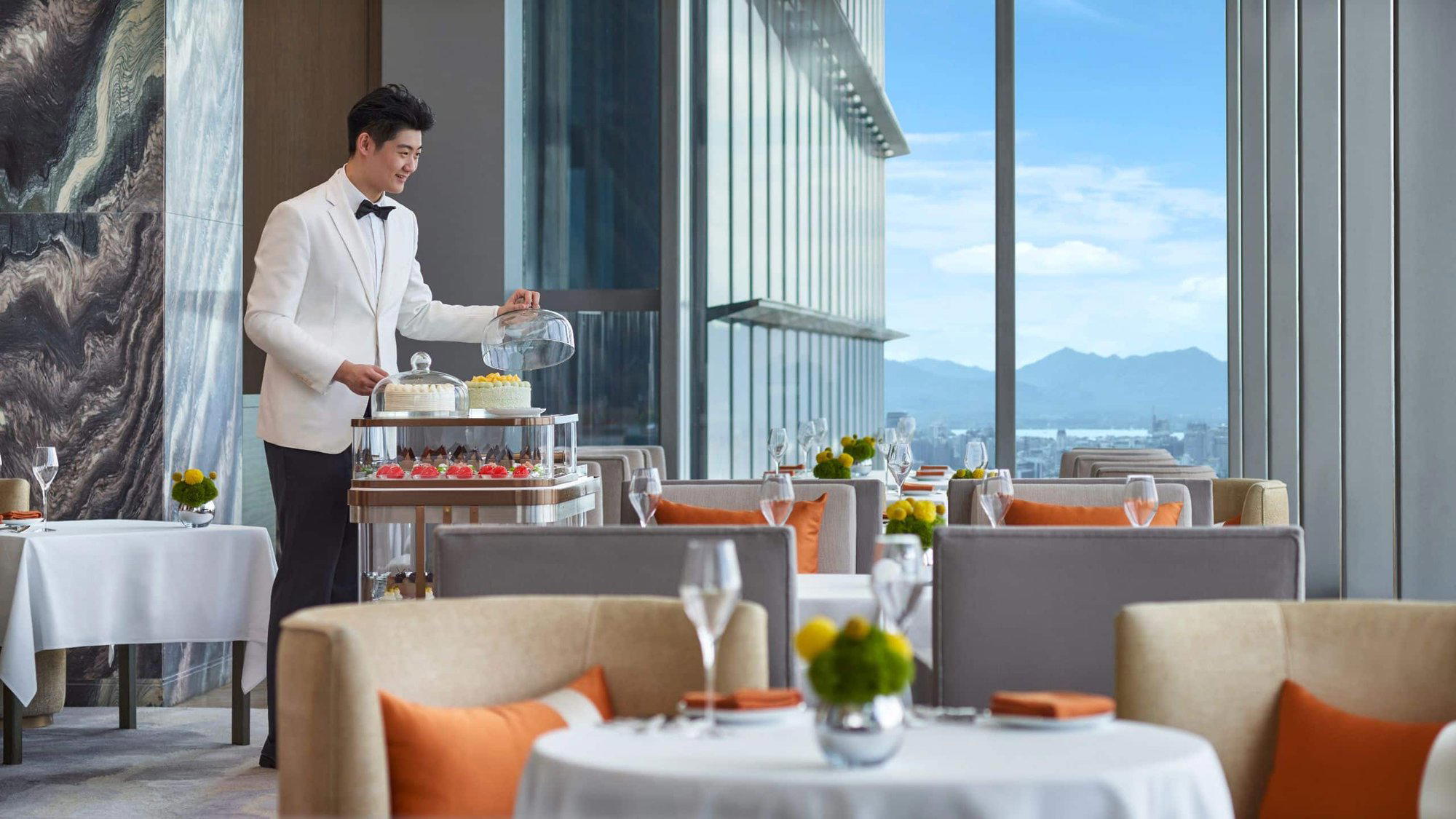
Song’s practical advantage is its placement in Hangzhou’s central hotel infrastructure. For visitors moving between business districts, West Lake itineraries and rail-linked arrivals, a dining room inside a major hotel removes a layer of friction. That convenience should not be confused with anonymity. In a city where strong eating can be hyper-local and low-profile, the formal hotel restaurant plays a different role: it concentrates regional signals into a room designed for international and domestic travellers who may have limited meals in town.
The editorial case is strongest for diners who want Hangzhou and Zhejiang references in a composed setting. Those looking for everyday price cues should compare the experience with lower-key local restaurants before committing their main regional meal to a hotel dining room. Those prioritising comfort, centrality and a visually deliberate room will understand the appeal quickly. Song is not the entire Hangzhou dining argument; it is one polished version of it, shaped by silk, jade tones and the city’s long habit of treating ingredients as carriers of place.
For a wider China itinerary, the contrast becomes sharper outside Hangzhou. #8 in Chengdu sits in a Sichuan context where heat, oil and fermentation change the centre of gravity; 167 Shan Hai Li in Fuzhou points toward a coastal Fujian register; 1927 Dong Yuan Si Chu in Xiamen and 1980烧肉粽 in 厦门市 extend that southeastern comparison. Even far outside China, addresses such as Jōdo Saké Bar in Los Angeles and Onigiri Time in Pasadena underline the same point: regional identity becomes legible when format, sourcing and restraint are allowed to do the work.
In Context: Similar Options
Comparable venues by cuisine and price in the same metro.
| Venue | Cuisine | Price | Awards |
|---|---|---|---|
| Song | Jade-coloured archways, silk-clad... | This venue | Not listed |
| Ming Kitchen | Zhejiang | ¥¥ | Zhejiang, ¥¥ |
| Kui Yuan Guan (Jiefang Road) | Zhejiang | ¥ | Zhejiang, ¥ |
| Hangzhou House | Zhejiang | ¥¥¥ | Zhejiang, ¥¥¥ |
| Datou Yingshi Xiaoguan | Hang Zhou | ¥¥ | Hang Zhou, ¥¥ |
Recognition history
Dated appearances from independent guides and award organizations, with the underlying list record or original source where available.
Michelin 1 Star
Michelin
At a Glance
- Elegant
- Sophisticated
- Quiet
- Modern
- Classic
- Date Night
- Business Dinner
- Celebration
- Special Occasion
- Design Destination
- Hotel Restaurant
- Standalone
- Local Sourcing
Elegant and refined, with classical garden-inspired design, soft lighting, and a polished fine-dining feel.