Porte des Indes
A Marble Arch institution for subcontinental cooking, Porte des Indes occupies a converted Victorian ballroom on Bryanston Street and has served French-inflected Indian cuisine to London diners for decades. The dining room's scale and colonial-era visual register set it apart from the city's smaller, counter-format Indian restaurants. It belongs to a tier of Indian dining defined by ceremony and architectural drama rather than minimalism.
- Address
- 32 Bryanston Street, London, W1H 7EG, United Kingdom
- Phone
- 020 7224 0055
- Website
- laportedesindes.com
- Directions
- Get directions
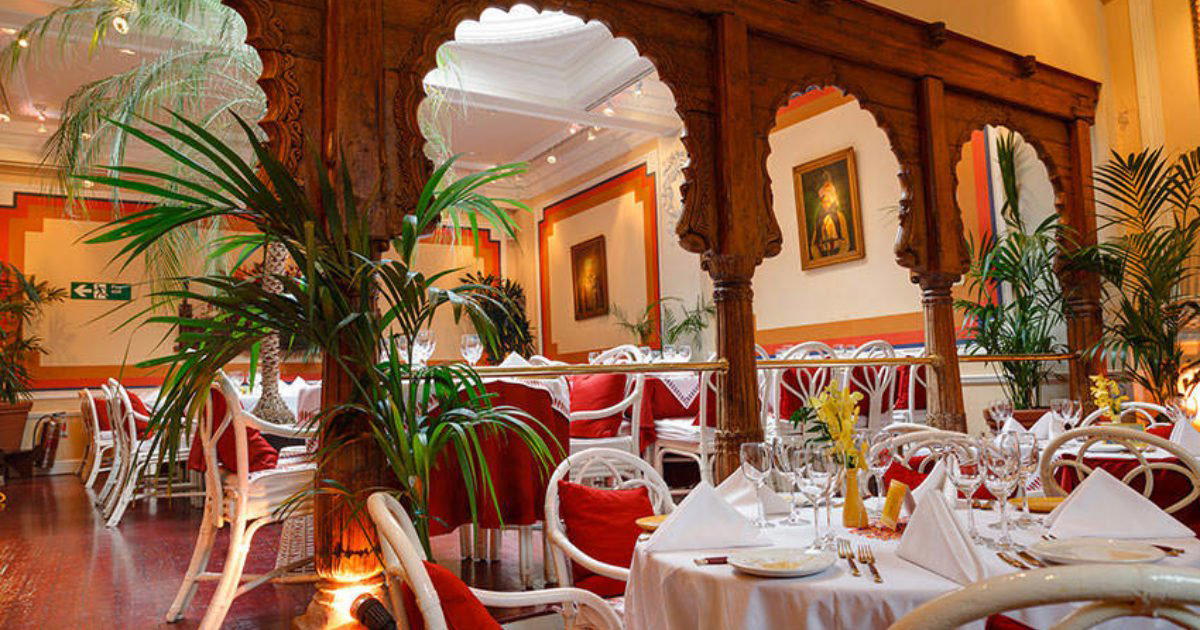
Scale as Statement: Indian Dining in a Victorian Ballroom
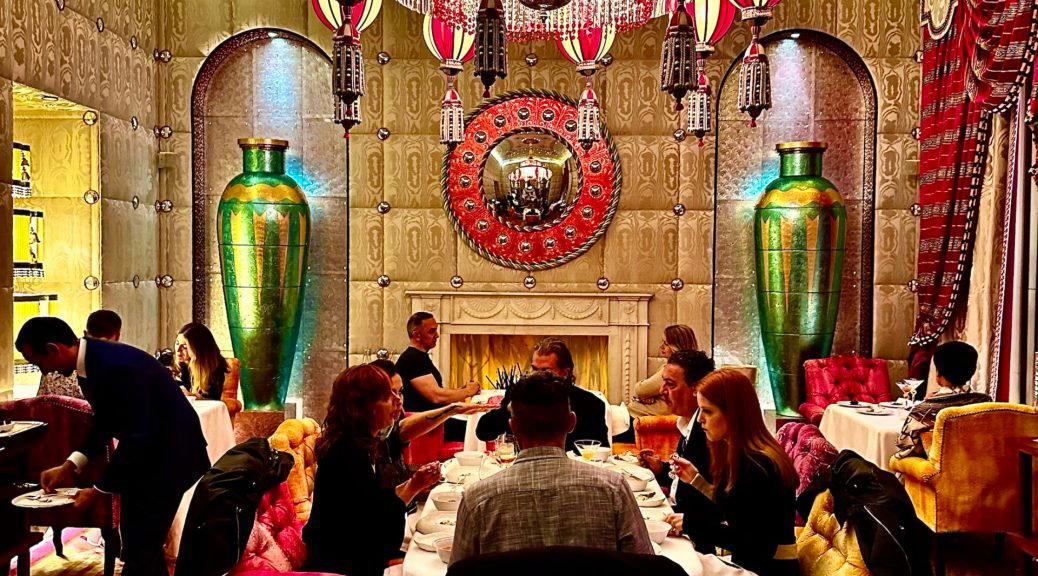
London's Indian restaurant scene has fractured sharply over the past decade. At one end, a wave of regional specialists, Keralan, Assamese, Goan, have brought tighter, more focused menus to smaller rooms. At the other, a handful of large-format rooms still operate on the older conviction that subcontinental cuisine deserves theatrical space, formal service, and an architectural setting that matches the ambition of the cooking. Porte des Indes, at 32 Bryanston Street near Marble Arch, belongs firmly to that second camp. The building is a converted Victorian ballroom, and the dining room reads like it: high ceilings, tall interior plantings, a visual language drawn from colonial-era India that places you somewhere between a Calcutta club and a Mayfair hotel. Porte des Indes is a French-Creole Indian Fusion restaurant at 32 Bryanston Street, London W1H 7EG, with a smart-casual dress code and reservations recommended. This is a room designed to be heard as much as seen, the ambient noise level of a full service carries the particular warmth of a space built before acoustic panels became a restaurant design priority.
French India on the Plate
The cuisine at Porte des Indes tracks a specific and historically grounded strand of Indian cooking: the French colonial territories, principally Pondicherry, where French technique and subcontinental spice tradition merged over two centuries of cohabitation. This is not a common reference point in London's Indian dining scene, where Mughal-derived North Indian and Punjabi cooking still dominate the mid-to-upper tier. The Pondicherry influence means dishes built around tamarind, coconut, and mustard seed alongside preparations that carry the structural logic of French mother-sauce cookery, a combination that reads as both familiar and distinctly its own. For diners who have spent time in London's more conventional Indian fine-dining rooms, the flavour register here shifts the frame of reference, drawing as much from the Bay of Bengal coast as from the tandoor-centric North. Comparison venues in the city's upper bracket, The Ledbury, Sketch, The Lecture Room and Library, CORE by Clare Smyth, operate in European fine-dining registers; the restaurant holds a different position, one of the few large-format rooms in London where the cooking itself references a colonial culinary hybrid rather than a single national tradition.
The Sensory Architecture of the Room
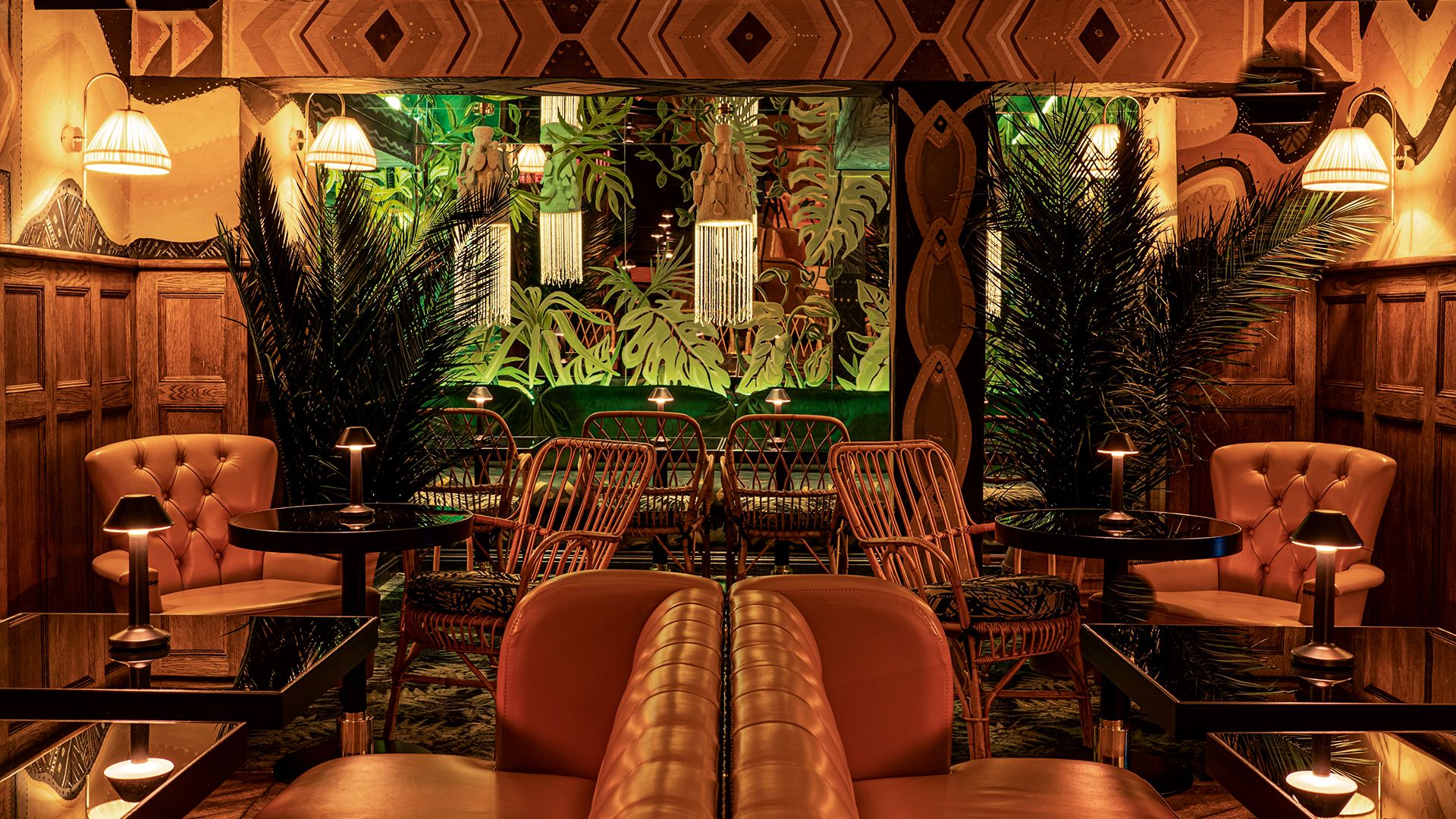
To eat at the restaurant is to engage with an experience whose sensory impact begins before the menu arrives. The entrance off Bryanston Street gives little indication of scale; the interior opens dramatically, with the ballroom's original proportions working as a kind of reveal. The height of the ceiling, the density of tropical plantings, and the warm amber lighting combine to create an atmosphere closer to a conservatory or a period-drama set than to the pared-back rooms that now define London's most-discussed restaurants. The smell of the room, spiced oil, warm bread, the faint sweetness of coconut-based curries arriving from the kitchen, registers before the food does. Sound behaves differently here than in smaller dining rooms; conversation carries and blends rather than being absorbed, and a busy evening generates a hum that adds to the sense of occasion rather than detracting from it. This is the kind of room that rewards being noticed rather than hidden, which places it in a different competitive register than the intimate counter-formats that have defined recent London openings.
Where It Sits in London's Wider Dining Conversation
London's upper tier of destination dining is heavily weighted toward Modern British and French-adjacent cooking. Restaurant Gordon Ramsay, Dinner by Heston Blumenthal, and the other high-recognition rooms in the city compete primarily on technique, sourcing, and tasting-menu format. The restaurant does not compete in that frame. Its comparison set is a smaller group of restaurants where the dining room itself carries as much of the experience as the kitchen, and where a cuisine tradition outside the European mainstream is presented at a scale and with a degree of ceremony more commonly associated with European fine dining. For comparison outside London, the challenge of presenting non-European cuisines in a formal register is something restaurants like Le Bernardin in New York City and Atomix in New York City have addressed in their own ways, Atomix specifically through a Korean fine-dining format that reconfigured the tasting-menu structure entirely. The restaurant takes a different route, using European architectural grandeur as the container for a cuisine that predates that framing by several centuries.
The Fat Duck in Bray, L'Enclume in Cartmel, Moor Hall in Aughton, Gidleigh Park in Chagford, Hand and Flowers in Marlow, and Le Manoir aux Quat' Saisons, a Belmond Hotel in Great Milton, though each operates in a fundamentally different culinary tradition.
Planning a Visit
The restaurant is located at 32 Bryanston Street, London W1H 7EG, a short walk from Marble Arch station. Reservations: Advance booking is advisable for dinner, particularly for larger groups, given the venue's reputation and room size. Contact the restaurant directly or via their official website for current availability. Dress: The room's formality and visual scale suggest smart-casual at minimum; the atmosphere rewards dressing for the occasion. Budget: Expect about $95 per person. Timing: A weekday dinner booking gives the leading read of the room at full atmosphere without weekend peak demand.
- Demoiselles de Pondichèry
- Magret de Canard Pulivar
- Poulet Rouge
- Patra ni Machi
- Lobster Peri Peri
- Roast Black Cod
A Pricing-First Comparison
Comparable venues nearby, for context on price, style, and recognition.
| Venue | Cuisine | Price | Notes |
|---|---|---|---|
| Porte des IndesThis venue — the venue you are viewing | Marble Arch, French-Creole Indian Fusion | $$$ | Not listed |
| Chourangi | Marble Arch, Calcutta Indian Cuisine | $$$ | Not listed |
| Salloos | Not listed | $$$ | Belgravia, Authentic Pakistani & North Indian |
| Gaylord | Cubitt Town, Traditional Mughlai Indian | $$$ | Not listed |
| The Kokum London | Peckham, Modern Indian | $$$ | Not listed |
| Mint Leaf | Charing Cross, Modern Indian Fine Dining | $$$ | Not listed |
Continue exploring
More in London
Restaurants in London
Browse all →
Bars in London
Browse all →
Hotels in London
Browse all →



At a Glance
- Elegant
- Romantic
- Ornate
- Sophisticated
- Date Night
- Business Dinner
- Group Dining
- Celebration
- Special Occasion
- Private Dining
- Standalone
- Historic Building
- Design Destination
- Craft Cocktails
- Local Sourcing
Ornate colonial Indian design with rich décor, greenery, and wood elements creating an exotic, warm atmosphere reminiscent of the British Raj era.