Salloos
On a quiet Belgravia mews that sees more Bentleys than tourists, Salloos has anchored Pakistani fine dining in London for decades, long before the city's broader appetite for South Asian cuisine caught up with it. The cooking draws on the subcontinental tradition of slow-cooked, wood-fired meat, served in a room that reads old money rather than high street. Few addresses in SW1 carry the same combination of neighbourhood loyalty and culinary specificity.
Pearl is the En Primeur Club membership app — saves, bookings, and concierge access live there. Same editors, same standards.
- Address
- 62-64 Kinnerton St, London SW1X 8ER, United Kingdom
- Phone
- +44 20 7235 4444
- Website
- salloos.co.uk
- Directions
- Get directions
 Saves & bookings on Pearl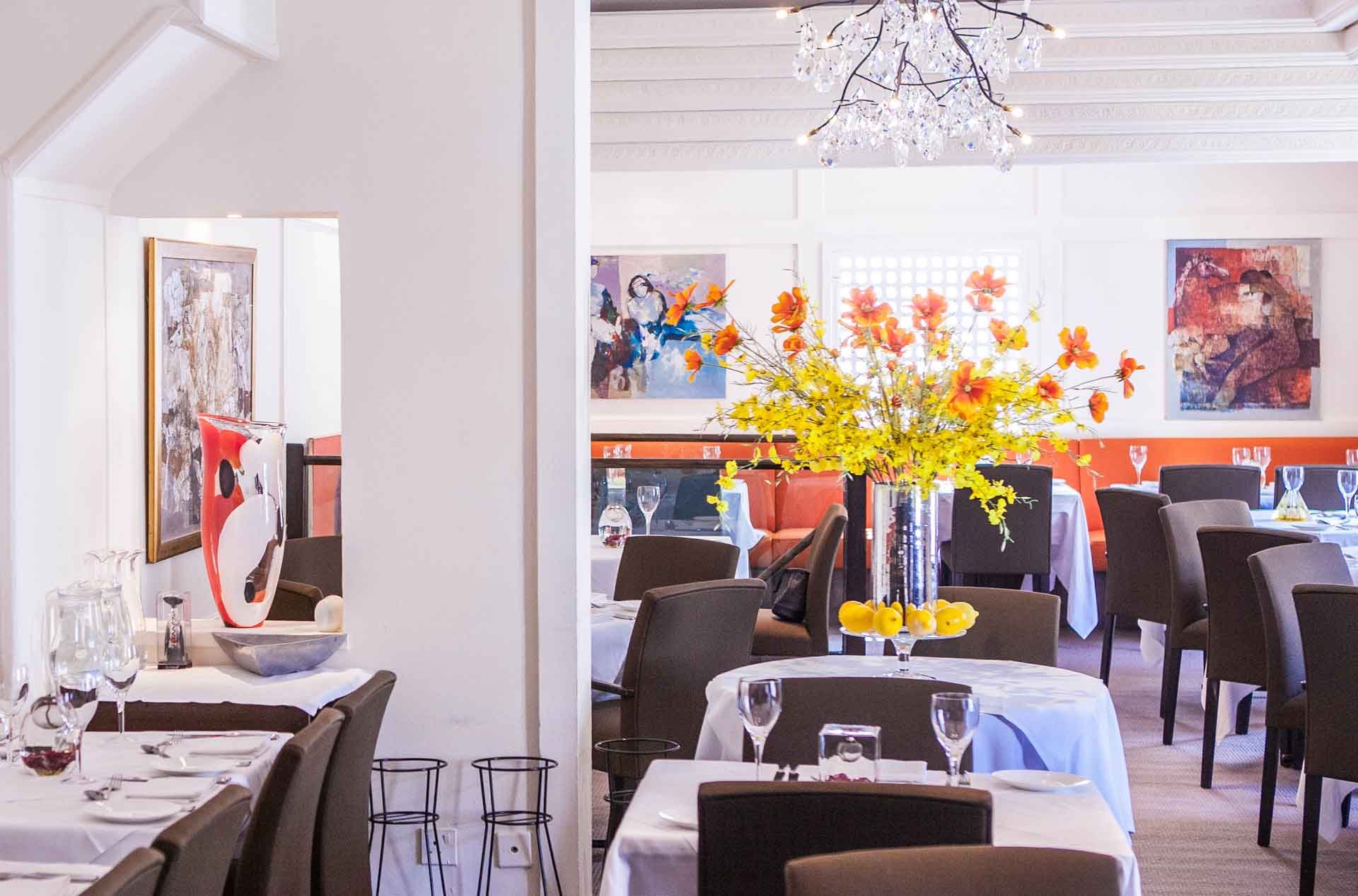
A Mews Address That Has Outlasted Trends
Kinnerton Street occupies a particular kind of London real estate: the cobbled, slightly secretive mews that runs between Knightsbridge and Belgravia proper, more residential in feeling than commercial, the sort of address where regulars arrive by habit rather than by app. Pakistani fine dining does not cluster here. Salloos is a London restaurant serving authentic Pakistani and North Indian cooking at about $95 per person.
The broader context matters. London's South Asian dining scene has spent the last decade recalibrating, with a new generation of chefs applying fine-dining technique to regional Indian and Pakistani traditions. That shift has brought critical attention to a cuisine category that was previously consigned, unfairly, to the mid-market. Salloos predates that recalibration by a wide margin, which puts it in an unusual position: it is not a product of the trend, but it now exists in a city where the conversation around its cuisine has finally caught up.
The Room and What It Signals
In London's premium dining tier, the visual language of a room usually signals something about ambition and price positioning. The maximalist approach of somewhere like Sketch, The Lecture Room and Library announces itself loudly; the pared-back modernism of CORE by Clare Smyth does the same in the opposite direction. Salloos occupies neither register. The interior reads as a room that has not needed to reinvent itself, and that confidence, whether intentional or simply the by-product of longevity, communicates something to the diner before a single dish arrives.
That kind of atmospheric stability is worth paying attention to. A room that feels settled and consistent carries its own editorial statement. It implies a clientele that returns because the cooking delivers, not because the design is new. For a Belgravia address, where the surrounding neighbourhood is itself resistant to rapid change, the fit is coherent.
The Sensory Register of Pakistani Cooking at This Level
Pakistani cuisine, at its technical core, is built on heat management and time: charcoal tandoors, slow-braised meat dishes, spice blending that layers rather than overwhelms. The aromatic profile is distinct from north Indian cooking, leaning on cumin, coriander, and black pepper rather than the richer, cream-led sauces that became the shorthand for South Asian dining in Britain through the latter half of the twentieth century. The smell of a tandoor in operation, the char on a seekh kebab, the way a karahi reduces around the edges of a steel pan, these are sensory signatures that belong to a specific culinary tradition, and they travel badly when diluted for a mass market.
The question any serious Pakistani restaurant in London faces is how much of that sensory specificity survives the translation to a premium dining room. At the rougher, more authentic end of the city's Pakistani restaurant scene, the atmosphere is often inseparable from the cooking, the noise, the informality, the shared tables. At Salloos, the register is quieter and the room more formal, which creates a different kind of experience: one where the cooking has to carry the full sensory weight without the ambient theatre of a busy high-street canteen.
For comparison, consider the contrast with how Modern British kitchens at the ££££ tier, such as Dinner by Heston Blumenthal or The Ledbury, approach the relationship between atmosphere and cooking. There, the room is designed to focus attention on the plate. At Salloos, the dynamic is different: the cuisine carries its own aromatic presence into the room, which means the atmosphere is partly created by the food itself rather than by design decisions alone.
Positioning Within London's Premium Restaurant Set
London's highest-profile restaurant addresses, the Restaurant Gordon Ramsay bracket, the Michelin-starred Modern European tier, compete on a shared set of signals: guide recognition, tasting menu format, wine programme depth. Salloos does not compete on that axis. It occupies a different position in the market, one defined by neighbourhood loyalty and cuisine specificity.
That separation from the conventional fine-dining benchmark is not a weakness. It reflects a different kind of restaurant logic, one closer to the model of long-running Parisian bistros or the family-run trattorias that anchor certain Roman neighbourhoods, places whose authority derives from consistency over decades rather than from critical cycles. Within London, analogues are hard to find in the South Asian category. The city has produced acclaimed Pakistani and Indian restaurants, but few with this combination of address, longevity, and format.
Planning Your Visit
Kinnerton Street sits between Knightsbridge and Belgravia, walkable from Knightsbridge Underground station. The address is residential in character, so arrival by foot from the station is one practical approach; parking in the surrounding area is limited. Given the neighbourhood and the restaurant's established clientele, booking in advance is advisable, particularly for evening sittings later in the week. Those with dietary requirements should contact the restaurant directly before visiting, as Pakistani cooking relies on specific proteins and preparation methods that may not accommodate all restrictions without advance notice.
Quick reference: Salloos, 62-64 Kinnerton St, London SW1X 8ER.
A Minimal comparable set
Comparable venues nearby, for context on price, style, and recognition.
| Venue | Cuisine | Price | Notes |
|---|---|---|---|
| SalloosThis venue — the venue you are viewing | Not listed | $$$ | Not listed |
| Shezan | Not listed | $$$ | Knightsbridge, Authentic Indian & Pakistani |
| Gunpowder Tower Bridge | Borough, Modern Indian Small Plates | $$$ | Not listed |
| Gul & Sepoy | Spitalfields, Modern Rustic Royal Indian | $$$ | Not listed |
| Zayna | Not listed | $$$ | Marble Arch, Authentic Pakistani & Indian |
| Chakra Little Venice | Little Venice, Modern North Indian | $$ | Not listed |
Continue exploring
More in London
Restaurants in London
Browse all →
Bars in London
Browse all →
Hotels in London
Browse all →



At a Glance
- Classic
- Elegant
- Cozy
- Sophisticated
- Date Night
- Business Dinner
- Special Occasion
- Celebration
- Standalone
- Extensive Wine List
Current opening hours
- Monday
- 5–11 PM
- Tuesday
- 5–11 PM
- Wednesday
- 5–11 PM
- Thursday
- 5–11 PM
- Friday
- 5–11 PM
- Saturday
- 5–11 PM
- Sunday
- Closed
Hours can change for holidays and private events. Last verified .
Comfortable and elegant contemporary-classic surroundings with a relaxed, special-occasion feel.