Chourangi
Chourangi on Old Quebec Street brings the cooking traditions of colonial-era Calcutta to Marylebone, framing Bengal's layered culinary history through a format that sits outside London's mainstream Indian restaurant tier. The address places it steps from Marble Arch, in a neighbourhood better known for hotel dining than regional Indian specificity. For London diners who treat Indian cuisine as a single category, Chourangi makes a considered case for its complexity.
Pearl is the En Primeur Club membership app — saves, bookings, and concierge access live there. Same editors, same standards.
- Address
- 3 Old Quebec St, London W1H 7AF, United Kingdom
- Phone
- +44 20 3582 2710
- Website
- chourangi.co.uk
- Directions
- Get directions
 Saves & bookings on Pearl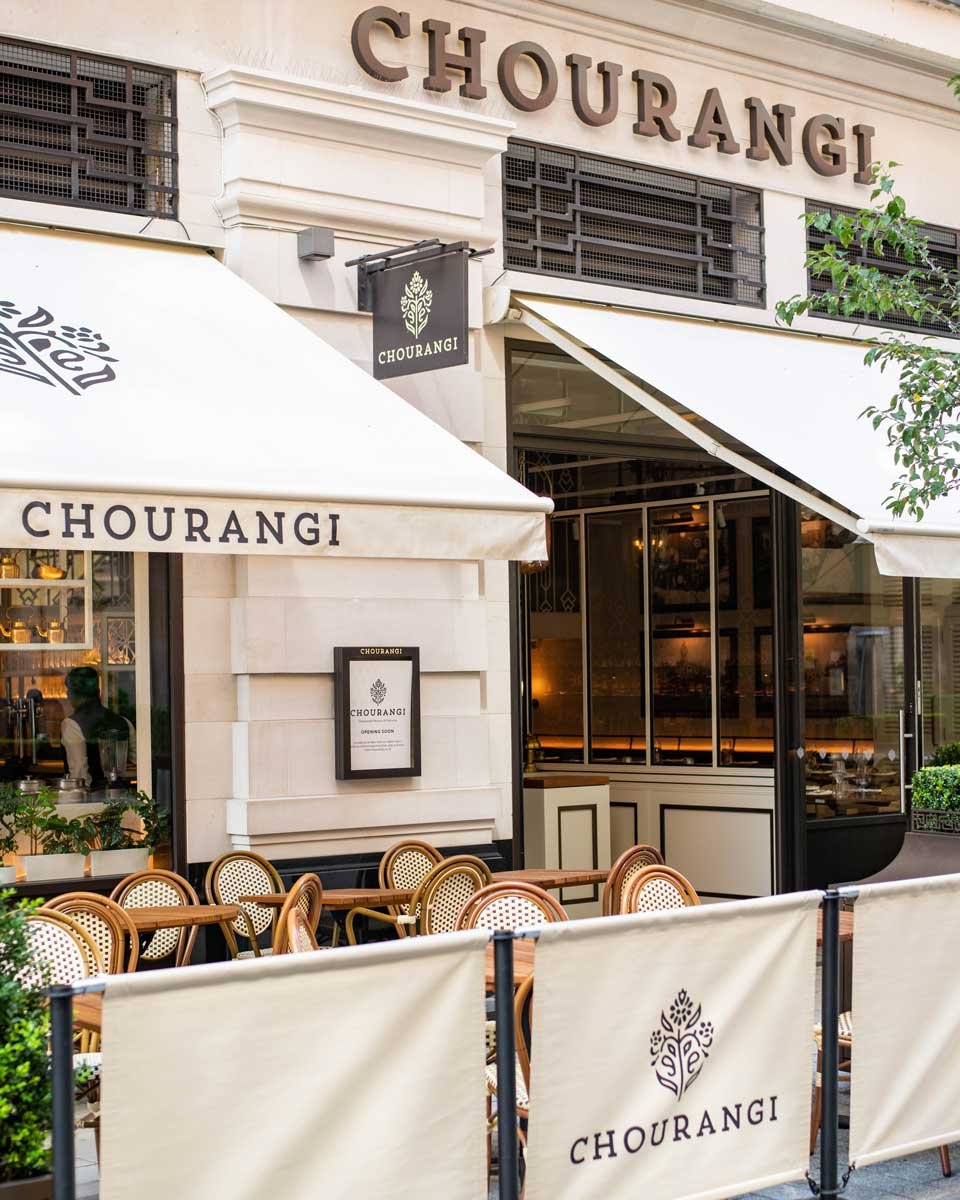
Calcutta on Old Quebec Street
London's Indian restaurant scene has long been dominated by two poles: the high-volume curry-house format that defined the British-Bangladeshi tradition, and a newer wave of modern Indian dining that uses French technique as its primary frame of reference. Chourangi, at 3 Old Quebec Street in Marylebone, occupies a more specific position than either. Its reference point is Calcutta, or Kolkata, and more precisely the cooking culture that developed there during the British colonial period, a cuisine shaped by the convergence of Mughal court food, Bengali home cooking, and the Anglo-Indian hybrid traditions that emerged in the clubs and households of the nineteenth and early twentieth centuries.
That culinary history is less frequently represented in London than the food of Punjab, Kerala, or coastal Goa. Calcutta's kitchen produced dishes that don't map neatly onto the tandoor-and-tikka shorthand that still structures most British perceptions of Indian food. The Marylebone address, a few minutes' walk from Marble Arch, places Chourangi in a neighbourhood where hotel restaurants set the dominant tone. Against that context, a restaurant focused on Bengali and Anglo-Indian tradition reads as a deliberate counter-programme.
The Cultural Weight of Calcutta's Table
To understand what Chourangi is cooking, it helps to understand what Calcutta was. For roughly two centuries, the city functioned as the administrative capital of British India, and the food culture that developed there reflected the negotiation between two culinary systems in close proximity. The Anglo-Indian community that emerged from that contact produced its own distinct kitchen: dishes like railway mutton curry, country captain chicken, and the various chops and cutlets that Bengali cooks adapted from British patterns and made entirely their own. Meanwhile, the Mughal-influenced Nawabi cuisine of the Bengali Muslim tradition and the fish-centred, mustard-heavy cooking of the Hindu Bengali household ran in parallel.
Restaurants attempting to represent this tradition in London face a specific challenge. The food doesn't always perform visually in the way that modern Indian fine dining, with its colourful plating and dramatic presentations, tends to. Calcutta food is often subtler in colour and more complex in spice architecture, built around techniques like slow-cooking, smoking, and the layering of whole spices that release differently over time. The audience for that kind of cooking in London is smaller and more specific than the market for, say, a glossy pan-Indian tasting menu. That Chourangi has chosen this territory is itself an editorial position.
Where It Sits in London's Indian Dining Tier
London's premium Indian restaurant sector has expanded considerably over the past decade. Restaurants in the higher price brackets now operate with wine programmes, tasting menus, and levels of service formality that place them in direct comparison with European fine dining at equivalent price points. Venues like CORE by Clare Smyth, Restaurant Gordon Ramsay, Sketch, The Lecture Room and Library, and The Ledbury define what formal fine dining looks like in the city at the Michelin three-star tier. Dinner by Heston Blumenthal, with its two stars, shows how historical British culinary research can anchor a serious modern restaurant. Chourangi applies an analogous logic to the Indian context: archival cooking traditions as the basis for a contemporary restaurant proposition.
The comparison is useful because it frames what Chourangi is doing as part of a broader movement in serious restaurant cooking, one that treats culinary history as primary source material rather than nostalgic backdrop. That approach is well-established in the British context at places like The Fat Duck in Bray, L'Enclume in Cartmel, and Moor Hall in Aughton. In the Indian fine dining space, it remains considerably rarer.
The Marylebone Setting
Old Quebec Street is a short, quiet road that connects Oxford Street to Portman Square, flanked largely by hotels and their associated restaurants. The location gives Chourangi a passing trade of hotel guests alongside a destination-dining audience that has chosen it specifically. That dual audience shapes how restaurants on this kind of street tend to calibrate their format: approachable enough for a hotel guest who walked in, considered enough to justify a reservation from across the city.
Marylebone more broadly has developed into one of London's more coherent neighbourhoods for mid-to-upper dining, with enough density of good restaurants to constitute a genuine dining destination rather than merely a geographic convenience. For context on how the area fits into the city's wider hospitality map, the EP Club London restaurants guide covers the full range, alongside dedicated guides for hotels, bars, wineries, and experiences across the city.
A Note on the Anglo-Indian Canon
The dishes most closely associated with Anglo-Indian Calcutta cooking represent particularly interesting collision points in South Asian culinary history. The category of preparations sometimes grouped under the term "club food", the kedgerees, the devilled kidneys repurposed through Bengali spicing, the various mulligatawny variants, tells a social history as much as a culinary one. These are dishes that emerged from specific institutional contexts: the Bengal Club, the Saturday Club, the kitchens of the grand Marwari households. Representing them accurately in a London restaurant requires both archival knowledge and the discipline to resist modernising them into something more photogenic but less historically coherent.
That same commitment to regional specificity over generalist appeal characterises the serious end of Korean fine dining in New York, where restaurants like Atomix have built sustained critical reputations on deep engagement with a particular culinary tradition rather than broad accessibility. In the European context, Le Bernardin in New York City demonstrates how a singular culinary focus, maintained over decades, compounds into institutional authority. The logic applies across cuisines: specificity, sustained over time, is a more defensible position than range.
Planning Your Visit
Chourangi is located at 3 Old Quebec Street, London W1H 7AF, within walking distance of Marble Arch Underground station on the Central and Elizabeth lines. For regional comparison, the culinary seriousness being pursued here has analogues in British restaurants outside London, including Gidleigh Park in Chagford, Hand and Flowers in Marlow, and hide and fox in Saltwood, all of which demonstrate how focused culinary identities sustain reputations in competitive markets.
At-a-Glance Comparison
Comparable venues nearby, for context on price, style, and recognition.
| Venue | Cuisine | Price | Notes |
|---|---|---|---|
| ChourangiThis venue — the venue you are viewing | Calcutta Indian Cuisine | $$$ | Not listed |
| Copper Chimney | Modern North Indian | $$$ | White City |
| The Kokum London | Modern Indian | $$$ | Peckham |
| Gunpowder Soho | Modern Regional Indian | $$$ | Soho |
| Curry Room at the Rubens | Authentic Indian Curry House | $$$$ | Victoria |
| Taste of Lahore Queensway | Pakistani & North Indian Curry House | $$ | Queensway |
Continue exploring
More in London
Restaurants in London
Browse all →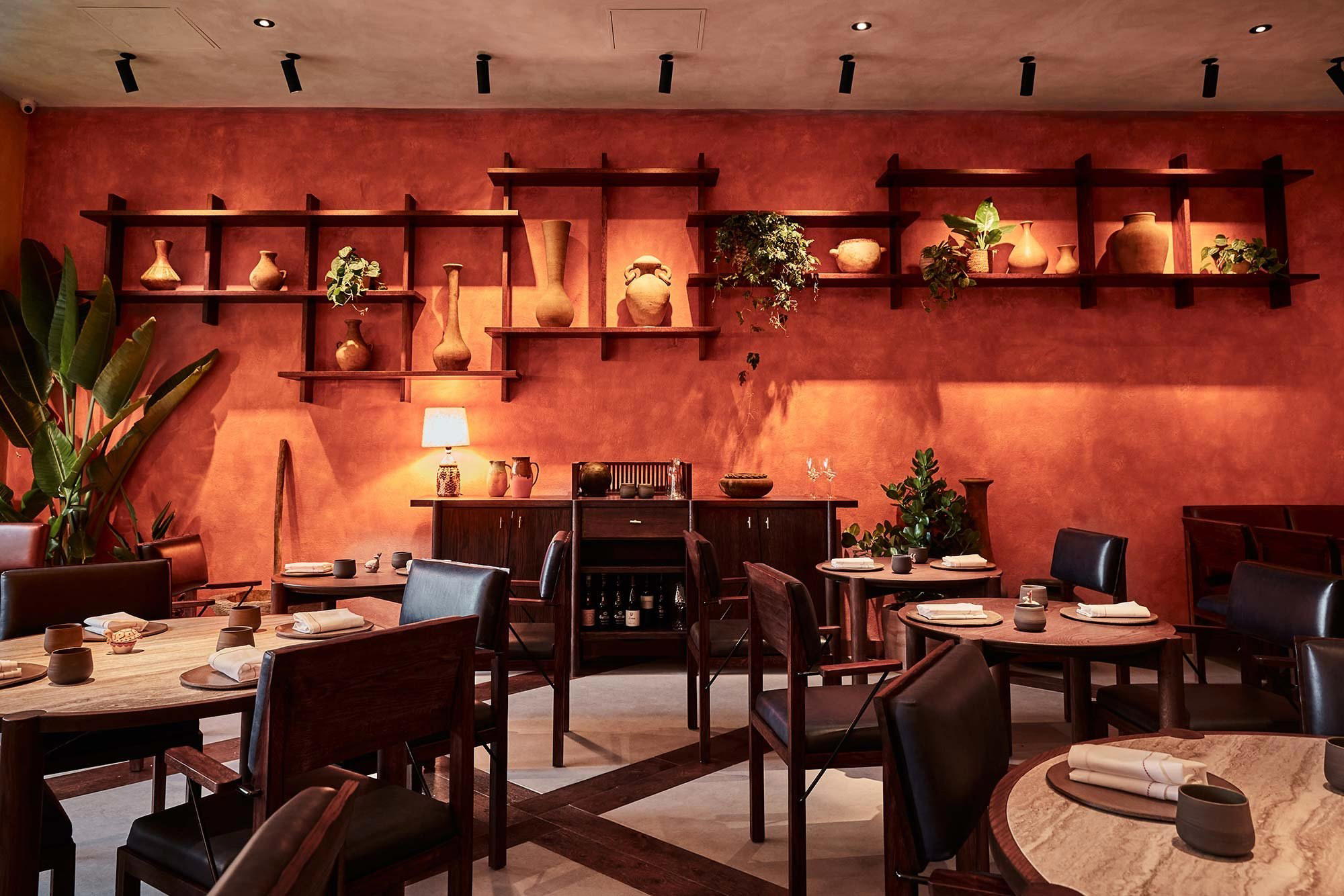
Bars in London
Browse all →
Hotels in London
Browse all →


At a Glance
- Sophisticated
- Elegant
- Cozy
- Date Night
- Special Occasion
- Group Dining
- Family
- Open Kitchen
- Craft Cocktails
- Street Scene
Current opening hours
- Monday
- 1–10 PM
- Tuesday
- 1–10 PM
- Wednesday
- 12:30–10 PM
- Thursday
- 12:30–10 PM
- Friday
- 12:30–10:30 PM
- Saturday
- 12:30–10:30 PM
- Sunday
- 12:30–10 PM
Hours can change for holidays and private events. Last verified .
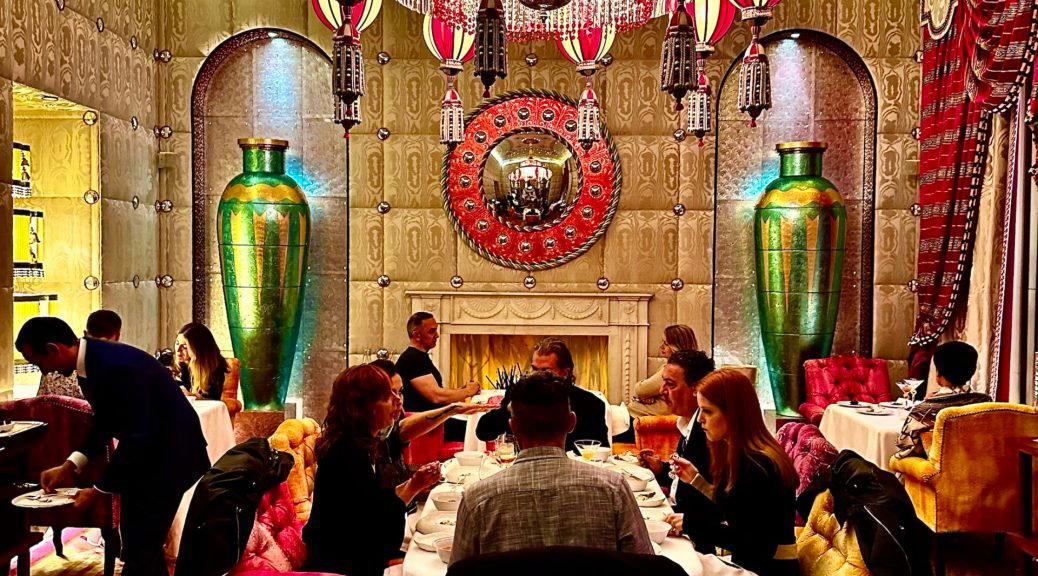
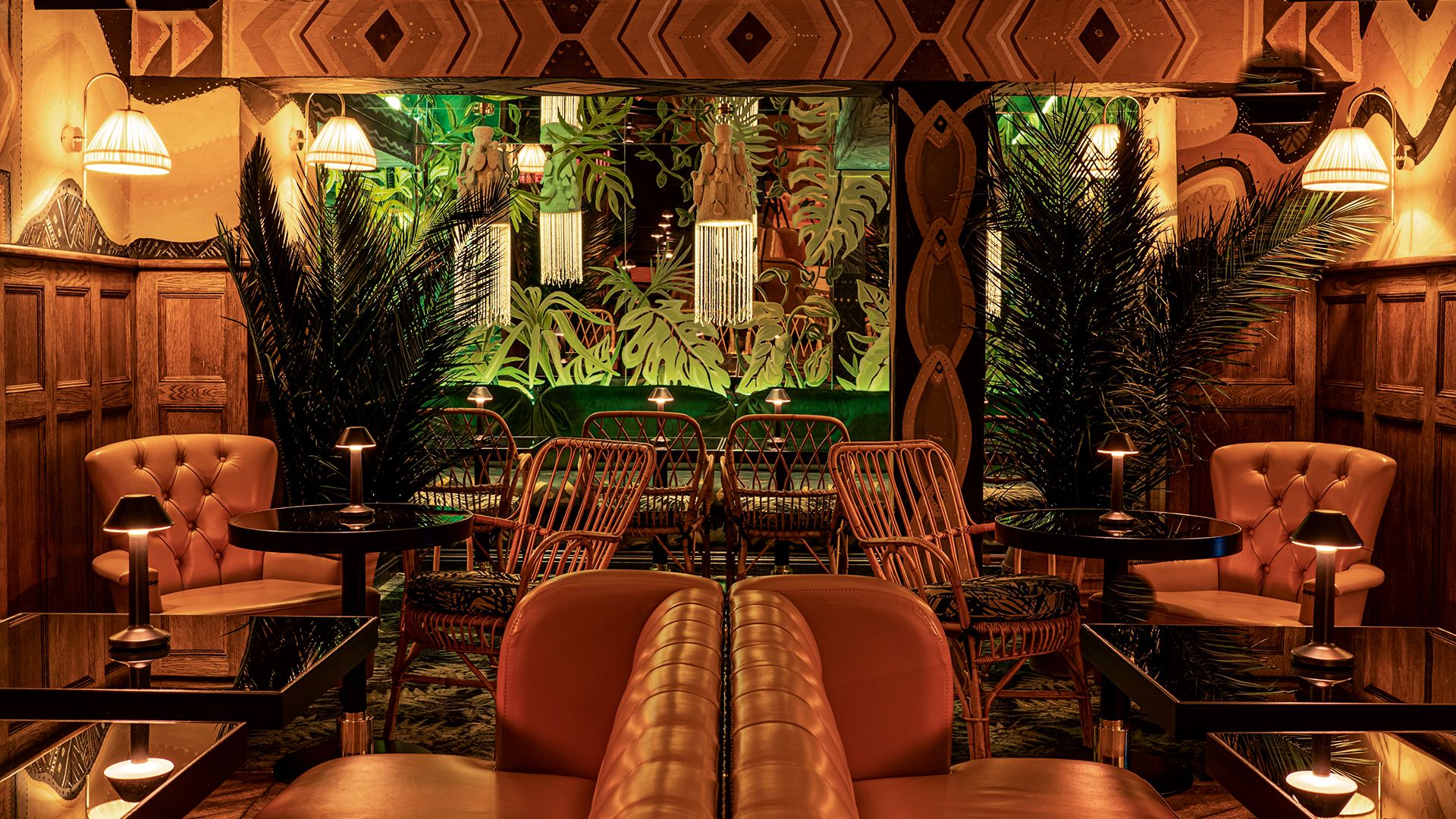
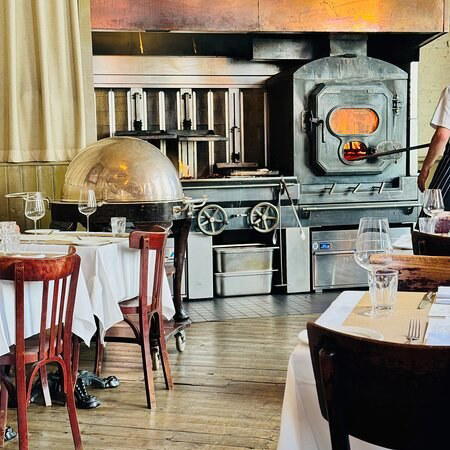
Inviting atmosphere with natural rattan-stained furniture, cream walls capturing Calcutta architecture, lively decor with wall paintings, open kitchen, tall ceilings, and low-volume desi retro music.