
Tabelog Bronze #349
Our verdict
Keiraku Yakiniku Pome is a 14-seat yakiniku counter in Higashishinsaibashi, Osaka, that has earned consecutive Tabelog Bronze Awards in 2025 and 2026 alongside four straight years on the Tabelog Yakiniku WEST 100 list. Operating on an almost exclusively course-meal format, dinner runs JPY 15,000–19,999 per person. Cash only, no private rooms, and reservations are close to essential.

Pearl is the En Primeur Club membership app, where members save venues, book tables and use the concierge.
The menu
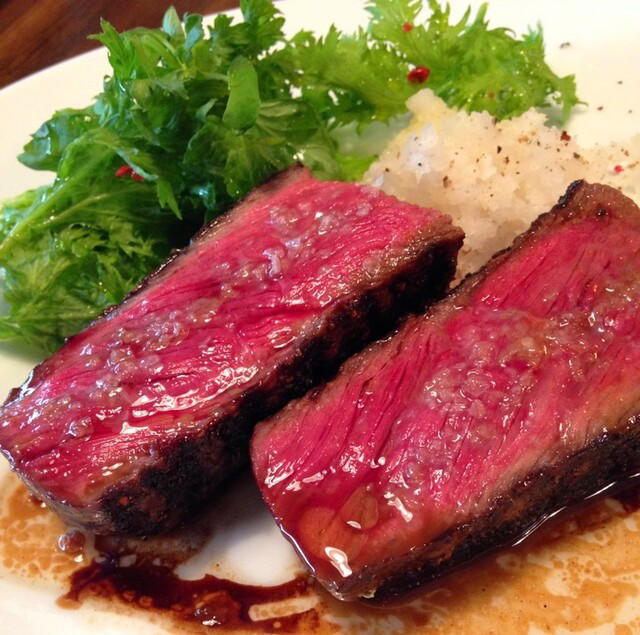
What to order
- Yukhoe
- Black tongue kalbi
- Sagari
- Harami
- Tantanmen
Smoke, Sequence, and the Course-Driven Logic of Osaka Yakiniku
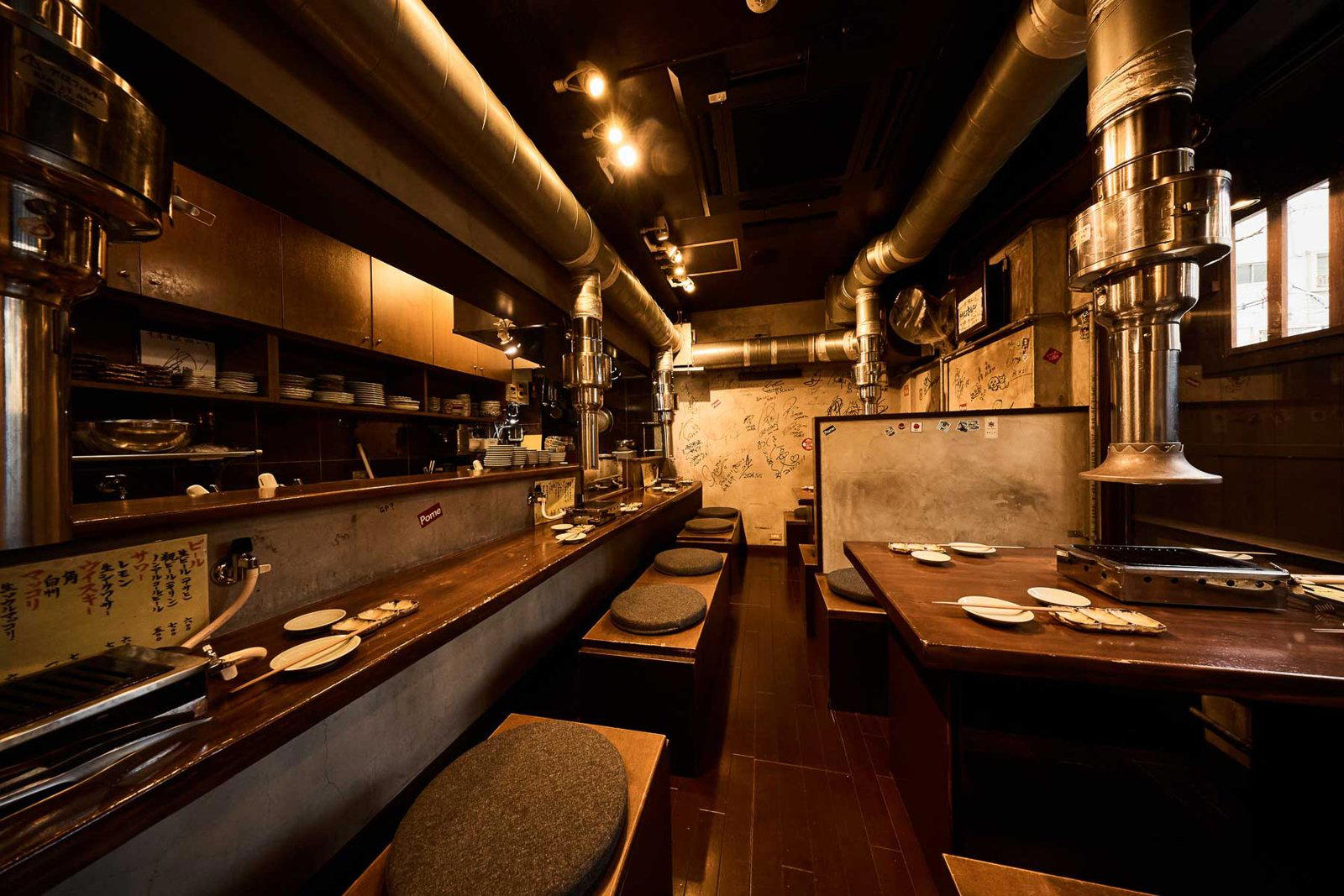
Walk into a compact first-floor room in Higashishinsaibashi and the smell reaches you before the menu does. Grilled meat smoke clings to the air, the venue itself notes that ventilation is limited, and what might read as a warning functions equally as a calibration: this is a place where the cooking is the atmosphere. Keiraku Yakiniku Pome seats 14 across a six-seat counter and two tables, and at that scale the boundary between kitchen theatre and dining room collapses almost entirely.
That physical intimacy is not incidental. It shapes the entire logic of how a meal here works, and it explains why the format has drifted toward courses rather than à la carte. Premium yakiniku in Japan's major cities has broadly sorted itself into two operating models: high-volume houses with broad menus and grills at every table, and smaller counters that impose sequence and selection on the guest. Pome sits firmly in the second category, where the room size and the course structure reinforce each other. A 14-seat maximum also means private hire is on the table for groups up to 20, which runs slightly paradoxical on paper but likely involves a full buyout of the space.
How the Menu Is Structured, and What That Tells You
The Tabelog listing carries a single, clarifying note on format: reservations are available, and meals are almost exclusively course-based. That single sentence carries considerable weight. In yakiniku, the shift from free-order to course service is usually a signal about ingredient sourcing, pacing, and the kitchen's intent to control the sequence of cuts and cooking temperatures across an evening. It mirrors, structurally, the logic of omakase in sushi or kaiseki in Japanese haute cuisine: the chef sequences the meal, not the guest.
At a dinner budget of JPY 15,000–19,999 per person (with review-based averages running closer to JPY 20,000–29,999 in practice), Pome operates in the mid-to-upper tier of Osaka's yakiniku market. That price point is well below the ¥¥¥¥ bracket occupied by Osaka's French and innovative tasting-menu restaurants, HAJIME, La Cime, and Fujiya 1935 all sit in a different economic register, but it is also above casual yakiniku chains, positioning the restaurant in a niche that takes the format seriously without asking for the outlay of a full kaiseki evening at Kashiwaya Osaka Senriyama or Taian.
The course-only posture also explains the drink list. Shochu, wine, and cocktails are available, a range that gestures at both traditional pairing logic (shochu alongside grilled beef is the orthodox Japanese choice) and at a slightly more international guest.
Recognition and Where Pome Sits in the Wider Yakiniku Field
The award record here is consistent and accumulating. Pome has been selected for the Tabelog Yakiniku WEST 100 every year from 2022 through 2025, and earned the Tabelog Bronze Award in both 2025 and 2026, the latter paired with a score of 4.10 on a platform where scores above 3.50 already indicate genuine distinction and scores above 4.00 are rare. The Tabelog 100 designation is a peer-ranked selection across Western Japan's yakiniku category, meaning the recognition is regionally comparative rather than nationally diluted.
For context, the Tabelog scoring system aggregates a large volume of verified diner reviews and weights them against reviewer credibility metrics. A 4.10 in a high-competition category like Osaka yakiniku places Pome in a cohort that draws serious repeat visitors, not just curious tourists passing through Shinsaibashi. That pattern of consecutive recognition across four years, opened October 2020 and on the Tabelog 100 list within two years, suggests the format landed quickly with the local dining public rather than building slowly through word of mouth.
For reference on how this maps against Japan's broader premium dining circuit: restaurants like Harutaka in Tokyo and Gion Sasaki in Kyoto represent the upper boundary of recognition in their respective categories. Pome's Tabelog Bronze and 100-list placements put it in a comparable tier of platform-validated, category-specific excellence rather than city-wide omakase celebrity.
The Neighbourhood and How to Arrive
Higashishinsaibashi in Chuo Ward sits on the eastern edge of the broader Shinsaibashi shopping and dining corridor. The address (2-1-25, Daiyu Building 1F) is accessible on foot from Nagahoribashi subway station in roughly three minutes, making it the logical transit anchor. Shinsaibashi Station and Kintetsu Nihonbashi Station are both within an eight-minute walk. There is no on-site parking, but coin parking is available directly opposite. Osaka's restaurant density in this district is among the highest in the country, meaning the surrounding blocks contain both serious competition and a dining public accustomed to the format.
The no-smoking environment across the room is worth noting given yakiniku's natural tendency to produce both smoke and smell. The venue is candid that the grill scent lingers, a practical consideration if you have subsequent commitments. Plan the evening accordingly, or treat it, as many regulars presumably do, as the final destination of the night.
Pome opened in October 2020, which means it found its footing during a difficult period for hospitality and still accumulated four consecutive years of Tabelog 100 recognition. That trajectory is more telling than a launch-year spike. It also suggests a dining proposition steady enough to build a reservation base and sustain course-format consistency across variable conditions. For visitors exploring Osaka's dining scene beyond the kaiseki and ramen categories, the course-driven yakiniku format here represents a genuinely different register, one that rewards patience and an interest in how sequenced beef cookery functions as a distinct discipline. See our full Osaka restaurants guide for the broader picture, and consult the Osaka hotels guide, bars guide, and experiences guide for planning around the meal.
Beyond Osaka, the course-based Japanese protein format has parallels across the country's dining map. Akordu in Nara, Goh in Fukuoka, 1000 in Yokohama, and 6 in Okinawa each represent different takes on the sequenced Japanese meal. Internationally, the discipline with which a kitchen controls pacing and product selection at a small counter has counterparts in places like Le Bernardin in New York City and Atomix in New York City, though the format and register differ significantly. The Osaka wineries guide rounds out the full regional picture for those building a multi-day itinerary.
Planning Your Visit
Reservations: Required; the venue operates on a near-exclusively course meal basis. Hours: Tuesday through Sunday, 18:00–00:00; closed Monday. Budget: Dinner JPY 15,000–19,999 per person (reviewed averages suggest JPY 20,000–29,999 in practice). Payment: Cash only, credit cards, electronic money, and QR code payments are not accepted; confirm you have sufficient yen before arrival. Seats: 14 total (6 counter, 8 table); maximum party size 14 for standard seating, up to 20 for private hire. Dress code: None stated. Getting there: Three minutes on foot from Nagahoribashi subway station; coin parking opposite the restaurant. Smoking: Non-smoking throughout.
Frequently asked questions
What dish is Pome famous for?
Pome operates as a yakiniku restaurant where the meal is structured around a curated course sequence rather than individual signature dishes. The Tabelog Yakiniku WEST 100 recognition, held continuously from 2022 through 2025, alongside Tabelog Bronze Awards in both 2025 and 2026, points to the kitchen's handling of beef across a sequenced format as the core draw. Confirming current course content requires contacting the restaurant directly, as menus in this format typically change with the season and supply.
Recognition, Side-by-Side
Comparable venues nearby, for context on price, style, and recognition.
| Venue | Cuisine | Price | Awards | Notes |
|---|---|---|---|---|
| PomeThis venue (the venue you are viewing) | Modern Yakiniku Omakase | $150–200 | Tabelog Bronze #349 | Not listed |
| Sushi Oga | Tuna-Focused Omakase Sushi | Not listed | Not listed | Sakai |
| Kizuna | Edo-style Omakase Sushi | $150–200 | Tabelog Bronze #188 | Chūō |
| Ohata | Kansai-style Edomae Omakase | $150–200 | Tabelog Bronze #333 | Kita |
| Aoki | Michelin-Starred Kaiseki | $200–300 | Tabelog Bronze #20 | Nishi |
| Numata Sou | Tempura Omakase | Not listed | 1 Michelin Star · Tabelog 100 #11 | Kita |
Recognition history
Dated appearances from independent guides and award organizations, with the underlying list record or original source where available.
Tabelog Bronze #349
Tabelog
Full recognition history (3 entries)
Tabelog 100 #99 · No. 99
Tabelog · Tabelog 100 - Yakiniku - WEST - 2025
Tabelog Bronze
Tabelog
Continue exploring
More in Osaka
Restaurants in Osaka
All restaurants in Osaka →



Bars in Osaka
All bars in Osaka →
Hotels in Osaka
All hotels in Osaka →

Wineries in Osaka
Browse all →
Details
- Intimate
- Cozy
- Modern
- Special Occasion
- Date Night
- Open Kitchen
- Sake Program
- Local Sourcing
- Omakase
- Counter Dining
Current opening hours
- Monday
- Closed
- Tuesday
- 6–11 p.m.
- Wednesday
- 6–11 p.m.
- Thursday
- 6–11 p.m.
- Friday
- 6–11 p.m.
- Saturday
- 6–11 p.m.
- Sunday
- 6–11 p.m.
Hours can change for holidays and private events. Hours as of .
Nostalgic and casual small space with counter and table seating, featuring grilled meat aroma due to ventilation.