
Tabelog 100 #48
Our verdict
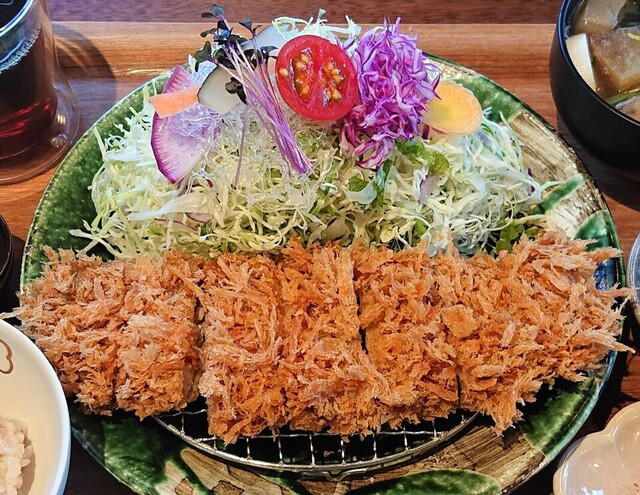
Poku Poku brings Nara’s local-produce argument into the tonkatsu category, using Yamato Pork and set-meal structure rather than treating pork cutlet as quick fuel. Its Tabelog Tonkatsu 100 selections in 2022, 2024, and 2026 place it within Japan’s serious tonkatsu conversation, while the Naramachi setting keeps the experience compact and local in feel.

Pearl is the En Primeur Club membership app, where members save venues, book tables and use the concierge.
The menu
What to order
- Yamato pork tonkatsu
- Set meals with assorted vegetables
- Katsu curry
Nara rewards slower eating. Away from the busiest station-front lunch routes, the city moves at a different tempo: compact dining rooms where a meal often turns on one clear specialty, not a long menu. Here, tonkatsu is more than breaded pork cutlet with rice; it tests frying discipline and the care given to the supporting dishes around the pork.
Poku Poku sits in that specialty-led branch of Nara dining. Its public identity is tied to tonkatsu, pork dishes, and cafe-style accessibility, with the meal framed as a focused local stop rather than a broad all-purpose restaurant. In a city whose culinary memory often leans toward tea, sweets, kakinoha-zushi, and temple-adjacent food culture, tonkatsu is not always the expected headline. That makes a serious pork-cutlet specialist more interesting than another generic cutlet counter.
Tonkatsu gives Nara's casual dining argument a clear anchor
Japan’s tonkatsu culture is usually judged by texture and balance: crumb, fat, doneness, cabbage, rice, sauce. In Nara, the sharper editorial question is how a familiar national comfort-food form reads inside a city more often discussed through heritage, sweets, and formal Japanese dining. Poku Poku’s value is that it gives that category a clear Nara anchor without asking diners to treat lunch or dinner as ceremony.
The Tabelog Tonkatsu 100 selection in 2026 gives that argument external weight. Tabelog’s Hyakumeiten lists are category-specific, so inclusion here means recognition inside the pork-cutlet field, not just a nod to Nara tourism traffic. A 3.65 Tabelog score also puts the restaurant in a serious band for a casual specialty format.
That is the useful comparison. Nara has a wide spread of dining choices, including places such as Tsuru Yoshi, Kinari Pizza, and Menya K. Poku Poku occupies its own lane: focused enough to earn national category attention, approachable enough for a casual meal, and specific enough to stand apart from a generic stop. For readers mapping the city, Our full Nara restaurants guide gives the broader spread, from other Nara dining rooms to unnamed specialist addresses across the city.
The meal is compact, set-led, and more domestic than theatrical
The format matters because tonkatsu can become fast food or performance. Here, the signal is small-scale focus. The restaurant’s category points toward pork cutlet and pork dishes, but the appeal is not only the cutlet itself; it is the way a focused meal can feel complete without becoming a luxury tasting menu. It is not counter drama under spotlights; it is closer to a quiet Nara lunch or dinner where the details around the main dish matter.
The supporting elements are not incidental. In many pork-cutlet restaurants, the main plate can dominate so completely that everything else becomes background. Poku Poku’s strength, as a Nara tonkatsu address, is that the meal reads as a compact whole rather than a single fried item. That is the editorial reason to put it on a Nara itinerary: it shows how a national comfort-food form can work as everyday regional dining without needing luxury signals.
Category also suits mixed groups. Tonkatsu is accessible for visitors who do not read deeply into Japanese dining traditions, while the category focus and the 2026 Hyakumeiten recognition give it weight for diners who usually chase more technical rooms. Compared with Nara’s refined sweets culture, represented in the city by Yorozu Onkashi Atsurae Dokoro Kashiya, this is a savory lunch-and-dinner expression of small-format precision. For adjacent local dining decisions, other unnamed Nara restaurants show how broad the city’s small-restaurant scene has become.
How to place it in a Nara food day
Smartest use of Poku Poku is not as a trophy booking detached from the city. It works within a Nara day, where walking, temples, craft shops, tea, and a focused meal can fit one compact itinerary. The setting belongs to Nara rather than to a hotel-dining bubble, and the dining logic is local rather than touristic: a clear category identity, a modest price band, and a reason to stop for pork cutlet rather than defaulting to more predictable visitor food.
There are practical implications. The listed budget is JPY 2,000 - JPY 2,999 for both lunch and dinner, which places it in an approachable range for a specialty meal. The published phone number is +81-742-31-2537, useful for diners who prefer to confirm current hours, availability, and any house rules before going. Those details clarify the format: a focused operation in Nara, not a hotel-concierge dining room built around elastic capacity.
Families and mixed parties should approach it as a focused meal rather than a long, sprawling stop. Tonkatsu is broadly understandable, but the pleasure here is in the restaurant’s specialization, the pacing of a compact meal, and the contrast it offers with Nara’s better-known sweet and temple-adjacent food traditions. It is best treated as a calm lunch or dinner choice for diners who want a clear category, a manageable budget, and a local-feeling room.
For wider Nara planning, the category links matter as much as the restaurant link. Stay decisions sit separately in Our full Nara hotels guide, while post-dinner drinking belongs in Our full Nara bars guide. Regional planning beyond restaurants can move through Our full Nara wineries guide and Our full Nara experiences guide. For broader Japan and overseas comparisons, EP Club also tracks specialist addresses in other cities, but Poku Poku’s relevance here is specifically its place in Nara’s own casual dining map.
The verdict is simple: this is Nara tonkatsu with a clear specialty spine. The draw is not luxury theatre or chef mythology; it is a focused pork-cutlet identity, an approachable lunch-and-dinner budget, and recognition within Japan’s tonkatsu category in 2026. For a city often framed around temples and sweets, the restaurant is a useful corrective: Nara’s everyday dining can carry as much regional meaning as its formal traditions.
Frequently asked questions
Can I bring kids to Poku Poku?
Poku Poku is in Nara. For family visits, confirm current suitability and any house rules directly with the restaurant before going.
What should I expect atmosphere-wise at Poku Poku?
Expect a focused Nara dining room built around tonkatsu, pork dishes, and a cafe-adjacent casual format rather than a broad, formal restaurant. The appeal is the specialty, the manageable scale of the meal, and the clarity of the category.
What should I budget for a meal at Poku Poku?
Pricing at Poku Poku is listed as JPY 2,000 - JPY 2,999 JPY 2,000 - JPY 2,999.
What is Poku Poku known for?
Poku Poku is known in Nara for tonkatsu, pork dishes, and cafe-style dining, with Tabelog Hyakumeiten recognition in 2026 and a listed score of 3.65.
Comparison Snapshot
Comparable venues by cuisine and price in the same metro.
| Venue | Cuisine | Price | Awards | Notes |
|---|---|---|---|---|
| Poku PokuThis venue (the venue you are viewing) | Japanese Tonkatsu | $10–20 | Tabelog 100 #48 | Not listed |
| Housekibaco (Jewelry Box) | Japanese Kakigori Cafe | $10–20 | Tabelog 100 #85 | Naramachi |
| Yorozu Onkashi Atsurae Dokoro Kashiya | Traditional Japanese Wagashi & Cafe | $10–20 | Tabelog 100 #46 | Nara |
| Nakatani Do | Traditional Japanese mochi shop | $1–10 | Tabelog 100 #36 | Nara |
| 味の旅人浪漫 | Seasonal Japanese Kaiseki | $50–100 | Not listed | Nara |
| 麺屋 NOROMA | 鶏白湯ラーメン | $10–20 | Not listed | 西大寺 |
Recognition history
Dated appearances from independent guides and award organizations, with the underlying list record or original source where available.
Tabelog 100 #48 · No. 48
Tabelog · Tabelog 100 - Tonkatsu - 2026
Continue exploring
More in Nara
Restaurants in Nara
All restaurants in Nara →



Bars in Nara
All bars in Nara →



Hotels in Nara
All hotels in Nara →



Wineries in Nara
Browse all →
Details
- Quiet
- Cozy
- Intimate
- Solo
- Family
- Casual Hangout
- Standalone
- Local Sourcing
- Street Scene
- Set Menu
- Vegetarian Friendly
- Allergy Accommodating
Current opening hours
- Monday
- 11:15 AM–2:30 PM, 5:30–8 PM
- Tuesday
- Closed
- Wednesday
- 11:15 AM–2:30 PM, 5:30–8 PM
- Thursday
- 11:15 AM–2:30 PM, 5:30–8 PM
- Friday
- Closed
- Saturday
- 11:15 AM–2:30 PM, 5:30–8 PM
- Sunday
- 11:15 AM–2:30 PM, 5:30–8 PM
Hours can change for holidays and private events. Hours as of .
Cozy and intimate, with a small dining room that emphasizes calm, careful service and a homey neighborhood feel.