
We're Smart World 3 Radishes
Our verdict
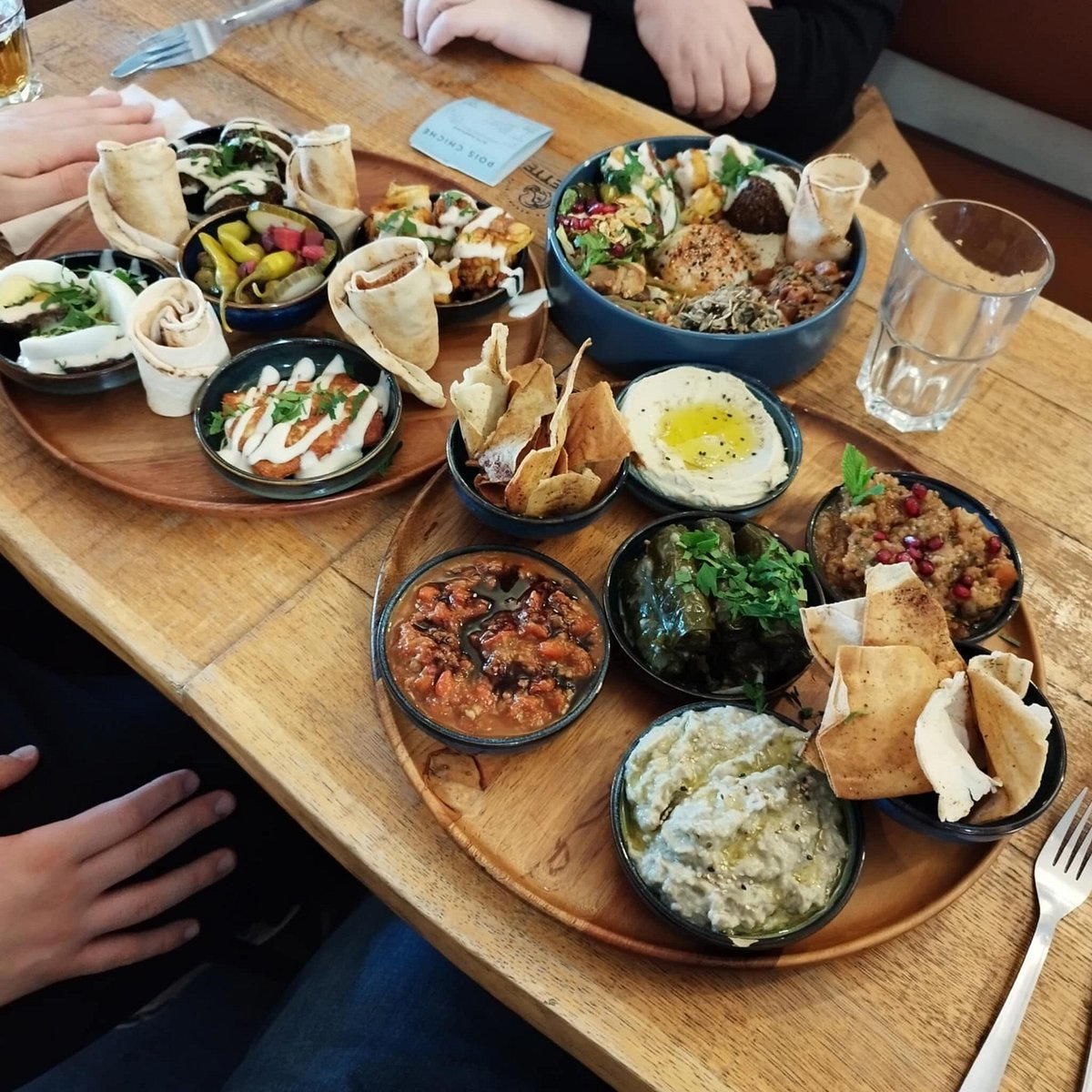
At Place de la Chapelle in the Marolles, Pois Chiche makes the case that vegetable-forward Middle Eastern street food and serious culinary intent are not mutually exclusive. Falafel, hummus, pita, shoarma and layered dips are built entirely from organic produce, placing this counter squarely in Brussels' growing appetite for food that is fast in format but honest in sourcing.

Pearl is the En Primeur Club membership app — saves, bookings, and concierge access live there. Same editors, same standards.
- Address
- Pl. de la Chapelle 15, 1000 Bruxelles, Belgium
- Phone
- +32 2 306 33 20
- Hours
- Mon–Thu 12–9 PMFri 12–10 PMSat 11 AM–10 PMSun 11 AM–9 PM
- Website
- poischiche.be
- Directions
- Get directions
- Booking
- Book on the venue's website
The Marolles, Street Food, and the Case for Cooking Simply
Place de la Chapelle sits at the lower edge of the Marolles, one of Brussels' oldest and most architecturally layered neighbourhoods, where the Palais de Justice looms above a maze of antique dealers, flea market stalls, and working-class cafés that have been gradually joined by a generation of ingredient-conscious restaurants and bars. It is the kind of square where the food culture reflects the neighbourhood's history of absorption and reinvention rather than any single culinary tradition. Pois Chiche fits that context precisely: a Middle Eastern street food bar operating at a price point and pace that puts it in conversation with the area's everyday rhythm rather than its occasional fine-dining incursion.
The broader Brussels dining spectrum runs from the white-tablecloth formality of places like Comme chez Soi and Bozar Restaurant at one end to neighbourhood counters at the other. Between those poles, a cohort of smaller, ingredient-driven operations has expanded steadily over the past decade, partly in response to a Brussels diner who is increasingly fluent in sourcing conversations and less tolerant of fast food that treats its raw material as irrelevant. Pois Chiche addresses that diner directly: the format is fast, the sourcing is organic, and the menu is built entirely around vegetables.
Chickpeas as Architecture
The name is the signal. Pois chiche — French for chickpea — announces both the culinary anchor and the philosophical orientation. Across the Middle East, the chickpea functions as structural ingredient: the base of hummus, the binder in falafel, the protein where meat is absent. At this counter, that logic is taken seriously rather than treated as a dietary concession. Falafel and hummus occupy the centre of the menu not because they are the easiest things to offer but because, done properly with organic produce, they are genuinely demanding preparations that reward attention to texture, seasoning, and the quality of the underlying legume.
Menu extends beyond the chickpea to include pita breads, salads, dips, and shoarma, the full vocabulary of Levantine street food executed without animal products. This is not a recent pivot driven by trend pressure. The entirely plant-based, organically sourced approach is structural to what Pois Chiche is, which places it in a meaningful position relative to the wider Brussels scene where organic commitments at fast-food price points remain relatively uncommon. For comparison, the city's more formal organic-leaning tables, including Barge and Eliane, operate at substantially higher price points and with considerably more ceremony around the sourcing story.
Imported Methods, Local Commitment
Editorial angle worth examining here is what happens when a culinary tradition developed across the Levant, one built around preserved technique, fermented condiments, and the careful handling of legumes and flatbreads, is applied to organically sourced produce within a Western European city. The technique does not change: good hummus requires the right variety of chickpea, extended soaking, careful blending, and the quality of the tahini. Good falafel depends on uncooked chickpeas, not tinned, ground with herbs and fried at the right temperature. These are not flexible variables. What changes is the sourcing framework around those fixed methods, and it is in that gap, between a tradition that developed under specific agrarian conditions and the organic supply chains of contemporary Belgium, that Pois Chiche makes its argument.
This dynamic is visible across Brussels in different registers. The city's Flemish fine-dining constellation, from Hof van Cleve in Kruishoutem to Zilte in Antwerp, works the same intersection at the formal end: techniques refined abroad applied to Belgian and seasonal European produce. The difference at Pois Chiche is that the technique in question predates modern fine dining by centuries, and the price point means the proposition is tested daily against a genuinely broad public rather than a self-selecting tasting-menu audience.
Where This Sits in the Brussels Picture
Brussels' restaurant map is not short of ambition at the leading. La Villa Lorraine by Yves Mattagne and the city's other high-end tables represent one version of the city's culinary confidence. What is less well documented is the mid-to-lower tier, where the interesting shifts in eating habits tend to show first. The growth of plant-forward, ingredient-honest fast food in neighbourhoods like the Marolles is a genuine trend rather than an anomaly, and Pois Chiche is an early and reasonably committed example of it.
For readers whose Brussels itinerary includes a meal at Bozar Restaurant or an evening at one of the city's more formal addresses, a stop at Pois Chiche represents a different register of the same broader conversation about sourcing and intent. The city's bars, hotels, and cultural experiences operate in parallel, and experiences guide map those separately, but Pois Chiche is squarely a lunchtime or early-evening proposition that fits naturally around a walk through the Marolles or a morning at the Jeu de Balle flea market on the same square.
Belgium's wider restaurant culture, documented across the country's Flemish tables from Boury in Roeselare to Willem Hiele in Oudenburg and Bartholomeus in Heist, reflects a national seriousness about produce that extends well beyond the fine-dining tier. Pois Chiche operates in that same cultural register, just at a radically different price point and with a culinary tradition imported from a different geography. places it in context alongside the city's broader range, from brasserie to tasting counter.
Planning a Visit
Pois Chiche is located at Place de la Chapelle 15, in the Marolles, reachable on foot from the Grand Place in under fifteen minutes or directly from the Chapelle metro and tram stops. The format is a street food bar rather than a seated restaurant, which means the visit suits a quick lunch or a snack between sights more naturally than a long dinner. No booking infrastructure is documented for this counter, which suggests walk-in is the standard mode. The entirely plant-based menu removes the need for most dietary discussions at the point of ordering, though specific allergen queries about items like tahini or bread would be worth raising directly at the counter. For those building a wider Brussels food day, the Marolles location places Pois Chiche in easy proximity to the antique district and the neighbourhood's other independent food businesses, with the city's wine and bar options a short distance away in the lower town.
Frequently asked questions
How do I find Pois Chiche?
Pois Chiche is located at Pl. de la Chapelle 15, 1000 Bruxelles, Belgium, Brussels.
What dish is Pois Chiche famous for?
The name gives it away: chickpeas are the anchor. Falafel and hummus are the headline preparations, built from organic vegetables with no meat in the kitchen. The pita wraps and shoarma round out a menu where every dish traces back to the same Levantine pantry.
What's the best way to book Pois Chiche?
Pois Chiche operates as a street food bar rather than a sit-down restaurant, which means walk-in is the standard approach. The venue is at Place de la Chapelle 15 in the Marolles, reachable on foot from the Grand Place in under fifteen minutes.
What's the defining dish or idea at Pois Chiche?
The defining idea is restraint by design: an entirely plant-based menu built around chickpeas, organic vegetables, and Middle Eastern technique. Nothing on the menu requires compromise on flavour to meet that standard — the falafel, dips, and shoarma are the proof.
Can Pois Chiche adjust for dietary needs?
The entire menu is plant-based, so vegetarian and vegan diners do not need to ask for substitutions — the kitchen operates without meat or animal products as its baseline.
At-a-Glance Comparison
Comparable venues nearby, for context on price, style, and recognition.
| Venue | Cuisine | Price | Awards | Notes |
|---|---|---|---|---|
| Pois ChicheThis venue — the venue you are viewing | Levantine Plant-Based Street Food | $20–30 | We're Smart World 3 Radishes | Not listed |
| Horia | Organic Moroccan-Lebanese | $20–30 | Not listed | Grand' Place |
| Arthur Amblard | Sugar-Free Artisan Chocolates | $10–20 | Not listed | Pl. de Brouckere |
| Thaiburi | Authentic Traditional Thai | $20–30 | Not listed | Grand' Place |
| Le Marmiton | Traditional Belgian Brasserie | $50–100 | Not listed | Pl. de Brouckere |
| Centho | Belgian Artisan Chocolates | Not listed | Not listed | Tervuren |
Recognition history
Dated appearances from independent guides and award organizations, with the underlying list record or original source where available.
We're Smart World 3 Radishes
We're Smart World
Continue exploring
More in Brussels
Restaurants in Brussels
Browse all →
Bars in Brussels
Browse all →
Hotels in Brussels
Browse all →
Wineries in Brussels
Browse all →
Details
- Cozy
- Casual
- Trendy
- Casual Hangout
- Brunch
- Group Dining
- Terrace
- Open Kitchen
- Local Sourcing
- Sustainable Seafood
- Street Scene
- Small Plates
- A La Carte
- Vegetarian Friendly
- Vegan Options
- Gluten Free Options
Current opening hours
- Monday
- 12–9 PM
- Tuesday
- 12–9 PM
- Wednesday
- 12–9 PM
- Thursday
- 12–9 PM
- Friday
- 12–10 PM
- Saturday
- 11 AM–10 PM
- Sunday
- 11 AM–9 PM
Hours can change for holidays and private events. Last verified .
Relaxed and cozy casual atmosphere with friendly service, though can be loud during busy times; cozy outdoor terrace available.