Planta Baja occupies a quiet stretch of Sarrià-Sant Gervasi, one of Barcelona's most residential upper districts, where the city's appetite for technical cooking meets a noticeably slower pace than the Eixample. The address places it among a cohort of neighbourhood restaurants that serve a local clientele rather than the tourist circuit, making it a useful lens for reading how Barcelona eats when it isn't performing for visitors.
Pearl is the En Primeur Club membership app — saves, bookings, and concierge access live there. Same editors, same standards.
- Address
- Carrer del Dr. Carulla, 27, Sarrià-Sant Gervasi, 08017 Barcelona, Spain
- Phone
- +34934178179
- Website
- primeroprimera.com
- Directions
- Get directions
 Saves & bookings on Pearl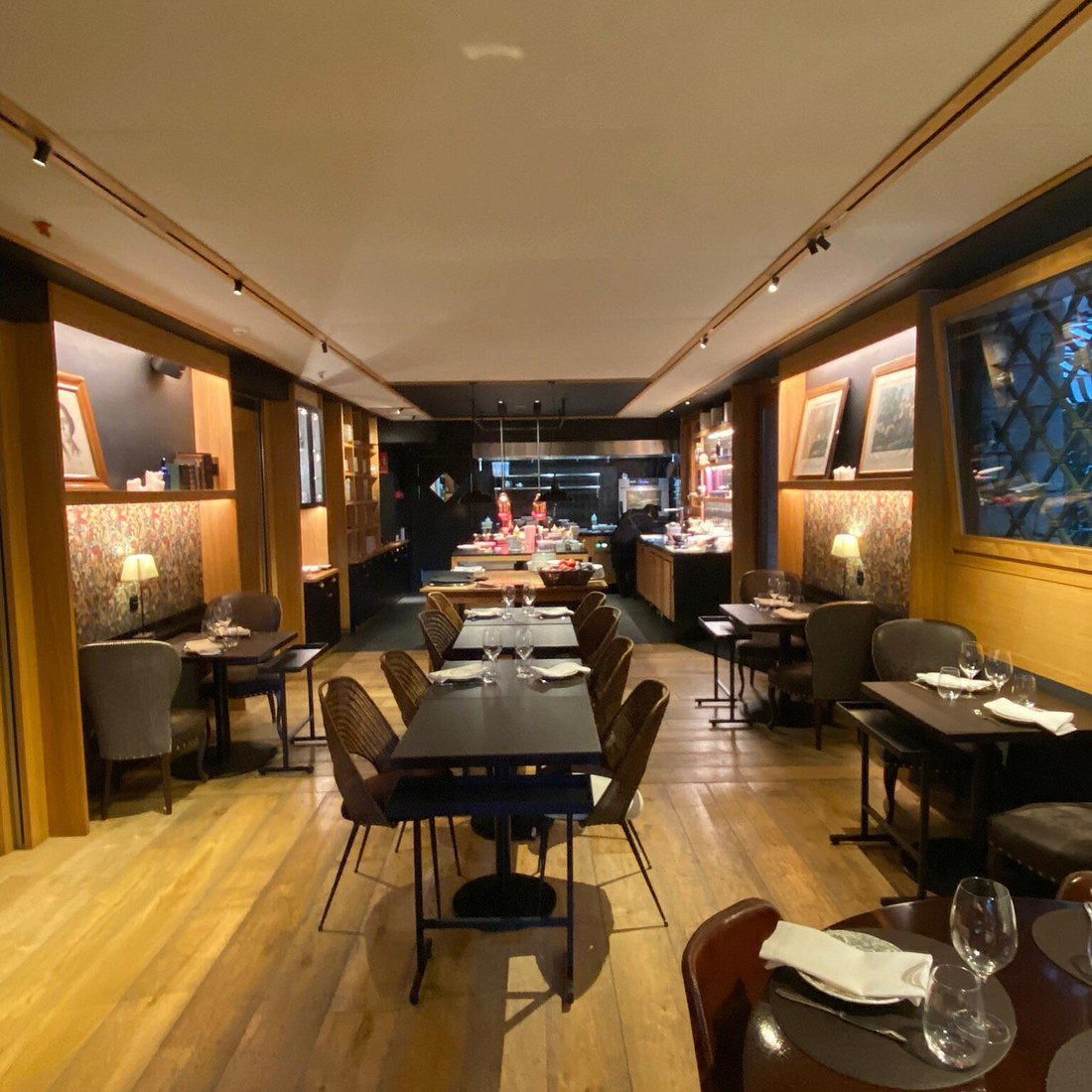
The Upper City and What It Asks of a Restaurant
Sarrià-Sant Gervasi sits above the grid. Where the Eixample runs on octagonal blocks and high footfall, this district follows older, hillside logic: narrower streets, quieter pavements, a population that tends to eat closer to home. Carrer del Dr. Carulla is that kind of street. Restaurants here are not destination addresses in the way that a Michelin-listed room in the Gothic Quarter or Poblenou might be. They are neighbourhood propositions, judged by whether they can hold the loyalty of residents who have other options and know the city well.
That context matters because it shapes what a place like Planta Baja is actually doing. In Barcelona's upper residential districts, the restaurants that survive long-term are not the ones chasing the food-press cycle. They are the ones that have found a register that works for Tuesday as well as Saturday, for a table of two locals and a table of visitors who found the address through a friend rather than a list. That is a different discipline from running a tasting-menu counter in a converted warehouse, and it is worth reading Planta Baja through that frame.
Where Local Ingredients and Global Technique Meet
Spain's broader creative cooking conversation, which you can trace through addresses like Disfrutar (Progressive, Creative) and Enigma (Creative) at the higher end, or through the regional ambition of El Celler de Can Roca in Girona and Mugaritz in Errenteria, has always been built on a productive tension between what Catalonia and Spain grow, fish, and cure, and the technical grammar imported from France, Japan, and the broader modernist canon. That tension does not belong only to the rooms with the tasting menus and the starred reputations. It filters down into neighbourhood cooking in ways that are often more interesting to observe precisely because the format is less self-conscious.
At the neighbourhood scale, the intersection of local product and acquired technique tends to express itself in ingredient sourcing, seasonal Catalan vegetables, coastal fish from the Barceloneta market chain, cured meats from inland producers, handled with a kitchen discipline that reflects training rather than tradition alone. The result, when it works, is cooking that reads as rooted rather than retrospective. This is the register that distinguishes the more serious neighbourhood addresses in upper Barcelona from the merely serviceable ones.
The broader Spanish creative scene that informs this approach spans the full peninsula. Aponiente in El Puerto de Santa María has made marine ingredients the entire argument. Quique Dacosta in Dénia works from a similar coastal-product logic but with a different formal vocabulary. Ricard Camarena in València has built a reputation on produce-first discipline. What these rooms share is a conviction that the ingredient is the editorial decision; technique is the delivery mechanism. That hierarchy, even when applied at a less formal scale, is what separates cooking that holds up from cooking that merely impresses on first encounter.
The Sarrià-Sant Gervasi Dining Position
Barcelona's dining geography has a clear internal logic. The creative-technical rooms cluster around the Eixample and its outer edges: Cocina Hermanos Torres (Creative), ABaC (Creative), and Lasarte (Progressive Spanish, Creative) are all operating in that bracket, with prices and formats that signal a deliberate occasion. Sarrià-Sant Gervasi supports a different mode. The neighbourhood's restaurants answer to a clientele that is prosperous and knowledgeable but eating on a weeknight schedule, not building a dining calendar around a reservation made three months ahead.
That positioning has its own demands. The wine list needs to work across a broader price band. The menu needs enough flexibility that returning diners do not exhaust it quickly. The room needs to function comfortably for a couple having a quiet dinner and a group celebrating something. These are operational constraints that the big tasting-menu rooms do not face in the same way, and executing against them consistently is its own form of discipline.
For international reference points on how neighbourhood technical cooking positions itself relative to the formal tier above it, it is instructive to look at how rooms like Le Bernardin in New York City or Atomix in New York City define the formal ceiling in their respective categories, while the addresses that operate just below that ceiling, and often just below the price point, carry much of the actual everyday weight of a city's dining culture. Barcelona is no different.
Reading the Creative Barcelona Tier
The rooms that define Barcelona's creative upper tier, Disfrutar, Enigma, Cocina Hermanos Torres, ABaC, are all operating at the €€€€ price point, with formats that require advance planning and, in most cases, a full evening commitment. They are excellent reference points for understanding what the city's kitchens are technically capable of, but they are not the addresses that define how Barcelona actually eats day to day. For that, you need to look at what is happening in the residential districts, and Sarrià-Sant Gervasi is one of the more instructive places to look.
Spain's wider creative network also provides context for where Barcelona sits regionally. Arzak in San Sebastián, Azurmendi in Larrabetzu, Martin Berasategui in Lasarte-Oria, DiverXO in Madrid, and Atrio in Cáceres are all drawing from the same broad tradition of Spanish creative cooking while operating from different regional product bases. Barcelona's neighbourhood restaurants inherit that tradition at a different register, which is precisely what makes them worth paying attention to.
Planning a Visit
| Venue | District | Price Tier | Format |
|---|---|---|---|
| ABaC | Sarrià-Sant Gervasi | €€€€ | Hotel tasting menu |
| Cocina Hermanos Torres | Eixample | €€€€ | Creative tasting menu |
| Disfrutar | Eixample | €€€€ | Progressive tasting menu |
Peers in This Market
Comparable venues nearby, for context on price, style, and recognition.
| Venue | Cuisine | Price | Notes |
|---|---|---|---|
| Planta BajaThis venue — the venue you are viewing | Mediterranean Catalan with Seasonal Local Ingredients | $$$ | Not listed |
| La Dama | Modern Mediterranean-French | $$$ | l'Antiga Esquerra de l'Eixample |
| Barcelona Milano | Catalan-Italian Fusion | $$$ | l'Antiga Esquerra de l'Eixample |
| My Fucking Restaurant | Gluten-Free Modern Mediterranean Tapas | $$$ | el Raval |
| Mirabe | Modern Mediterranean with Panoramic Views | $$$ | Sant Gervasi - la Bonanova |
| Albarada | Contemporary Mediterranean with skyline views | $$$ | Vallvidrera, el Tibidabo i les Planes |
Continue exploring
More in Barcelona
Restaurants in Barcelona
Browse all →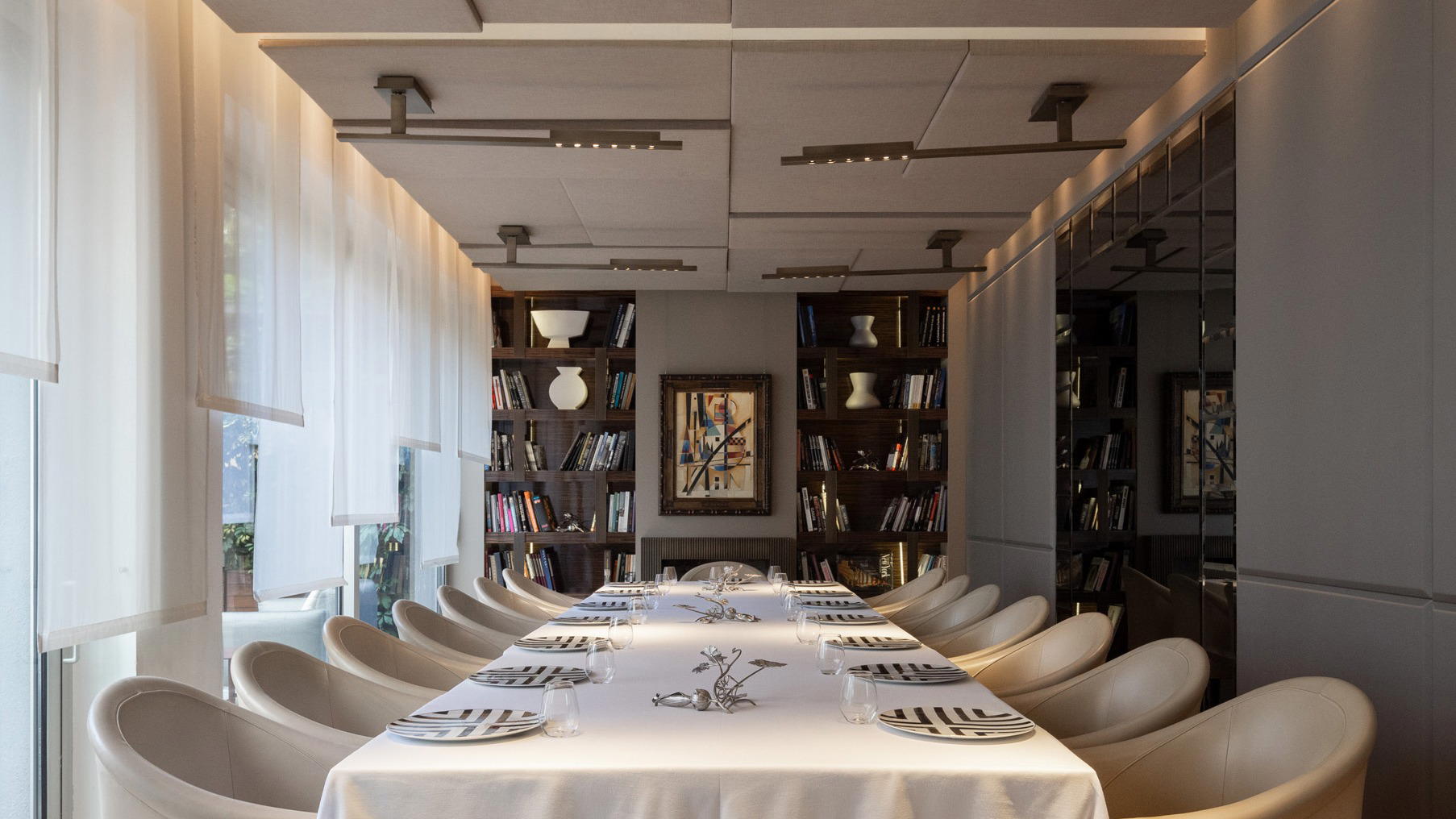
Bars in Barcelona
Browse all →
Hotels in Barcelona
Browse all →
At a Glance
- Elegant
- Intimate
- Cozy
- Classic
- Sophisticated
- Date Night
- Special Occasion
- Business Dinner
- Group Dining
- Open Kitchen
- Terrace
- Hotel Restaurant
- Private Dining
- Craft Cocktails
- Local Sourcing
Current opening hours
- Monday
- 8 AM–12 AM
- Tuesday
- 8 AM–12 AM
- Wednesday
- 8 AM–12 AM
- Thursday
- 8 AM–12 AM
- Friday
- 8 AM–12 AM
- Saturday
- 8 AM–12 AM
- Sunday
- 8 AM–12 AM
Hours can change for holidays and private events. Last verified .
Intimate living room atmosphere with warm lighting, working fireplace, library elements, and elegant 1950s English club or Parisian café-inspired decor across multiple thoughtfully designed spaces.