

A market-counter tapas bar operating Tuesday through Saturday from within Mercat de Sant Antoni, Pinotxo has climbed steadily on the Opinionated About Dining Casual Europe list, reaching #81 in 2024 before settling at #202 in 2025. The format is tightly traditional: standing or perching at the counter, ordering in sequence, eating as Barcelona has eaten in its markets for generations.
Pearl is the En Primeur Club membership app — saves, bookings, and concierge access live there. Same editors, same standards.
- Address
- Carrer del Compte d'Urgell 1 Mercat de Sant Antoni 18-19-20-21, 08011 Barcelona, Spain
- Phone
- +34 933 17 17 31
- Website
- pinotxobar.com
- Directions
- Get directions
 Saves & bookings on Pearl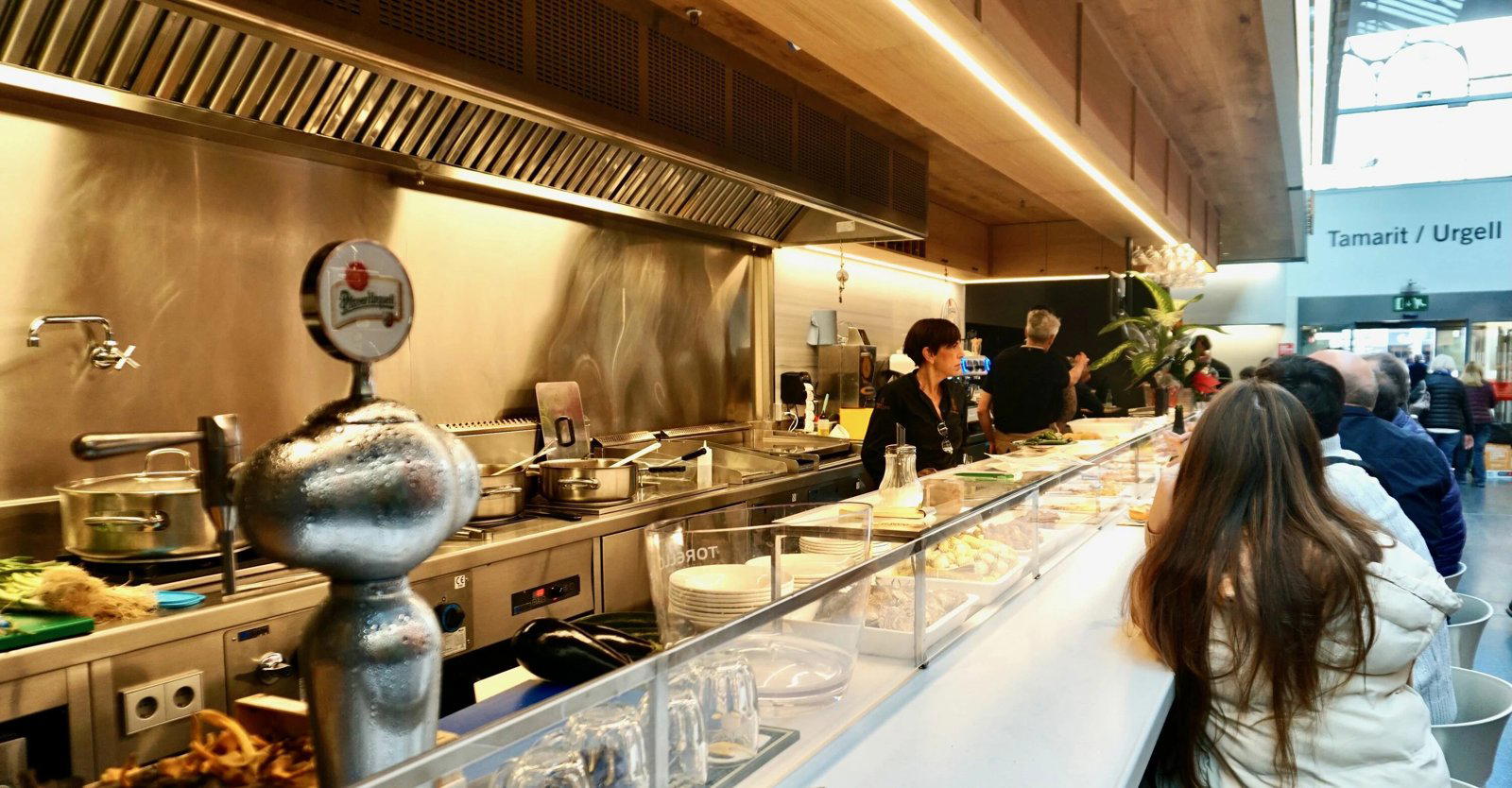
Counter Service, Market Hours, No Shortcuts
They open at breakfast, close before the afternoon is out, and operate on a logic that has nothing to do with dinner reservations or tasting menus. The counter is the dining room, the rhythm is determined by the kitchen and the crowd, and the meal unfolds in whatever sequence makes sense given what's ready and what you've managed to order. Pinotxo, set inside Mercat de Sant Antoni at stalls 18 through 21, sits squarely inside that tradition and has been recognised for it: ranked #111 on the Opinionated About Dining Casual Europe list in 2023, climbing to #81 in 2024, then settling at #202 in 2025.
That ranking movement is worth reading carefully. A jump from #111 to #81 across a single cycle signals that the format was being taken seriously at a European level, not just a local one. The 2025 ranking of #202 reflects a broader list expansion. For a counter bar operating Tuesday through Saturday and closing at 4:30 in the afternoon, sustained presence on that list over three consecutive years is a meaningful signal. It places Pinotxo in a different conversation than the city's creative tasting-menu houses, El Celler de Can Roca in Girona, Arzak in San Sebastián, or Barcelona's own DiverXO in Madrid, but it also separates it from the generic tapas bar category. It's a recognised format with a specific audience.
The Arc of a Market-Bar Meal
Market bars don't offer tasting menus, but they do have a progression, it's just informal and self-directed. The sequence at a counter like this tends to start with something sharp and briny: a few olives, a glass of house wine or cava, whatever is closest and quickest. The mid-section is where the kitchen's range shows up: small plates arriving in no particular ceremony, portions sized for sharing or for solo eating at the counter without ceremony. The final stretch, if you've read the room correctly, slows down into something warmer and more substantial.
That arc is a feature of market eating broadly, and Pinotxo operates within it. What distinguishes counters that earn outside recognition is discipline in sourcing and consistency in execution across what is, by definition, a high-turnover, informal format.457 reviews suggests that consistency holds across a wide range of visitors, not just regulars who know what to order. For a bar with no evening hours, that volume of feedback is telling.
The comparison peer for this format in Barcelona is a short list. La Cova Fumada operates on similarly tight hours with a similarly market-adjacent logic. El Xampanyet anchors the Born end of the same tradition. Bar Cañete and Cerveceria Catalana operate in the same tapas register but with longer hours and a slightly more polished format. Bar Mut tilts toward the Eixample clientele and a different price tier. Pinotxo's position among these is that of the structurally traditional: shortest hours, most market-embedded, least concession to the evening-dining model that has taken over much of the city's casual sector.
Sant Antoni as Context
Mercat de Sant Antoni matters here as more than a location detail. The market reopened after a major renovation in 2019, drawing a new wave of attention to a neighbourhood, the western edge of the Eixample, that had spent decades operating in the shadow of the Boqueria and the Born. Sant Antoni's revival brought a younger, more local crowd back to market eating, which changed the comparable set for bars operating inside it. Pinotxo is positioned at stalls 18 through 21, within the market's main hall.
This is a different context from the Boqueria, which has shifted heavily toward tourist traffic over the past twenty years. Sant Antoni runs on a more mixed clientele: neighbourhood residents, local professionals on lunch hours, and visitors who seek it out specifically rather than arriving by tour group. That distinction affects the character of the eating experience and the kind of recognition the venue earns: OAD's list is compiled from a reviewer base that skews toward the latter category.
For anyone building a Barcelona eating itinerary around the city's serious casual tier rather than its fine-dining constellation, Sant Antoni's market bar circuit connects naturally to the broader neighbourhood. The area around the market has accumulated enough good eating to justify a morning or midday anchored there, separate from the Eixample's restaurant corridor or the Bom's bar density.
Spain's Casual Tier in Wider Frame
The Spanish casual eating scene has its own hierarchy, and market-bar formats sit in a specific position within it. At the formal end of the country's dining range, the tasting-menu tier includes venues like Aponiente in El Puerto de Santa María, Quique Dacosta in Dénia, and Azurmendi in Larrabetzu. The market-bar format operates on an entirely different axis: no reservations, no ceremony, no progression determined by anyone but the diner. The Basque Country's pintxos bar circuit, including venues like Antonio Bar and Bar Bergara in San Sebastián, is the closest structural parallel elsewhere in Spain.
What Pinotxo represents in Barcelona is the persistence of that counter-service, market-hours format in a city that has otherwise shifted heavily toward the international dining model. Three consecutive OAD appearances across 2023, 2024, and 2025 signal that the format has a critical audience beyond the neighbourhood. The daytime, Tuesday-to-Saturday schedule shapes the visit.
Know Before You Go
- Address: Mercat de Sant Antoni, Stalls 18-19-20-21, Carrer del Compte d'Urgell 1, 08011 Barcelona
- Hours: Tuesday to Saturday, 8:00 am to 4:30 pm. Closed Sunday and Monday.
- Format: Counter bar inside a working market. No evening service.
- Recognition: Opinionated About Dining Casual Europe, #81 (2024), #111 (2023), #202 (2025) 4 from 1,355 reviews
- Booking: No booking method listed; market-bar counter format typically operates on a walk-in basis
- Getting there: Mercat de Sant Antoni is served by the Eixample street grid; closest metro is Sant Antoni on Line 2
Price and Positioning
Comparable venues nearby, for context on price, style, and recognition.
| Venue | Cuisine | Price | Notes |
|---|---|---|---|
| PinotxoThis venue — the venue you are viewing | Sant Antoni, Traditional Catalan Tapas | $$ | Not listed |
| Restaurant Can Pineda | el Clot, Traditional Catalan | $$ | Not listed |
| Can Valles | Not listed | $$$ | la Nova Esquerra de l'Eixample, Traditional Catalan |
| Restaurant Miguelitos | Not listed | $$ | l'Antiga Esquerra de l'Eixample, Modern Spanish Tapas & Mediterranean |
| Restaurant La Panxa del Bisbe | Not listed | $$ | la Vila de Gracia, Creative Catalan Tapas |
| Sense Pressa | Not listed | $$$ | l'Antiga Esquerra de l'Eixample, Authentic Catalan |
Recognition history
Dated appearances from independent guides and award organizations, with the underlying list record or original source where available.
Macarfi 6.9 Food Rating
Macarfi
Opinionated About Dining Casual in Europe Highly Recommended
Opinionated About Dining
Opinionated About Dining Casual in Europe Ranked #202
Opinionated About Dining
Opinionated About Dining Casual in Europe Ranked #81
Opinionated About Dining
Opinionated About Dining Casual in Europe Ranked #111
Opinionated About Dining
Continue exploring
More in Barcelona
Restaurants in Barcelona
Browse all →
Bars in Barcelona
Browse all →
Hotels in Barcelona
Browse all →
At a Glance
- Rustic
- Well Known
- Lively
- Cozy
- Casual Hangout
- Brunch
- Open Kitchen
- Historic Building
- Local Sourcing
Current opening hours
- Monday
- Closed
- Tuesday
- 8 AM–4:30 PM
- Wednesday
- 8 AM–4:30 PM
- Thursday
- 8 AM–4:30 PM
- Friday
- 8 AM–4:30 PM
- Saturday
- 8 AM–4:30 PM
- Sunday
- Closed
Hours can change for holidays and private events. Last verified .
Bustling market bar counter atmosphere with fast-paced, friendly service amid fresh Catalan dishes.