Macarfi 7 Food Rating
Our verdict
Recognised by Opinionated About Dining in both 2023 and 2025, it operates on the rhythm of the neighbourhood rather than the demands of reservation systems.

Pearl is the En Primeur Club membership app — saves, bookings, and concierge access live there. Same editors, same standards.
- Address
- Carrer de Montcada, 22, Ciutat Vella, 08003 Barcelona, Spain
- Phone
- +34 933 19 70 03
- Hours
- Mon 7–11 PMTue–Fri 12–3:30 PM, 7–11 PMSat 12–3:30 PMSun Closed
- Website
- elxampanyet.com
- Directions
- Get directions
The menu
What to order
- Anchovies
- Tortilla española
- House cava
- Calamari
- Baby clams
The Food as Evidence
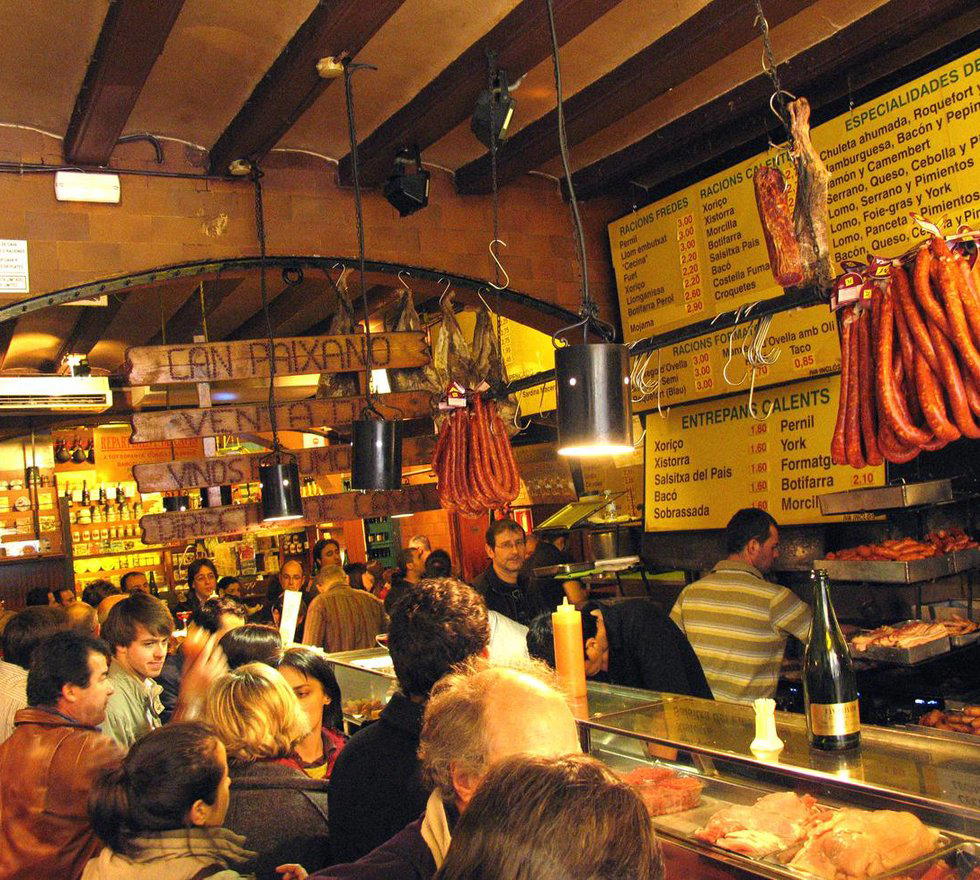
The tapas format in Catalonia has its own grammar, distinct from the pintxos culture of San Sebastián, where bars like Antonio Bar and Bar Bergara build elaborate bite-sized constructions on bread, and distinct from the sit-down raciones format that has become common across Madrid. In Catalonia, particularly in the Born and the Gràcia neighbourhoods, the tapas bar operates closer to the French zinc-bar tradition: you stand or perch, you drink first and eat alongside rather than sequentially, and the food is meant to sustain the drinking rather than replace a meal.
El Xampanyet's food offer fits this format precisely. The menu is not long, and that restraint is the point. A short list executed consistently over time carries more credibility than a broader selection with variable results. The anchovy and the cured-meat selections function as the bar's calling cards, items that regulars return to rather than dishes that rotate with seasons. That kind of menu stability is increasingly rare in a city where DiverXO in Madrid, Arzak in San Sebastián, Aponiente in El Puerto de Santa María, and Martin Berasategui in Lasarte-Oria, occupies a different world. El Xampanyet does not compete with any of those addresses and would not claim to. What it does, within its own narrow parameters, it does with the kind of consistency that earns sustained recognition from the same critical audience that tracks those bigger names.
What to Order
at El Xampanyet?
The house cava is the starting point: the bar's entire offer is organised around it, and arriving without ordering it misses the logic of the place. Alongside the cava, the anchovies are the item that appears most consistently in critical references to the bar, salt-cured, served simply, and calibrated to work with the wine's acidity. The broader advice is to order narrowly and repeat rather than to range across the menu. El Xampanyet's standing comes from a small number of things done with consistency, not from breadth. If you are looking for a more expansive tapas selection or a longer wine list,
Frequently asked questions
Is there a head chef associated with El Xampanyet?
The chef associated with El Xampanyet is Various.
What are the opening hours for El Xampanyet?
Hours at El Xampanyet: Hours: Monday 7–11 pm Tuesday 12–3:30 pm, 7–11 pm Wednesday 12–3:30 pm, 7–11 pm Thursday 12–3:30 pm, 7–11 pm Friday 12–3:30 pm, 7–11 pm Saturday 12–3:30 pm Sunday Closed.
What's the best thing to order at El Xampanyet?
Start with the house cava: the bar's offer is structured around it, and it anchors whatever food you order alongside. The tapas follow Catalan grammar rather than Basque pintxos logic, so expect shareable plates rather than bread-topped bites. Opinionated About Dining ranked El Xampanyet among its recommended casual venues in Europe in both 2023 and 2025, which puts the food in a credible peer context.
What style of cooking does El Xampanyet do?
Comparable Spots
| Venue | Cuisine | Price | Awards | Notes |
|---|---|---|---|---|
| El XampanyetThis venue — the venue you are viewing | Traditional Spanish Tapas | $20–30 | Macarfi 7 Food Rating | Not listed |
| Disfrutar | Avant-Garde Catalan Fine Dining | $300–500 | 3 Michelin Stars · World's 50 Best #1 | Progressive, Creative |
| Cocina Hermanos Torres | Modern Spanish Fine Dining | $300–500 | 3 Michelin Stars · World's 50 Best #78 | Creative |
| Lasarte | Modern Basque-Mediterranean Fine Dining | $300–500 | 3 Michelin Stars · La Liste Top Restaurants | Progressive Spanish, Creative |
| Cinc Sentits | Modern Catalan Fine Dining | $150–200 | 2 Michelin Stars · La Liste Top Restaurants | Modern Spanish, Creative |
| Enoteca Paco Pérez | Modern Mediterranean Seafood | $200–300 | 2 Michelin Stars · La Liste Top Restaurants | Modern Spanish, Modern Cuisine |
Recognition history
Dated appearances from independent guides and award organizations, with the underlying list record or original source where available.
Macarfi 7 Food Rating
Macarfi
Opinionated About Dining Casual in Europe Recommended
Opinionated About Dining
Full recognition history (4 entries)
Opinionated About Dining Casual in Europe Ranked #772
Opinionated About Dining
Opinionated About Dining Casual in Europe Recommended
Opinionated About Dining