Tabelog 100
Our verdict
Pinocchio belongs to Tokyo’s kissaten tradition rather than the city’s tasting-menu economy: small-scale, daytime-leaning, and built around coffee-shop rhythm, pancakes, and neighborhood use. Its Tabelog 100 Kissaten selections in 2021 and 2022 place it among the city’s recognized old-school café addresses, with prices in the JPY 1,000–1,999 bracket.

Pearl is the En Primeur Club membership app — saves, bookings, and concierge access live there. Same editors, same standards.
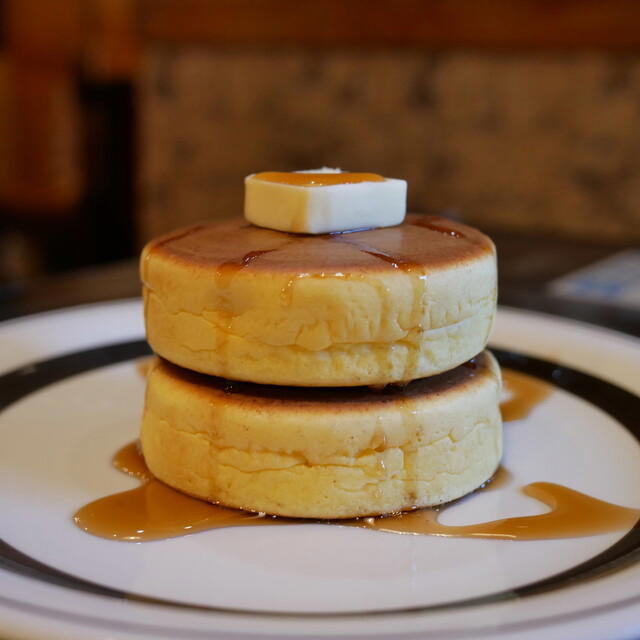
A Tokyo kissaten rarely announces itself theatrically. The signal is quieter: modest frontage, a room scaled for regulars, and the slower tempo of coffee, pancakes, and conversation. In Tokyo, that rhythm matters. The city rewards novelty, but café culture also survives on repetition, memory, and a front-of-house routine that can handle solo diners, families, and friends without turning the room into performance.
Pinocchio sits in that tradition. The category is kissa, not third-wave café, and the distinction matters. A kissa is built less around bean-origin discourse than the room’s social function: breakfast hours, afternoon pauses, counter culture when the counter is in use, and a menu language familiar to Tokyo diners. Pancakes give this address its sharper draw, but the broader point is the persistence of a Japanese coffee-shop format alongside several imported café trends.
Tokyo's kissaten culture, seen through a classic coffee-shop lens
Tokyo dining coverage often over-indexes on omakase counters, ramen queues, and hotel dining rooms. Kissaten sit in another lane. They do not compete with tasting menus, and their value cannot be read like luxury sushi or cocktail bars. The better comparison is with other sub-JPY 2,000 Tokyo specialist addresses, where depth comes from a narrow format done consistently rather than luxury ingredients or long-course structure.
That price tier is crowded. JUICY ALL STARZ, China Soba Osada, and Asahi Chonai Kai all sit in a similar JPY 1,000–1,999 Tokyo range, but their logic differs: casual counters often move around speed, turnover, and a defined bowl or plate. A kissaten asks for a longer pause. Materiel and Shinkirow show how other Tokyo venues can operate with different price expectations and different dining rhythms. Those differences matter because Pinocchio’s appeal is not luxury at a low price; it is a Tokyo dining pattern at a price that has stayed accessible.
The trust signal is specific. The café was selected for Tabelog Hyakumeiten recognition in 2022, and its listed Tabelog score is 3.69. In Japan, where online restaurant scoring is conservative, that combination carries more weight than a generic popularity claim. It places the address among recognized kissaten, not merely pleasant neighborhood cafés.
A small-room format where service rhythm does the work
The assigned editorial angle is team dynamic, but the useful reading is not chef biography. No public chef narrative is needed to explain the appeal. In a kissaten, team dynamic is operational: the kitchen times pancakes and café staples, the room absorbs different party types, and front-of-house keeps the experience calm even when demand concentrates around a narrow draw. That collaboration is quieter than a chef-sommelier pairing in a formal restaurant, but no less defining.
The practical core is the shared café room. Rather than framing the experience as a private salon, Pinocchio reads closer to a neighborhood dining room: public, steady, and dependent on the balance between the kitchen and the floor. That breadth says something about the kissa form: it is one of Tokyo’s rare formats where a lone coffee, a parent with a child, and a small group can plausibly share the same room without the venue changing identity.
Comfort also matters in a category often tied to nostalgia. Contemporary Tokyo kissaten often sit between memory and modern expectations; the best examples make the format legible for travelers and younger locals who want the culture without needing a long explanation. The appeal is practical as much as atmospheric: an accessible price band, a familiar café structure, and a format that can serve more than one kind of guest.
Where it fits into a Tokyo dining day
This is not a destination to pair with a maximalist dinner plan. It works better as a daytime anchor in Tokyo, especially for travelers who want to see how the city’s café culture operates beyond the most internationally visible dining categories. Seeking out a kissaten here differs from adding another central Tokyo restaurant to an already dense itinerary.
The practical reading is simple: come for the café format, the pancake category, and evidence of sustained recognition within the kissaten field. Its listed budget is Dinner: JPY 1,000 - JPY 1,999; Lunch: JPY 1,000 - JPY 1,999, which keeps the visit in the casual-planning tier rather than the special-occasion tier. Those details make this a deliberate café stop, not an after-dinner afterthought.
For broader Tokyo planning, the address belongs to a wider casual-dining map rather than a single genre trail. Readers comparing café formats might look at other Tokyo dining rooms, while casual Tokyo eating can stretch across unnamed specialist counters, coffee shops, and everyday restaurants. For city-wide context, use Our full Tokyo restaurants guide, plus Our full Tokyo hotels guide, Our full Tokyo bars guide, Our full Tokyo wineries guide, and Our full Tokyo experiences guide.
The wider Japan and overseas casual map is useful for calibration, not direct comparison: narrow-format cafés, counters, and casual restaurants in other cities show how focused dining ideas can travel without sharing the same cultural role. Pinocchio’s value is more local and more specific: a Tokyo kissa and pancake address whose recognition sits within Japan’s coffee-shop field.
The verdict is restrained: Pinocchio is worth the detour for readers who understand that Tokyo’s food culture is not built only from reservation battles and luxury counters. Its importance sits in continuity, price discipline, and hospitality that depends on steady coordination rather than visible ceremony. That is the point of a serious kissaten now.
Frequently asked questions
What's Pinocchio's location?
Tokyo.
What should I budget for a meal at Pinocchio?
Pricing at Pinocchio is listed as JPY 1,000 - JPY 1,999 JPY 1,000 - JPY 1,999 View spending breakdown.
Do they take walk-ins at Pinocchio?
Published details provided here do not confirm a reservation policy. Pinocchio is best approached as a Tokyo kissa and pancake stop in the JPY 1,000 - JPY 1,999 range.
What makes Pinocchio worth seeking out?
Pinocchio was selected for Tabelog Hyakumeiten recognition in 2022, which gives it clear standing in Tokyo’s coffee-shop scene. The appeal is its kissaten format, pancake category, and listed Tabelog score of 3.69.
Can Pinocchio adjust for dietary needs?
Those details are not published. The safest approach is to plan around the standard kissa and pancake category rather than expect special adjustments. Check the venue's official channels for the latest details.
Awards and Standing
Side-by-side context: comparable cuisine and price.
| Venue | Cuisine | Price | Awards | Notes |
|---|---|---|---|---|
| PinocchioThis venue (the venue you are viewing) | Japanese Kissaten / Pancakes | Not listed | Tabelog 100 | Not listed |
| Mitsuru Akebonobashi honten | Japanese neighborhood bakery | $1–10 | Tabelog 100 #43 | Shinjuku |
| Takeya | Udon & Izakaya | $10–20 | Tabelog 100 #100 | Bunkyō |
| Tonpei | Traditional Tonkatsu Counter | $10–20 | Tabelog 100 #69 | Taitō |
| Naniwaya cafe | Traditional Japanese taiyaki & sweets café | $1–10 | Tabelog 100 #21 | Minato |
| Kyokasuduke Uokyu Ginza ten | Traditional Japanese kasuzuke fish teishoku | $10–20 | Tabelog 100 #48 | Chūō |
Recognition history
Dated appearances from independent guides and award organizations, with the underlying list record or original source where available.
Tabelog 100
Tabelog · Tabelog 100 - Kissaten - 2026
Full recognition history (2 entries)
Tabelog 100 #7 · No. 7
Tabelog · Tabelog 100 - Kissaten - 2022