
Tabelog 100 #69
Our verdict
Tonpei belongs to Tokyo’s compact tonkatsu tradition rather than the city’s luxury tasting-menu economy: counter seating, pork cutlet as the point, and Tabelog 100 Tonkatsu 2026 recognition as the credential. Its appeal is the ratio between specialization and cost, especially for diners who want a focused Tokyo meal without turning lunch into a reservation campaign.

Pearl is the En Primeur Club membership app, where members save venues, book tables and use the concierge.
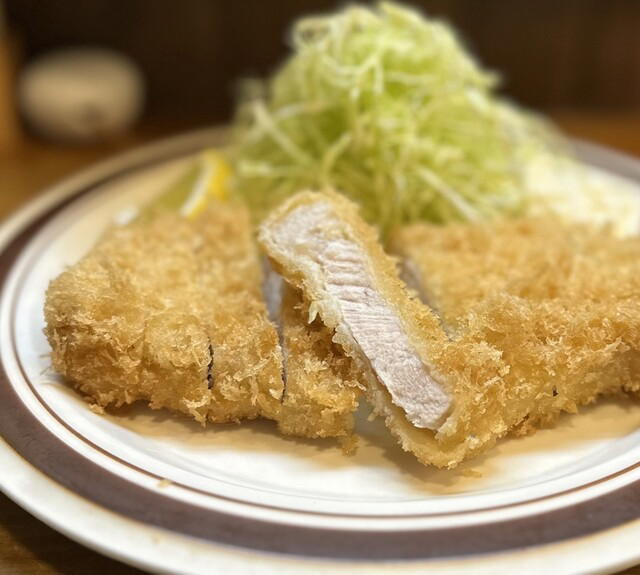
Tokyo is not only hotel-lobby omakase or camera-ready dining rooms. A different rhythm runs through the city’s practical dining culture: commuters, neighborhood regulars, narrow storefronts, and meals built around one dish repeated well rather than menus designed to impress. Tonkatsu suits that setting. It is a cuisine of timing, oil management, pork cutlet focus, rice, cabbage, sauce, and restraint; the room matters less than the fry, and the clearest story is often told by the plate rather than by linen or ceremony.
Tonpei fits that tradition as a Tokyo tonkatsu specialist with Tabelog 100 Tonkatsu 2026 recognition, a useful signal in a category where local diners quickly separate serious specialists from generic set-meal shops. The format is best understood as lean and direct, with no need to turn tonkatsu into a luxury concept. In Tokyo, where pork cutlet ranges from station-area lunch staple to high-end breed-and-breadcrumb discourse, the point is value through concentration: a narrow genre, a low-friction meal, and enough recognition to justify making room for it in a Tokyo eating itinerary.
Tokyo tonkatsu is a value category when the shop stays disciplined
Tonkatsu occupies an unusual place in Tokyo dining. It can be everyday food, yet the gap between a routine cutlet and a serious specialist is clear in crust adhesion, frying temperature, pork thickness, rice quality, and how the set holds together. Unlike sushi or kaiseki, tonkatsu does not need luxury signals to communicate skill. Its economics are more democratic, which is why focused specialists earn repeat local demand.
Tonpei’s listed budget, Dinner: JPY 1,000 - JPY 1,999; Lunch: JPY 1,000 - JPY 1,999, sits at the accessible end of Tokyo’s award-recognized dining, making its Tabelog 100 Tonkatsu 2026 selection more relevant than a generic popularity badge. In a city where counter meals can drift into ceremony and surcharge, tonkatsu at this level offers craft without theatricality. It is not trying to be a grand occasion restaurant. It competes against spending more on a more elaborate meal, and often wins on focus.
The comparison is clearest within Tokyo’s casual-specialist tier. Kansai Fu Teuchi Udon Irasshai, CANNONBALL DINER, sardexka, Iriya Kishimojin Monzen no Daya, and Yakiniku Uguisudanien each represent different ways a Tokyo itinerary can move between casual meals, specialist stops, and more involved dining. Against that field, Tonpei’s role is precise: a compact tonkatsu answer for diners seeking a recognized specialist without making the meal the whole evening.
The focused tonkatsu format changes the way the meal works
Focused tonkatsu has built-in discipline. There is little room for distraction when the main question is whether the cutlet, rice, cabbage, and sauce hold together as a satisfying set. That matters in Tokyo, where many of the strongest everyday food experiences are engineered for one person eating efficiently, quietly, and well. The expectation should be simple: this is not about lingering over a sprawling menu. It is a focused stop, closer to a craft specialist than a broad dining room.
For travelers, the practical read is simple: treat it as a meal to fold into a Tokyo route, not necessarily the fixed anchor of a day. The city’s scale rewards flexibility, and a tonkatsu stop works best when it sits naturally within a larger plan rather than forcing the whole itinerary around one plate. Building a cross-city meal around any compact specialist requires more tolerance for timing and demand.
That trade-off is part of the appeal. Tokyo dining is often discussed through scarcity, but scarcity is not always luxury. Sometimes it is simply a focused format, narrow genre, and local demand. Tonpei is more interesting read that way. It is not selling access as status. It works in a genre where the decisive question is whether the cutlet justifies the trip, and the Tabelog 100 Tonkatsu 2026 selection gives the answer enough weight for serious diners.
Where Tonpei fits in a Tokyo eating itinerary
For visitors mapping Tokyo by cuisine rather than neighborhood hype, tonkatsu is a necessary counterpoint to sushi, ramen, yakitori, and tempura. It shows another side of Japanese specialization: Western-influenced, fully domesticated, and measured by repetition rather than novelty. Strong tonkatsu shops rarely need long menus. They need consistency, heat control, and a meal that keeps the focus on the cutlet.
Tonpei is strongest as a value-led specialist stop, especially for diners who care about category depth. It is less suited to travelers chasing a long tasting menu, broad drinks program, or celebration room. The better frame is lunch or a compact dinner in Tokyo, followed by a different kind of evening elsewhere. For broader planning, use Our full Tokyo restaurants guide alongside Our full Tokyo bars guide, Our full Tokyo hotels guide, Our full Tokyo experiences guide, and Our full Tokyo wineries guide rather than treating one meal as the whole plan.
Tokyo’s range is clearer when small specialists sit beside unrelated formats. A diner might pair this cutlet stop with other Tokyo dining rooms, casual counters, cafés, curry shops, or drinks-led venues, depending on the day’s route. The logic extends beyond any one city: different trips can be organized around specialist cooking, everyday meals, and compact formats that do one thing with care. Tonpei’s place in that map is modest but sharp: a Tokyo tonkatsu specialist where value comes from specialization, not spectacle.
Quick Comparison
Comparable venues by category and price.
| Venue | Cuisine | Price | Awards | Notes |
|---|---|---|---|---|
| TonpeiThis venue (the venue you are viewing) | Traditional Tonkatsu Counter | $10–20 | Tabelog 100 #69 | Not listed |
| Mendokoro Honda Akihabara honten | Modern Tokyo Ramen & Tsukemen | $10–20 | Tabelog 100 #12 | Chiyoda |
| Echigoya Wakasa | Traditional Japanese Sweets | $1–10 | Tabelog 100 #34 | Sumida |
| Stand Hero | Standing Japanese Izakaya & Kushikatsu Bar | $10–20 | Tabelog 100 #49 | Chiyoda |
| 御料理 心馬 | Kaiseki with Oyakodon | $150–200 | Michelin Plate | Chūō |
| DOMINICA Ginza ten | Soup curry specialty (Sapporo-style Japanese curry) | $10–20 | Tabelog 100 #74 | Chūō |
Recognition history
Dated appearances from independent guides and award organizations, with the underlying list record or original source where available.
Tabelog 100 #69 · No. 69
Tabelog · Tabelog 100 - Tonkatsu - 2026
Continue exploring
More in Tokyo
Restaurants in Tokyo
All restaurants in Tokyo →












Details
- Cozy
- Classic
- Intimate
- Solo
- Casual Hangout
- Chefs Counter
- Standalone
- A La Carte
- Counter Dining
Current opening hours
- Monday
- 11:30 AM–2 PM, 6–9 PM
- Tuesday
- 11:30 AM–2 PM, 6–9 PM
- Wednesday
- Closed
- Thursday
- Closed
- Friday
- 11:30 AM–2 PM, 6–9 PM
- Saturday
- 11:30 AM–2 PM, 6–9 PM
- Sunday
- Closed
Hours can change for holidays and private events. Hours as of .
An old-school, compact counter-only shop with just eight seats, non-smoking and focused on carefully prepared tonkatsu, creating a down-to-earth, cozy atmosphere that suits solo diners and small parties of friends.