
Tabelog 100 #48
Our verdict
Kyokasuduke Uokyu Ginza ten is a compact Ginza lunch address built around kyo-kasuzuke, the sake-lees marinating tradition applied to fish. Its Tabelog 100 - Diner 2026 selection, modest JPY 1,000 - JPY 1,999 range, counter seating, and no-reservations format place it in Tokyo’s serious everyday-dining tier rather than the city’s luxury omakase economy.

Pearl is the En Primeur Club membership app, where members save venues, book tables and use the concierge.
The menu
What to order
- Kyoto-style kasuzuke gindara set meal
- Grilled kasuzuke salmon set meal
Tokyo can feel engineered for polish: department-store basements, watch boutiques, hushed counters, and dining rooms where the bill often reflects the city before the plate. The more interesting counterpoint sits in weekday lunch culture, where office workers, solo diners, and older regulars use narrow rooms for cooking that is disciplined rather than theatrical. In that context, Kyokasuduke Uokyu Ginza ten belongs to a Japanese category that visitors often underrate: the modest specialist lunch room, where a focused format can carry the meal.
The name points toward a broader Japanese food tradition rather than a modern flourish. Sake-lees marination, as a general technique, sits at the intersection of fermentation, preservation, and rice-brewing culture, using a byproduct of nihonshu production as a seasoning medium. The idea matters because it changes the logic of seafood dining in Tokyo. Instead of only the raw-fish precision associated with sushi, this part of Japanese food culture also leans on time, salt, and alcohol-derived aroma. It is a local ingredient system with technique as its quiet engine, closer to a craft pantry than a chef’s performance format.
Kasuzuke makes seafood feel rooted in the sake brewery, not the sushi counter
Tokyo’s seafood reputation is often filtered through sushi, tempura, and formal dining, but everyday fish cooking has its own hierarchy. Grilled set meals, simmered fish, miso-marinated fillets, and sake-lees marinades sit inside a lunch tradition where rice, pickles, soup, and a central protein do the structural work. The appeal is not novelty. It is repetition handled with control.
That is where Kyokasuduke Uokyu Ginza ten has a clear editorial role. Its Tabelog Hyakumeiten recognition for 2026 places a modestly priced cafeteria and seafood specialist inside a list that often rewards consistency over spectacle. The score attached to the listing, 3.65, is useful in Tokyo terms: Tabelog scores tend to compress, and a number in that range for a casual lunch room signals a following beyond convenience dining. The listed price band, JPY 1,000 - JPY 1,999, also helps explain its appeal as a focused everyday option rather than a high-spend destination.
The category label, cafeteria and seafood, is plain but revealing. This is not a room designed to compete with high-spend Tokyo counters such as Hiroyuki, where the dining proposition sits in an entirely different register. It is closer in economic logic to places like Kitsune An or Coffee Senmon Ten Sanjikken Ginza honten, where the city’s seriousness expresses itself at lower prices and with fewer gestures. Tokyo is unusually good at this tier: lunch rooms that look ordinary on paper but survive because the core product is narrow, repeatable, and judged by a demanding local audience.
Tokyo's serious lunch culture rewards narrow formats
The venue’s category reinforces the point. A cafeteria-and-seafood listing is not the choreography of an omakase counter, and it is not trying to be. It suits a lunch culture built around efficiency, solo dining, and a set-meal rhythm. That matters in Tokyo, where the city can punish indecision. A focused format reduces the meal to a few questions: fish, rice, timing, and whether the kitchen can make a seafood-led idea feel clean rather than heavy.
Kasuzuke also explains why sake can feel natural in this wider culinary context. The relationship is not pairing theater; it is a shared grammar. Sake lees carry the memory of brewing, and fish treated through that medium belongs to the same culinary family as nihonshu, pickles, miso, and other rice-driven ferments. For travelers used to Japanese seafood as pristine raw product, this is a useful correction. Tokyo’s fish culture is as much about controlled aging, curing, salting, and marinating as it is about knife work.
There is a broader global comparison here, but it should be used carefully. Many food cities now celebrate fermentation as an avant-garde technique, often through tasting menus and laboratory language. Japan never needed that reframing. Kasuzuke is fermentation without manifesto, a method embedded in lunch rather than staged as innovation. That makes this listing especially instructive for readers who already know Tokyo’s luxury dining circuit. It shows how technique can be sophisticated without becoming formal.
For a wider Tokyo food map, this sits beside other category-specific addresses rather than replacing them. Seafood, yakitori, curry, coffee, and casual dining each have their own lanes across the city, and the point is not to rank them against one another. Kyokasuduke Uokyu Ginza ten is useful because it shows how a modest category can still carry a strong editorial identity. Other Tokyo dining rooms may offer more theatre, but this kind of listing helps explain how the city’s everyday seriousness works.
How to place it within a Tokyo itinerary
The strongest reason to include Kyokasuduke Uokyu Ginza ten is not that it offers a grand meal. It offers a precise one. In a city where travelers often chase sushi seats, ramen queues, and tasting menus, a modest cafeteria-and-seafood lunch gives a clearer view of how Tokyo residents use specialist cooking during the workday. The format keeps the mood grounded. This is formal in discipline, casual in posture.
Readers building a fuller itinerary should treat it as part of a broader Tokyo day rather than a standalone destination. Tokyo pairs naturally with department-store food halls, coffee stops, and unplanned wandering between meals. For planning across the city, use Our full Tokyo restaurants guide, then layer in Our full Tokyo hotels guide, Our full Tokyo bars guide, Our full Tokyo wineries guide, and Our full Tokyo experiences guide for the city around the meal.
The same editorial lens applies beyond Tokyo. Regional and overseas Japanese dining formats show how narrow specialties travel and adapt, whether through grilled dishes, cafes, curry rooms, sake bars, or compact rice-focused counters. Each shows a different relationship between Japanese technique, local audience, and format. The Tokyo lesson is the cleanest one: a narrow idea can be the main event, even when the room refuses to announce itself that way.
Frequently asked questions
Is Kyokasuduke Uokyu Ginza ten child-friendly?
The provided listing identifies Kyokasuduke Uokyu Ginza ten as a cafeteria and seafood venue in Tokyo, with a listed price range of JPY 1,000 - JPY 1,999.
Is Kyokasuduke Uokyu Ginza ten formal or casual?
It reads as casual rather than formal. The provided category is cafeteria and seafood, and the listed budget is Lunch: JPY 1,000 - JPY 1,999.
How much does it cost to eat at Kyokasuduke Uokyu Ginza ten?
Pricing at Kyokasuduke Uokyu Ginza ten is listed as JPY 1,000 - JPY 1,999.
Is Kyokasuduke Uokyu Ginza ten open every day?
The provided venue details do not include a verified opening schedule. Check directly before visiting; the listed phone number is +81-3-6226-3395.
Where exactly is Kyokasuduke Uokyu Ginza ten?
Tokyo.
Pricing, Compared
Comparable options at the same price tier.
| Venue | Cuisine | Price | Awards | Notes |
|---|---|---|---|---|
| Kyokasuduke Uokyu Ginza tenThis venue (the venue you are viewing) | Traditional Japanese kasuzuke fish teishoku | $10–20 | Tabelog 100 #48 | Not listed |
| Wagashi Dokoro Oosumi Tamaya Ginza ten | Japanese Wagashi Shop | $1–10 | Tabelog 100 #71 | Chiyoda, Japanese Wagashi Shop |
| Ten mame | Japanese Traditional Sweets | $1–10 | Tabelog 100 #98 | Chūō, Japanese Traditional Sweets |
| Minna no Pan'ya | Traditional Japanese bakery | $10–20 | Tabelog 100 #33 | Chiyoda, Traditional Japanese bakery |
| Nihonbashi Nishikihorin Karintou senmonten | Traditional Japanese Karintou Specialty Shop | $1–10 | Tabelog 100 #69 | Chiyoda, Traditional Japanese Karintou Specialty Shop |
| BROWNIE | Japanese Curry / Yoshoku | Not listed | Tabelog 100 #31 | Chiyoda, Japanese Curry / Yoshoku |
Recognition history
Dated appearances from independent guides and award organizations, with the underlying list record or original source where available.
Tabelog 100 #48 · No. 48
Tabelog · Tabelog 100 - Diner - 2026
Continue exploring
More in Tokyo
Restaurants in Tokyo
All restaurants in Tokyo →

Bars in Tokyo
All bars in Tokyo →


Details
- Quiet
- Classic
- Solo
- After Work
- Casual Hangout
- Standalone
- Sustainable Seafood
- Set Menu
- Counter Dining
- Tea
- Soft Drinks
- Pescatarian Friendly
Current opening hours
- Monday
- 11 AM–2 PM
- Tuesday
- 11 AM–2 PM
- Wednesday
- 11 AM–2 PM
- Thursday
- 11 AM–2 PM
- Friday
- 11 AM–2 PM
- Saturday
- Closed
- Sunday
- Closed
Hours can change for holidays and private events. Hours as of .
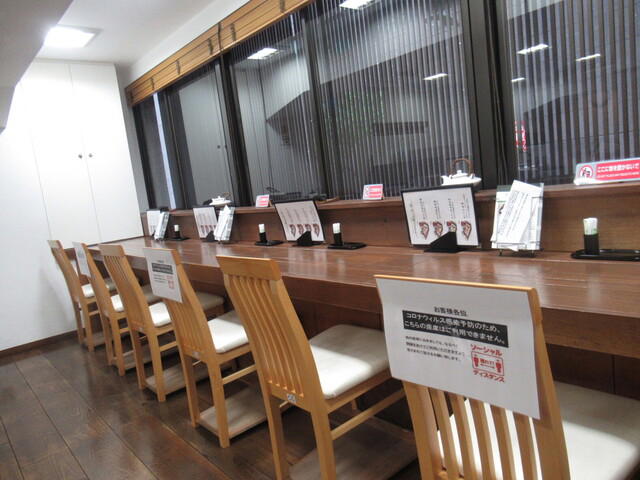
Simple counter-style and table seating in a compact second-floor space, with a no-reservations, lunch-only service that feels like a classic Tokyo teishoku-ya: efficient, understated, and focused entirely on the grilled kasuzuke fish.