
Michelin Plate
Our verdict
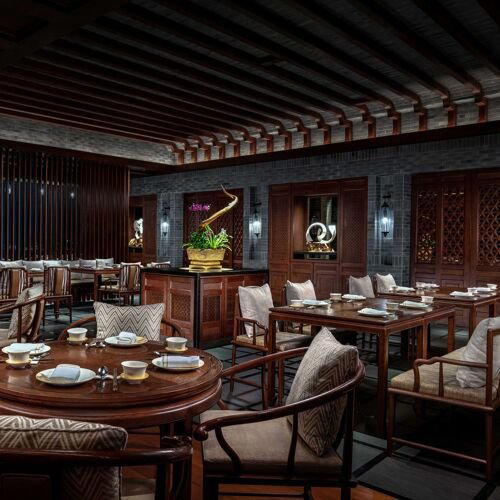
Pin Ning Fu sits in Nanjing's Qinhuai District, serving Huaiyang cuisine at a mid-range price point that makes the tradition accessible without diluting its technical demands. A 2025 Michelin Plate recognition places it within a recognized tier of Huaiyang cooking in the city, alongside a handful of peers working the same classical repertoire. For travelers tracing Jiangnan food culture through its historical capital, it is a considered stop.

Pearl is the En Primeur Club membership app, where members save venues, book tables and use the concierge.
The menu
What to order
- Crystal pork aspic
- Wensi tofu soup
- Crab meat lion head
- Squirrel osmanthus fish
Qinhuai and the Weight of Huaiyang Cooking
Mingwalang, the street that runs through Nanjing's Qinhuai District, sits inside one of China's most historically loaded dining neighborhoods. The area around the old city wall and the Qinhuai River has been associated with refined southern cooking for centuries, and the pressure that places on any kitchen claiming the Huaiyang tradition is not merely symbolic. Huaiyang, one of the four great schools of Chinese cuisine, built its reputation on restraint: knife work over heat intensity, careful seasoning over layered spice, and an almost obsessive attention to freshness and texture. Restaurants that occupy this address are operating inside an inherited argument about what southern Chinese cooking should be.
Pin Ning Fu, at 64-66 Mingwalang, has a 2025 Michelin Plate recognition, which places it inside the inspected tier of Nanjing's Huaiyang scene without ascending to starred territory. The Michelin Plate designation signals food that meets a quality threshold worth noting, a step above the unrecognized mid-range field. At a ¥¥ price point, it occupies a specific position: Huaiyang cooking delivered at everyday costs, rather than the ¥¥¥¥ register of places like Jiangnan Wok · Yun, which represents the category's premium ceiling in Nanjing.
The Huaiyang Tradition in Nanjing's Current Moment
Understanding Pin Ning Fu requires understanding what has happened to Huaiyang cooking over the past two decades in cities like Nanjing. The tradition spent much of the 1990s and 2000s under commercial pressure: banquet formats ballooned, the knife work that defines the canon got standardized into efficiency-driven shortcuts, and the cuisine's identity in the popular imagination narrowed to a handful of set-piece dishes. The correction came slowly, and it came first at the high end, with tasting-menu formats and premium ingredient sourcing restoring some of the craft signal. What has shifted more recently is the mid-range tier, where a smaller cohort of kitchens has chosen to apply classical discipline to everyday pricing. That is the more interesting development for anyone watching how the tradition actually propagates.
Pin Ning Fu's ¥¥ positioning places it squarely in this newer mid-range cohort. Its Michelin Plate in 2025 suggests the kitchen is operating with enough technical care to hold inspector attention, which is a meaningful credential in a city where Huaiyang cooking is politically and culturally significant. The comparison set across the city's Huaiyang category spans several price tiers: Hou Pin Xiao Yuan and Jiangnan Wok represent different points on that spectrum, each making distinct arguments about how classical cooking should translate into contemporary hospitality. Pin Ning Fu's argument, at its price level, is that accessibility and rigor are not contradictory.
Huaiyang at This Price Point: What to Expect
The Huaiyang canon at the ¥¥ level rarely includes the most labor-intensive showpieces, the hand-pulled tofu filaments or the multi-day braised preparations that define the ¥¥¥¥ experience. What it can sustain, at its finest, is the foundational discipline: clean stocks, accurate seasoning, and produce sourced with genuine attention to freshness. These are not lesser expressions of the tradition; they are its backbone. Many of the most technically revealing moments in Huaiyang cooking happen in dishes that cost little but tolerate no imprecision.
The 2025 Michelin Plate signals that Pin Ning Fu is executing within that framework at a standard worth recognizing. For a kitchen operating in this part of the Qinhuai District, the combination of recognized credentials and accessible pricing positions it as a practical entry point into Nanjing's Huaiyang conversation, particularly for visitors who want to compare the tradition across registers rather than spending exclusively at the premium end.
For deeper context on how Huaiyang cooking travels beyond Nanjing, the tradition has also produced recognized kitchens in other cities, including The Huaiyang Garden in Macau and Huaiyang Fu in Beijing's Dongcheng district. Comparing across these outposts is one of the more instructive ways to trace how the cuisine adapts to different market contexts.
The Qinhuai Setting
The Qinhuai District as a dining destination operates on two registers simultaneously. One is the tourist-facing version: lit-up waterfront restaurants, ceremonial presentations of local specialties, and the kind of staging that treats southern Chinese food as heritage spectacle. The other is a quieter, neighborhood-level register where kitchens are cooking for local regulars without theatrical framing. Mingwalang sits closer to the second register, which matters for what you can reasonably expect when you walk through the door. The address is practical rather than polished: a working street address rather than a designed dining destination.
Visitors building a Nanjing itinerary around food would do well to use Pin Ning Fu alongside other reference points. The Lantchen Reserve and Longyin Shanfang in Jiangning represent different directions the city's dining scene has moved in, and mapping those against a classical Huaiyang kitchen is useful editorial work for any serious eater. Beyond Nanjing, Jiangnan cuisine in Shanghai at places like 102 House or the Zhejiang tradition at Ru Yuan in Hangzhou offer comparative context for how the broader southern Chinese culinary family has evolved.
Planning a Visit
Pin Ning Fu is located at 64-66 Mingwalang in the Qinhuai District, centrally placed for visitors staying in or near the old city area. The ¥¥ pricing means a full meal runs at everyday costs rather than requiring a dining budget allocation, which makes it a practical lunch or dinner stop rather than a planned occasion. Booking details are not publicly listed, so arriving during standard Chinese lunch or dinner service windows and checking current hours locally before visiting is the practical approach. For visitors building a wider picture of Nanjing's dining scene, our full Nanjing restaurants guide covers the city's range across cuisines and price points. Those extending their stay can also find curated coverage in our Nanjing hotels guide, bars guide, and experiences guide.
Frequently asked questions
How much does it cost to eat at Pin Ning Fu?
Pricing at Pin Ning Fu is listed as ¥¥.
What's the address for Pin Ning Fu?
Pin Ning Fu is located at 64-66 Mingwalang, 64, Qinhuai District, Nanjing, Jiangsu, China, 210004, Nanjing.
What's Pin Ning Fu known for in terms of accolades?
Pin Ning Fu has received recognition including: Michelin Plate (2025).
What's the must-try dish at Pin Ning Fu?
What the 2025 Michelin Plate recognition does confirm is that the kitchen is executing Huaiyang cooking at a level worth attention. At the ¥¥ price point, Huaiyang menus in Nanjing typically centre on braised and slow-cooked preparations rather than the most labour-intensive showpieces, which gives a reasonable indication of what the kitchen is likely doing well.
How It Stacks Up
Comparable venues nearby, for context on price, style, and recognition.
| Venue | Cuisine | Price | Awards | Notes |
|---|---|---|---|---|
| Pin Ning FuThis venue (the venue you are viewing) | Modern Huaiyang & Nanjing Cuisine | Not listed | Michelin Plate | Not listed |
| Purple Mountain Garden | Traditional Huaiyang Chinese Fine Dining | $50–100 | Michelin Plate | Xuanwu District |
| FONG SENSE | Modern Huaiyang Chinese Fine Dining | Not listed | Black Pearl 1 Diamond | Jiangning Development Zone |
| Yu Chuan | Modern Sichuan | Not listed | Michelin Plate | Xuanwu |
| The Kitchen | International Buffet with Huaiyang and Cantonese Influences | $30–50 | Not listed | Jiangning District |
| San Bai Wan Bao Ying Chang Yu Mian | Baoying Rice Paddy Eel Noodles | Not listed | Michelin Bib Gourmand | Xuanwu |
Recognition history
Dated appearances from independent guides and award organizations, with the underlying list record or original source where available.
Michelin Plate
Michelin
Continue exploring
More in Nanjing

Details
- Elegant
- Sophisticated
- Scenic
- Intimate
- Date Night
- Special Occasion
- Business Dinner
- Open Kitchen
- Panoramic View
- Hotel Restaurant
- Sake Program
- Waterfront
- Mountain
- Skyline
- A La Carte
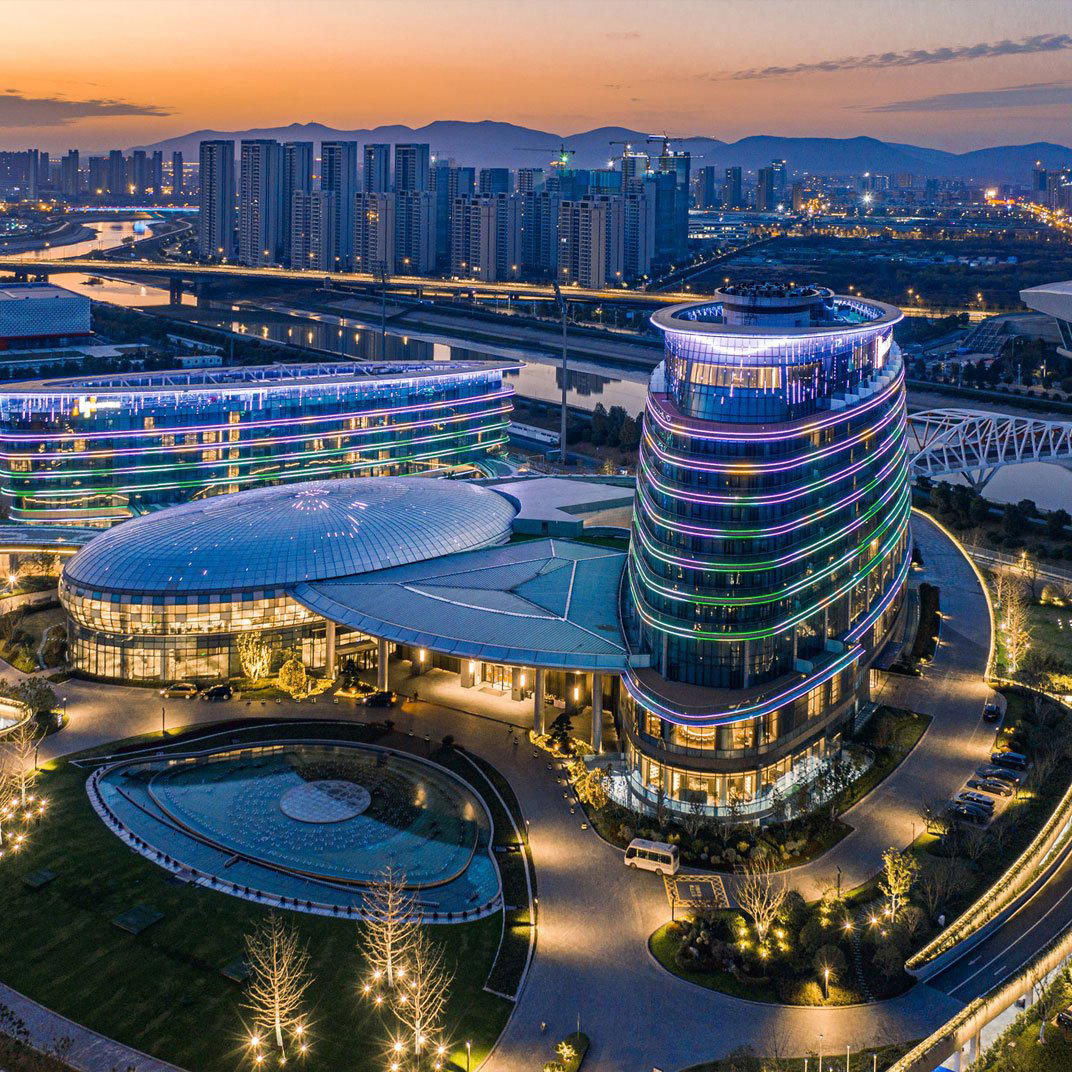
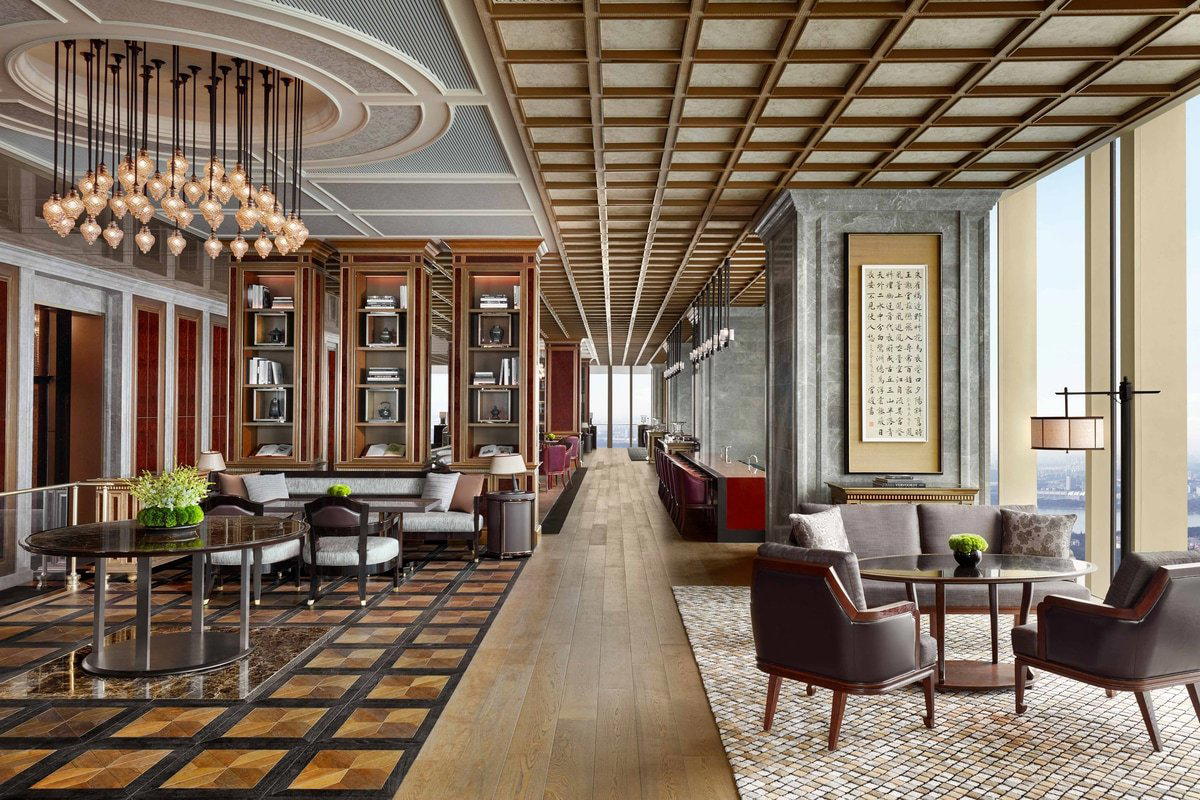
Serene and elegant with soft lighting, muted hues, open kitchen, and floor-to-ceiling windows showcasing far-reaching vistas.