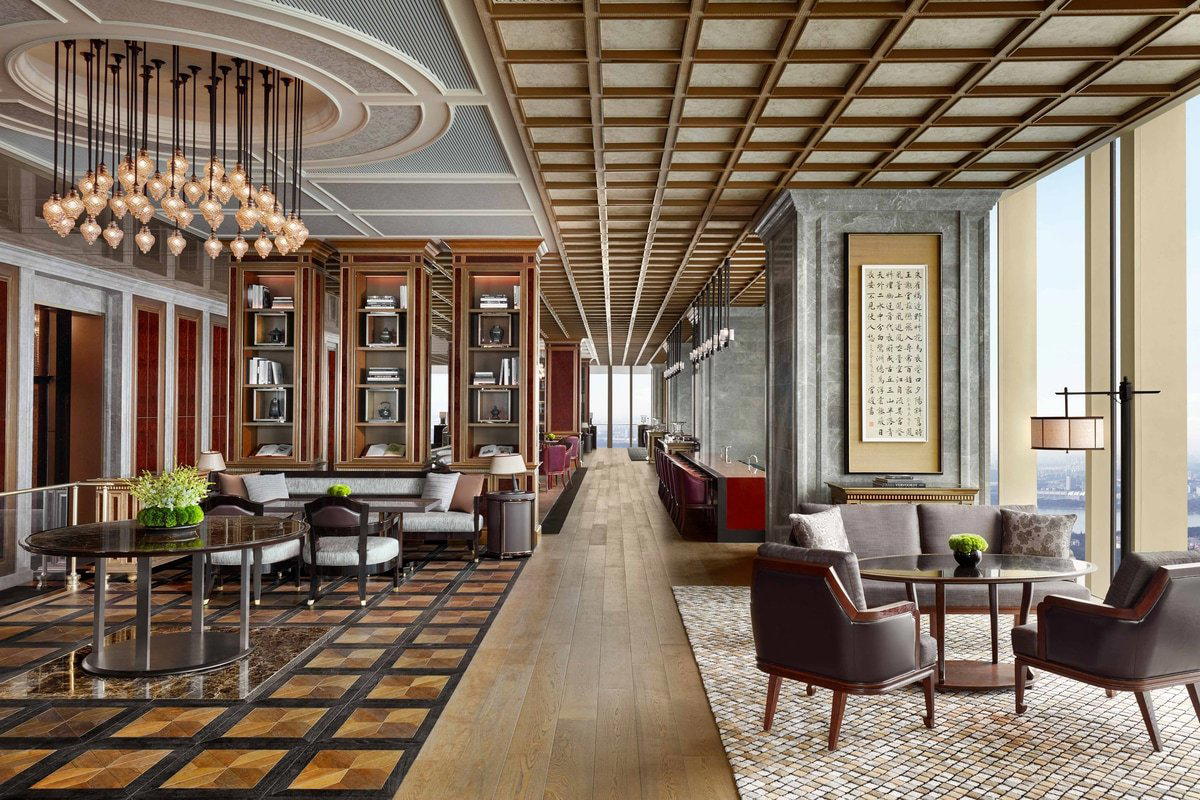
Michelin Plate
Our verdict
Yu Chuan brings Sichuan cooking to Nanjing's Pukou District with enough seriousness to earn a Michelin Plate in 2025. In a city dominated by Huaiyang and Jiangzhe traditions, the restaurant occupies a specific niche: bold, heat-forward cuisine transplanted from the southwest and executed at a price point (¥¥¥) that signals ambition rather than casual dining.

Pearl is the En Primeur Club membership app, where members save venues, book tables and use the concierge.

The menu
What to order
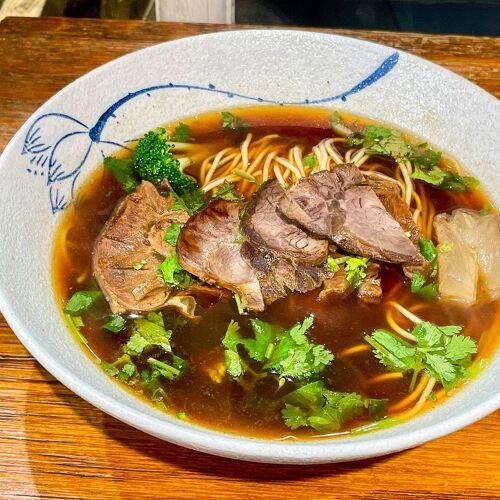
- Mapo Tofu with marbled beef
- Handmade ice jelly
Sichuan in the Land of Huaiyang
Nanjing's restaurant identity is built on restraint. Huaiyang cooking, the culinary tradition most closely associated with the Yangtze Delta cities, prizes delicacy, precise knife work, and broths that take days to clarify. It is the opposite of Sichuan cuisine's logic, where dried chilies, Sichuan peppercorn, fermented black beans, and doubanjiang create flavour through accumulation and heat. That Sichuan restaurants now hold Michelin recognition in Nanjing says something about how the city's dining scene has broadened beyond its native traditions, and about the appetite, among Nanjing diners, for something that pushes against the local grain.
Yu Chuan, located in the Pukou District on Dihe Road, earned a Michelin Plate in 2025. At the ¥¥¥ price tier, it sits in the same bracket as Dai Yuet Heen, which takes the Cantonese route at a comparable spend, and above the mid-range Jiangzhe and Chinese restaurants that populate Nanjing's broader dining mix. The Michelin Plate is a signal of consistent cooking quality rather than a starred recommendation, but in a city where Sichuan transplants often struggle to find the same recognition accorded to local traditions, the distinction carries weight.
What Sichuan Cooking Demands of Its Practitioners
Sichuan cuisine is among the most technically demanding regional Chinese traditions. The mala flavour profile, numbing from Sichuan peppercorn, fiery from dried or fresh chilies, requires not just ingredient sourcing but precise calibration. Too much peppercorn tips a dish into anesthesia; too little and the heat becomes unbalanced. Dishes like mapo tofu, twice-cooked pork (huiguorou), or dan dan noodles each have specific flavour ratios that regional specialists in Chengdu regard as benchmarks. Restaurants operating Sichuan cuisine outside its home province face an additional test: sourcing. Authentic Sichuan peppercorn, especially the Hanyuan variety, has a citrus-forward fragrance that inferior substitutes cannot replicate. The quality of doubanjiang, typically aged for years in Pixian, similarly determines whether a dish tastes canonical or approximate.
This is the context in which Yu Chuan's Michelin Plate has meaning. The recognition implies that the cooking clears a threshold of consistency and intent that the inspectors found worth noting. For Sichuan specialists based in Chengdu, the comparative reference points are deep: Yu Zhi Lan and Fang Xiang Jing represent the upper tier of Sichuan dining in that city, both Michelin-starred and operating at a level of refinement that reframes what the cuisine can do. Yu Chuan operates in a different context, a transplanted tradition in a city with its own culinary priorities, but the Plate suggests the kitchen is working to standards rather than coasting on the genre's popularity.
Nanjing's Expanding Regional Range
A decade ago, Nanjing's serious dining options were almost entirely rooted in the Jiangnan tradition. Jiangnan Wok · Yun represents the upmarket version of that tradition, Huaiyang cooking at the ¥¥¥¥ tier, where the price reflects sourcing and technique applied to locally resonant ingredients. Chi Man and Du Shi Li De Xiang Cun occupy the Jiangzhe space at more accessible price points. Fang Po addresses the small eats segment. What this map historically lacked was serious representation from China's other major regional traditions.
The arrival of Michelin-recognised Sichuan cooking in Nanjing reflects a broader shift visible across China's second and third-tier cities: diners with more travel experience, greater exposure to regional variation, and a willingness to pay for non-local cooking when it is executed with rigour. This pattern is visible in other cities in the EP Club network. Xin Rong Ji in Beijing brought Zhejiang-Jiangnan cooking north with sustained recognition. 102 House in Shanghai and Ru Yuan in Hangzhou represent similar moves into non-native regional territory. In Guangzhou and Macau, restaurants like Imperial Treasure Fine Chinese Cuisine and Chef Tam's Seasons have demonstrated that regional Chinese cooking, when executed at high standards, earns recognition regardless of geography.
Pukou District: Off the Central Circuit
Yu Chuan's address in Pukou places it across the Yangtze from central Nanjing, in a district that has historically been separated from the city's main dining circuits by the river. Pukou's development has accelerated in recent years, and the district now attracts restaurants that benefit from lower rents while still drawing diners willing to cross the water for a specific destination. This geography matters for how to approach the visit: Pukou is not a spontaneous stop on a central Nanjing itinerary but a deliberate journey. That positioning actually reinforces the case for treating the restaurant as a destination rather than an option, the Michelin Plate, at this remove from the dining core, represents a real commitment from the kitchen.
Planning the Visit
Yu Chuan sits at the ¥¥¥ price tier, which in Nanjing's current market places it in the mid-to-upper range where Michelin-recognised restaurants typically operate. Booking in advance is advisable for any restaurant at this recognition level; specific availability data is not published, but Plate-level restaurants in Chinese cities of Nanjing's size typically fill weekend slots several days ahead. The Pukou District address on Dihe Road is specific enough to locate on a mapping application, though visitors arriving from the central city should allow travel time across the river. No dress code data is available, though the ¥¥¥ positioning suggests smart-casual is the appropriate baseline.
For visitors building a broader Nanjing itinerary, the EP Club's full Nanjing restaurants guide covers the range from local Jiangzhe to international options. The Nanjing hotels guide, bars guide, wineries guide, and experiences guide complete the picture for extended stays.
Yu Chuan in the Sichuan Dining Spectrum
It is worth positioning Yu Chuan honestly within the wider Sichuan spectrum before a visit. The top tier of Sichuan dining in China sits in Chengdu, where restaurants like Yu Zhi Lan and Fang Xiang Jing have redefined what the cuisine can achieve in fine-dining formats, with starred recognition and the sourcing advantages of proximity to native ingredients. Yu Chuan operates at a different altitude, a Plate rather than stars, in a transplanted context rather than the source region. What the restaurant represents is Sichuan cooking executed with enough discipline to earn external recognition in a city that has no particular reason to favour it. For diners in Nanjing who want something outside the Huaiyang and Jiangzhe default, that is a more useful frame than any comparison to the Chengdu canon.
Frequently asked questions
What kind of cuisine does Yu Chuan serve?
What's the pricing like at Yu Chuan?
Pricing at Yu Chuan is listed as ¥¥¥.
What distinctions does Yu Chuan have?
Yu Chuan has received recognition including: Michelin Plate (2025).
What's the signature dish at Yu Chuan?
As a Michelin Plate recipient in 2025, the kitchen is recognised for its command of Sichuan technique, where mala preparations anchored by Sichuan peppercorn and dried chilli are central to the cuisine. Ordering around those core flavour principles is the most reliable approach at a restaurant of this classification.
Price Lens
Comparable venues nearby, for context on price, style, and recognition.
| Venue | Cuisine | Price | Awards | Notes |
|---|---|---|---|---|
| Yu ChuanThis venue (the venue you are viewing) | Modern Sichuan | Not listed | Michelin Plate | Not listed |
| Longyin Shanfang (Jiangning) | Modern Huaiyang Cuisine | $50–100 | Michelin Plate · Black Pearl 1 Diamond | Jiangning, Modern Huaiyang Cuisine |
| Pin Ning Fu | Modern Huaiyang & Nanjing Cuisine | Not listed | Michelin Plate | Xuanwu District, Modern Huaiyang & Nanjing Cuisine |
| Plum Garden | Huaiyang & Nanjing Classics | $50–100 | Michelin Plate · Black Pearl 1 Diamond | Xinjiekou, Huaiyang & Nanjing Classics |
| Meng Du Hui | Traditional Anhui (Hui) Cuisine | $50–100 | 1 Michelin Star | Jianye District, Traditional Anhui (Hui) Cuisine |
| Wan Guo Chun Chinese Restaurant | Traditional Huaiyang Cuisine | $30–50 | Michelin Plate · Relais Chateaux Award | Gulou, Traditional Huaiyang Cuisine |
Recognition history
Dated appearances from independent guides and award organizations, with the underlying list record or original source where available.
Michelin Plate
Michelin