Pidgin
This listing is retired after a June 2026 status audit found the place inactive at its stored address.
- Address
- 52 Wilton Way, London E8 1BG, United Kingdom
- Phone
- +44 20 7254 8311
- Website
- pidginlondon.com
- Directions
- Get directions
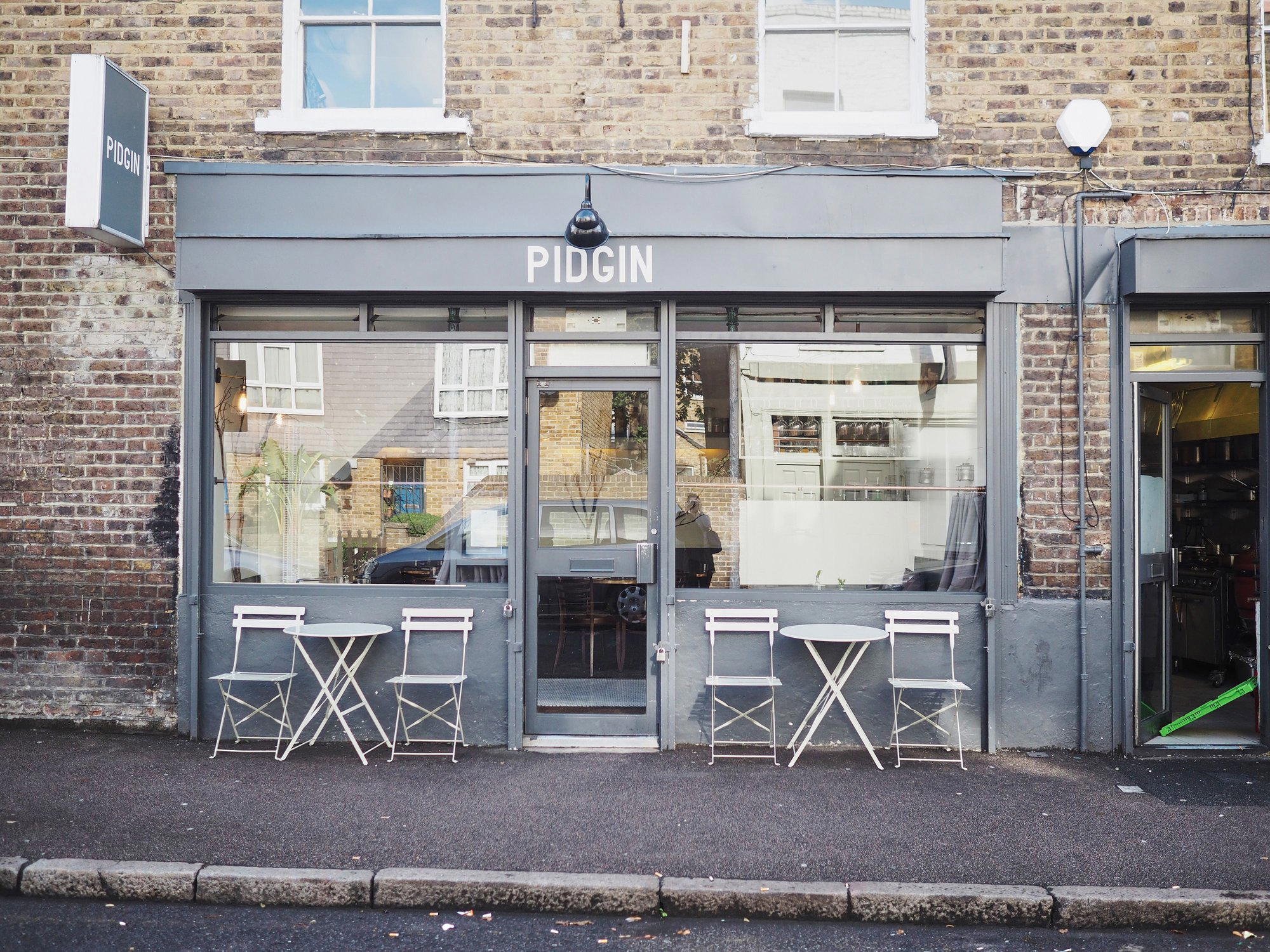
Wilton Way and What It Represents
Pidgin is a restaurant at 52 Wilton Way, London E8 1BG, serving a Modern British Tasting Menu at about $72 per person. The street runs through a pocket of E8 where independent coffee shops, natural wine bars, and small-format restaurants have accumulated not through gentrification spectacle but through the quieter logic of chefs and operators choosing affordable space close to where they live. Pidgin, at number 52, belongs to that pattern. The room is small, the aesthetic stripped back, and the cooking format structured around a set menu that changes weekly, a cadence that places serious technical demands on the kitchen and signals, clearly, that this is not a neighbourhood restaurant in the passive sense.
That weekly rotation is worth pausing on. Most restaurants with similar ambitions in central London anchor on seasonal change across months, updating menus quarterly or when supply dictates. A weekly format compresses that cycle dramatically, requiring a kitchen to source, develop, test, and execute new dishes on a timeline that most brigade structures struggle to sustain. It aligns Pidgin with a small cohort of restaurants globally, places like Lazy Bear in San Francisco, where the menu format itself is a statement about kitchen philosophy, not just a logistical choice.
The Editorial Angle: Where Does Local Technique End and Global Method Begin?
London's most interesting cooking of the past decade has happened at the intersection of British seasonal produce and methods imported from elsewhere, fermentation vocabularies from Scandinavia and Korea, braising logic from France and Japan, fire techniques from South America and West Africa. This is not fusion in the old, muddled sense. It is chefs who understand multiple culinary systems applying whichever technique actually serves the ingredient in front of them.
Pidgin operates squarely in that mode. The cooking draws from a wide technical library, there is nothing fixed about the cuisine category, but the sourcing stays close to home in the way that serious British restaurants have increasingly committed to since the mid-2010s. What emerges is cooking that uses international method as a servant of local ingredient, rather than treating the British larder as a constraint to be overcome. This is a meaningful distinction. Restaurants like L'Enclume in Cartmel and Moor Hall in Aughton have built their reputations on exactly this logic in rural contexts; Pidgin does something structurally similar inside a city neighbourhood, without the garden acreage or the country house infrastructure.
The central London tier, CORE by Clare Smyth, The Ledbury, Dinner by Heston Blumenthal, works with British ingredients but within formal frameworks and price points that place them in a different competitive set entirely. Pidgin's peer group is less those Michelin-starred dining rooms and more the wave of thoughtful neighbourhood restaurants across London, Copenhagen, and Melbourne that have redefined what serious cooking outside a formal fine-dining structure can look like. The comparison with Le Bernardin in New York City is instructive in reverse: where Le Bernardin operates with institutionalised rigidity around a French seafood tradition, Pidgin's weekly menu rotation is a structural rejection of that kind of fixed identity.
Hackney as Context
Understanding Pidgin means understanding what E8 has become as a dining district. Hackney is not Mayfair, and that is precisely the point. The neighbourhood has developed a cluster of independent restaurants that attract food-focused Londoners who have grown tired of the theatrics and price inflation of the West End. This is a dining culture that values directness, smaller rooms, shorter wine lists chosen with actual conviction, cooking that doesn't require a front-of-house team performing elaborate ceremony to justify its price.
That context shapes what Pidgin is. The room's intimacy is functional, not incidental. Restaurants operating on similar principles elsewhere in the UK, hide and fox in Saltwood, Midsummer House in Cambridge, demonstrate that tight-format cooking with serious ambition is not the exclusive preserve of the capital's established fine-dining corridors.
Placing Pidgin in the Broader British Restaurant Conversation
Britain's restaurant conversation has shifted considerably since 2015. The question is no longer whether serious cooking can happen outside London or outside formal fine-dining structures. It can, and the evidence is substantial: Waterside Inn in Bray, Gidleigh Park in Chagford, Restaurant Andrew Fairlie in Auchterarder, Hand and Flowers in Marlow, and Ynyshir Hall in Machynlleth have all demonstrated that geography is not destiny in British cooking. The newer question is what form serious neighbourhood cooking takes inside London itself, outside the Michelin-chasing frameworks of Chelsea and Mayfair.
Pidgin answers that question with a specific set of choices: a compact room on a residential Hackney street, a weekly-changing set menu format, and cooking that draws on global technique to serve British seasonal produce. Those choices constitute a coherent position in the London dining market, and they distinguish Pidgin from both the formal fine-dining bracket (see Restaurant Gordon Ramsay or Sketch, The Lecture Room and Library) and from the casual neighbourhood restaurants that don't carry similar kitchen ambition. And for comparable ambition in a different regional register, Opheem in Birmingham offers a useful parallel in how a city's non-central neighbourhoods can carry serious cooking credentials.
Know Before You Go
- Address: 52 Wilton Way, London E8 1BG
- Format: Set menu, changing weekly
- Booking: Advance reservations strongly recommended given the small room size; walk-ins are unlikely to succeed on weekends
- Getting there: London Fields (Overground) is the nearest station, approximately five minutes on foot; Hackney Central is also walkable
- Neighbourhood: Hackney, East London, the surrounding streets have a concentration of independent food and drink venues worth building an evening around
Cuisine and Credentials
Comparable venues nearby, for context on price, style, and recognition.
| Venue | Cuisine | Price | Notes |
|---|---|---|---|
| PidginThis venue — the venue you are viewing | Modern British Tasting Menu | $$$ | Not listed |
| Teal | Contemporary British Bistro | $$$ | Whitehall |
| Old Compton Brasserie | Modern British Brasserie | $$$ | Soho |
| Blue Boar | British Gastropub | $$$ | Westminster |
| St John. Marylebone | Modern British Nose-to-Tail | $$$ | Marylebone |
| Ivy Kensington Brasserie | Modern British Brasserie | $$$ | Kensington Palace Gardens |
Continue exploring
More in London
Restaurants in London
Browse all →
Bars in London
Browse all →
Hotels in London
Browse all →



At a Glance
- Cozy
- Intimate
- Trendy
- Date Night
- Special Occasion
- Open Kitchen
- Natural Wine
Cozy and convivial intimate neighborhood atmosphere with a pop-up feel.