Ivy Kensington Brasserie
Positioned between Kensington High Street's retail energy and the quieter residential streets beyond, Ivy Kensington Brasserie operates in a different register from the Ivy's Covent Garden flagship, less theatre, more neighbourhood confidence. The brasserie format suits the postcode, drawing a mix of local regulars and visitors who want something more considered than the surrounding casual options without committing to the full ££££ tier represented by nearby Michelin-tracked rooms.
Pearl is the En Primeur Club membership app — saves, bookings, and concierge access live there. Same editors, same standards.
- Address
- 96 Kensington High St, London W8 4SG, United Kingdom
- Phone
- +442033010500
- Website
- ivycollection.com
- Directions
- Get directions
 Saves & bookings on Pearl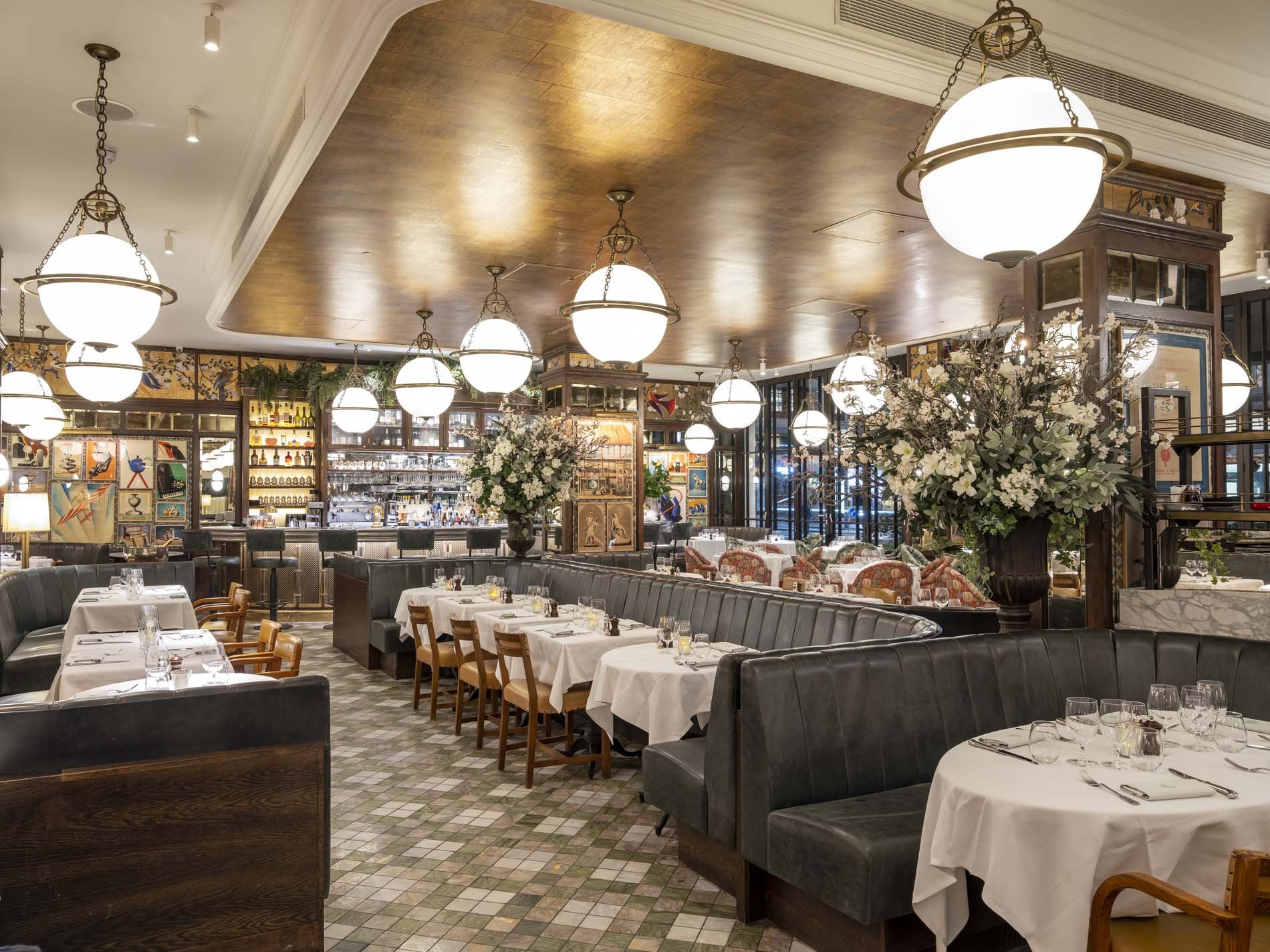
Kensington's Brasserie Register
London's mid-tier dining has quietly bifurcated. On one side sits the fast-casual end, where speed and price dominate. On the other, the formal tasting-menu rooms, venues like CORE by Clare Smyth, The Ledbury, and Sketch, The Lecture Room and Library that operate at ££££ and require advance planning as a matter of course. Between those two poles, the brasserie format has carved its own logic: à la carte flexibility, a room designed to hold different occasions simultaneously, and a price point that allows return visits without ceremony. Ivy Kensington Brasserie, a Modern British Brasserie in London at 96 Kensington High Street, sits squarely in that middle register. It belongs to The Ivy Collection, the group-dining arm built from the original Covent Garden institution, and its postcode places it in direct conversation with a neighbourhood that has historically under-served serious but informal dining.
Kensington is a wealthy residential pocket with significant foot traffic from the Royal Albert Hall, the Victoria and Albert Museum, and the High Street's retail corridor. That combination produces a specific diner: time-pressed at lunch, more relaxed in the evening, and broadly sceptical of overtly tourist-facing menus. The brasserie format addresses all three conditions without resolving any of them perfectly, which is why the category remains genuinely useful in London rather than being displaced by more legible formats at either end of the price spectrum.
How the Day Divides
The lunch-to-dinner shift at a brasserie of this type is more pronounced than it appears from the outside. Brasserie formats across London and, by extension, across European dining tradition, were designed to absorb the full range of the day, a counter-programming response to the rigidity of formal dining rooms that shut between services. At Ivy Kensington, as with comparable venues in its comparable set, the daytime proposition leans on accessibility: lighter dishes, faster pacing, and a room that accommodates solo diners and working lunches with less of the social performance that evening service demands.
Evenings shift the atmosphere considerably. The Ivy Collection's design vocabulary, heavily influenced by the Covent Garden original's stained glass and art-hung walls, tends to read more dramatically under artificial light. This is a deliberate architectural choice: the rooms are built to transition, not to be one fixed thing. By dinner, the brasserie functions less as a convenience and more as a destination in its own right, competing not just with the neighbourhood's casual offerings but also drawing comparisons to the lower tiers of London's more formal rooms, including Dinner by Heston Blumenthal nearby at the Mandarin Oriental. The comparison isn't about cuisine register, Dinner operates in a different category entirely, but about how Kensington diners allocate an evening.
Value arithmetic also behaves differently across the two services. Lunch at London brasseries in this bracket typically offers set menus or compressed à la carte pricing that can represent meaningfully better value than the same room at dinner. For visitors who have reserved their evenings for the ££££ tier, a brasserie lunch provides a calibrated counterpoint without doubling the day's spend.
Placing the Ivy Collection in Context
The Ivy Collection has expanded considerably over the past decade, which places any individual branch in an interesting position. The original Ivy in Covent Garden carried genuine cultural weight, decades of theatrical clientele, a waiting list treated as a London rite of passage. The Collection format, which brought the aesthetic and broad menu approach to neighbourhood sites across London and the UK, made that cultural shorthand more widely available while inevitably diluting some of its exclusivity. This is a rational trade-off, and not distinctive to The Ivy: comparable group expansions have followed the same logic across Paris, New York, and Tokyo.
For Kensington specifically, the Collection model is well-suited. The neighbourhood's residents expect a level of finish, design investment, attentive service, a wine list with range, that a purely local independent might not sustain at the required volume. The group's infrastructure supports consistency across those dimensions. What it trades in return is the particularity of a single-site operation: the sense that the room exists because of this specific street, this specific clientele, this specific chef. Those qualities define venues at the higher end of London's dining register. For context on what that sharper edge looks like in practice, venues such as L'Enclume in Cartmel, Moor Hall in Aughton, or Midsummer House in Cambridge represent the single-site conviction that group operations structurally cannot replicate.
That observation is not a criticism of the brasserie format. It is a clarification of what the format is actually doing. Ivy Kensington competes horizontally, against other brasserie-tier rooms in the postcode and adjacent neighbourhoods, rather than vertically against the Michelin tier. Measured against that comparable set, its group backing is an operational advantage: the supply chains, training standards, and design investment that smaller operators struggle to maintain at equivalent price points.
Broader London Dining Worth Knowing
London's dining geography rewards planning. Kensington sits within reach of several of the city's most discussed rooms, and understanding the neighbourhood's position relative to them clarifies where Ivy Kensington fits in a longer itinerary. For those extending beyond London, the UK's destination dining scene includes Gidleigh Park in Chagford, Hand and Flowers in Marlow, hide and fox in Saltwood, Opheem in Birmingham, and Restaurant Andrew Fairlie in Auchterarder. For international comparison, Le Bernardin in New York City and Atomix in New York City represent the US end of the fine-dining spectrum that London increasingly benchmarks itself against.
Planning Your Visit
Address: 96 Kensington High Street, London W8 4SG. Dress: Smart casual is the working standard. Budget: Expect about $45 per person.
Just the Basics
Comparable venues nearby, for context on price, style, and recognition.
| Venue | Cuisine | Price |
|---|---|---|
| Ivy Kensington BrasserieThis venue — the venue you are viewing | Not listed | $$$ |
| St John. Marylebone | Marylebone, Modern British Nose-to-Tail | $$$ |
| Browns | Covent Garden, British Brasserie | $$$ |
| The Lighterman | King's Cross, Modern British Gastropub | $$$ |
| Rochelle Canteen | Bethnal Green, Seasonal Modern British | $$$ |
| Paradise by way of Kensal Green | West Kilburn, Modern British Gastropub | $$$ |
Continue exploring
More in London
Restaurants in London
Browse all →
Bars in London
Browse all →
Hotels in London
Browse all →


At a Glance
- Elegant
- Sophisticated
- Lively
- Classic
- Brunch
- Celebration
- Casual Hangout
- Historic Building
- Extensive Wine List
- Street Scene
Current opening hours
- Monday
- 8 AM–12 AM
- Tuesday
- 8 AM–12 AM
- Wednesday
- 8 AM–12 AM
- Thursday
- 8 AM–12 AM
- Friday
- 8 AM–12 AM
- Saturday
- 8 AM–12 AM
- Sunday
- 9 AM–11:30 PM
Hours can change for holidays and private events. Last verified .
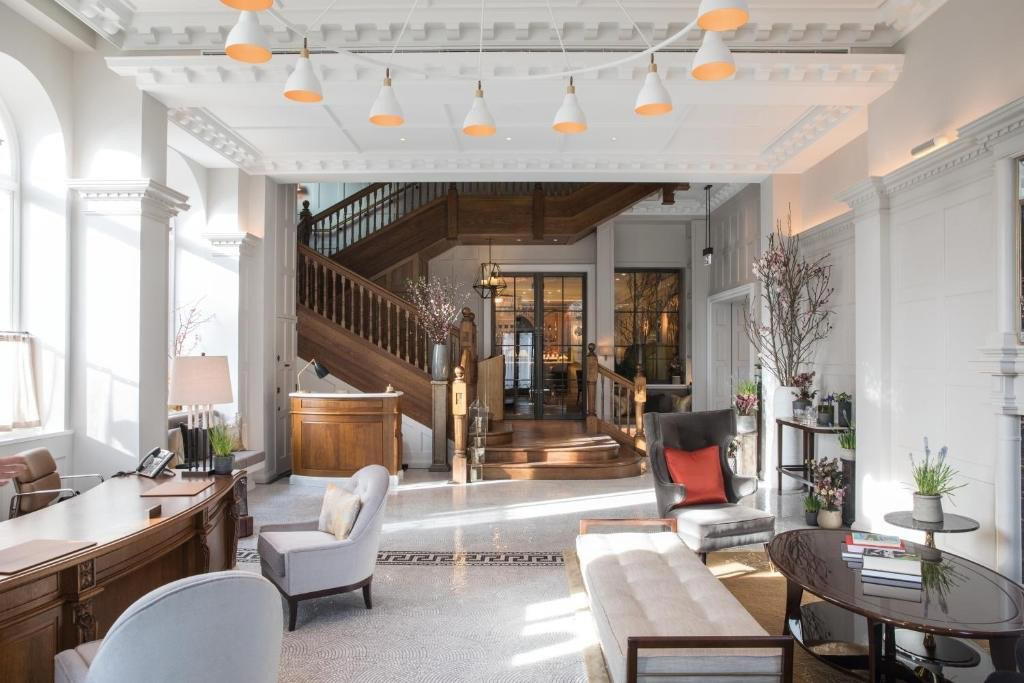
Polished design with shining floors, high ceilings, wall of windows creating an urbane, lively brasserie atmosphere.