Michelin Plate · The Sunday Times Ireland’s 100 Best Restaurants
Our verdict
On Camden Street Lower, Pickle holds a Michelin Plate for 2025, making it the most critically recognised Indian restaurant in Dublin. The kitchen applies Northern Indian technique to Irish produce, spanning a midweek lunch menu, à la carte, and tasting menu at dinner. Signature dishes include the ghost keema pao with black cardamom and pork champ vindaloo.

Pearl is the En Primeur Club membership app, where members save venues, book tables and use the concierge.
The menu
What to order
- Chicken wings
- Butter chicken
- Lamb shank
- Tandoori prawns
- Potato cakes
Camden Street and the Question of Authentic Indian Cooking in Dublin
Camden Street Lower runs through one of Dublin's more deliberately casual dining corridors, a stretch where independent restaurants hold their ground against the city's creeping appetite for chain hospitality. The building at number 43 gives nothing away from the outside. What happens inside, however, has reshaped how the city thinks about Indian cooking.
For most of its modern restaurant history, Dublin's Indian dining scene followed the same script as every other northern European capital: adapted subcontinental dishes softened for local palates, menus that converged on the same dozen familiar names, spice levels negotiated downward. The shift toward something more considered has been slow but is now clearly underway, and Pickle sits at the centre of that shift. The restaurant holds a Michelin Plate for 2025, and the critical language around it focuses on a specific proposition: Northern Indian techniques applied to Irish produce, in what the kitchen calls, with some self-awareness, "pickle country."
What the Kitchen Is Actually Doing
The approach at Pickle belongs to a broader movement visible across contemporary Indian restaurants in Europe and the Gulf, from Opheem in Birmingham to Trèsind Studio in Dubai: take the structural logic of a regional Indian cuisine, its spice hierarchies, cooking methods, and flavour ratios, and apply it to ingredients that are local to wherever the kitchen is operating. The results, when done with real knowledge of the source material, tend to read as more coherent than either straight replication or vague fusion.
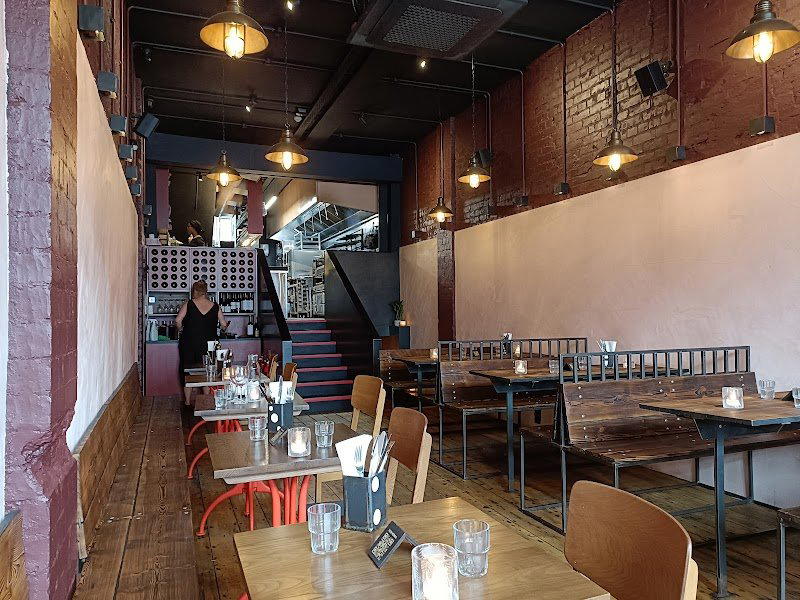
At Pickle, Northern Indian technique is the constant. Spices are visible on the kitchen counter, a working detail that signals how central they are to the cooking rather than peripheral seasoning. The dishes cited most often in public record include the ghost keema pao with black cardamom and fenugreek, the pork champ vindaloo with a sauce built for heat, and the fauzi chicken wings with tamarind. Each of these sits inside a recognisable Northern Indian framework while incorporating Irish proteins and produce. Pork vindaloo is itself a dish with a complicated history, originating in Goa through Portuguese contact, and its appearance here in a Northern Indian context with Irish pork speaks to the kitchen's willingness to work across regional lines rather than treat Indian cooking as a single monolithic tradition.
The format spans a good-value midweek lunch menu, an à la carte, and a tasting menu at dinner. That range positions Pickle as accessible for a daytime visit and more considered as an evening destination, without pitching the experience at a price point that would narrow its audience. At €€, it sits well below the tier occupied by Dublin's Michelin-starred rooms like Patrick Guilbaud or Chapter One by Mickael Viljanen, and operates in a different register from modern Irish rooms like Bastible.
The Broader Indian Dining Conversation in Dublin
Irish cities are not short of Indian restaurants, but the category has historically suffered from the same compression that affected it across Britain: menus designed for broad acceptability rather than regional specificity. The past decade has seen some genuine movement. Ananda has operated at a different register from the city's mid-market Indian offer for some years.
The Michelin Plate designation, which indicates food worth stopping for, is significant context. In a city where Michelin starred recognition tends to flow toward modern European formats and refined Irish cooking, the Plate at Pickle is a marker that the guide is tracking the evolution of Indian cooking in Ireland with some seriousness. The same pattern has played out in other cities: critical infrastructure that once ignored the Indian restaurant category has been forced, by the quality of operators like Pickle, to engage with it on the same terms as any other serious kitchen.
Pickle in the Context of Irish Restaurant Ambition
Dublin is a city that has grown considerably in dining ambition over the past fifteen years. The shift is visible not just in the capital but across the country, in places like Liath in Blackrock, dede in Baltimore, Aniar in Galway, Bastion in Kinsale, Campagne in Kilkenny, and Terre in Castlemartyr. The common thread is a serious engagement with Irish produce and a willingness to build a distinct culinary identity rather than import a template. Pickle is part of that conversation, arriving at it from a different cultural starting point but applying the same discipline: source Irish, cook with depth, build something that belongs specifically to here.
The midweek lunch menu offers a more accessible entry point, both in format and likely availability. For a full picture of what Dublin offers across categories, our full Dublin restaurants guide maps the city's dining scene by neighbourhood and type, alongside our Dublin hotels guide, bars guide, wineries guide, and experiences guide.
Frequently asked questions
What cuisine category does Pickle fall under?
How do I find Pickle?
Pickle is located at 43 Camden Street Lower, Saint Kevin's, Dublin 2, D02 N998, Ireland, Dublin.
Has Pickle won any awards?
Pickle has received recognition including: The modest exterior of this restaurant belies the buzzing atmosphere within. It’s a busy spot and deservedly so, with fresh, vibrant dishes and a service team that do a great job of handling their huge popularity. With spices lined up on th….
What's the must-try dish at Pickle?
Three dishes define what Pickle does differently from the broader Dublin Indian scene: the ghost keema pao with black cardamom and fenugreek, the pork champ vindaloo, and the fauzi chicken wings with tamarind. Each applies Northern Indian technique to Irish-sourced ingredients, which is the kitchen's stated approach and the reason the Michelin Plate recognition landed in 2025. The keema pao in particular illustrates the 'pickle country' philosophy most clearly, pairing a street-food format with spicing that reads as neither strictly Indian nor Irish.
What It’s Closest To
| Venue | Cuisine | Price | Awards | Notes |
|---|---|---|---|---|
| PickleThis venue (the venue you are viewing) | Modern Northern Indian | $50–100 | Michelin Plate · The Sunday Times Ireland’s 100 Best Restaurants | Not listed |
| Patrick Guilbaud | Modern French Fine Dining | $150–200 | 2 Michelin Stars · La Liste Top Restaurants | Irish - French, Modern French |
| Bastible | Modern Irish | $100–150 | 1 Michelin Star · The Sunday Times Ireland’s 100 Best Restaurants | Modern Cuisine |
| Host | Modern Italian | $50–100 | Michelin Plate | Not listed |
| mae | Modern Irish Fine Dining | $50–100 | Michelin Plate · The Sunday Times Ireland’s 100 Best Restaurants | Not listed |
| Matsukawa | Authentic Edomae Omakase | $100–150 | Michelin Plate · La Liste Top Restaurants | Not listed |
Recognition history
Dated appearances from independent guides and award organizations, with the underlying list record or original source where available.
Michelin Plate
Michelin
The Sunday Times Ireland’s 100 Best Restaurants
The Sunday Times
Full recognition history (3 entries)
Michelin Plate
Michelin