
Michelin Bib Gourmand
Our verdict
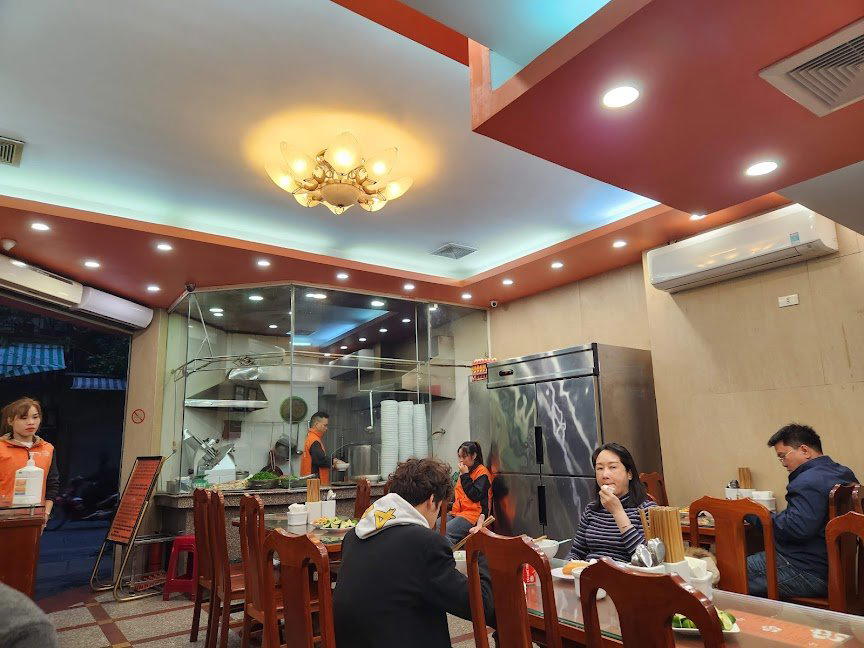
A Michelin Bib Gourmand-recognised phở counter on Lý Quốc Sư, one of three branches in Hanoi's Hoan Kiem district. The menu runs to ten phở variations built around different beef cuts, from tái (rare slices) to bắp trần (beef fillet), served from a compact corner kitchen visible through a glazed partition. At the ₫ price tier, it sits at the accessible end of Hanoi's recognised noodle spectrum.

Pearl is the En Primeur Club membership app — saves, bookings, and concierge access live there. Same editors, same standards.
- Address
- 10 P. Lý Quốc Sư, Hàng Trống, Hoàn Kiếm, Hà Nội, Vietnam
- Phone
- +84 24 3825 7338
- Hours
- Daily 6 AM–10 PM
- Website
- pho10lyquocsu.com.vn
- Directions
- Get directions
A corner of Lý Quốc Sư that Hanoi keeps coming back to
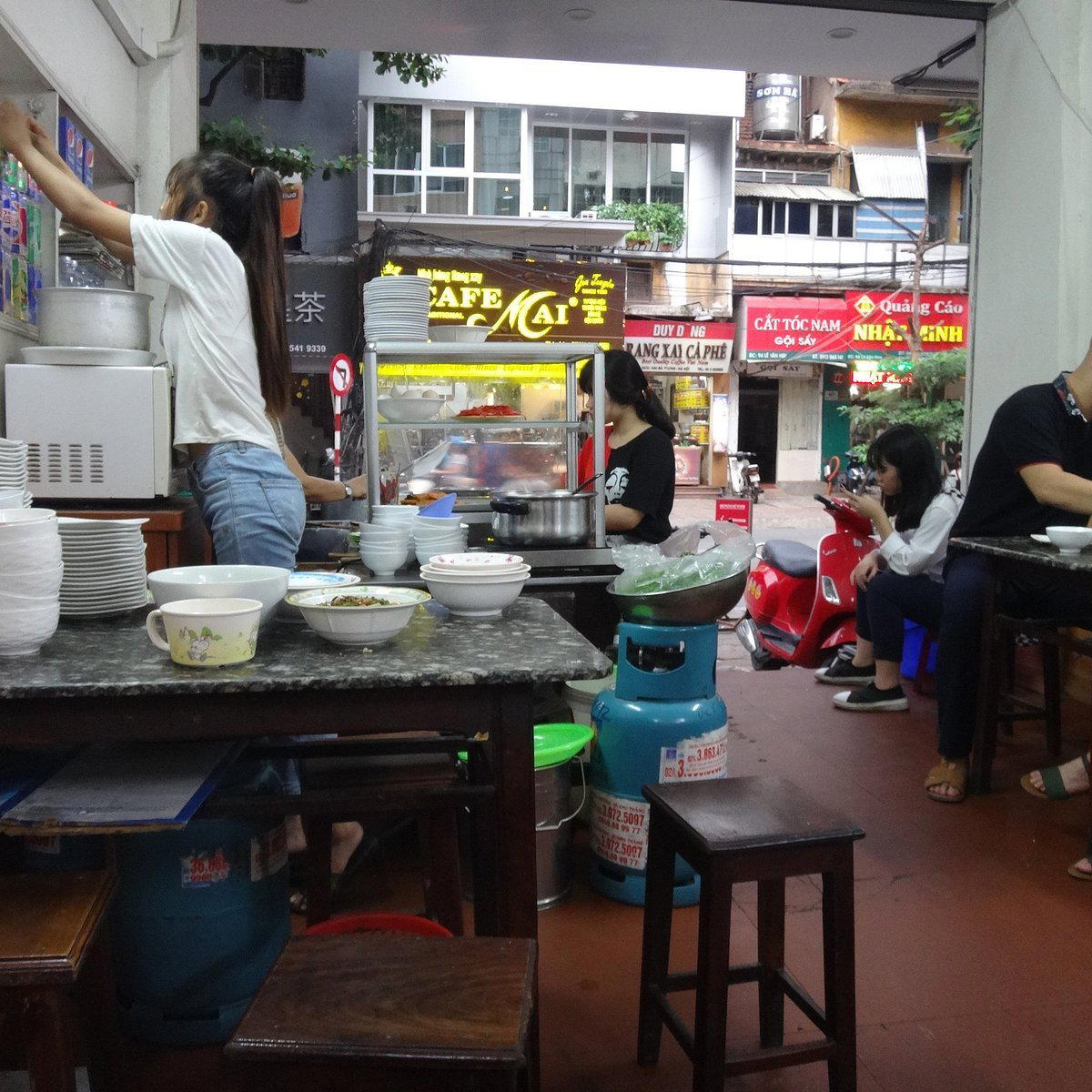
Step onto Lý Quốc Sư on any given morning and the pavement rhythm is immediately legible: plastic stools shifted outward, metal bowls stacked high, steam curling through the gap between a glazed kitchen partition and an open doorway. This is the ground-floor theatre of Hanoi phở at its most concentrated. The street sits in the heart of Hoan Kiem, a few minutes' walk from Hoan Kiem Lake, and it carries the kind of foot traffic that only accumulates around something that has earned consistent word-of-mouth over years. Phở 10 Lý Quốc Sư occupies a corner position at number 10, with the kitchen visible through a glazed partition that separates preparation from service without concealing either. That transparency is part of the appeal: you can watch the broth ladled, the beef laid in, the herbs arranged, before the bowl reaches the table.
How Hanoi phở is scored — and where this fits
Hanoi's phở market is both deep and differentiated. At street level, the city offers dozens of unremarked bowls that satisfy without seeking recognition. At the other end, a smaller group of addresses has attracted sustained critical attention — Michelin extended its Bib Gourmand programme to Hanoi in recent years, and the category rewards cooking that delivers clear quality at accessible prices, specifically at the ₫ and ₫₫ tiers. Phở 10 Lý Quốc Sư received a Bib Gourmand in 2024, which places it in a verified peer group that excludes neither the serious eater nor the budget-conscious traveller. The award does not imply fine-dining complexity; it implies reliability and value at a price point that a Hanoi local would pay without negotiating their expectations downward.
The comparison set at this tier includes noodle-focused addresses elsewhere in the city and across Vietnam. For contrast at the noodle category level, Bà Diệu (Tran Tong Street), Noodles in Da Nang illustrates how the category plays out in a southern coastal context, while [A Bing Bao Shan Mian, Noodles in Hangzhou](), [A Kun Mian, Noodles in Taichung](), and A Niang Mian Guan, Noodles in Shanghai map the broader Asian noodle tradition that phở sits within as a regionally distinct expression.
Ten options, each a different argument for beef
The menu at Phở 10 Lý Quốc Sư runs to ten phở variations. That is not a small selection by the standards of a specialist counter, and the distinctions between options track real differences in texture, bite, and flavour release. Tái is rare beef, added to the bowl at the last moment so the hot broth finishes the cooking; chin is brisket, slow-cooked to a softer yield; nạm is flank, with more connective texture and a richer fat content; bắp trần is beef fillet, leaner and firmer. Each cut interacts differently with the broth, and experienced phở drinkers often order a combination, tái-nạm or tái-chin, to cover multiple textures in a single bowl. The kitchen operates from a compact corner setup, and the team working it handles the volume at a pace that keeps wait times short even during the busiest morning periods.
Phở is inherently a morning dish in Hanoi, consumed before 9am by much of the population and stretching toward midday for later risers. The rhythm at addresses like this one is front-loaded: heaviest traffic before 8am, gradual thinning through mid-morning. This is a structural reality of the format, not a quirk of this address specifically.
The imitation problem and why it matters for planning
The venue data for this address includes a direct caution: beware of imitations in the city. This is not a throwaway warning. Hanoi has a documented pattern of successful phở names being replicated by unaffiliated operators using similar signage, similar addresses, or near-identical naming. For an address with three legitimate branches, the risk of walking into an unconnected operation using the Phở 10 name is real. The confirmed location for this review is 10 P. Lý Quốc Sư, Hàng Trống, Hoàn Kiếm. Verifying the address before arriving is the most practical step a visitor can take.
Booking, arrival, and what to expect
No booking infrastructure applies here. Phở at this price tier and format operates on a walk-in basis, seating arranged as space allows, turnover fast. The practical question is not whether you can reserve but when to arrive and how to find the right branch. Lý Quốc Sư in Hoan Kiem is the confirmed location. The street is accessible on foot from the lake, and the corner position at number 10 is direct to identify. Arriving before 9am gives the fullest experience of the morning rush and the freshest broth draw of the day; arriving after 10am trades peak atmosphere for a shorter queue.
At ₫ pricing, a bowl sits at the accessible floor of Hanoi's dining economy. For context within the city's range, compare this to the ₫₫₫₫ tier occupied by Gia (Vietnamese Contemporary) or Hibana by Koki (Teppanyaki), categories operating in an entirely different register of cost and format. At the ₫ tier, Bun Cha Ta (Nguyen Huu Huan Street) and 1946 Cua Bac sit in the same pricing band, confirming that Hoan Kiem's ground-level eating culture remains priced for daily use, not occasion dining.
Hanoi's noodle scene in full
Phở 10 Lý Quốc Sư is one address in a city that has constructed an entire cuisine around the bowl. Hanoi's noodle geography extends well beyond phở: miến (glass noodle) preparations, bún chả (grilled pork with vermicelli), and fish-based broths each have their own specialist addresses and neighbourhood loyalties. For other recognised noodle formats in the city, Miến Lươn Chân Cầm (Hoan Kiem) and Miến Lươn Đông Thịnh cover the eel glass-noodle category, while Bún Chả Chan and Bun Cha Ta (Nguyen Huu Huan Street) address the bún chả format. Hiệu Lực Canh Cá Rô Hưng Yên (Hai Ba Trung) extends the picture into fish-based preparations. Taken together, these addresses sketch out a noodle curriculum that a visitor with two or three days in Hanoi could use to build a coherent sequence of meals.
For coverage beyond noodles, the full [Hanoi restaurants guide]() maps the city's wider dining range, and Anan Saigon in Ho Chi Minh City and La Maison 1888 in Da Nang provide reference points for how Vietnamese cooking performs at the country's other major dining destinations. For planning the rest of a Hanoi visit, the [bars guide](), [hotels guide](), experiences guide, and [wineries guide]() complete the picture.
What to order at Phở 10 Lý Quốc Sư
The ten-item phở menu organises itself around beef cut rather than preparation style. Tái (rare beef), chin (brisket), nạm (flank), and bắp trần (beef fillet) are the primary options, with combination orders available. The broth is the constant; the cut determines texture and fat register.
Reputation First
Comparable options at a glance, pulled from our tracked venues.
| Venue | Cuisine | Price | Awards | Notes |
|---|---|---|---|---|
| Phở 10 Lý Quốc Sư (Hoan Kiem)This venue — the venue you are viewing | Authentic Northern Vietnamese Pho | $1–10 | Michelin Bib Gourmand | Not listed |
| Hibana by Koki | Michelin-Starred Japanese Teppanyaki | $200–300 | 1 Michelin Star · La Liste Top Restaurants | Teppanyaki, ₫₫₫₫ |
| Tầm Vị | Northern Vietnamese Home-Style | $10–20 | 1 Michelin Star | Vietnamese, ₫₫ |
| Gia | Modern Vietnamese Fine Dining | $100–150 | 1 Michelin Star · La Liste Top Restaurants | Vietnamese Contemporary, ₫₫₫₫ |
| 1946 Cua Bac | Northern Vietnamese | $10–20 | Michelin Bib Gourmand | Vietnamese, ₫ |
| Bun Cha Ta (Nguyen Huu Huan Street) | Authentic Vietnamese Bun Cha | $1–10 | Michelin Bib Gourmand | Noodles, ₫ |
Recognition history
Dated appearances from independent guides and award organizations, with the underlying list record or original source where available.
Michelin Bib Gourmand
Michelin
Full recognition history (3 entries)
Michelin Bib Gourmand
Michelin
Michelin Bib Gourmand
Michelin
Details
- Lively
- Classic
- Casual Hangout
- Solo
- Open Kitchen
- Historic Building
- Street Scene
- A La Carte
Current opening hours
- Monday
- 6 AM–10 PM
- Tuesday
- 6 AM–10 PM
- Wednesday
- 6 AM–10 PM
- Thursday
- 6 AM–10 PM
- Friday
- 6 AM–10 PM
- Saturday
- 6 AM–10 PM
- Sunday
- 6 AM–10 PM
Hours can change for holidays and private events. Last verified .
Street food energy at communal tables under air-conditioned comfort, with a fast-paced, efficient service and visible tight kitchen.