Queen West and the Long History of the Neighbourhood Bistro Queen Street West has never been a static address. The strip between Spadina and Bathurst has cycled through waves of galleries, record shops, and restaurants since the 1980s, and the...
Pearl is the En Primeur Club membership app — saves, bookings, and concierge access live there. Same editors, same standards.
- Address
- 373 Queen St W, Toronto, ON M5V 2A4, Canada
- Phone
- +14167923838
- Website
- bistro.peterpantry.ca
- Directions
- Get directions
 Saves & bookings on Pearl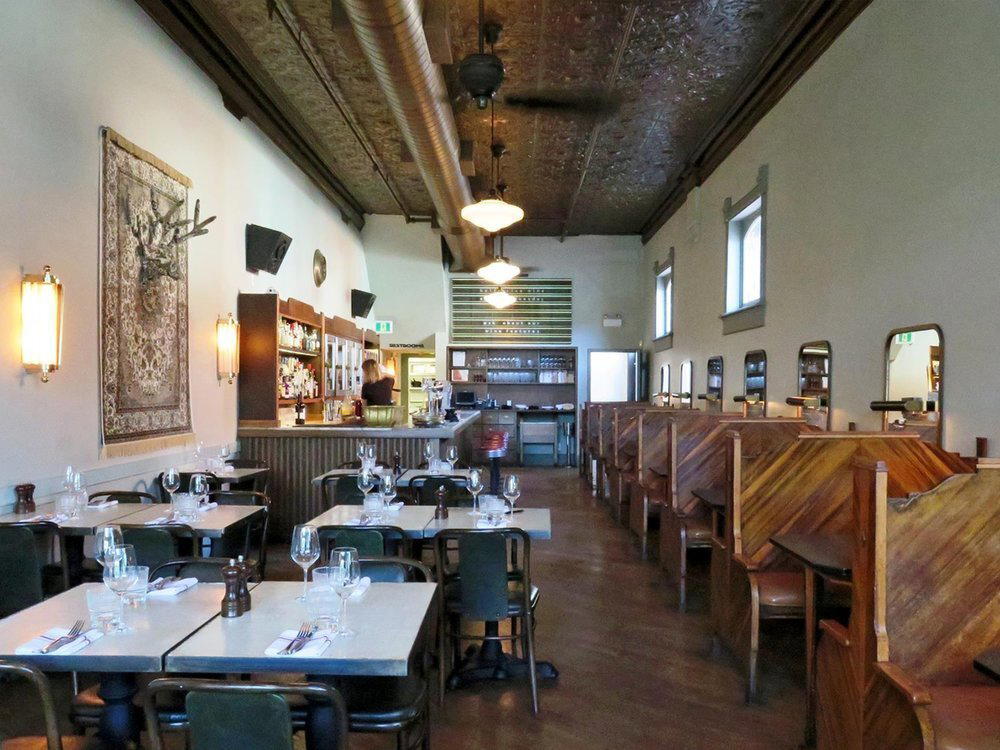
Queen West and the Long History of the Neighbourhood Bistro
Queen Street West has never been a static address. The strip between Spadina and Bathurst has cycled through waves of galleries, record shops, and restaurants since the 1980s, and the dining formats that survive longest here tend to share a common quality: they absorb the street's energy without chasing it. The neighbourhood bistro, in particular, has proven durable in a way that higher-concept formats have not. It arrives with a fixed ritual, a recognisable room, and a menu that assumes repeat visits rather than single-occasion spectacle.
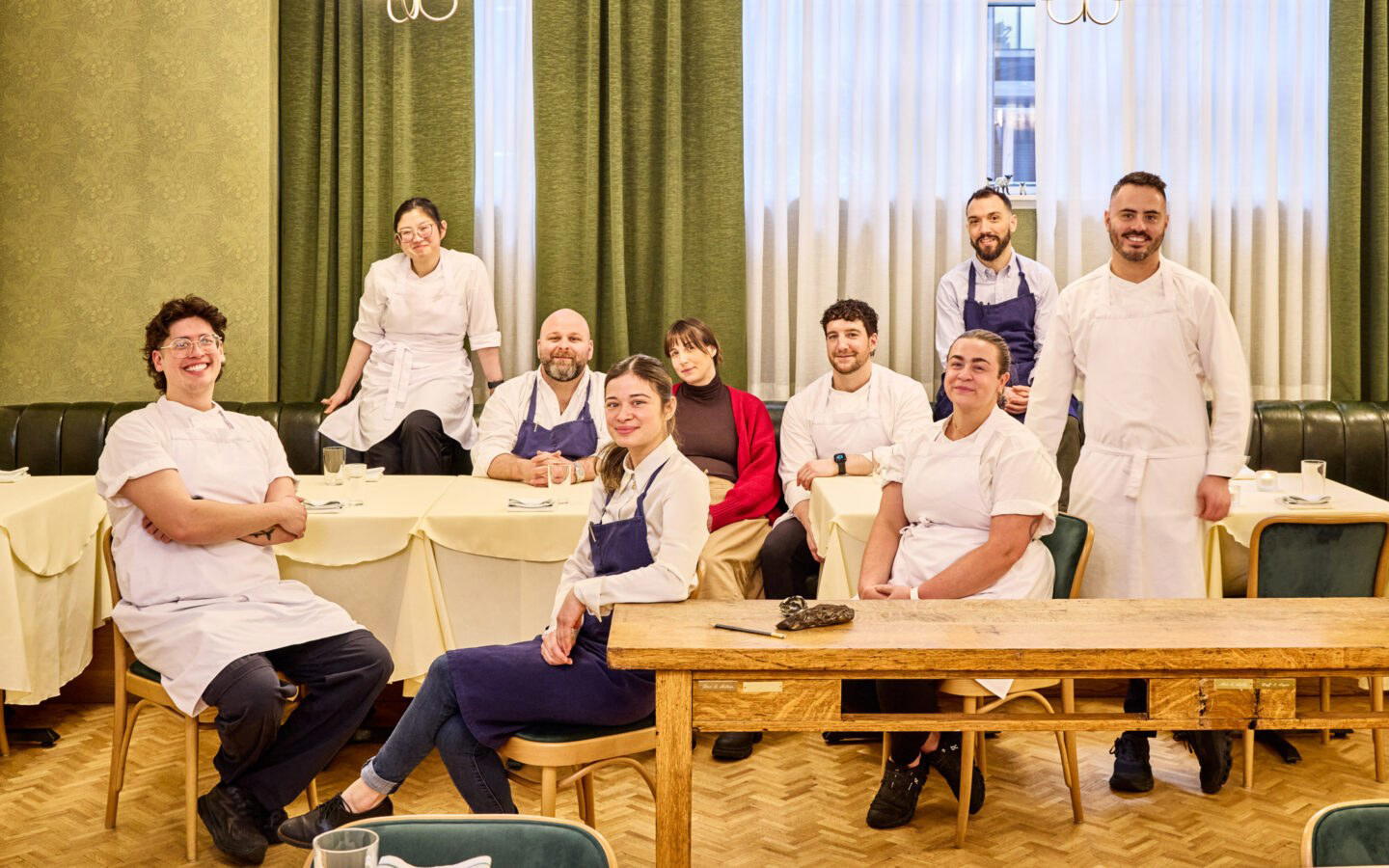
Peter Pan Bistro is a Modern French Bistro at 373 Queen St W, Toronto, with a price point around $35 per person. Peter Pan Bistro, at 373 Queen St W, sits inside that tradition. The address itself carries history, occupying a building that has fed Torontonians across multiple eras of the city's dining culture. Where comparable Queen West addresses have rotated through abbreviated tenures, this one has maintained continuity. That continuity is not incidental. It shapes how the room is used and how the meal tends to unfold.
The Ritual of a Bistro Meal on Queen West
The bistro format carries implicit etiquette that distinguishes it from both the tasting-menu counter and the casual drop-in. At the counter end of Toronto's dining spectrum, places like Sushi Masaki Saito or Aburi Hana demand complete submission to the chef's sequence. At Peter Pan, the grammar is looser but not shapeless. You arrive, you take the room in, and you make choices. The pacing is yours to negotiate. That act of negotiation, between the kitchen's rhythm and the diner's own appetite, is where the bistro format earns its particular kind of loyalty.
On Queen West, this plays out against a backdrop that reinforces the ritual. The street outside is active in the specific way of inner-city Toronto: cyclists, gallery-goers, early-evening pedestrian traffic that sharpens as the sky drops. Inside, the room registers as something deliberately apart from that, designed to hold the meal at a certain temperature, neither rushed nor ceremonial. The bistro does not require formal dress, but it does reward attention. Diners who arrive expecting a quick transaction tend to recalibrate within the first course.
This is a different social contract from the one operating at Toronto's fine dining tier. At Alo, the tasting sequence is the authority and the diner follows it. At DaNico or Don Alfonso 1890, Italian-rooted formats frame the meal in a recognisable European idiom. The bistro at Queen and Bathurst operates with fewer ceremony signals. It expects the diner to do more interpretive work, and that expectation is itself a form of hospitality.
Where Peter Pan Sits in Toronto's Dining Map
Toronto's premium dining market is now clearly stratified. The upper tier, occupied by multi-course tasting formats with Michelin recognition or equivalent critical acknowledgment, operates at price points and booking lead times that position dining as an event. A second tier, comprising neighbourhood-anchored restaurants with serious kitchens but more accessible formats, functions as the city's everyday fine-casual layer. Peter Pan Bistro belongs to this second tier, competing not against omakase counters but against other rooms that have built long-term neighbourhood credibility.
This is, the harder competitive set. Tasting-menu restaurants attract occasion diners willing to plan months ahead. Neighbourhood bistros compete for the recurring customer, the person who will return six times a year if the room earns it. Retention, not novelty, is the measure. Across Canada, restaurants that hold this position in their respective cities, places like AnnaLena in Vancouver or Jérôme Ferrer - Europea in Montreal, share a common characteristic: the room itself has become part of the offer, not just a container for the food.
Ontario's wider dining geography provides useful context too. Outside Toronto, destination restaurants like Eigensinn Farm in Singhampton or Restaurant Pearl Morissette in Lincoln operate on appointment models with long booking windows and single seatings. The urban neighbourhood bistro is their counterpart in the city: accessible without being casual, serious without requiring advance commitment of the same order.
The Queen West Address in Context
373 Queen St W sits in one of Toronto's most densely layered dining and cultural corridors. The blocks between University and Bathurst have historically attracted independent operators rather than group-backed concepts, which means the room has competed on its own identity rather than on brand infrastructure. This matters for how the meal feels. Independent bistros that survive on a street like this do so because the local diner has made a decision to keep returning. There is no marketing apparatus sufficient to manufacture that. The repeat customer is the real vote of confidence.
For visitors arriving from outside Toronto, the Queen West corridor is walkable from several central hotel clusters and connects directly to transit. As a first Toronto dining experience, it gives a more accurate read of the city's day-to-day restaurant culture than the tasting-menu tier, which attracts a narrower audience. For a broader view of what the city offers, the full Toronto restaurants guide maps the range across neighbourhoods and price points.
Elsewhere in Canada, analogous neighbourhood anchors worth tracking include Tanière³ in Quebec City, Narval in Rimouski, The Pine in Creemore, Aux Anciens Canadiens in Quebec, and Barra Fion in Burlington. For international reference points at the opposite end of the formality scale, Le Bernardin in New York City and Atomix in New York City demonstrate how far the tasting-counter format diverges from the bistro tradition Peter Pan represents. Bearspaw Golf Club in Calgary offers another register entirely, as a clubhouse dining model operating outside the urban neighbourhood frame.
Know Before You Go
- Address: 373 Queen St W, Toronto, ON M5V 2A4, Canada
- Neighbourhood: Queen West, central Toronto
- Format: Neighbourhood bistro; à la carte pacing
- Booking: Reservations recommended
- Price range: About $35 per person
The Quick Read
Comparable venues nearby, for context on price, style, and recognition.
| Venue | Cuisine | Price | Notes |
|---|---|---|---|
| Peter Pan BistroThis venue — the venue you are viewing | Not listed | $$ | Not listed |
| Brownes Bistro | Deer Park, Classic French Bistro | $$ | Not listed |
| The Tempered Room | Parkdale, French Pâtisserie | $$ | Not listed |
| Bonjour Brioche | South Riverdale, French Bakery & Brunch | $$ | Not listed |
| Avant Gout | Not listed | $$ | Rosedale, French Bistro with Moroccan Influences |
| Le Baratin | Little Portugal, Classic French Bistro | $$ | Not listed |
Continue exploring
More in Toronto
Restaurants in Toronto
Browse all →
Bars in Toronto
Browse all →
Hotels in Toronto
Browse all →
Wineries in Toronto
Browse all →
At a Glance
- Cozy
- Classic
- Intimate
- Date Night
- Brunch
- Casual Hangout
- Craft Cocktails
- Local Sourcing
Current opening hours
- Monday
- Closed
- Tuesday
- Closed
- Wednesday
- 11 AM–3 PM, 5–10 PM
- Thursday
- 11 AM–3 PM, 5–10 PM
- Friday
- 11 AM–3 PM, 5–10 PM
- Saturday
- 10 AM–3 PM, 5–10 PM
- Sunday
- 10 AM–4 PM
Hours can change for holidays and private events. Last verified .
Warm and inviting atmosphere with striking wall tapestries, well-suited for any dining occasion.