Our verdict
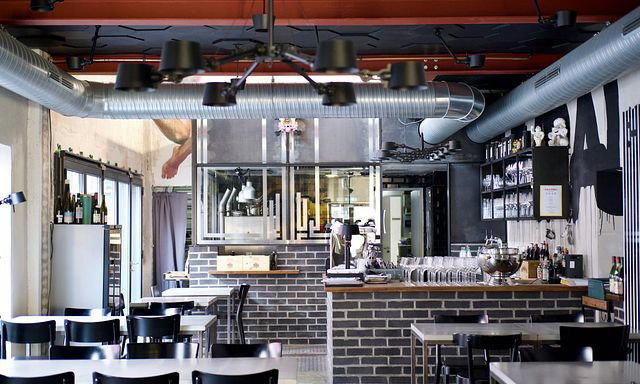
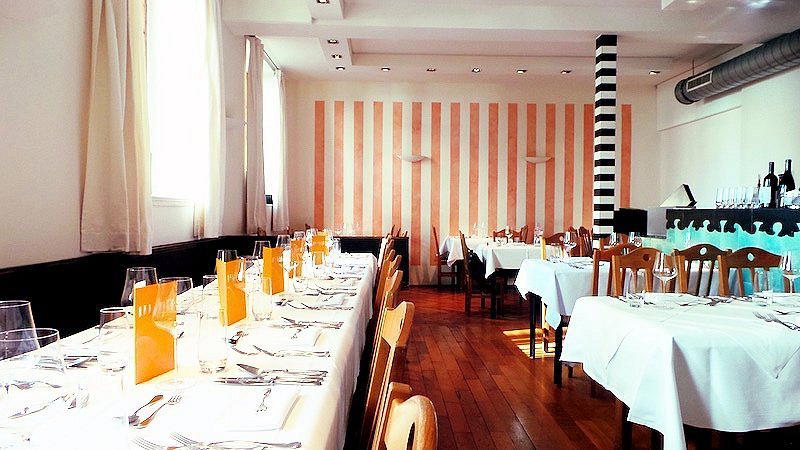
On Pettenkoferstraße in Munich's Ludwigsvorstadt, Pescheria occupies a corner of the city where Italian seafood traditions meet the quieter registers of Bavarian dining. The address places it a short walk from the Theresienwiese and the dense restaurant corridor around Sendlinger Tor, in a neighbourhood that rewards those willing to move beyond the central tourist circuit.

Pearl is the En Primeur Club membership app, where members save venues, book tables and use the concierge.

The menu
What to order
- Turbot Hondarribia
- Risotto Mare
- Tris di Tatar
- Gambas Piri Piri
- Burrata with Black Truffle
A Street Address That Tells a Story
Pettenkoferstraße runs through a part of Munich that doesn't appear on most itineraries. The blocks between the university hospital and Sendlinger Tor contain a mix of professional offices, residential buildings, and a handful of restaurants that serve the neighbourhood rather than the visitor. It is precisely the kind of address where a serious seafood kitchen can operate without the overhead, or the pressure, of a Maximilianstraße postcode. Pescheria sits at number one on that street, and the position matters: this is a restaurant whose relationship with its immediate surroundings shapes how it functions.
Munich's seafood dining has historically occupied an awkward position. The city is landlocked, roughly 700 kilometres from the North Sea and 300 from the Adriatic, and its traditional kitchen centres on pork, veal, and freshwater fish from the alpine lakes to the south. Imported saltwater fish has always required both logistical commitment and a customer base willing to pay for the transit. The restaurants that have made that commitment seriously, and sustained it, tend to occupy a distinct tier: smaller in scale, more dependent on supplier relationships, and priced accordingly. Pescheria belongs to that category of Munich address, where the premise depends on doing one thing with discipline rather than offering breadth.
How Munich's Italian Seafood Tier Has Shifted
The broader pattern across German cities over the past two decades has been a gradual thinning of mid-market Italian restaurants and a simultaneous hardening of the premium end. In Munich specifically, the Italian dining scene split between neighbourhood trattorias serving long-term residents and a smaller cohort of kitchens operating at the level where the cooking competes with destinations like Tantris or Atelier for the same discretionary spend. The seafood-focused Italian format sits in neither camp cleanly: it requires the ingredient sourcing rigour of fine dining but carries the informal associations of a fish market or coastal trattoria.
That tension has been productive in cities like Hamburg, where Restaurant Haerlin demonstrates how coastal proximity shapes a kitchen's identity, or in the more rarefied context of Aqua in Wolfsburg, where seafood technique is part of a broader creative language. Pescheria's address on Pettenkoferstraße, away from the restaurant districts that attract the Michelin-circuit crowd, suggests it has made that choice without requiring external validation to sustain it.
The Reinvention Question
Any restaurant that survives long enough in a competitive city goes through cycles of reinvention. The editorial angle that matters here is not the founding story, that belongs to a different kind of writing, but the question of what a seafood-focused kitchen in a landlocked city looks like after it has had time to settle into its identity. The restaurants that endure in Munich's mid-to-upper tier tend to do so by becoming more specific over time, not less: more committed to a particular supplier, a particular regional tradition, or a particular format. The comparison is instructive when you look at how Tohru in der Schreiberei has navigated its German-Japanese positioning, or how Alois - Dallmayr Fine Dining has deepened its creative identity while remaining anchored to its historic house.
For a pescheria, the Italian word for fishmonger or fish restaurant, the reinvention question is partly about sourcing: which waters, which seasons, which supply chains have been built or rebuilt over time. It is also about format. The informal fish-counter aesthetic that the name implies sits uneasily with Munich's restaurant price expectations, and the kitchens that have found a durable position tend to be those that resolved that tension in a clear direction, either leaning into the casualness or abandoning it for a more structured dining format. Germany's broader fine dining map includes examples of both approaches, from the precision cooking at Vendôme in Bergisch Gladbach to the single-minded dessert focus of CODA Dessert Dining in Berlin, each representing a decision to narrow rather than broaden.
Where Pescheria Sits in Munich's Current Dining Picture
Munich's high-end restaurant tier is relatively well-documented. The Michelin map includes addresses like JAN in the creative category and multiple kitchens operating at the €€€€ price point with formal tasting-menu formats. Pescheria on Pettenkoferstraße operates at a remove from that circuit, both geographically and in terms of positioning. The Ludwigsvorstadt location places it closer to the residential and academic character of that district than to the gallery-and-hotel strip around the Maxvorstadt or the old town.
That positioning has precedents in other German cities: Schanz in Piesport and ES:SENZ in Grassau are both examples of kitchens that built strong reputations from addresses that required the diner to come looking rather than stumble across. Bagatelle in Trier and Waldhotel Sonnora in Dreis demonstrate that serious cooking in Germany has consistently operated outside the obvious metropolitan centres. Pescheria is the Munich iteration of that pattern: a specific address that rewards engagement over discovery by accident.
For comparative context beyond Germany, the seafood-as-primary-identity positioning finds its clearest international reference in kitchens like Le Bernardin in New York City, where the commitment to fish as the sole focus defines every decision from sourcing to service format. Closer in spirit to Munich's more compact dining scene, Atomix in New York City demonstrates how a kitchen built around a specific culinary identity can develop a following without depending on immediate neighbourhood foot traffic. The parallels are structural rather than culinary, but they are instructive.
For readers mapping Munich's Italian dining options, the Acquarello benchmark at the Italian-Mediterranean upper tier provides a useful peer reference. Pescheria's fish-market name and Pettenkoferstraße address suggest a different register: less formal, more ingredient-driven, and positioned to serve regulars as much as destination diners. For a fuller picture of where it sits within the city's broader restaurant offer, the EP Club Munich restaurants guide maps the range from neighbourhood addresses to the multi-star Michelin tier.
Know Before You Go
Address: Pettenkoferstraße 1, 80336 München, Germany
Neighbourhood: Ludwigsvorstadt, between Sendlinger Tor and the Theresienwiese. Walkable from the U-Bahn at Poccistraße or Sendlinger Tor.
Booking: The restaurant's website and current hours should be confirmed directly before visiting.
Price range: Given the neighbourhood and seafood-focused format, expect pricing to reflect ingredient sourcing costs rather than a tasting-menu bracket.
Leading approach: Arrive on foot from Sendlinger Tor to get a sense of the neighbourhood before you sit down. The street itself is part of the experience.
Frequently asked questions
Where is Pescheria in Munich?
Pescheria is located at Pettenkoferstraße 1, 80336 München, Germany, Munich.
Is Pescheria a good option for seafood dining in Munich compared to other Italian restaurants in the city?
Munich's Italian restaurant tier has shed many mid-market seafood-focused kitchens over the past two decades, making a dedicated pescheria-style address on Pettenkoferstraße a relatively uncommon format in the city.
What's the must-try dish at Pescheria?
In a seafood-focused Italian kitchen at a Pettenkoferstraße address of this type, the menu tends to rotate with catch availability rather than anchoring on fixed signatures. Checking directly with the restaurant before visiting will give the most accurate picture of what is currently on the pass.
What's the best way to book Pescheria?
In Munich's mid-to-upper Italian dining tier, kitchens at this address level typically take reservations by phone or email, and weekends tend to fill faster than the restaurant's residential location might suggest. Arriving with a reservation rather than walking in is the safer approach for dinner.
What makes Pescheria worth seeking out?
Pescheria occupies a specific gap in Munich's restaurant picture: a seafood-focused Italian kitchen positioned away from the high-tourist corridors, on Pettenkoferstraße between the university hospital quarter and Sendlinger Tor. That address signals a neighbourhood-driven rather than footfall-driven operation, which in Munich's dining context tends to indicate a kitchen that earns its repeat custom on food quality rather than location convenience. The absence of Michelin coverage does not disqualify it from that argument.
Fast Comparison
Comparable venues nearby, for context on price, style, and recognition.
| Venue | Cuisine | Price | Awards | Notes |
|---|---|---|---|---|
| PescheriaThis venue (the venue you are viewing) | Mediterranean Seafood Tavern | $50–100 | Not listed | Not listed |
| Burger & Lobster Bank | American Steakhouse with Lobster | $30–50 | Not listed | Lehel |
| Haxnbauer | Traditional Bavarian | $30–50 | Not listed | Altstadt |
| Nice | Modern Bavarian | Not listed | Michelin Plate | Haidhausen |
| Hunsinger in der Goldenen Gans | French-Asian Seafood | Not listed | Not listed | Pasing |
| Mr. Tonkey | Wine & Streetfood | $30–50 | Not listed | Theresienwiese |