Our verdict
On Calle del Barquillo in Madrid's Centro district, Pastelería Celicioso occupies a specific niche in the city's pastry scene: gluten-free baking taken seriously, presented in a space designed to feel like a proper pastelería rather than a dietary-restriction workaround. The address puts it within reach of Chueca and the Alonso Martínez corridor, where daytime café culture runs deep and the competition for a good morning table is genuine.

Pearl is the En Primeur Club membership app, where members save venues, book tables and use the concierge.
The menu
What to order
- Red Velvet cupcakes
- Choco Peanut cupcakes
- Croquetas de carrilleras
A Pastelería With a Point of View
Madrid's café and pastry culture operates at street level in ways that the city's fine-dining reputation tends to obscure. While the broader conversation about Spanish gastronomy gravitates toward tasting menus at places like DiverXO or the creative Spanish cooking at Coque, the daily rhythm of Madrid runs through the neighbourhood pastelería: the glass case of pastries, the marble counter, the caña of coffee taken standing or at a small table. Pastelería Celicioso on Calle del Barquillo, 19 operates inside that tradition while occupying a distinct position within it. The entire offering is gluten-free, which in the context of Spanish baking is not a minor footnote. It changes sourcing, technique, and the economics of the kitchen in ways that most pastelerías never have to consider.
The Physical Space as Editorial Statement
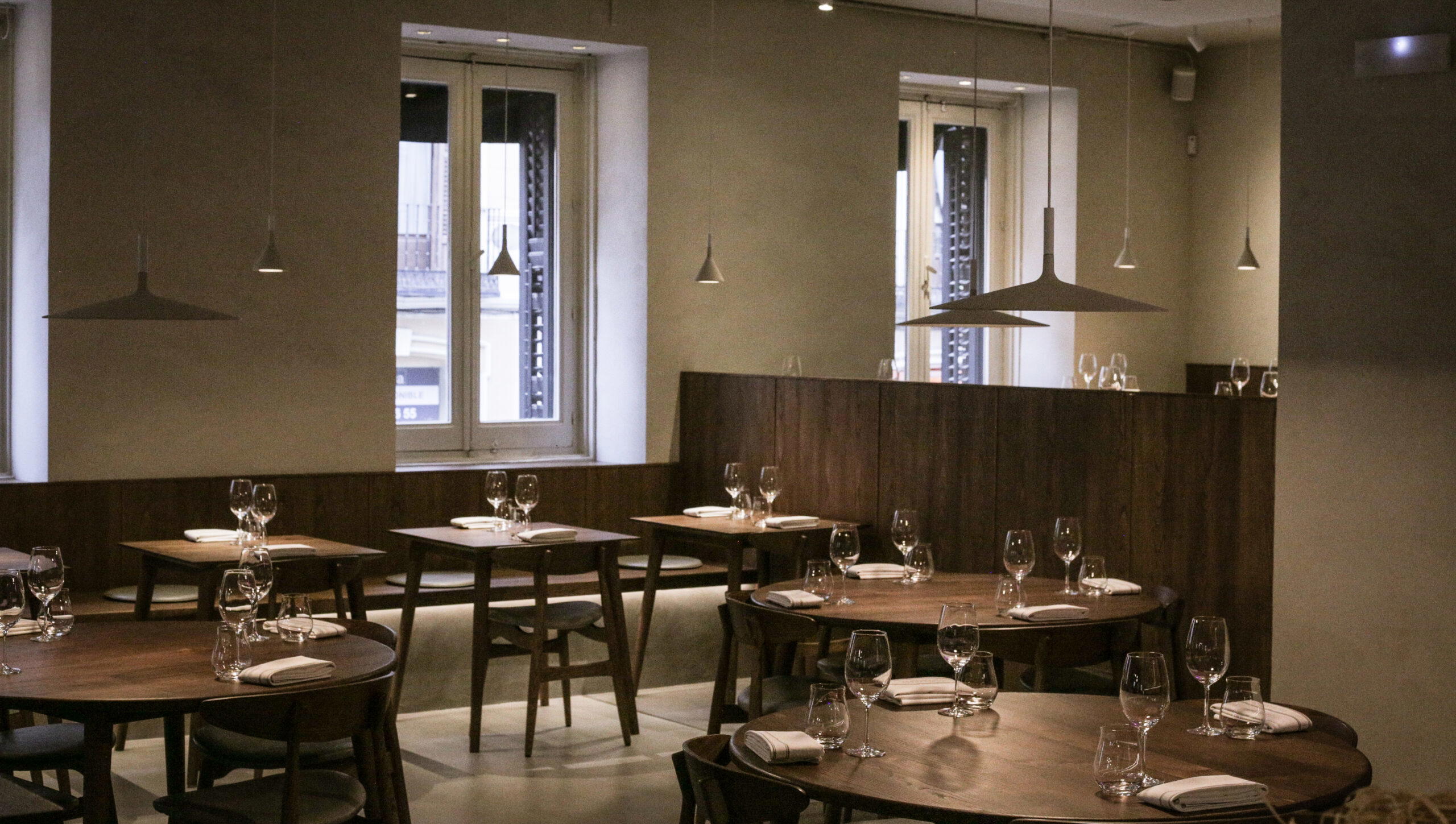
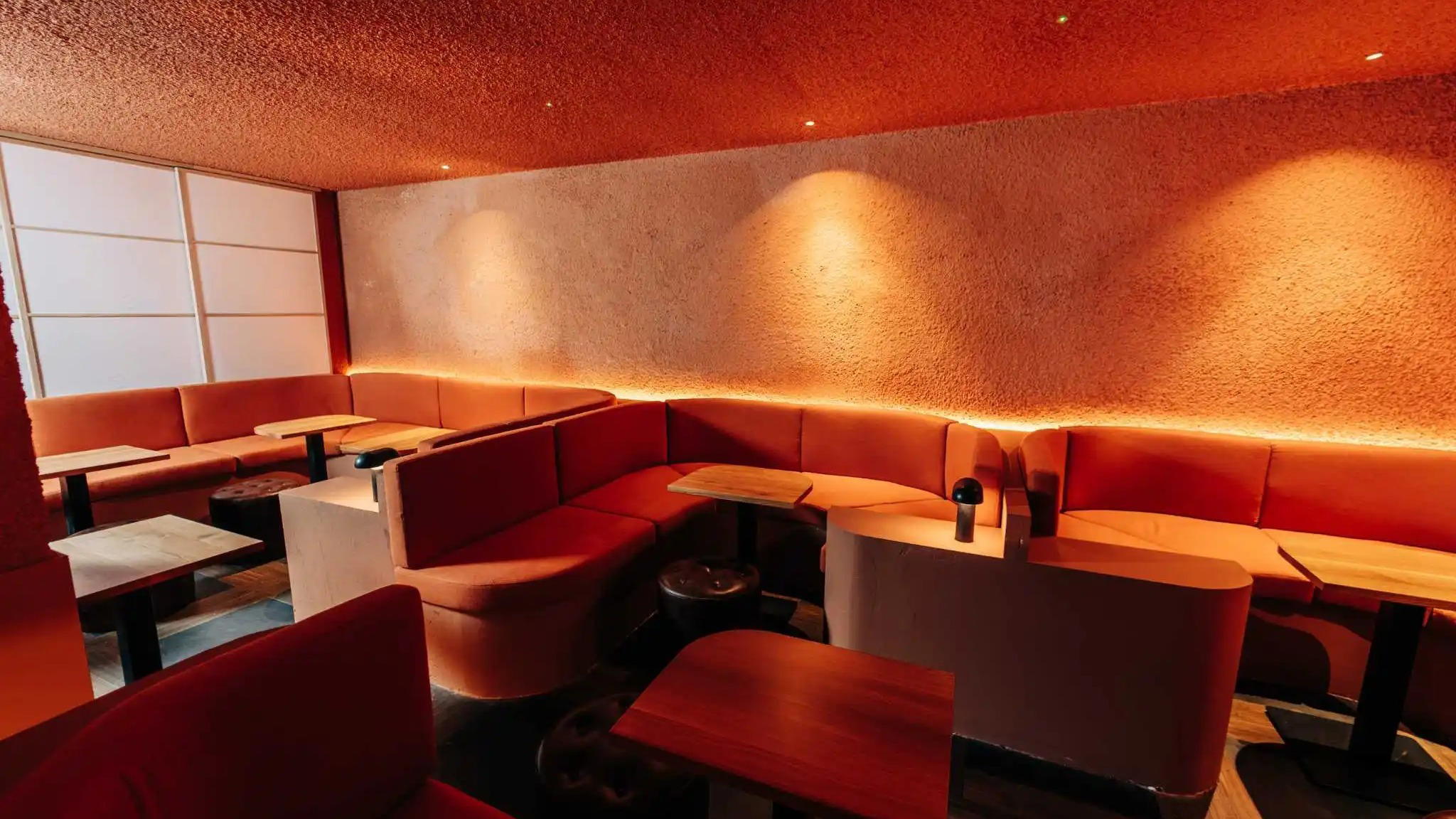
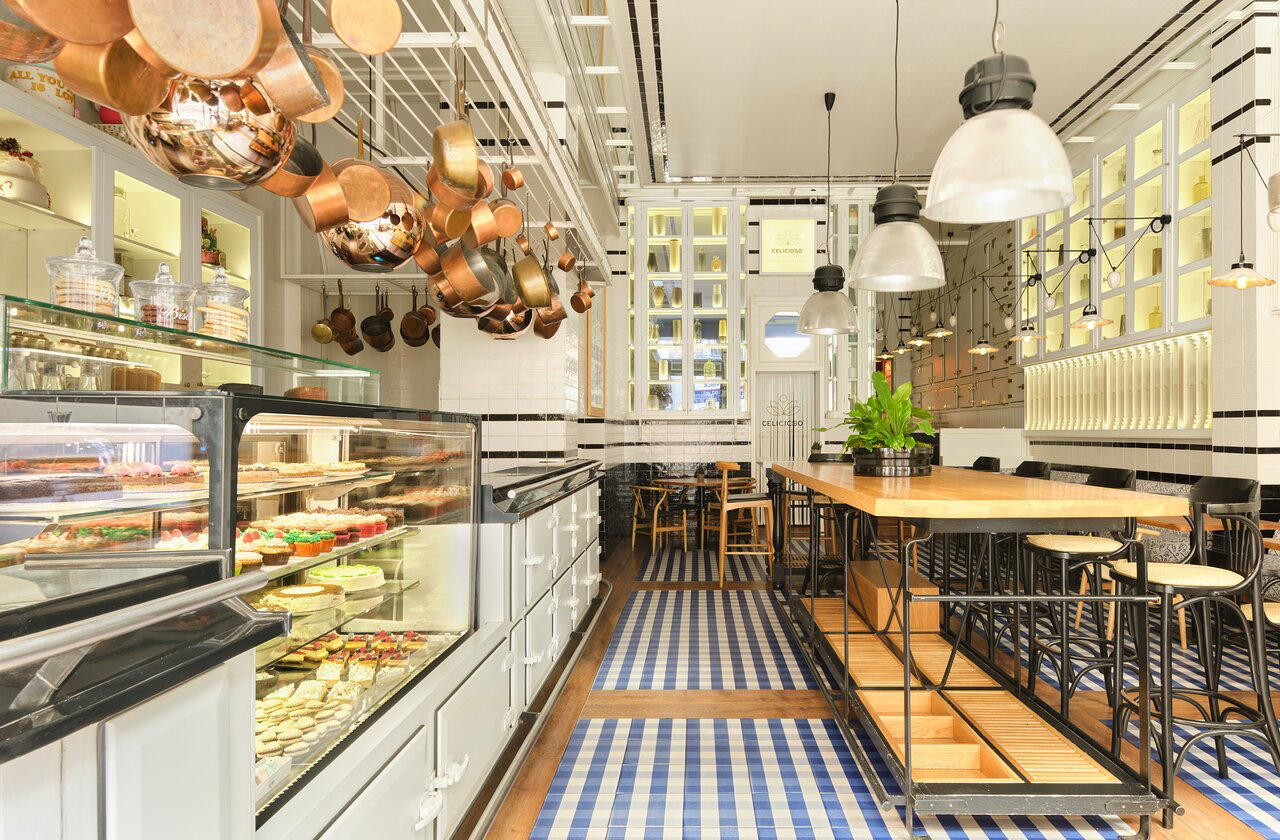
In Madrid, the design of a pastelería communicates its positioning before a single item is ordered. The old-school confiterías of the city lean heavily on dark wood cabinetry, glass cases polished daily, and a certain deliberate absence of modernity. Newer café formats in Chueca and Malasaña tend toward exposed brick and Scandinavian restraint. Celicioso on Barquillo takes a different approach: the interior reads as a proper bakery-café rather than either a heritage institution or a minimalist coffee shop. The display cases are the focal point, which is architecturally honest for a pastelería. The emphasis is on what is in the case, not on creating a backdrop for social media. That orientation toward product over atmosphere is itself a positioning choice in a city where the Instagram-legible café has become its own category.
The address on Barquillo places the venue inside the Centro district at a point that connects naturally to Chueca to the north and the commercial axis of Gran Vía to the south. This stretch of the city draws a mix of residents and visitors without being a purely tourist-facing street, which shapes the clientele toward repeat local custom rather than single-visit traffic. For a bakery that depends on building a following around a specific dietary format, that neighbourhood dynamic matters. The logistics of a visit are uncomplicated: the location is accessible from the Chueca or Alonso Martínez metro stops, and the format is walk-in, which puts it outside the reservation infrastructure that defines the upper tier of Madrid dining at venues like Deessa or DSTAgE.
Gluten-Free Baking as Craft Discipline
The gluten-free specialisation at Celicioso is worth contextualising against the broader Spanish pastry tradition, because Spain's baking culture is not especially accommodating of dietary exceptions by default. The canonical pastries of Madrid, from the rosquillas of San Isidro to the torrijas of Semana Santa, are flour-dependent in their structure. The technical challenge of replicating the texture and crumb of conventional pastry without wheat gluten is not trivial: gluten provides the elasticity and binding that give baked goods their characteristic structure. Bakeries that do this well across a full range of products, from croissants and cakes to bread, are working at a different level of technical complexity than venues that simply offer one or two gluten-free options as an afterthought.
Across Europe, the specialist gluten-free bakery that takes craft seriously as its primary commitment, rather than as a compliance exercise, remains a small category. The comparison set is not the neighbourhood café around the corner but the handful of operations in major European cities that have built reputations specifically on gluten-free quality. In Madrid, that position is relatively uncrowded, which gives Celicioso a clear reason to exist beyond the dietary niche itself.
Where Celicioso Sits in Madrid's Broader Food Scene
Madrid's food reputation internationally is built on its fine-dining tier: the three-Michelin-star ambitions of venues in the full Madrid restaurants guide, the creative Spanish cooking of Paco Roncero, and the broader Spanish gastronomy circuit that connects Madrid to Quique Dacosta in Dénia, Arzak in San Sebastián, Azurmendi in Larrabetzu, Martin Berasategui in Lasarte-Oria, Aponiente in El Puerto de Santa María, Cocina Hermanos Torres in Barcelona, El Celler de Can Roca in Girona, Ricard Camarena in València, Mugaritz in Errenteria, and Atrio in Cáceres. Internationally, the craft-bakery conversation includes reference points as different as Le Bernardin in New York City and Lazy Bear in San Francisco, where technical commitment at a specific format level has built sustained reputations.
Celicioso operates several tiers below that fine-dining conversation in price and formality, but it participates in the same broader question of what technical commitment to a specific format looks like in practice. The relevant metric here is not Michelin recognition but whether the gluten-free format is executed with enough craft consistency to earn repeat custom from people who could eat anywhere. That is a harder test than it sounds in a city with Madrid's depth of pastry options.
Planning a Visit
Calle del Barquillo, 19 is a walk-in address. The Chueca and Alonso Martínez metro stations both provide easy access, making this a natural stop before or after exploring the galleries and design shops that cluster in this part of Centro. Pricing at the pastry-café level in Madrid is generally accessible, though Celicioso's specialist positioning may carry a modest premium over conventional bakeries. The venue does not appear in any award data available to us, so trust signals here rest on the operational logic of the format and its neighbourhood reputation rather than external recognition.
Frequently asked questions
Where is Pastelería Celicioso located?
Pastelería Celicioso is located at C. del Barquillo, 19, Centro, 28004 Madrid, Spain, Madrid.
Is Pastelería Celicioso suitable for people with coeliac disease visiting Madrid?
Celicioso is one of the few pastelerías in Madrid built around gluten-free production as its core identity rather than as an add-on menu section, which makes it a reference address for coeliac visitors to the city. The shop is located at Calle del Barquillo, 19 in Madrid's Centro district, within walking distance of the Chueca and Alonso Martínez neighbourhoods. Cross-contamination practices and full ingredient detail are worth confirming directly at the counter for individual dietary requirements.
What do regulars order at Pastelería Celicioso?
Celicioso built its following on gluten-free versions of Spanish pastry staples, the kind of items that are typically off-limits for coeliac customers in conventional Madrid confiterías. The counter format at Calle del Barquillo, 19 means orders are made at the display case, and the range typically spans cakes, croissants, and baked goods produced without gluten-containing flour. Given the specialisation, regulars tend to return for the formats that are hardest to replicate well in gluten-free baking: laminated doughs and layered pastries.
Is Pastelería Celicioso reservation-only?
No reservation is required. Celicioso operates as a walk-in café and pastry counter at Calle del Barquillo, 19 in Madrid's Centro district, which means the format is drop-in rather than seated dining. Capacity is counter-led, so peak weekend mornings are the most competitive time to visit.
What's Pastelería Celicioso best at?
Celicioso's clearest credential is gluten-free pastry executed as a craft discipline rather than a dietary workaround, a meaningful distinction in a city where Spain's conventional baking tradition leaves coeliac customers with limited options. The Barquillo location puts it in one of central Madrid's more design-conscious streets, and the shop has accumulated a loyal customer base among both coeliac residents and visitors who seek it out specifically. The format is pastry counter, not restaurant, so the focus is tight and the execution reflects that.
Cuisine and Credentials
| Venue | Cuisine | Price | Awards | Notes |
|---|---|---|---|---|
| Pastelería CeliciosoThis venue (the venue you are viewing) | Gluten-Free Spanish Bakery Cafe | $10–20 | Not listed | Not listed |
| DiverXO | Avant-Garde Spanish Tasting Menu | $300–500 | 3 Michelin Stars · World's 50 Best #9 | Progressive - Asian, Creative |
| Coque | Modern Spanish Fine Dining | $300–500 | 2 Michelin Stars · La Liste Top Restaurants | Spanish, Creative |
| Deessa | Modern Valencian Fine Dining | $150–200 | 2 Michelin Stars · La Liste Top Restaurants | Modern Spanish, Creative |
| Paco Roncero | Avant-Garde Spanish Fine Dining | $150–200 | 2 Michelin Stars · La Liste Top Restaurants | Creative |
| Smoked Room | Modern Japanese Fire Omakase | $200–300 | 2 Michelin Stars · La Liste Top Restaurants | Progressive Asador, Contemporary |