Pasta & Vino
A neighbourhood Italian in Knokke-Heist's Koningslaan corridor, Pasta & Vino draws on the tradition of pasta-centred dining where the kitchen, wine selection, and front-of-house operate as an integrated whole rather than separate departments. The format sits within a Belgian coastal dining scene that increasingly prizes informal precision over formal ceremony, making it a reference point for the genre in the area.
Pearl is the En Primeur Club membership app — saves, bookings, and concierge access live there. Same editors, same standards.
- Address
- Pasta & Vino, Koningslaan 149, 8300 Knokke-Heist, Belgium
- Phone
- +3250616701
- Website
- pastavinoknokke.be
- Directions
- Get directions
 Saves & bookings on Pearl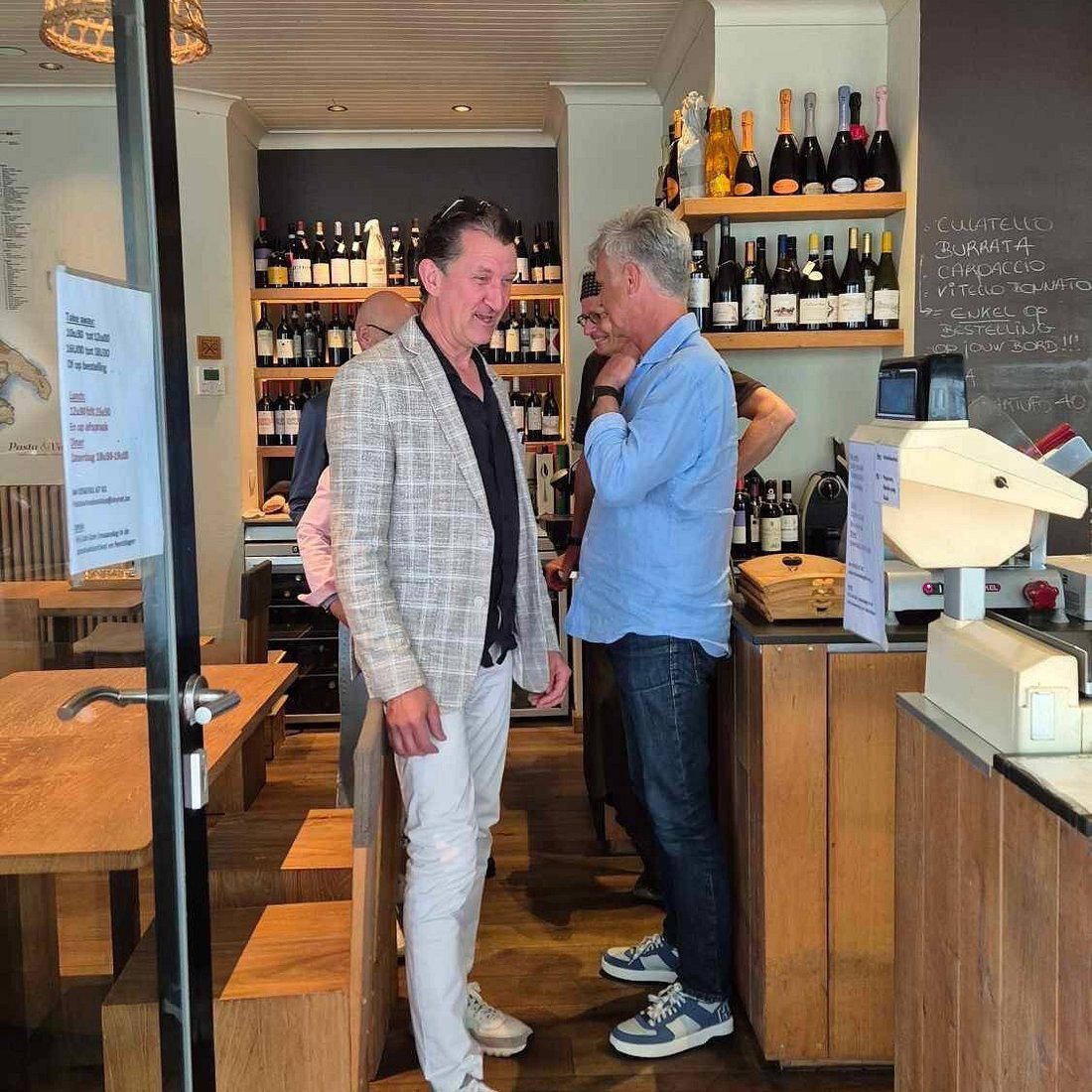
Italian Informality on the Belgian Coast
Knokke-Heist has long occupied an unusual position in Belgian dining. The coastal resort attracts a clientele with genuine appetite for serious food, yet the atmosphere it demands is resolutely informal — linen without stiffness, wine lists without intimidation, kitchens that take their craft seriously without announcing it at every course. That tension between quality and ease has produced a dining scene unlike any other stretch of the Belgian coast, where trattorias and brasseries coexist with addresses that could credibly hold their own in any major European city. Pasta & Vino, at Koningslaan 149, plants itself squarely inside that tradition.
The name signals a deliberate reduction of scope. Pasta and wine: two elements, executed with focus, in a resort town that rewards exactly that kind of clarity. Italian-format restaurants across northern Europe have bifurcated in recent years between the high-volume, broad-menu trattoria model and a smaller, more disciplined tier where the pasta is made in-house, the wine list is curated rather than simply stocked, and the floor staff understand both sides of the pass. Pasta & Vino belongs to a conversation about which tier it occupies — and that conversation is part of what gives the address its character on Koningslaan.
The Coastal Scene as Context
To understand where Pasta & Vino sits, it helps to map the wider Knokke-Heist dining circuit. The town's restaurant addresses range from destination-level fine dining through to neighbourhood fixtures that locals return to across seasons. At the formal end, Bartholomeus in Heist has established the Belgian coast's claim to serious gastronomy. Bel-Etage, Alexandra, and bablut. each occupy distinct registers within the town's mid-to-upper tier. Café de Paris and Caillou anchor the more casual bracket.
Within this spread, the Italian-format address occupies a specific niche: it promises a cuisine that is both legible and technically demanding, where simplicity of concept does not translate to simplicity of execution. The challenge for any pasta-centred kitchen in a resort market is maintaining production discipline across a season that swings between quiet midweek services and weekend surges. The addresses that manage it reliably tend to operate with tight menus and strong team coherence rather than sprawling choice.
Kitchen, Sommelier, Floor: How the Format Works
The editorial angle most relevant to any serious pasta-and-wine address is how the three operational pillars, kitchen, wine, and floor, are knit together. In Italian dining at this register, the wine is not an afterthought appended to a kitchen-driven menu. The selection shapes what the kitchen does, and the floor staff serve as interpreters between the two. When all three departments operate with shared understanding, the result is a meal that feels coherent: pasta textures that anticipate the acidity of the wines poured alongside, front-of-house that can read a table's pace and adjust accordingly.
Across Italy's export dining culture in northern Europe, the most-discussed addresses are those where this integration is visible rather than incidental. Willem Hiele in Oudenburg has demonstrated how a tightly run Belgian coastal operation can build a national reputation through precisely this kind of coherence, even in a format quite different from Italian. Boury in Roeselare and Zilte in Antwerp show what sustained team discipline produces at higher price points. At the trattoria register, the stakes are lower but the principle is the same: a room where kitchen and floor share a common vocabulary eats better than one where they operate independently.
Pasta as a Culinary Discipline
The broader Italian dining revival across Western Europe has re-established pasta as a genre worthy of serious critical attention, not merely a carbohydrate delivery system. Regional specificity matters here: whether a kitchen draws on Emilia-Romagna's egg-rich tradition, the durum-wheat formats of the south, or the butter-and-sage economy of Lombardy tells you a great deal about the kitchen's reference points and the wine selections that logically follow. A Ligurian-leaning list of pastas pairs differently from a Roman one, and a sommelier who understands that distinction is worth considerably more to a table than one who simply offers house red and house white.
For comparison, the highest-tier Belgian addresses working within European gastronomic traditions, Hof van Cleve - Floris Van Der Veken in Kruishoutem, De Jonkman in Sint-Kruis, L'air du temps in Liernu, all demonstrate that Belgian kitchens engage rigorously with classical technique regardless of format. That context raises expectations even for casual-register Italian in a resort market. A diner who has recently eaten at Bozar Restaurant in Brussels or d'Eugénie à Emilie in Baudour arrives at a Knokke trattoria with a calibrated palate, not a forgiving one.
Placing Pasta & Vino in a Wider Reference Frame
The Italian format at this register sits well below the price points of globally tracked addresses like Le Bernardin in New York City or Atomix in New York City, and the comparison is deliberately asymmetric. What connects them is the insistence on team coherence as a prerequisite for quality at any price point. A pasta restaurant that operates with a unified kitchen-sommelier-floor approach punches above the category norm, while one that treats those functions as separate concerns tends to plateau at comfort-food territory regardless of ingredient quality.
The Belgian coast has produced enough serious dining addresses, see Castor in Beveren for another example of regional ambition outside the main urban centres, to suggest that the resort market no longer functions as a quality ceiling. Visitors expecting seaside-town mediocrity increasingly find themselves corrected.
Planning Your Visit
Pasta & Vino is located at Koningslaan 149, 8300 Knokke-Heist. Koningslaan is accessible by car from the E40 motorway corridor that connects Bruges and the coast, and the address sits within the broader Knokke-Heist commercial and dining strip that sees high footfall across the summer season. For visitors arriving during peak coastal season (July and August), booking ahead is advisable for any sit-down address in the town, as weekend covers fill quickly across the board. Shoulder-season visits in May, June, or September offer the same quality with considerably less competition for tables. For the full range of Knokke-Heist dining options across formats and price points, see our full Knokke Heist restaurants guide.
How Pasta & Vino Knokke Heist compares with similar nearby venues.
| Venue | Cuisine | Price |
|---|---|---|
| Tablàvins | Modern Cuisine | €€€ |
Continue exploring
More in Knokke Heist
Restaurants in Knokke Heist
Browse all →
Bars in Knokke Heist
Browse all →
At a Glance
- Classic
- Cozy
- Date Night
- Casual Hangout
- Extensive Wine List
Current opening hours
- Monday
- Closed
- Tuesday
- Closed
- Wednesday
- Closed
- Thursday
- Closed
- Friday
- 10:30 AM–6:30 PM
- Saturday
- 10:30 AM–6 PM
- Sunday
- 10:30 AM–6:30 PM
Hours can change for holidays and private events. Last verified .
Cozy spot focused on authentic Italian flavors with good wine selection.
Know Before You Go
- Getting there
- Pasta & Vino, Koningslaan 149, 8300 Knokke-Heist, Belgium