Pasta Primavera
Pasta Primavera occupies a familiar address on North Main Street in Walnut Creek, where the East Bay's suburban dining scene has quietly grown more ambitious over the past decade. The kitchen centers on Italian-leaning pasta cookery, placing it in a city that now supports a range of serious European-inflected tables alongside broader Asian and contemporary American options.
Pearl is the En Primeur Club membership app — saves, bookings, and concierge access live there. Same editors, same standards.
- Address
- 2997 N Main St, Walnut Creek, CA 94597
- Phone
- +19259307774
- Website
- pastapizzaprimavera.com
- Directions
- Get directions
 Saves & bookings on Pearl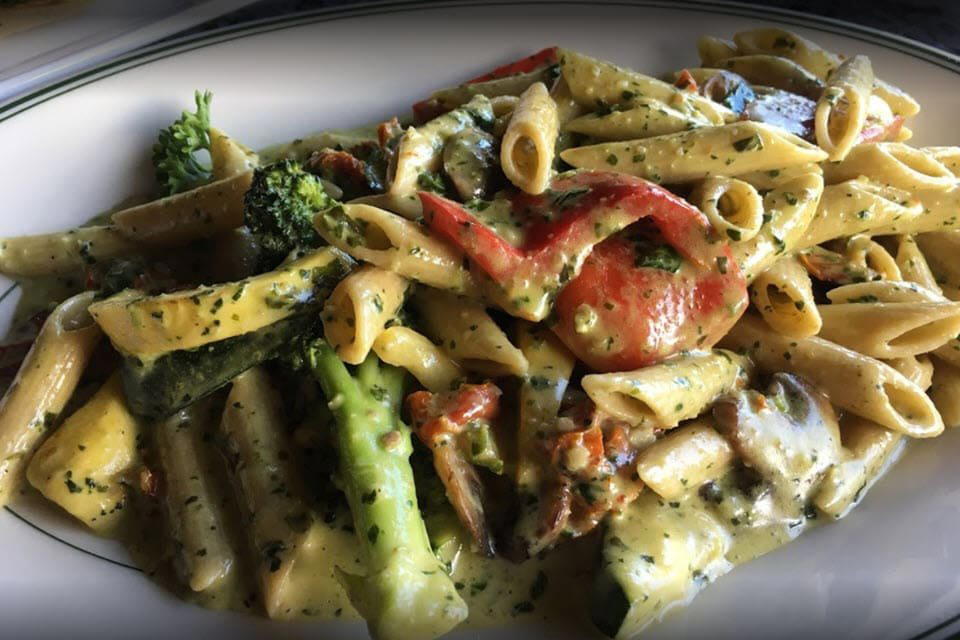
North Main Street and the Shape of Walnut Creek's Italian Table
Walnut Creek's dining corridor along North Main Street has undergone a slow but legible shift in recent years. What was once a stretch defined by chain outposts and casual American formats has developed a more considered range of independent restaurants, each staking out a specific culinary position. Italian-leaning kitchens have found a foothold in this market, partly because the East Bay suburbs have a long-standing appetite for pasta-centered dining that predates the current wave of chef-driven ambition in nearby Oakland and San Francisco. Pasta Primavera, at 2997 N Main St, sits within that tradition, occupying a neighborhood where the expectation for Italian cookery is both familiar and, increasingly, more demanding.
The broader context matters here. Contra Costa County diners have historically traveled across the Bay or into the East Bay flatlands for serious Italian meals. The fact that independent pasta-focused restaurants now operate with enough confidence to hold a permanent address in Walnut Creek reflects a genuine change in local appetite. That shift is visible across the city's dining fabric: venues like Massimo Ristorante have established Italian cooking as a credible anchor category here, and Pasta Primavera enters a market where that precedent already exists.
The Sensory Register of a Pasta-Focused Room
Italian pasta restaurants operate within a sensory tradition that is as defined as any formal cuisine category. The expectation, built over decades of both neighborhood trattorias and destination Italian tables, involves a particular combination of warm starch smells from fresh dough, the sound of ceramic plates moving between a kitchen pass and a dining room, and a room temperature that tends to climb slightly as a service progresses. These are not incidental qualities; they are part of what signals that a kitchen is working at volume with fresh product rather than assembled components.
At its finest, pasta cookery communicates primarily through texture before flavor. The difference between a pasta that has been properly rested, rolled to the right gauge, and cooked in heavily salted water, and one that has not, is legible before a fork has touched it. Color matters too: fresh egg pasta carries a particular yellow that shifts with the ratio of yolk to flour, and the surface sheen of a well-sauced rigatoni or linguine tells a diner something about emulsification technique before the first bite. These are the signals that serious Italian tables train their regulars to read, and they are the standards against which any pasta-focused kitchen in this category is inevitably measured.
California's spring and early summer months are when vegetable-forward pasta preparations find their natural register. The name Primavera, directly referencing spring, suggests a kitchen orientation toward seasonal produce, and that frame places the restaurant squarely in the California-Italian tradition that runs from San Francisco's North Beach trattorias through the farm-adjacent Italian restaurants of Sonoma and Napa. For diners arriving in April through June, the intersection of local produce availability and pasta cookery is where the format performs at its most coherent.
Where Pasta Primavera Sits Among Walnut Creek's Broader Dining Options
Walnut Creek's restaurant scene now covers enough ground that diners can make meaningful choices between culinary categories without leaving the city. Creek House Dim Sum Restaurant represents the city's Chinese dining tier, while La Sen Bistro WC occupies the Vietnamese-French register. LITA and Chateau each stake out distinct positions in the contemporary and European-influenced categories respectively. Within this range, an Italian-leaning pasta kitchen occupies a specific and defensible niche: accessible to a broad dining public by cuisine familiarity, but technically demanding enough that execution separates the credible from the casual.
That positioning also means Pasta Primavera competes less on novelty and more on consistency, value signaling, and the quality of core technique. In a city where diners have access to the broader Bay Area dining ecosystem on weekends, the local Italian table earns its regulars through reliability rather than discovery. The pasta restaurant that holds its neighborhood is usually the one where the Tuesday-night cacio e pepe tastes the same as the Saturday-night version.
For context on what pasta-focused Italian cooking looks like at its most technically rigorous in the US, the tradition runs from the white-tablecloth Italian rooms of New York, such as those in the orbit of Le Bernardin's Midtown peers, through the tasting-menu formats at places like Alinea in Chicago, which have occasionally incorporated Italian pasta forms into broader contemporary American frameworks. Closer to home, the farm-to-table Italian idiom practiced at Single Thread Farm in Healdsburg represents the Northern California high-end version of the same instinct toward seasonally driven pasta cookery. The French Laundry in Napa, while not Italian, has long demonstrated how Northern California's agricultural abundance translates into technically precise composed dishes, an influence that shapes the region's serious restaurants broadly. Further afield, Lazy Bear in San Francisco, Providence in Los Angeles, Addison in San Diego, Blue Hill at Stone Barns in Tarrytown, Emeril's in New Orleans, The Inn at Little Washington, Atomix in New York City, and 8 1/2 Otto e Mezzo Bombana in Hong Kong each represent the upper tier of their respective regional dining identities, illustrating the spectrum against which any serious restaurant calibrates its own ambition. Pasta Primavera operates well below that register by geography and format, but the culinary lineage its name invokes connects it to the same broader tradition.
Planning Your Visit
Pasta Primavera is located at 2997 N Main St in Walnut Creek, accessible from the Walnut Creek BART station, which is approximately a 15-minute walk or a short rideshare from the restaurant's North Main Street address. For diners coming from San Francisco or Oakland, the Pleasant Hill or Walnut Creek BART stops both provide viable access to the North Main corridor. Current hours, booking policies, and pricing are best confirmed directly with the restaurant, as those details were not available at the time of publication. Walnut Creek's dining neighborhood rewards evening arrivals; the North Main corridor tends to be most active between Thursday and Saturday, when the suburban commuter demographic that anchors this market is most available. For a broader orientation to what the city offers before or after a meal here, our full Walnut Creek restaurants guide maps the range of options across categories and price points.
Continue exploring
More in Walnut Creek
Restaurants in Walnut Creek
Browse all →
Bars in Walnut Creek
Browse all →
Hotels in Walnut Creek
Browse all →


At a Glance
- Classic
- Cozy
- Casual Hangout
- Family
Current opening hours
- Monday
- Closed
- Tuesday
- 11 AM–8:30 PM
- Wednesday
- 11 AM–8:30 PM
- Thursday
- 11 AM–8:30 PM
- Friday
- 11 AM–9 PM
- Saturday
- 11 AM–9 PM
- Sunday
- 11 AM–8:30 PM
Hours can change for holidays and private events. Last verified .
Casual, contemporary setting with cozy Italian favorite atmosphere.
Know Before You Go
- Getting there
- 2997 N Main St, Walnut Creek, CA 94597