Panza
On Hanover Street in the heart of the North End, Panza occupies a stretch of Boston's most densely Italian-American block, where red-sauce tradition and contemporary Italian cooking have long traded floor space. The address places it squarely inside a neighbourhood where dining decisions are made by smell and sound as much as by reputation, and where the competition is constant and immediate.
Pearl is the En Primeur Club membership app — saves, bookings, and concierge access live there. Same editors, same standards.
- Address
- 326 Hanover St, Boston, MA 02113
- Phone
- +16175579248
- Website
- panzarestaurant.com
- Directions
- Get directions
 Saves & bookings on Pearl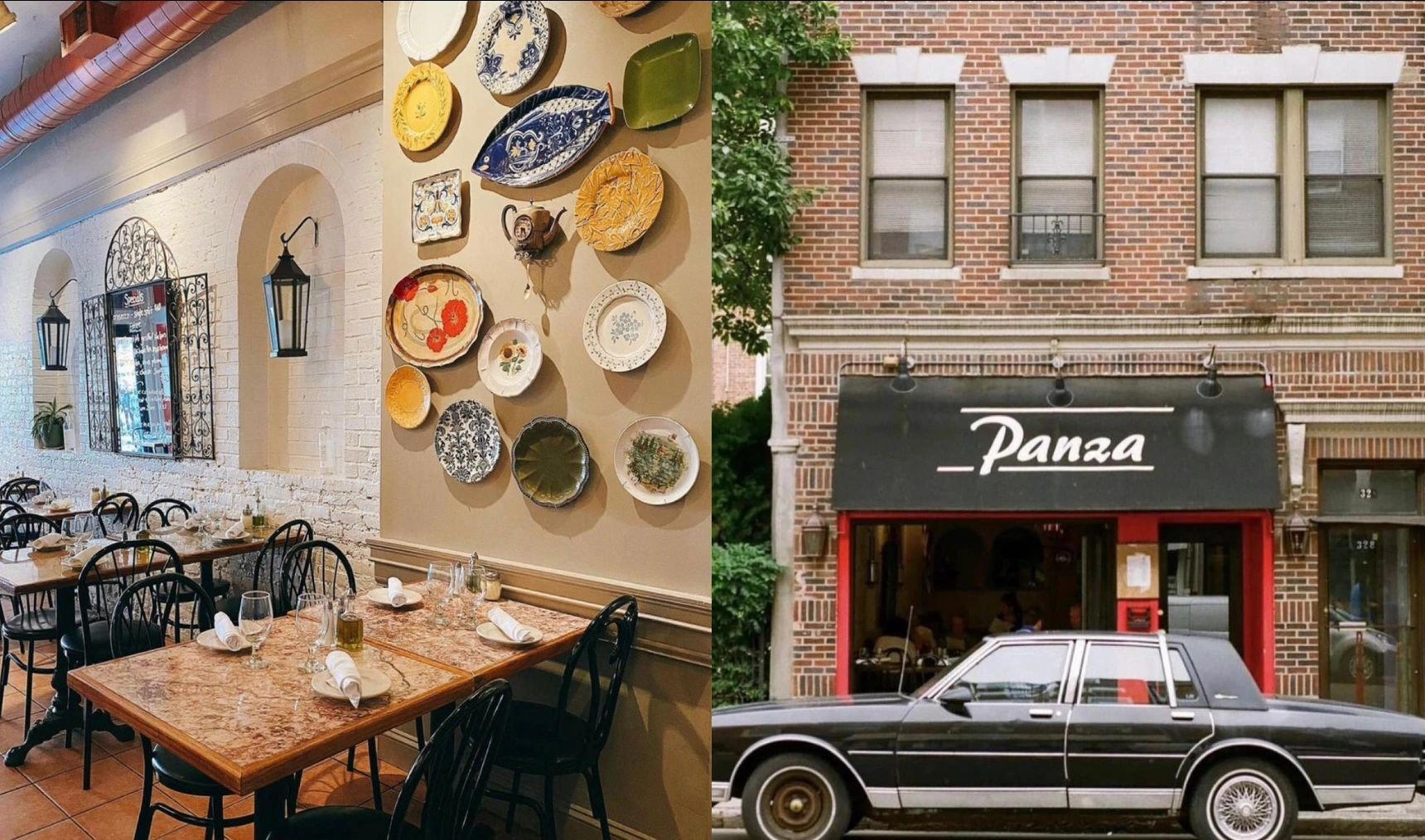
Hanover Street and the Weight of the North End
Boston's North End operates on a different register from the rest of the city's dining scene. On Hanover Street, restaurants do not need to work hard to announce themselves: the neighbourhood does it for them. The smell of garlic and butter drifts through open doorways in warm months, espresso machines run from early morning to late evening, and the foot traffic between cannoli counters and trattorie is thick enough that a reservation at any serious table here carries genuine competitive logic. This is one of the oldest continuously inhabited urban neighbourhoods in the United States, and its Italian-American culinary identity has accumulated over more than a century of immigration, adaptation, and consolidation.
Panza, at 326 Hanover St, sits inside that tradition. The address is neither peripheral nor hidden: it is on the main artery, surrounded by the full spectrum of North End dining, from tourist-facing red-sauce houses to the handful of more considered rooms that attract the neighbourhood's repeat visitors. What distinguishes the better options on this strip is not novelty but calibration: how well a kitchen understands the ingredients it works with, and whether the room has the sense to let the food carry the evening. Those are the terms on which Italian cooking in the North End is ultimately judged, whether the kitchen is turning out a simple cacio e pepe or something more architecturally ambitious.
The Sensory Grammar of the Block
Approaching Hanover Street from the Haymarket side, the North End announces itself gradually. The streets narrow. Brick buildings press closer together. The sound profile shifts from downtown ambient noise toward something more domestic: voices from open windows, chairs scraping on sidewalk terraces, the rhythmic clatter of a busy kitchen through a propped service door. By the time you reach the 300 block, you are inside a neighbourhood that was built for this kind of density, where restaurants occupy ground-floor spaces that have housed some version of Italian food service for decades.
That physical context matters for how a room like Panza reads when you walk in. North End dining rooms tend to be compact by design rather than by accident, a function of the neighbourhood's 17th-century street plan and the row-house architecture that followed. Tables sit close. The rooms are warm. The acoustics reward conversation over distance. Italian dining in this tradition has always been calibrated toward the table as a social unit, and the leading North End rooms hold that calibration even when the menu has moved beyond direct trattoria fare.
Italian Cooking in a Neighbourhood That Has Seen All of It
The North End's culinary range is wider than its Italian-American reputation suggests, though that reputation is the foundation everything else builds on. What has changed in the past decade is the arrival of a tier of restaurants that take the source material more seriously without abandoning it: kitchens that work with imported Italian ingredients alongside local New England product, that think about pasta geometry, that treat the wine list as an argument rather than an afterthought. That shift is visible across the neighbourhood, and it has raised the baseline expectations of the diners who eat here regularly.
In that context, Panza occupies a Hanover Street slot where the ambient competition is not just other Italian restaurants but the accumulated memory of every good meal the neighbourhood's regulars have eaten in these rooms over the years. The North End's most reliable tables attract a local constituency that dines out frequently and does not forgive a kitchen running below its own stated standard. That is a harder test than a single-visit review, and it is the one that matters most for a restaurant at this address. For reference on how other Boston Italian addresses position themselves in the same peer conversation, Agosto, the Portuguese-inspired fine dining and tasting-menu counter, offers a different model of how European culinary tradition can be handled at a chef's counter format across the city.
Boston Italian in Wider American Context
Italian-American dining in Boston does not operate in isolation from the national conversation about what Italian cooking in America has become. The post-2010 reappraisal of Italian cuisine across American cities, driven partly by chefs with time in Italian kitchens and partly by an importing infrastructure that now delivers DOP-certified ingredients reliably to US addresses, has changed what a serious Italian restaurant is expected to do. The reference points have shifted. A kitchen in 2024 is being measured against what diners have eaten not just in New York or San Francisco but in Milan, Bologna, and Rome, where they increasingly travel.
That context does not diminish what the North End does well. It focuses it. The neighbourhood's identity is strong enough to absorb new ambition without losing the things that make it worth the walk from downtown: the concentration of tables, the Italian wine lists that tend toward depth rather than breadth, the rhythm of a meal that does not try to hurry you. Those qualities survive even as the technical ambition of individual kitchens rises. For comparison with Italian cooking at the highest tier of US fine dining, 8 1/2 Otto e Mezzo Bombana in Hong Kong and Le Bernardin in New York City represent different ends of the European-trained fine dining spectrum. Closer to home, 1928 Rowes Wharf, 75 on Liberty Wharf, and Abe and Louie's sit in the broader Boston dining conversation as points of comparison across different price tiers and formats. Nationally, the benchmark tables for serious American restaurants include Alinea in Chicago, The French Laundry in Napa, Single Thread Farm in Healdsburg, Lazy Bear in San Francisco, Providence in Los Angeles, Addison in San Diego, Blue Hill at Stone Barns in Tarrytown, The Inn at Little Washington, Atomix in New York, Emeril's in New Orleans, and 311 Omakase in Boston for a sense of what the leading tiers of American dining look like across formats and cities.
Know Before You Go
Address: 326 Hanover St, Boston, MA 02113
Neighbourhood: North End
Cuisine: Italian (North End tradition)
Phone: Not available
Website: Not available
Hours: Mon to Thu 11:30 AM to 3 PM and 5 to 10 PM; Fri 11:30 AM to 3 PM and 5 to 10:30 PM; Sat 11:30 AM to 3 PM and 4 to 10:30 PM; Sun 11:30 AM to 3 PM and 4 to 9:30 PM
Reservations: Recommended
Getting There: 326 Hanover St, Boston, MA 02113
What It’s Closest To
Comparable venues nearby, for context on price, style, and recognition.
| Venue | Cuisine | Price | Notes |
|---|---|---|---|
| PanzaThis venue — the venue you are viewing | Traditional Italian | $$ | Not listed |
| Trattoria Il Panino | Classic Italian Trattoria | $$ | North End |
| The Salty Pig | Italian Charcuterie & Wood-Fired Pizza | $$ | Back Bay |
| Monica's Trattoria | Traditional Italian Trattoria | $$ | North End |
| Assaggio | Positano Italian | $$ | North End |
| MIDA | Modern Italian Neighborhood Pasta | $$ | South End |
Continue exploring
More in Boston
Restaurants in Boston
Browse all →
Bars in Boston
Browse all →
Hotels in Boston
Browse all →
Wineries in Boston
Browse all →
At a Glance
- Cozy
- Relaxed
- Classic
- Date Night
- Group Dining
- Casual Hangout
- Open Kitchen
Current opening hours
- Monday
- 11:30 AM–3 PM, 5–10 PM
- Tuesday
- 11:30 AM–3 PM, 5–10 PM
- Wednesday
- 11:30 AM–3 PM, 5–10 PM
- Thursday
- 11:30 AM–3 PM, 5–10 PM
- Friday
- 11:30 AM–3 PM, 5–10:30 PM
- Saturday
- 11:30 AM–3 PM, 4–10:30 PM
- Sunday
- 11:30 AM–3 PM, 4–9:30 PM
Hours can change for holidays and private events. Last verified .
Relaxed and cozy atmosphere with welcoming family feel, open kitchen, and street-facing window.