Ox & Olive
Ox & Olive is a steakhouse in Washington, D.C., operating in a city where the genre has grown increasingly competitive and sophisticated. The format positions it alongside a comparable set defined by serious sourcing, confident beef programs, and dining rooms that hold their own against the capital's broader fine-dining tier. For visitors mapping a D.C. meal around red meat and a well-stocked wine list, it belongs in the conversation.

Pearl is the En Primeur Club membership app — saves, bookings, and concierge access live there. Same editors, same standards.

Washington's Steakhouse Tier, and Where Ox & Olive Sits
Washington, D.C. has never lacked for steakhouses. The genre has long been part of the city's dining DNA, power lunches, expense-account dinners, bipartisan tables sharing bone-in ribeyes, and that institutional role has kept it well-funded and competitive. What's changed over the past decade is how the category has fractured. The old guard of white-tablecloth, jacket-preferred steak temples now shares territory with a newer cohort of restaurant-forward steakhouses that borrow technique from the broader fine-dining world: dry-aging programs, nose-to-tail sourcing arguments, wine lists curated by sommeliers with serious credentials. Ox & Olive is a Modern Steakhouse in Washington, D.C. priced at tier 3. It operates in that contested middle ground, where the cooking is expected to carry as much weight as the provenance of the beef. That context matters when you're deciding how to spend a dinner in a city that also offers the modern French precision of Jônt, the wood-fired Middle Eastern register of Albi, and the plant-forward ambition of Oyster Oyster.
The Format and What to Expect at the Table
Steakhouse dining in D.C. has bifurcated in ways that are useful to understand before you book. One camp remains deliberately old-school: generous pours, tableside presentations, the ritual of carving wagyu in front of you. The other camp has moved toward a more edited, modernist format where the steak is the centerpiece but the surrounding menu, appetizers, sides, desserts, reflects a kitchen with broader ambitions. Ox & Olive fits the latter tendency. The name itself signals a dual identity: the bovine and the botanical, meat and oil, the steakhouse and the something-else. That pairing suggests a menu that treats the steak as a statement but doesn't stop there.
For the closest peer comparison within D.C. St. Anselm is one direct reference point. That restaurant built its reputation on American wood-fire cooking with a strong beef emphasis, drawing a crowd that skews younger and more food-literate than the traditional steakhouse demographic. Ox & Olive occupies a similar register, casual enough to feel approachable, serious enough to be taken seriously. The tension between those two modes defines the experience.
Planning Your Visit: Booking, Timing, and What to Know
Washington's better steakhouses rarely suffer for demand, and the smarter move is almost always to book ahead rather than walk in and hope for the leading. Across the D.C. dining scene, reservations at mid-to-upper-tier restaurants typically open two to four weeks in advance through the standard platforms, with weekend prime-time slots going fastest. Weekday dinners, Tuesday through Thursday, tend to be more available and, at many kitchens, more consistent in terms of service pace and kitchen focus. If your schedule allows, arriving for an early dinner service (before 7:00 p.m.) usually means a less pressured room and more attentive pacing.
D.C. dining also has a particular seasonal rhythm worth accounting for. The August recess period, when Congress is out of session, tends to thin out the business-dining crowd and can make reservations that feel impossible in April suddenly manageable. Conversely, late January through early February, inauguration adjacency, political conference season, puts serious pressure on the city's most in-demand tables. For context on how Ox & Olive's booking window compares to nearby alternatives, the Peruvian tasting menu at Causa and the Lebanese-inspired menu at Albi both operate with advance reservation requirements that reflect their position in D.C.'s upper-mid tier.
The Steakhouse in a Broader American Context
The American steakhouse has been through a sustained critical reassessment over the past fifteen years. Restaurants that once competed purely on the size of the cut and the depth of the cellar now find themselves measured against the full range of fine-dining expectations: sourcing transparency, kitchen technique, front-of-house intelligence. That shift has produced a stronger category overall, and a more demanding diner who has likely eaten at a range of serious American tables, from the event-dining format of Lazy Bear in San Francisco to the tasting-menu precision of Alinea in Chicago, and who arrives at a steakhouse with a well-calibrated sense of what good cooking looks like.
In that context, a steakhouse that wants to hold serious diners' attention needs to do more than source a good cut. The side dishes need to be worth ordering on their own merits. The wine list needs to go beyond California Cab dominance. The room needs to feel intentional rather than generic. These are the metrics that separate the restaurants that persist in local critical esteem from those that coast on category loyalty. For comparison at the high end of the national steakhouse conversation, properties like A Cut in Taipei and Capa in Orlando demonstrate how the format translates across different markets, a useful reminder that the genre is genuinely global, with local character still mattering enormously at the table level.
D.C. diners who want to anchor a trip around tasting-menu ambition rather than steakhouse comfort have strong alternatives nearby. The Inn at Little Washington, roughly two hours southwest, remains among the more decorated addresses in the Mid-Atlantic. In the city itself, Jônt operates at the demanding end of the tasting-menu format. But for the specific pleasure of a good steakhouse dinner, the weight of the plate, the deliberate pace, the pour of something red and structured, Ox & Olive answers the brief for D.C. diners who want that experience without the old-school formality the genre used to require.
Reputation Context
Comparable venues nearby, for context on price, style, and recognition.
| Venue | Cuisine | Price | Notes |
|---|---|---|---|
| Ox & OliveThis venue — the venue you are viewing | Modern Steakhouse | $$$ | Not listed |
| Annie's Paramount Steak House | Classic American Steakhouse | $$$ | Dupont Circle |
| Brasero Atlántico | Argentinian live-fire steakhouse | $$$$ | Georgetown |
| Realm | Seychelles-Inspired Fusion Rooftop Lounge | $$$ | Shaw |
| Claudio's Table | Italian Trattoria | $$$ | Kent |
| Uchi | Modern Japanese Omakase | $$$ | Downtown D.C. |
Continue exploring
More in Washington DC
Restaurants in Washington DC
Browse all →
Bars in Washington DC
Browse all →



At a Glance
- Sophisticated
- Elegant
- Modern
- Date Night
- Special Occasion
- Business Dinner
- Standalone
- Craft Cocktails
- Local Sourcing
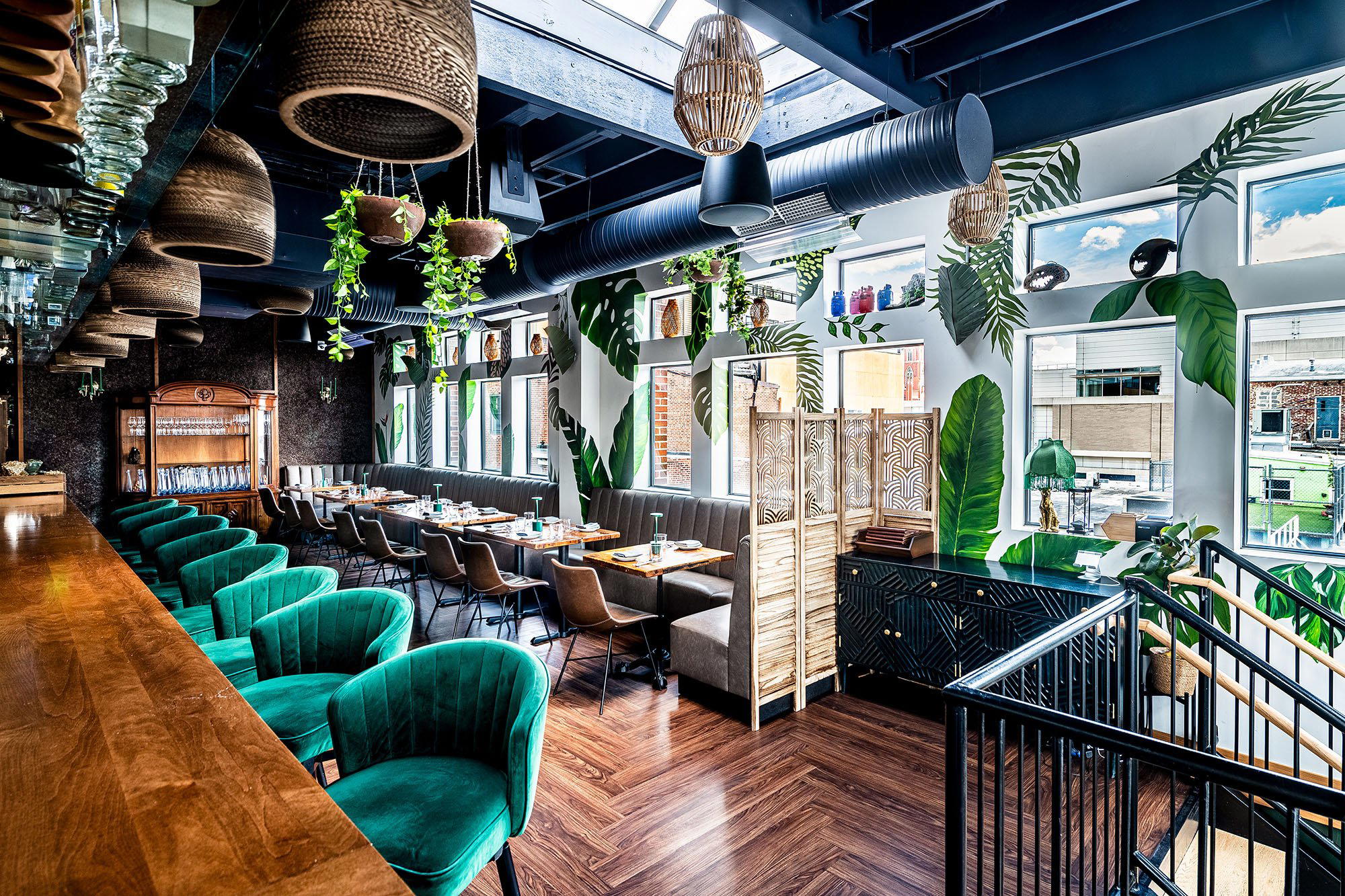
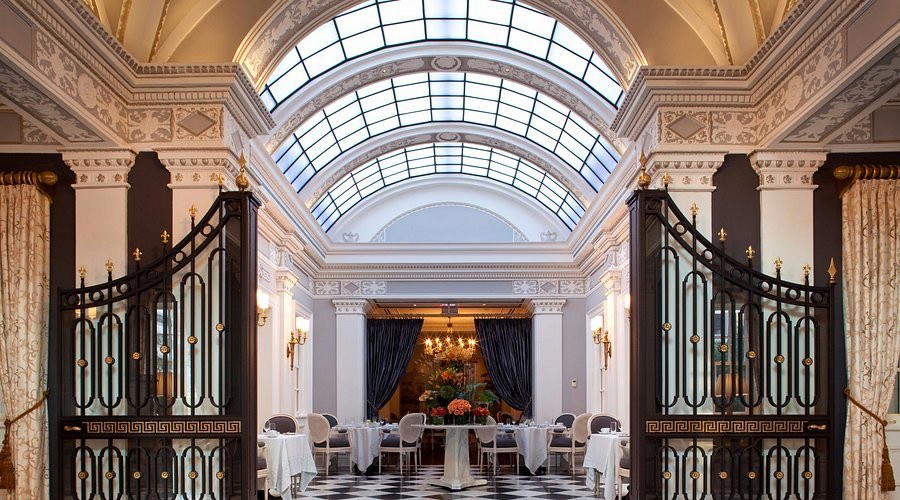
Sophisticated and welcoming with contemporary gothic style blending refined steakhouse vibes.