Our verdict
Along the Brenta Riviera between Venice and Padua, Osteria da Caronte occupies a stretch of the Veneto that has fed travellers for centuries. The osteria format here prioritises ingredient provenance over ceremony, placing it within a quietly serious regional dining tradition rather than the destination-restaurant circuit. For those willing to leave the city behind, the rewards are proportionate to the detour.

Pearl is the En Primeur Club membership app, where members save venues, book tables and use the concierge.
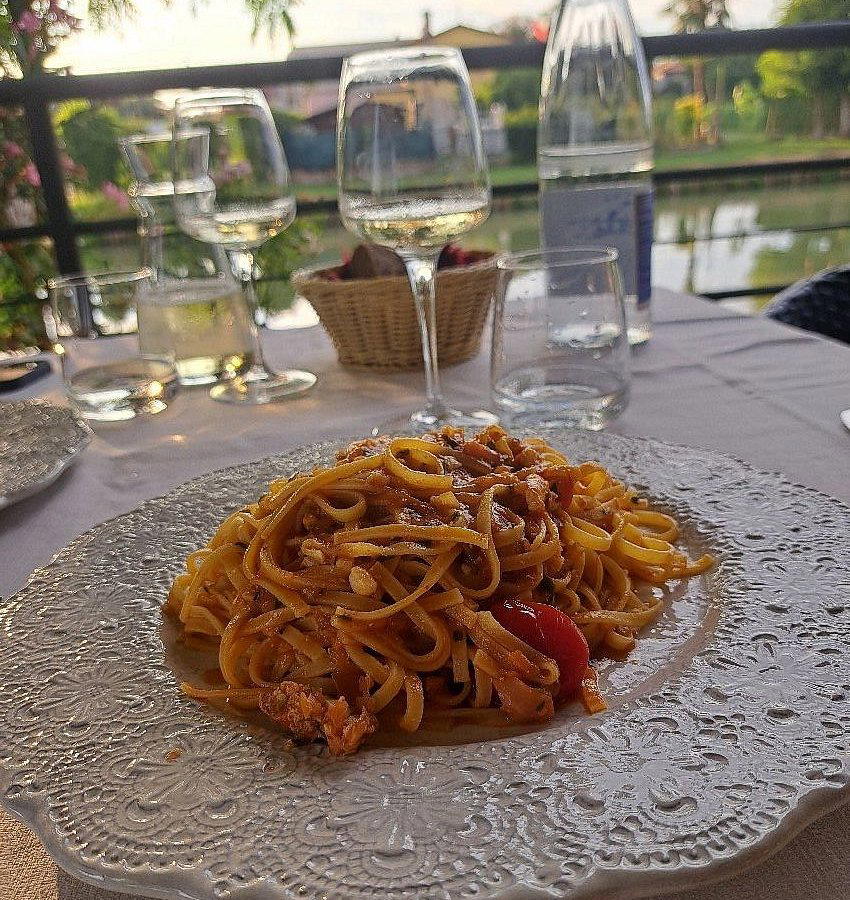
The Brenta Corridor and What It Produces
The stretch of the Veneto running west from Venice along the Brenta Riviera is better known for its palladian villas than its restaurants. That reputation, built on aristocratic architecture and boat excursions from Padua, has long overshadowed the area's food culture, which is older, quieter, and considerably less marketed than the dining scenes in either city flanking it. Stra sits at the eastern end of this corridor, a small comune in the Metropolitan City of Venice, and the eating here reflects a regional logic that predates tourism: cook what the land and water produce, and do not overcomplicate it.
This is the context in which Osteria da Caronte operates. The address, Via Dolo 29 in the Paluello fraction of Stra, places it in genuinely local territory, away from the villa tour coaches and closer to the agricultural and fishing rhythms of the lower Veneto. That positioning is not incidental. Across the Veneto, the osteria format has historically functioned as a community anchor, a place where provenance matters more than presentation and where the sourcing of ingredients from surrounding farms, rivers, and the Venetian lagoon is the foundation of the menu rather than a marketing detail.
Ingredient Sourcing in the Lower Veneto
To understand what a serious osteria in this part of Italy is reaching for, it helps to understand what the lower Veneto actually produces. The Brenta river basin supports significant vegetable cultivation, including radicchio varieties that range from the tight, bitter Trevisano to the looser Castelfranco, the latter grown specifically in the territory between Treviso and Padua. The lagoon to the east supplies crab, sea bass, sole, and the small, intensely flavoured soft-shell crabs known as moleche, which are harvested twice a year during the moulting season. Inland, the foothills and plains yield white asparagus from Bassano, the Vialone Nano rice that defines Venetian risotto, and cured meats from the Berici Hills.
In a region with this depth of primary production, the most interesting restaurants are not those that import prestige ingredients from elsewhere but those that maintain genuine relationships with local suppliers. The osteria tradition in the Veneto is built on exactly that kind of sourcing fidelity, a commitment that connects it philosophically to operations like Dal Pescatore in Runate, where the surrounding Mantuan countryside has shaped the menu across decades, or Uliassi in Senigallia, which has built its Adriatic identity around the catch arriving at its door. The scale and register are different, but the underlying logic is the same: geography determines the plate.
Setting and Atmosphere
The physical character of an osteria in a village along the Brenta tends toward the unpretentious. Stone or plaster facades, interior rooms that have accumulated layers of use over time, tables that are serviceable rather than designed, and a noise level that suggests people are there to eat and talk rather than to be seen. This is a different register from the polished dining rooms of Le Calandre in Rubano, which sits within the same regional geography but operates at the top of Italy's progressive fine-dining tier, or the formal grandeur of Enoteca Pinchiorri in Florence.
The Brenta Riviera setting itself adds a specific atmospheric quality. Villa Pisani, one of the grandest of the Venetian republic's country estates, is in Stra, and the landscape around the town carries that sense of faded, well-proportioned grandeur that characterises the entire river road. Arriving at a local osteria in this context, past the cypress-lined walls and water gates of the old villas, sharpens the contrast between the area's patrician past and the everyday character of its food culture.
Placing Osteria da Caronte in the Regional Dining Tier
Italy's restaurant tier structure is sometimes misread by visitors who conflate Michelin recognition with quality, or assume that the most interesting food is always found in the most celebrated rooms. The Veneto complicates that assumption. Some of the most precise cooking in the region happens in places that have not sought, or have not received, formal recognition. The osteria tier, when it is functioning well, offers something the decorated restaurants cannot always replicate: an unmediated connection between place and plate, without the ceremony that inevitably adds distance between the two.
Restaurants operating at the top of the Italian fine-dining hierarchy, from Osteria Francescana in Modena to Piazza Duomo in Alba or Atelier Moessmer Norbert Niederkofler in Brunico, are working from a different set of premises. Their ingredient sourcing is deliberate and often equally rigorous, but it is deployed inside a framework of technique and concept that transforms it. The osteria tradition works in the opposite direction: ingredients are the frame, and technique exists to serve them rather than to reinterpret them.
For visitors comparing options in northeastern Italy, the decision between a destination restaurant and an osteria of this kind is not a question of budget alone. It is a question of what kind of encounter with a place's food culture you are seeking. Other serious addresses in the region or nearby worth knowing include Casa Perbellini 12 Apostoli in Verona and Da Vittorio in Brusaporto, both of which operate in the fine-dining register. Outside the region, Quattro Passi in Marina del Cantone, Reale in Castel di Sangro, and Gambero Rosso in Marina di Gioiosa Ionica represent the same commitment to regional sourcing at different points on the formality spectrum. Further afield, the ingredient-first philosophy connects, at a conceptual level, to what drives Le Bernardin in New York City and Atomix, though the contexts and registers differ entirely. For the full picture of serious eating in Rome or Milan, La Pergola in Rome and Enrico Bartolini in Milan represent Italy's most decorated urban dining.
Planning a Visit
Stra is accessible by road from both Venice (roughly 30 kilometres west along the Riviera del Brenta) and Padua (approximately 15 kilometres east). Public transport connections exist but are infrequent by urban standards; a car or taxi is the practical option for most visitors. The village is small enough that the osteria is easy to locate once you are in Paluello. Given the limited data publicly available on booking methods, hours, and seasonal schedules, contacting the restaurant directly before visiting is the prudent approach, particularly for weekend lunches, which in this part of the Veneto tend to draw a local following that fills tables without advance notice. For a broader view of eating in the area, our full Stra restaurants guide maps the options by format and occasion.
Frequently asked questions
Is Osteria da Caronte a family-friendly restaurant?
Osteria-format venues in villages like Stra along the Brenta corridor typically operate as informal, multi-generational dining rooms where families are a core part of the clientele. The setting at Via Dolo, 29 in Paluello suggests a neighbourhood-rooted operation rather than a formal dining room. check the venue's official channels to confirm seating arrangements for groups with children.
What kind of setting is Osteria da Caronte?
Osteria da Caronte is located in Paluello, a small settlement within Stra in the lower Veneto, at Via Dolo, 29. Osterias along this stretch of the Brenta Riviera tend toward plainspoken interiors: plastered walls, close-set tables, and rooms that prioritise function over theatrics. The surrounding area is defined by agricultural flatlands and the Palladian villa corridor, placing the venue within a working rural rather than tourist-facing context.
Is Osteria da Caronte worth visiting as a day trip from Venice or Padua?
Stra sits approximately 30 kilometres west of Venice and 15 kilometres east of Padua, making it reachable from either city by road in under an hour. The Brenta Riviera route via the Riviera del Brenta road passes several UNESCO-listed Palladian villas, so a meal at an osteria in Stra can anchor a half-day itinerary through the corridor. The village itself draws few independent tourists, which keeps the dining room oriented toward local trade rather than passing visitors.
What should I eat at Osteria da Caronte?
The lower Veneto produces a specific larder: freshwater fish from the Brenta's tributary network, radicchio from Chioggia and Treviso, polenta from local mills, and baccalà prepared in the regional manner. An osteria in this location would logically anchor its menu to these ingredients, though specific dishes and seasonal availability should be confirmed directly with the venue before visiting.
What's the address for Osteria da Caronte?
Osteria da Caronte is located at îVia Dolo, 29, 30030 Paluello VE, Italy, Stra.
What's the best way to book Osteria da Caronte?
Phone and website details are not currently listed for Osteria da Caronte. Visiting in person or reaching out through local directories for the Paluello VE address (Via Dolo, 29, 30030) is the most direct approach. For a Saturday or Sunday lunch, the peak sitting for Brenta corridor osterias, reservations made well in advance are advisable.
At-a-Glance Comparison
Comparable venues nearby, for context on price, style, and recognition.
| Venue | Cuisine | Price | Notes |
|---|---|---|---|
| Osteria da CaronteThis venue (the venue you are viewing) | Authentic Venetian Osteria | $20–30 | Not listed |
| pizzeria ai sportivi | Italian Pizza and Pasta | $20–30 | Dorsoduro |
| Da culata | Traditional Veneto Trattoria | $30–50 | Montegalda |
| La Patatina di San Giacomo | Italian Pizza and Seafood with Vegan Options | $30–50 | Santa Croce |
| Nalin | Traditional Venetian Grill & Regional Italian | $30–50 | Sant'Andrea, Campodarsego |
| Alla Conchiglia | Venetian Seafood | $30–50 | Castello |
Continue exploring
More in Stra
Restaurants in Stra
All restaurants in Stra →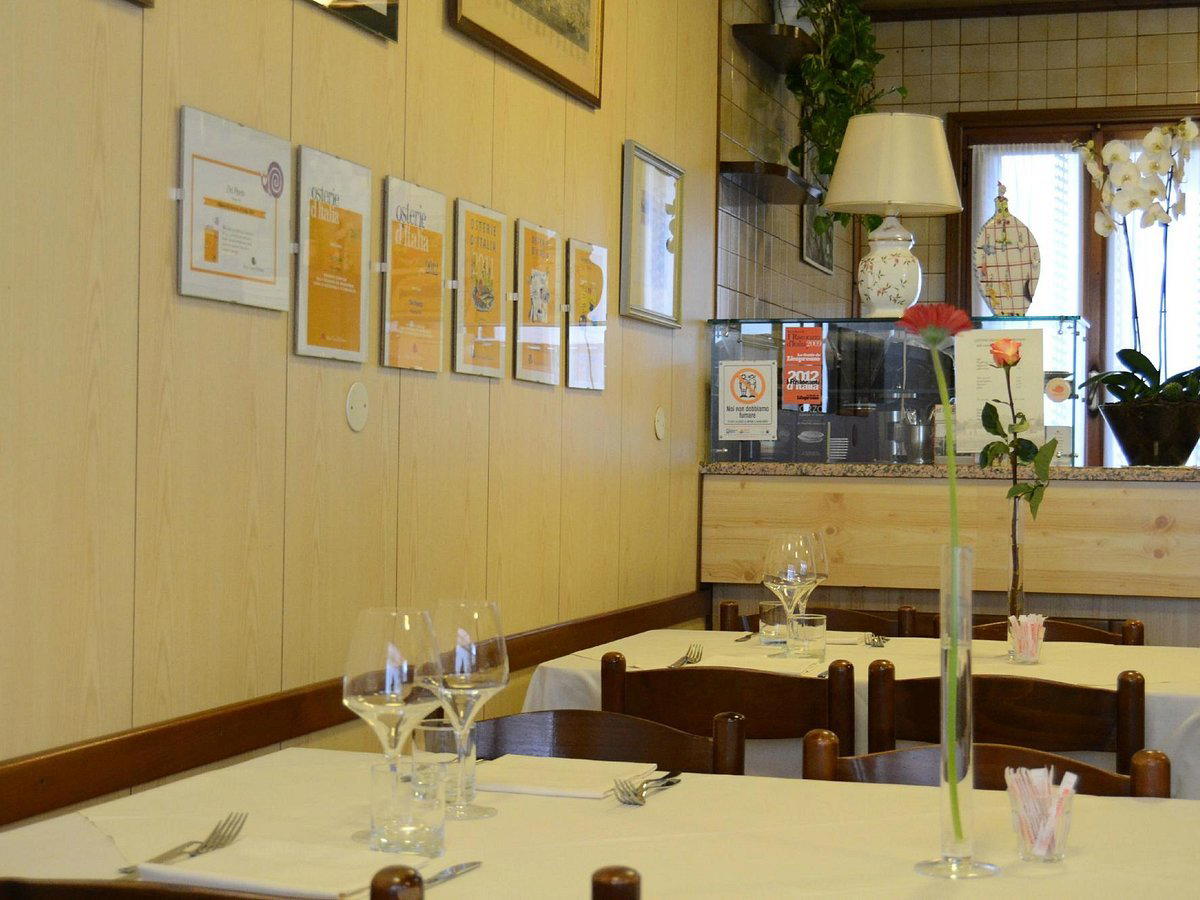
Bars in Stra
Browse all →
Details
- Cozy
- Rustic
- Scenic
- Intimate
- Date Night
- Casual Hangout
- Garden
- Terrace
- Open Kitchen
- Extensive Wine List
- Local Sourcing
- Waterfront
- Garden
- A La Carte
- Local Wines
- Gluten Free Options
Current opening hours
- Monday
- 12–2 PM, 7–10 PM
- Tuesday
- Closed
- Wednesday
- Closed
- Thursday
- 12–2 PM, 7–10 PM
- Friday
- 12–2 PM, 7–10 PM
- Saturday
- 12–2 PM, 7–10 PM
- Sunday
- 12–2 PM, 7–10 PM
Hours can change for holidays and private events. Hours as of .
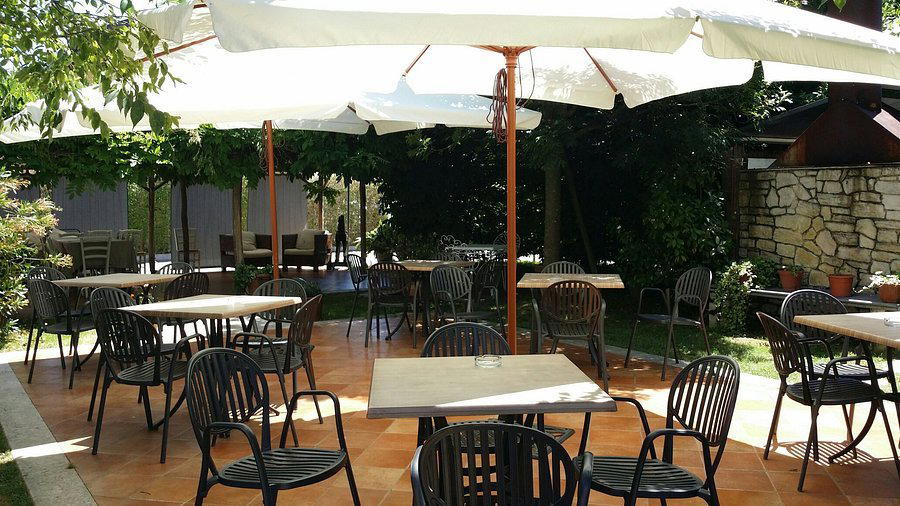
Cozy retreat with exposed beams, straw chairs, inviting fireplace, and tranquil canal-side garden terrace.