El 5 de Tirso sits on Plaza de Tirso de Molina, one of central Madrid's most historically layered squares, positioning it within a neighbourhood long associated with traditional Castilian eating culture. Where that square once anchored Madrid's older tavern circuit, the address now signals a different kind of ambition, placing it in conversation with the city's evolving mid-to-upper dining tier.
Pearl is the En Primeur Club membership app — saves, bookings, and concierge access live there. Same editors, same standards.
- Address
- Pl. de Tirso de Molina, 5, Centro, 28012 Madrid, Spain
- Phone
- +34 910 88 85 02
- Website
- grupolafabrica.es
- Directions
- Get directions
 Saves & bookings on Pearl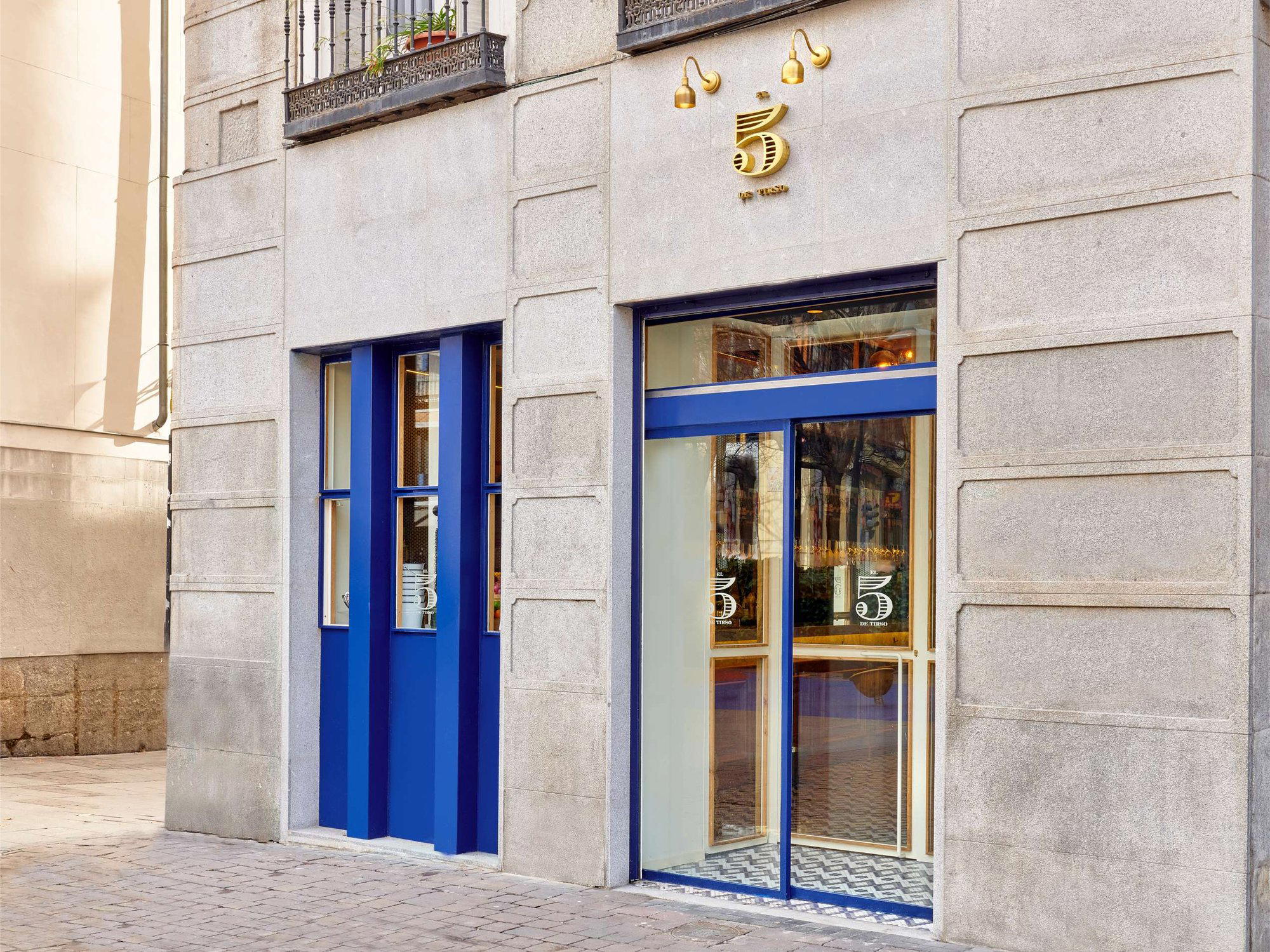
A Square That Has Always Had Something to Prove
Plaza de Tirso de Molina has spent decades being underestimated. The square sits in the heart of Lavapiés and the southern edge of Embajadores, a zone that Madrid's gastronomic attention skipped over for years in favour of Salamanca's polished dining rooms and the Chueca corridor's trend-driven openings. That neglect, in retrospect, made the area more interesting. The older taberna culture held on here longer than elsewhere, which means that newer addresses arriving on or near the plaza inherit both a specific physical context and a set of expectations built up across generations of neighbourhood eating. El 5 de Tirso occupies number five on that square, and the address alone carries the weight of that layered history.
The square itself is worth understanding before considering what happens inside. Tirso de Molina is not a terrace-tourism destination in the way that Plaza Mayor draws visitors who eat by obligation rather than intention. It functions as a working neighbourhood square, busy at lunchtime with locals, quieter in the mid-afternoon, and animated again after dark. Any venue operating on it has to negotiate between the square's populist energy and whatever internal register it chooses to project.
The Neighbourhood Shift and What It Means for the Address
Madrid's dining geography has been redrawn meaningfully over the past fifteen years. The traditional concentration of fine dining around the Paseo de la Castellana and the Salamanca barrio has loosened, with ambitious kitchens appearing in areas that previously offered little beyond functioning bars and market-adjacent stalls. Lavapiés, in particular, absorbed a wave of internationally influenced openings that drew on the neighbourhood's multicultural character. That wave is still arriving, but its character has changed: early openings often competed on novelty; more recent ones are competing on discipline and continuity.
Within that broader shift, the Tirso de Molina end of the district occupies an interesting position. It is close enough to the main tourist circuit to draw visitors who have moved beyond the obvious stops, but grounded enough in everyday Madrid life that venues here do not survive on passing trade alone. The addresses that hold on in this zone tend to do so because they are doing something consistent and specific, not because the location guarantees footfall. That context shapes what El 5 de Tirso is navigating: a neighbourhood that rewards staying power over spectacle, and a city that has grown significantly more sophisticated about what it expects from a mid-to-upper table.
Where It Sits Against Madrid's Creative Dining Tier
Madrid's three-Michelin-star addresses, led by DiverXO, operate in a register defined by tasting menus, extended booking windows, and explicit destination-dining intent. The tier below that, where venues like Coque, Deessa, DSTAgE, and Paco Roncero operate, is defined by sustained creative ambition backed by Michelin recognition. Both tiers share a common geographic instinct: they tend to anchor in neighbourhoods that project a certain seriousness, whether through architecture, postcode prestige, or deliberate remove from the tourist circuit.
El 5 de Tirso operates in a different register. Its position on a working plaza, rather than in a hotel dining room or a purpose-built creative space, places it closer to the tradition of Madrid's established neighbourhood restaurants than to the city's destination-dining circuit. That is not a limitation; it is a positioning choice with its own logic. The Spanish dining culture that produced El Celler de Can Roca in Girona or Arzak in San Sebastián always had a strong neighbourhood-restaurant substrate underneath the headline addresses. Venues in that register succeed not through awards-season visibility but through the kind of repeat patronage that a reliable, well-executed kitchen builds over years.
For comparison with Spain's broader high-end circuit, Quique Dacosta in Dénia, Azurmendi in Larrabetzu, Martin Berasategui in Lasarte-Oria, Aponiente in El Puerto de Santa María, Cocina Hermanos Torres in Barcelona, Ricard Camarena in València, Mugaritz in Errenteria, and Atrio in Cáceres all define themselves through the combination of location specificity and deep kitchen identity. The restaurant's claim on that kind of credibility, if it is being built, would need to come from what happens at the table over time, not from the address alone. Internationally, the model of a neighbourhood-anchored restaurant building sustained credibility is well established: venues like Lazy Bear in San Francisco and Le Bernardin in New York City show how location context and consistent kitchen output can define a venue's identity across different market conditions.
Planning Your Visit
The restaurant is located at Plaza de Tirso de Molina, 5, in the Centro district of Madrid (28012). The square is well served by the Madrid Metro at Tirso de Molina station on Line 1. Visitors arriving from central Madrid should allow for a short walk from Sol or Ópera.
The Essentials
Comparable venues nearby, for context on price, style, and recognition.
| Venue | Cuisine | Price | Notes |
|---|---|---|---|
| El 5 de TirsoThis venue — the venue you are viewing | Lavapies, Modern Madrid Tapas | $$ | Not listed |
| El Patio de Atocha | Not listed | $$ | Barrio de las Letras, Modern Spanish Fusion |
| Restaurante Adrede | Jeronimos, Traditional Spanish Tapas | $$ | Not listed |
| Mar y Tierra - Chamartín | Not listed | $$ | Hispanoamerica, Traditional Spanish Rice and Seafood |
| La Gruta Valdebernardo | Not listed | $$ | Casco Historico de Vicalvaro, Cocina Española de Autor |
| Restaurante Cuadrilla | Not listed | $$ | Montecarmelo, Traditional Spanish Mediterranean |
Continue exploring
More in Madrid
Restaurants in Madrid
Browse all →
Bars in Madrid
Browse all →
Hotels in Madrid
Browse all →


At a Glance
- Classic
- Cozy
- Rustic
- Casual Hangout
- Group Dining
- Open Kitchen
Current opening hours
- Monday
- 1 PM–12 AM
- Tuesday
- 1 PM–12 AM
- Wednesday
- 1 PM–12 AM
- Thursday
- 1 PM–12 AM
- Friday
- 1 PM–1 AM
- Saturday
- 1 PM–1 AM
- Sunday
- 1 PM–12 AM
Hours can change for holidays and private events. Last verified .
Recreates a high-end ultramarinos with majestic chestnut wood and marble bar, open kitchen, and vaulted brick basement with hanging lamps and wine cellar.