Our verdict
Three hawker institutions sharing a single address in Penang: OO White Coffee for the island's characteristic milky brew, Tiger Char Kway Teow for wok-fired flat noodles with proper breath-of-the-wok char, and Gow Thew Chik Hainanese Chicken Rice for the poached-bird standard that defines the Straits Chinese table. A multi-stall format that regulars treat as a complete meal circuit rather than a single-dish stop.

Pearl is the En Primeur Club membership app, where members save venues, book tables and use the concierge.
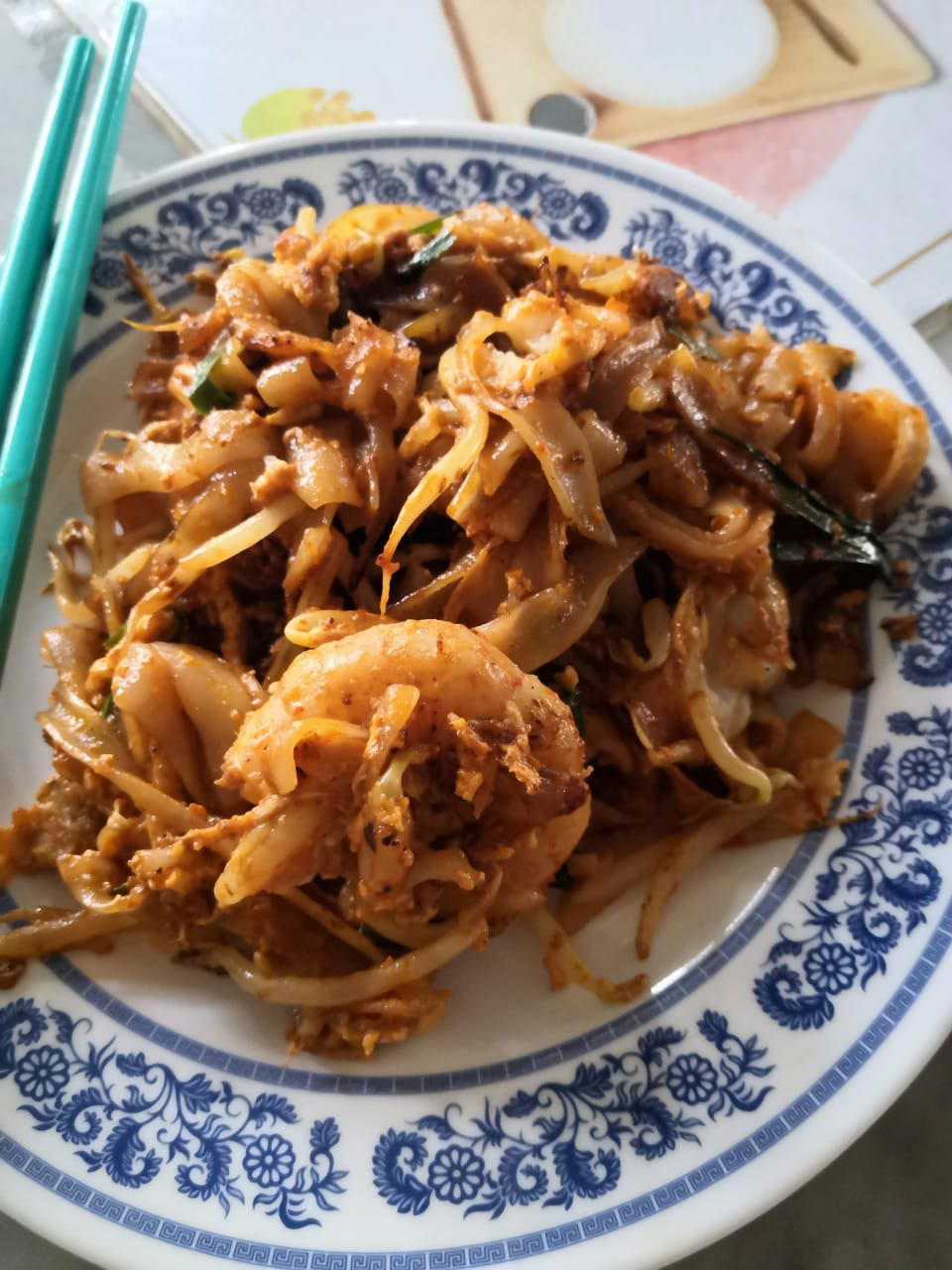
The menu
What to order
- White coffee
- Char kway teow
- Hainanese chicken rice
Three Disciplines, One Address
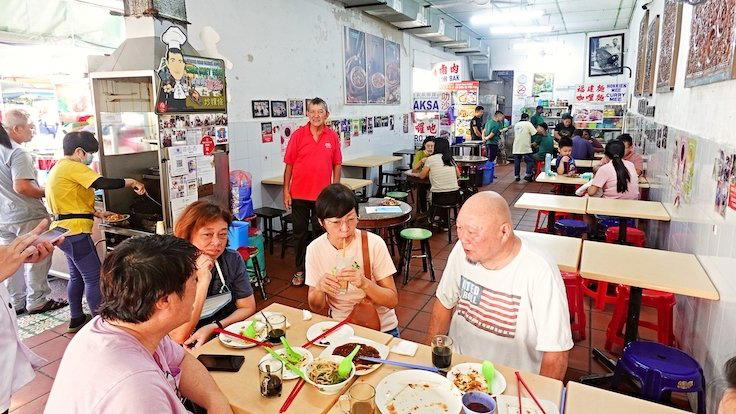
Penang's hawker culture has always resisted the logic of the single-dish restaurant. The island's most enduring eating addresses are not defined by one kitchen but by a cluster of specialists sharing a roof, a set of shared tables, and a customer base that orders from all of them simultaneously. The combination of OO White Coffee, Tiger Char Kway Teow, and Gow Thew Chik Hainanese Chicken Rice sits squarely in that tradition: three distinct cooking disciplines operating as a de facto tasting circuit for regulars who know exactly how to work the room.
That multi-stall format is worth understanding before you arrive. In Penang's kopitiam culture, loyalty is stall-specific but the visit is holistic. You secure a table, place drink orders first, then dispatch across stalls to collect food. Regulars at this address have internalized the sequence: coffee arrives at the table, char kway teow lands next from the wok station, and chicken rice follows in a separate plate, the two savoury dishes setting up a complementary contrast of smoky-oily noodles against the clean, stock-poached bird. It is a meal logic that George Town's older eating houses have practiced for decades, and one that newer restaurant formats in the city have found difficult to replicate. For comparison, a sit-down address like ChinaHouse or a Western-leaning kitchen like Christoph's operates on an entirely different hospitality register, organized, sequenced, single-bill. The kopitiam model inverts that entirely.
The White Coffee Standard
Ipoh tends to claim white coffee as its own, but Penang's kopitiam operators have maintained their own version of the tradition for generations. The distinguishing characteristic is roasting method: beans processed with palm-oil margarine rather than the sugar-and-butter combinations used in standard Malaysian kopitiam roasting, producing a brew that reads as less bitter and more rounded in the cup. OO White Coffee operates within that tradition, serving the beverage that anchors the wider meal. For regulars, the coffee order is placed before anything else, it arrives first, it is drunk through the meal, and it functions as the structural backbone of the sitting. Across the causeway in peninsular Malaysia, Kopi Ping Cafe in Tuaran and similar regional kopitiam addresses demonstrate how consistent this format remains across the country's Chinese-Malaysian eating culture.
Char Kway Teow: The Wok as Instrument
Penang char kway teow occupies a specific position in the broader canon of Malaysian hawker cooking. The city's version is darker, more intensely flavoured, and more dependent on high-heat wok technique than the versions produced in Kuala Lumpur or Singapore. The flat rice noodles require a wok operating at temperatures that most domestic kitchens cannot produce, and the characteristic smokiness, what Cantonese cooks call wok hei, breath of the wok, emerges from the brief, violent contact between noodle, oil, egg, and flame. Tiger Char Kway Teow's name positions it inside a city tradition where individual stalls carry the weight of decades of neighbourhood loyalty. Regulars order it with or without cockles depending on preference, and with lard rendered from pork fat if they are eating pork. The dish is finished quickly, plated fast, and eaten immediately, it degrades in quality within minutes of leaving the wok, which is why the kopitiam table format, where you eat at the source, remains the correct context for it. For readers exploring comparable wok-fired noodle traditions elsewhere in Penang, Air Itam Asam Laksa, Chong Char Koay Teow, and 888 Hokkien Mee represents another multi-discipline address with its own cluster of stall loyalties.
Hainanese Chicken Rice: The Quiet Benchmark
Hainanese chicken rice has become one of Southeast Asia's most widely travelled dishes, appearing in hotel restaurants, airport terminals, and fine-dining reinterpretations from Singapore to Sydney. What that diffusion often loses is the standard against which the dish is properly measured: a whole or half bird poached in a master stock maintained across service periods, sliced cold or at room temperature, served with fragrant rice cooked in chicken fat and stock, and accompanied by ginger paste, dark soy, and chilli sauce. Gow Thew Chik operates in that original register. The Hainanese community's presence in Penang dates to the nineteenth century, and the chicken rice tradition they carried arrived through the same migration routes that brought the dish to Singapore and the Malay Peninsula. The dish at this address is a Straits Chinese staple rather than a hotel amenity, which is the most useful way to frame the difference. For a broader sense of how Penang's heritage cuisine addresses position themselves relative to one another, Auntie Gaik Lean's Old School Eatery in George Town offers a parallel Nyonya-lineage comparison, while Jit Seng Roasted Duck Rice and Ka Bee Cafe and Laksa Mamu anchor the roasted-meat and laksa stall traditions respectively.
What the Regulars Know
The editorial angle that matters most here is not what any single stall produces in isolation. It is the way regulars have assembled a personal choreography across all three. The coffee first, the noodles ordered early because the queue at the wok station builds by mid-morning, the chicken rice as a cooling counterweight to the char kway teow's smokiness. That sequencing is not written anywhere. It is absorbed through repeated visits, passed laterally between acquaintances at shared tables, and refined over time. This is the mechanism by which Penang's leading kopitiam addresses sustain their reputations across generations without advertising, without awards in the conventional sense, and without tasting menus or chef profiles to give critics a formal point of entry. The peer comparison is instructive: internationally recognised kitchens like Dewakan in Kuala Lumpur or, further afield, Le Bernardin in New York City and Atomix in New York City carry their authority through documented critical apparatus. The kopitiam address carries it through the observable density of its regulars and the speed at which tables turn without anyone feeling rushed.
For visitors approaching George Town for the first time, the logistics of this format require adjustment. Arrive before 9am if possible: the char kway teow queue at the wok station lengthens quickly as the morning progresses, and the leading chicken rice portions move at pace. There is no reservation system and no formal host. Tables are shared as a matter of course. Payment is handled per stall. For the fuller picture of how this address sits within Penang's wider hawker geography, our full Penang restaurants guide maps the territory across neighbourhoods and stall types, from George Town's heritage coffee shops to the broader circuit that includes addresses like CRC Restaurant in Georgetown and the range of formats covered in our Malaysia-wide coverage, including Jia Yi Dao Vegetarian Restaurant in Taiping.
Frequently asked questions
How does the white coffee at OO differ from the Ipoh white coffee style served at chain cafés across Malaysia?
Penang's kopitiam white coffee is roasted with a lighter touch than the heavily commercialised Ipoh versions now sold in chain format across Malaysia, producing a cup that reads less sweet and more directly bitter-edged. OO operates within a generational kopitiam tradition where the coffee is brewed to order through a sock filter rather than dispensed from a machine. The distinction matters because the Penang style was never designed for mass replication, it remains a counter-specific preparation tied to the individual operator's roast profile.
What should I eat at OO White Coffee, Tiger Char Kway Teow, Gow Thew Chik Hainana Chicken Rice?
The address operates across three disciplines: white coffee from the OO kopitiam counter, Penang-style char kway teow from Tiger, and Hainanese chicken rice from Gow Thew Chik. Penang's version of char kway teow runs darker and more intensely flavoured than its KL counterpart, and the chicken rice here sits in the quieter, less-travelled end of the city's hawker canon. The practical approach is to order all three across a single sitting, as regulars do.
Do I need a reservation for OO White Coffee, Tiger Char Kway Teow, Gow Thew Chik Hainana Chicken Rice?
Hawker-format operations in Penang do not take reservations. Seating is first-come, first-served, and peak hours, typically breakfast and lunch, move quickly at addresses that attract a loyal local following. Arriving early or between meal rushes is the standard approach at this kind of kopitiam setup.
What do critics highlight about OO White Coffee, Tiger Char Kway Teow, Gow Thew Chik Hainana Chicken Rice?
The editorial focus tends to land on the collective rather than any single stall: Penang's enduring hawker addresses are defined by the combination of disciplines under one roof, not by a single dish in isolation. The white coffee tradition here draws a direct line to kopitiam culture that predates Ipoh's modern claim on the style. Char kway teow and Hainanese chicken rice at this address represent the city's preference for specificity over spectacle.
Cuisine and Awards Snapshot
| Venue | Cuisine | Price | Awards |
|---|---|---|---|
| OO White Coffee, Tiger Char Kway Teow, Gow Thew Chik Hainana Chicken RiceThis venue (the venue you are viewing) | Traditional Penang Kopitiam Hawker Food | $1–10 | Not listed |
| Christoph's | Austrian & German Brasserie | $50–100 | Michelin Plate · Star Wine List |
| ChinaHouse | Trendy Fusion Cafe & Bakery | $10–20 | Not listed |
| Jit Seng Roasted Duck Rice | Hong Kong Roasted Duck Rice | $1–10 | Michelin Plate |
| La Vie | European with Asian Fusion Fine Dining | $50–100 | Not listed |
| Sri Ananda Bahwan | South Indian Banana Leaf | $1–10 | Not listed |
Continue exploring
More in Penang
Restaurants in Penang
All restaurants in Penang →
Bars in Penang
All bars in Penang →
Details
- Classic
- Lively
- Casual Hangout
- Solo
- Standalone
- Local Sourcing
- Street Scene
- Counter Dining
- A La Carte
- White Coffee
- Milk Tea
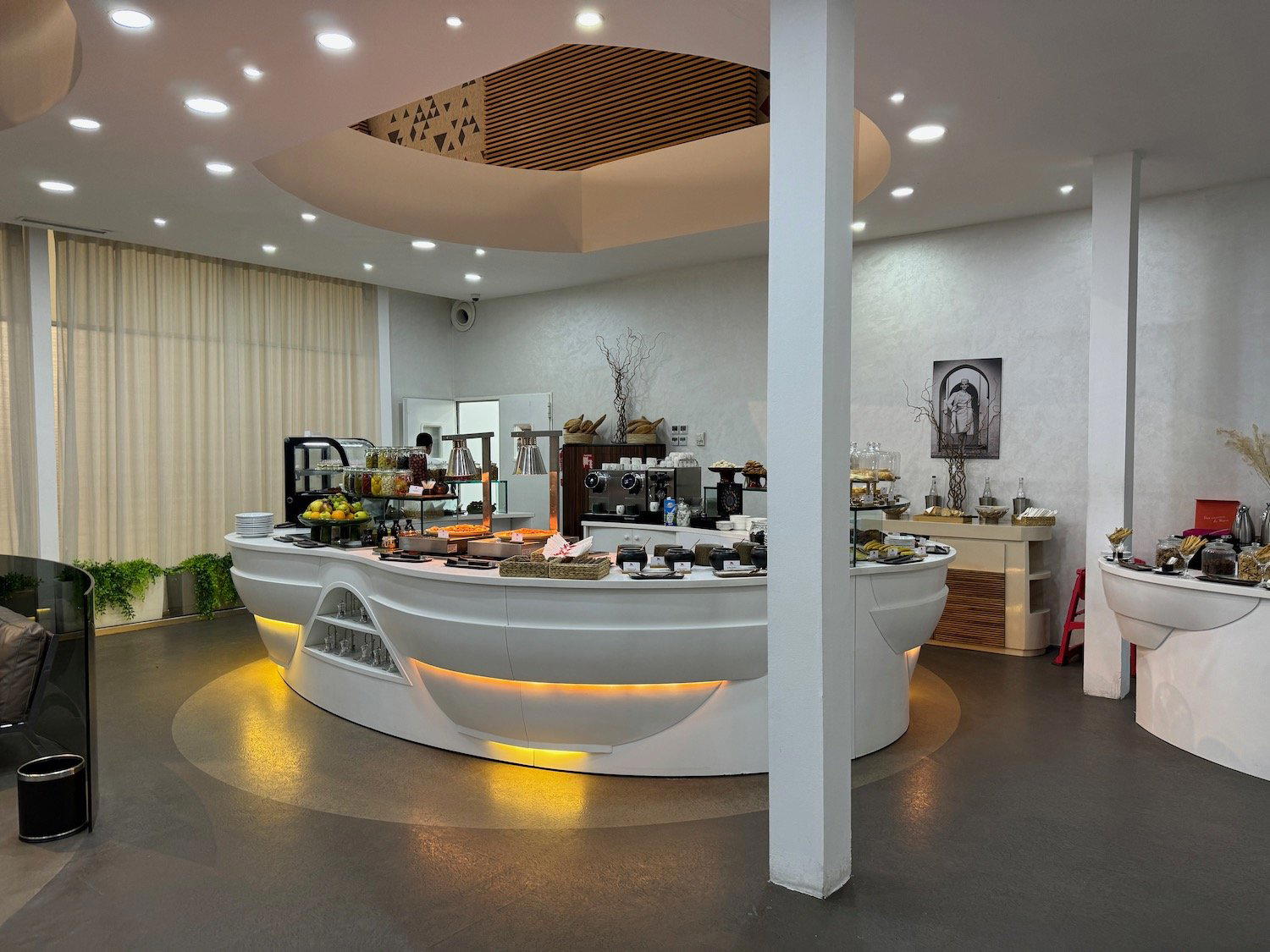
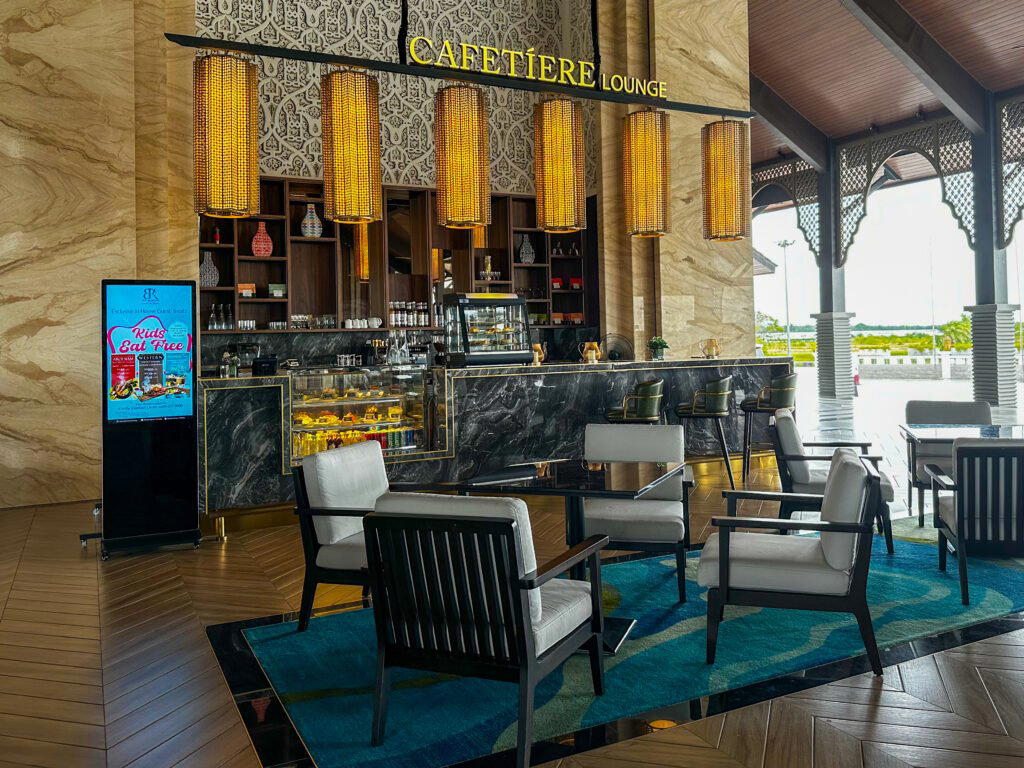
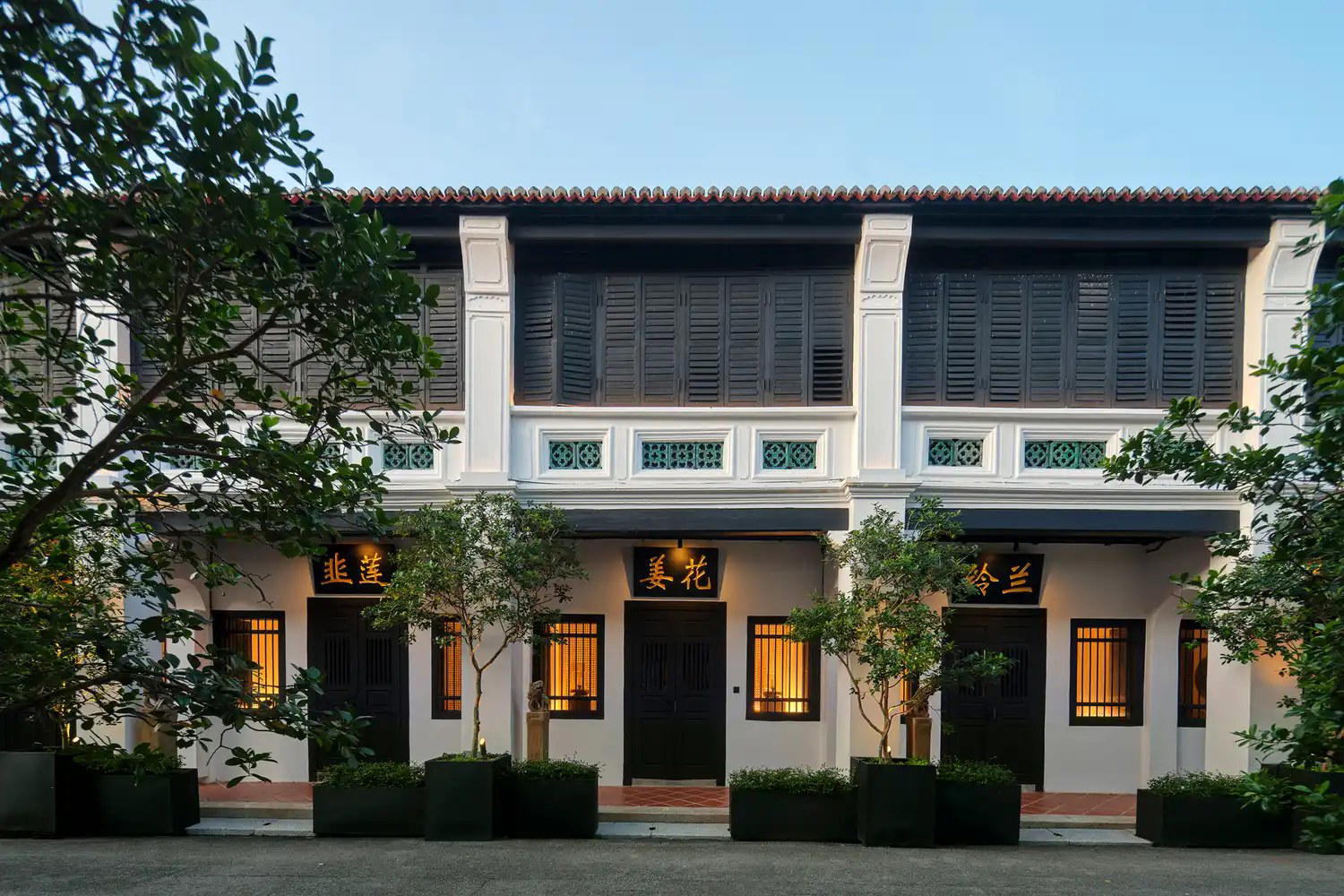
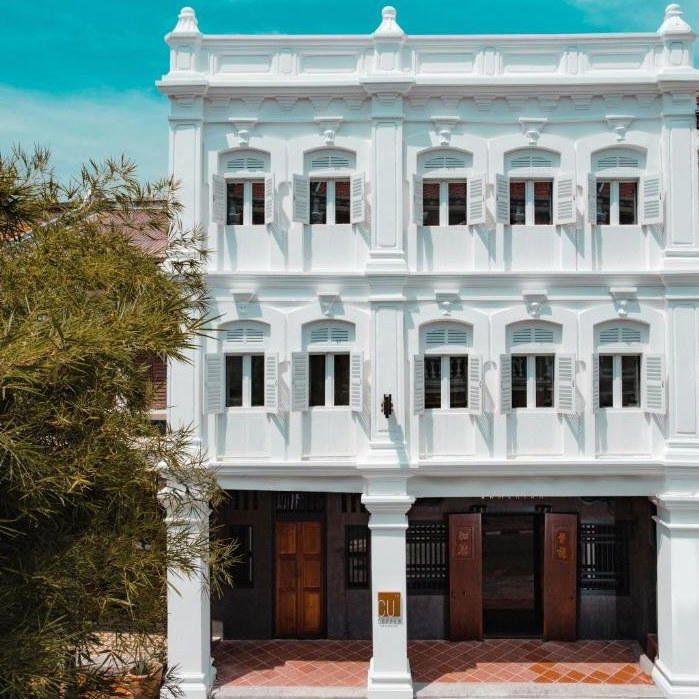
A casual, lively traditional Penang kopitiam setting with counter-service hawker stalls and lunch queues.