Our verdict
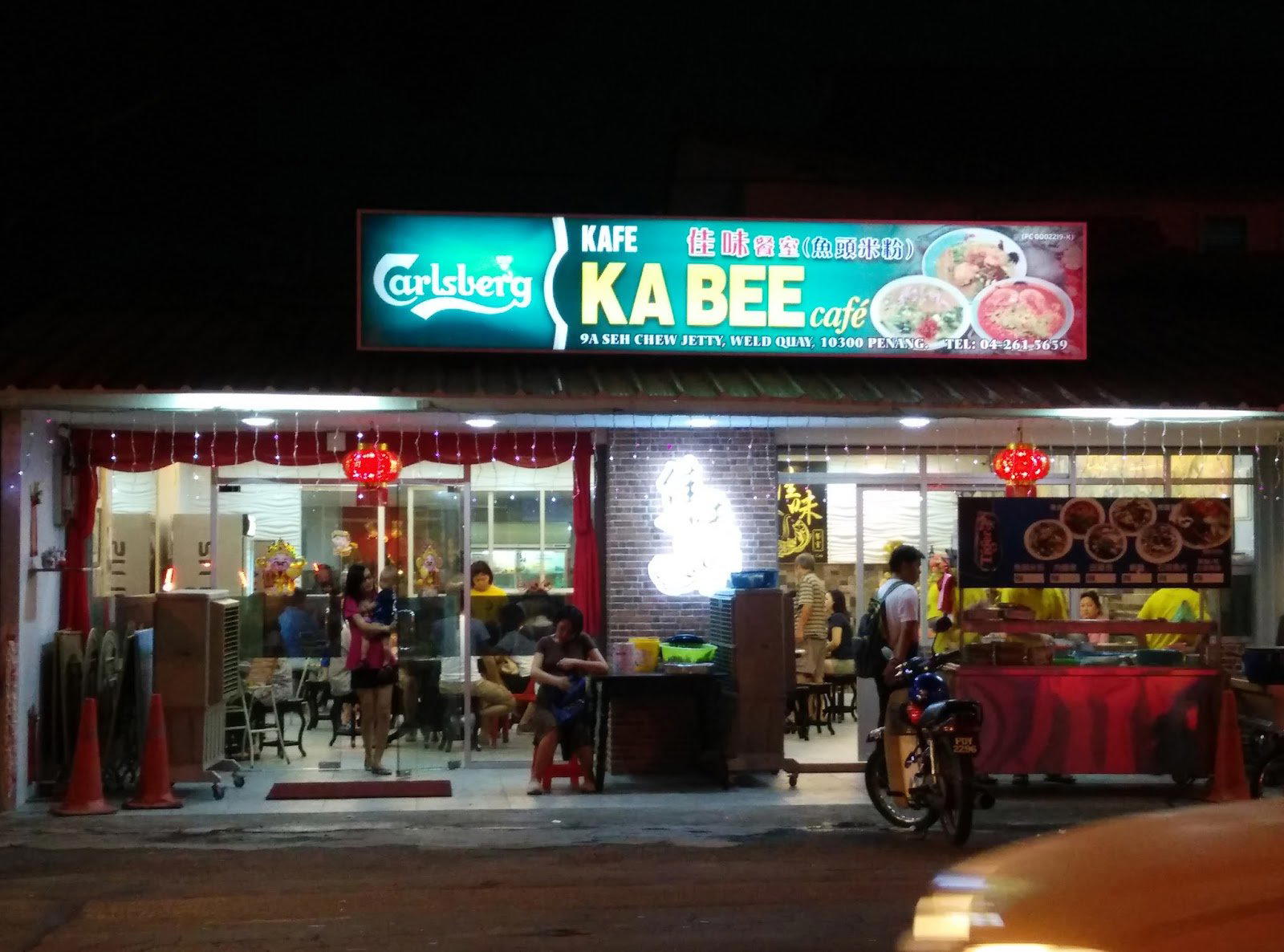
Ka Bee Cafe and Laksa Mamu sits within Penang's crowded hawker tradition, where a bowl of laksa carries as much cultural weight as the setting around it. George Town's cafe culture produces exactly this kind of address: low-key in presentation, precise in execution, and embedded in the daily rhythms of a neighbourhood rather than the itineraries of passing visitors.

Pearl is the En Primeur Club membership app — saves, bookings, and concierge access live there. Same editors, same standards.
- Address
- Penang, Malaysia
- Directions
- Get directions
The Ritual Before the Bowl
In Penang, eating laksa is not a casual act. The approach to a hawker cafe like Ka Bee follows a pattern that regulars observe almost without thinking: find a table, signal readiness, watch the preparation from a short distance, and receive the bowl with an understanding that the experience is front-loaded. The broth has been cooking since early morning. The garnishes are assembled in a specific order. Nothing about the process is improvised, and the cafe setting, with its tiled floors, ceiling fans, and the ambient noise of adjacent stalls, is not incidental to the meal. It is the meal's context, and stripping that context away would change what you taste.
Penang's hawker culture operates on a different register from the curated dining of, say, La Vie or the heritage cafe format of ChinaHouse. The comparison is not a matter of quality but of intention. At a laksa-focused address, the discipline is concentrated into one or two preparations done with great consistency rather than spread across a menu engineered for variety. Ka Bee Cafe and Laksa Mamu belongs to that focused tradition: a place defined by what it has chosen to do rather than the breadth of its offer.
Laksa in George Town's Competitive Frame
George Town has more laksa addresses per square kilometre than almost any comparable city in Southeast Asia, and the differences between them are often granular. Asam laksa, the sour, tamarind-based variant that Penang is most associated with globally, differs from curry laksa in base, garnish logic, and even the pace at which it should be eaten. Asam laksa cools quickly and changes character as the broth temperature drops, which is why regulars at the older hawker addresses tend to eat fast and without interruption. Curry laksa, richer and coconut-forward, has more thermal stability but demands a different garnish balance.
Within this context, the name Laksa Mamu attached to Ka Bee signals a specific lineage. Mamu-style laksa, associated with the Indian-Muslim hawker tradition in Penang, occupies a smaller niche than the Hokkien-derived asam variants but carries its own distinct technique. For comparison, Air Itam Asam Laksa, Chong Char Koay Teow, and 888 Hokkien Mee operates in the asam tradition and represents the Hokkien end of the same broader category. The two formats are not in direct competition so much as they serve different moments in a diner's understanding of what laksa can be.
Penang's hawker scene rewards this kind of lateral navigation. Addresses like Jit Seng Roasted Duck Rice and Christoph's represent entirely different registers of the city's food culture, and understanding where Ka Bee sits requires knowing that Penang eating is rarely about a single address. It is about a sequence of meals that map different traditions onto different hours of the day. Laksa, in most formats, is a morning-to-midday proposition.
The Pacing and Custom of the Cafe Visit
The social architecture of a Penang kopitiam or cafe-stall hybrid follows customs that are worth understanding before you sit down. Tables are shared without negotiation when the room is full. Ordering happens in fragments: coffee or tea first, then food, and sometimes from separate vendors operating within the same physical space. At Ka Bee, the cafe component and the laksa component may operate as parallel offerings rather than a unified kitchen, which is structurally common in George Town. A kopi-o, black coffee sweetened to order, is the default companion to a bowl of laksa in this tradition, not juice or water.
The pace is not leisurely. Hawker cafe eating in Penang is efficient without being rushed. Tables turn, but no one is pressured. Regulars finish and leave; visitors who linger over the last of their broth are rarely bothered. This is a rhythm distinct from the sit-and-stay culture of Auntie Gaik Lean's Old School Eatery in George Town, where the Nyonya format invites a longer table relationship. At a focused laksa counter, the bowl is the transaction, and the cafe exists to frame it.
Malaysia's broader hawker culture, which spans formats as different as Da De Bah Kut Teh in Borneo and the modern Chinese restaurant register of CRC Restaurant in Georgetown, operates on the assumption that the diner comes with prior knowledge. At Ka Bee, that means knowing your variant, communicating garnish preferences clearly, and understanding that the bowl will arrive when it is ready rather than on a timed service schedule.
Where Ka Bee Fits in a Penang Itinerary
A Penang eating itinerary that takes hawker culture seriously will include addresses across the morning-to-evening arc. Ka Bee functions in the early part of that arc. Laksa is not dinner food in the traditional hawker sense; most serious addresses close by early afternoon, and the broth quality at peak service, typically between 8am and noon, is meaningfully different from what is left in the pot at 2pm. Arriving early is not a recommendation so much as a structural feature of how this format works.
For visitors mapping Penang's food culture at a broader level, our full Penang restaurants guide traces the full range from hawker stalls to fine dining. Those interested in how Malaysian cuisine operates at its most technically ambitious can look at Dewakan in Kuala Lumpur for a point of contrast that clarifies, by distance, what hawker culture preserves that the fine dining register cannot replicate. The two traditions are not in competition, but reading them against each other sharpens the appreciation for both.
Planning Your Visit
Ka Bee Cafe and Laksa Mamu is a hawker-format address in Penang, and the logistics follow the conventions of that format. Arrival before midday is advisable given that hawker addresses in this category typically operate morning hours and sell out rather than staying open through service periods. No reservation is required or expected. Payment is cash-based at the vast majority of hawker addresses in George Town, and the price point sits in the range typical of established laksa stalls, where a bowl with accompaniments remains among the most affordable meals the city offers. The surrounding neighbourhood provides the context: Penang's hawker eating is street-level and densely layered, and Ka Bee is one node in a network of addresses that collectively make George Town one of Malaysia's most rewarding cities for this style of eating.
Frequently asked questions
How does Ka Bee Cafe and Laksa Mamu fit into Penang's hawker laksa scene compared to other George Town addresses?
George Town concentrates more laksa addresses per block than almost any comparable city in Southeast Asia, which means each venue earns its regulars through consistency rather than novelty. Ka Bee's cafe format places it in the kopitiam-adjacent category — shared tables, no frills, morning-to-midday hours — which is the operating standard for Penang's most serious hawker laksa addresses. That context is the credential: longevity and repeat custom in this neighbourhood are harder to sustain than any award.
What's the best thing to order at Ka Bee Cafe and Laksa Mamu?
Laksa is the reason to come. In George Town's hawker circuit, every cafe with 'laksa' in the name is staking its reputation on that single dish, and Ka Bee is no different. Beyond the laksa, the surrounding kopitiam-style format typically means coffee and simple accompaniments — but the bowl is the point of the visit.
Should I book Ka Bee Cafe and Laksa Mamu in advance?
Hawker-format addresses in Penang do not take reservations. Ka Bee operates on a walk-in basis, and the practical advice is to arrive before midday — George Town's most popular laksa counters sell out, and the queue dynamic shifts sharply after 11am. There is no phone or online booking mechanism for this category of venue.
What's Ka Bee Cafe and Laksa Mamu best at?
Ka Bee's position in George Town's densely contested laksa corridor distinguishes it through broth depth, prawn paste intensity, and noodle texture rather than décor or service format. Its cafe-stall hybrid format suits the early-morning-to-midday eating arc that serious Penang itineraries are built around.
Style and Standing
| Venue | Cuisine | Price | Awards |
|---|---|---|---|
| Ka Bee Cafe and Laksa MamuThis venue — the venue you are viewing | Penang Café | Not listed | Not listed |
| Christoph's | Austrian & German Brasserie | $50–100 | Michelin Plate · Star Wine List |
| ChinaHouse | Trendy Fusion Cafe & Bakery | $10–20 | Not listed |
| Jit Seng Roasted Duck Rice | Hong Kong Roasted Duck Rice | $1–10 | Michelin Plate |
| La Vie | European with Asian Fusion Fine Dining | $50–100 | Not listed |
| Sri Ananda Bahwan | South Indian Banana Leaf | $1–10 | Not listed |

Details
- Casual Hangout
- Standalone
- A La Carte
Relaxed café atmosphere in the UNESCO George Town area.