Old Bukhara
Our verdict
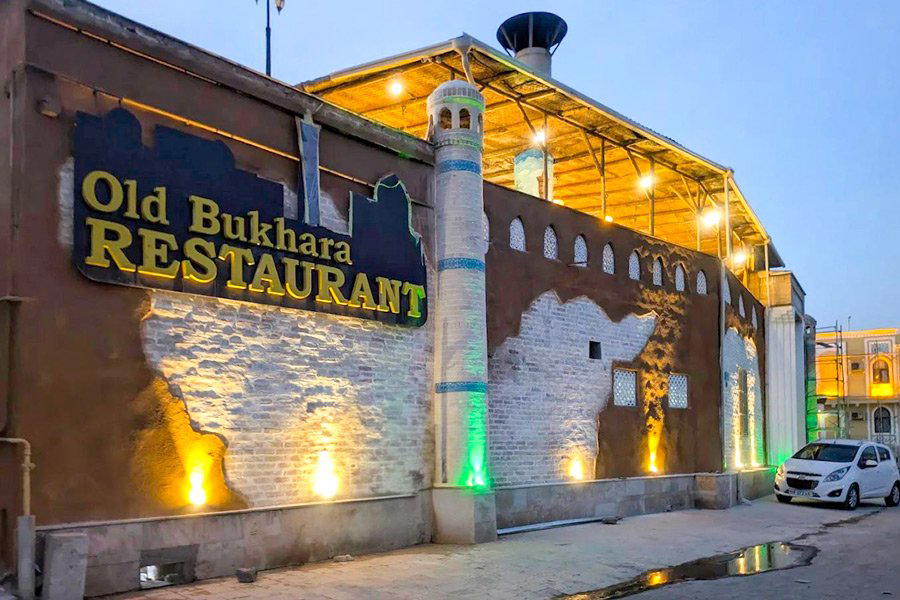
Old Bukhara sits on Mustakillik Street in the ancient city of Bukhara, where Silk Road trade routes once made this region a crossroads of Central Asian culinary tradition. The setting frames food that draws on centuries of Uzbek ingredient culture, from spice-market staples to slow-cooked grain and meat preparations that predate most modern restaurant formats by several generations.

Pearl is the En Primeur Club membership app, where members save venues, book tables and use the concierge.
The menu
What to order
- Shashlik
- Plov
- Manti
- Lagman
- Vaguri
- Kazan kebab
Stone, Spice, and the Weight of a Trading City
Bukhara does not ease you in. The city's historic core arrives as compressed density: madrassahs and minarets within walking distance of each other, alleyways that predate the concept of city planning, and a sensory register shaped by centuries of caravans unloading spice, silk, and dried fruit. Eating here is inseparable from that weight. A restaurant on Mustakillik Street sits at the intersection of contemporary Uzbek hospitality and a city that has been a functioning centre of trade and culture since at least the 6th century. Old Bukhara occupies that address, and the physical setting alone does a portion of the editorial work before any dish arrives.
The architecture of Bukhara's old city is predominantly mud brick, carved timber, and tiled courtyard, a building vocabulary that shapes how interiors feel even when they have been updated for a modern dining public. Spaces tend toward depth rather than openness, with natural light filtered through latticed screens or courtyard openings. Sound behaves differently in these buildings than in purpose-built restaurants. Whether Old Bukhara preserves those structural qualities or works against them is a question leading answered on arrival, but the address places it squarely inside the historic fabric rather than in a peripheral hotel corridor or modern commercial strip.
What the Silk Road Left in the Larder
The sourcing logic of Central Asian cooking is worth understanding before reading any menu in Bukhara. This is a cuisine that developed not around abundant fresh coastline or dense European agricultural land but around trade-route provisioning: dried apricots, raisins, and pomegranate from the orchards of the Fergana Valley and the Zerafshan basin; lamb and mutton from steppe herding cultures that ran parallel to the settled oasis cities; rice from irrigated paddies fed by the Amu Darya tributaries; and a spice inventory that reflected what passed through the bazaar rather than what grew locally. Cumin, coriander, and barberries are not garnishes in this tradition. They are structural, as load-bearing as the lamb fat rendered at the base of a proper plov.
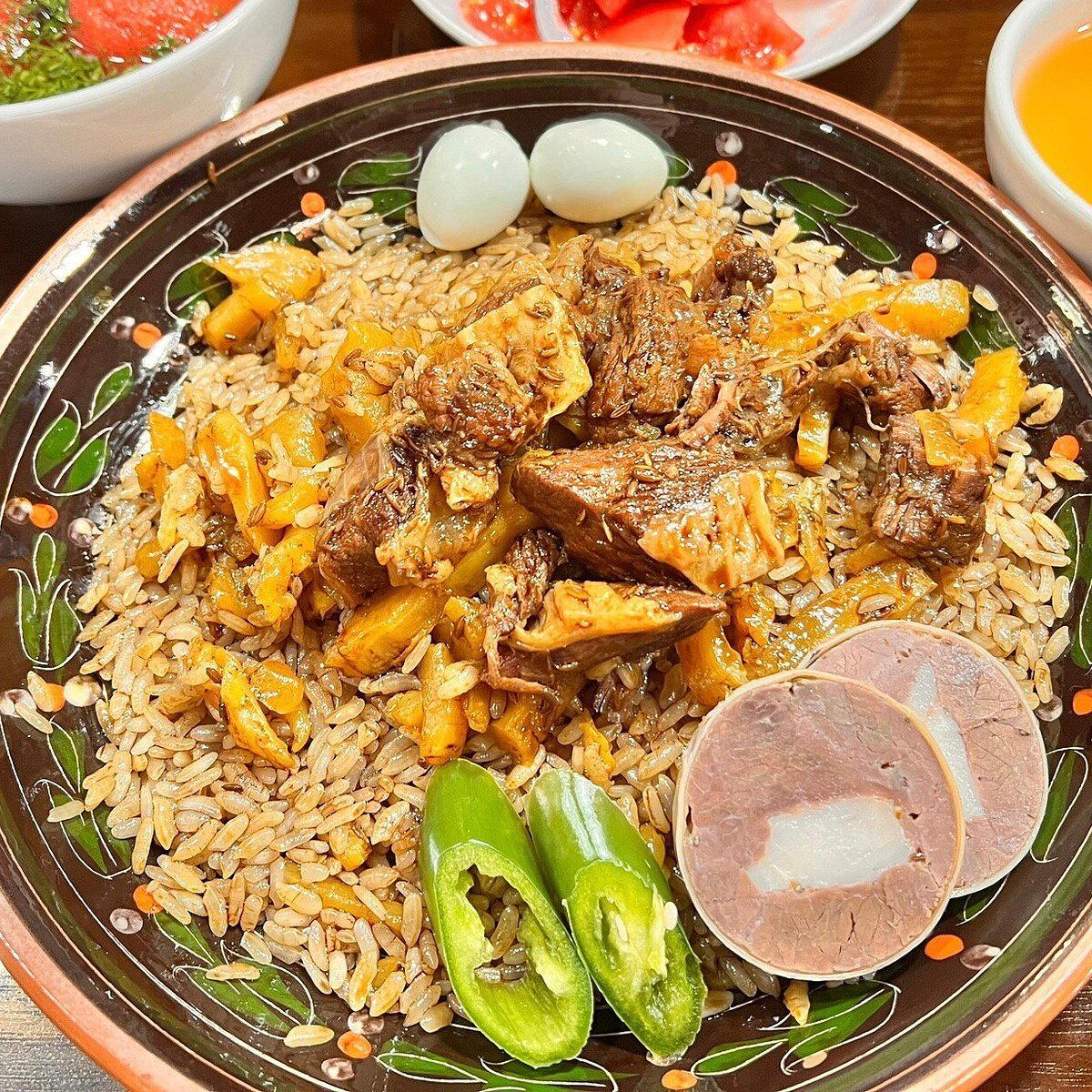
Plov itself deserves a paragraph of its own in any discussion of Uzbek ingredient culture. The dish is cooked differently in every major city in Uzbekistan, with Bukhara's variant traditionally leaning toward a drier, more concentrated rice preparation than the wetter Tashkent or Fergana styles. The fat rendered from the kazan (the cast-iron cauldron used across the region) and the quality of the rice, typically devzira or a local long-grain variety, determine the outcome more than any seasoning decision. Restaurants in Bukhara that take plov seriously treat it as a morning or midday affair, cooked in quantity and served when it is ready, which is a sourcing and production discipline as much as a cultural one. For comparison on how Uzbek cuisine reads in Tashkent, Jumanji in Tashkent and Khiva Cafe in Toshkent offer a useful point of reference for how the same culinary tradition adapts to a capital-city context.
Beyond plov, the Bukharan table draws on a repertoire that includes samsa (baked lamb pastries from tandoor ovens that line the bazaar perimeter), shurpa (a long-simmered broth of mutton and root vegetables that functions as restorative as much as starter), and lagman noodle dishes that carry the imprint of the Silk Road's eastern passage toward China. Grilled meats, typically presented as shashlik on skewers over charcoal, rely almost entirely on the quality of the animal and the fat distribution. At the ingredient level, this is a cuisine of relatively few variables applied with precision, which means sourcing failures are immediately legible.
For a sharper sense of how Bukharan cuisine sits relative to its regional peers, Afrosiyob Restaurant in Samarqand represents the Samarqand register, while Mirza Bashi in Xiva anchors the Khorezm tradition further west. Each city produces its own inflection of the same core pantry. Ayvan Restaurant in Bukhara and Saffron Restaurant occupy the same city and represent the range of options available to visitors eating through Bukhara's dining scene over several days. Our full Buxoro restaurants guide maps the broader field.
The Bukharan Dining Format
Eating in Bukhara's historic core tends to follow a pattern that global restaurant convention does not fully accommodate. Service is frequently unhurried to the point where it is worth building an extra half-hour into any lunch or dinner plan. Menus are often presented in Uzbek and Russian, with varying levels of English translation, and the actual availability of dishes frequently differs from what is printed. This is not a shortcoming of any individual establishment; it reflects a provisioning logic tied to what is fresh, what was prepared that morning, and what the kitchen has the capacity to cook well on a given day. Approaching the format with this in mind produces a better meal than expecting European restaurant rhythms.
Courtyard dining is common in the old city, and the temperature differential between Bukhara's summer heat (which regularly exceeds 40°C in July and August) and its shaded stone interiors is significant enough to inform when and where you eat. Late spring and early autumn are the most functional seasons for extended outdoor meals. Winter evenings contract the city considerably, with most activity concentrated indoors by early afternoon.
Planning a Meal at Old Bukhara
Old Bukhara is located at Mustakillik Street, 3, in the 200118 postal area of Bukhara, within manageable walking distance of the Lyabi-Hauz complex and the Kalon Minaret, which anchor the tourist circuit of the old city. Arriving at midday rather than late evening tends to align better with when plov and other cooked-from-morning preparations are at their leading. No website or advance booking mechanism is on file.
For broader context on Central Asian dining at an international reference level, the contrast with venues like Le Bernardin in New York City, Alinea in Chicago, or Amber in Hong Kong is instructive in one direction: those venues represent the precision-service, tasting-menu end of the global dining spectrum. Old Bukhara operates in an entirely different register, where the value proposition is historical density, ingredient integrity, and a culinary tradition that did not need to be invented. Additional EP Club regional coverage includes Shayxana Nayman in Kegeyli and Yi Palace in Konigil for Uzbekistan's wider dining geography. For American regional dining as a point of comparison, Emeril's in New Orleans and Lazy Bear in San Francisco illustrate how different cities anchor their food identity around local ingredient logic, the same principle at work in Bukhara's kitchen tradition. European haute cuisine reference points include Alain Ducasse at Louis XV in Monte Carlo, Alléno Paris au Pavillon Ledoyen, and 8½ Otto e Mezzo Bombana in Hong Kong. Atomix in New York City offers a useful counterpoint on how deep culinary tradition translates into a contemporary fine-dining format.
Frequently asked questions
Is Old Bukhara okay with children?
Bukhara's historic-core restaurants generally run at a relaxed pace, and Old Bukhara's address on Mustakillik Street, within walking range of the Lyabi-Hauz complex, puts it in a pedestrian-friendly part of the city. The unhurried service tempo common to this style of Central Asian dining suits families more than tightly timed tasting-menu formats would. No specific children's menu is documented, but the shared-plate structure of traditional Uzbek cooking tends to accommodate different appetites at the same table.
What is the atmosphere like at Old Bukhara?
The setting is shaped by proximity to Bukhara's most concentrated stretch of historic architecture: madrassahs, minarets, and the Lyabi-Hauz pool are all within short walking distance of Mustakillik Street, 3. Inside, the tone follows the Bukharan dining convention of unhurried service and communal rhythm rather than the structured progression of Western restaurant formats. Expect a room oriented toward local tradition rather than international hospitality signalling.
Is Old Bukhara a good option for visitors staying near the Lyabi-Hauz complex in Buxoro?
Old Bukhara's location on Mustakillik Street, 3, postal code 200118, places it within manageable walking distance of the Lyabi-Hauz complex, making it a practical choice for visitors based in Bukhara's historic core. The city's UNESCO-listed old town concentrates its main monuments within a compact radius, so the restaurant fits naturally into a day spent on foot between sites. No advance booking platform or phone number is currently listed publicly, so confirming availability in person or through your accommodation is advisable.
What do regulars order at Old Bukhara?
Bukhara's cooking tradition is anchored in dishes built from the region's historic trade routes: lamb, rice, dried fruits, and spices that moved through Central Asia's caravan networks over centuries. Plov, the slow-cooked rice dish considered the cornerstone of Uzbek cuisine, appears on virtually every table in this part of the city. Specific menu items and confirmed dishes at Old Bukhara are not formally documented, but any meal here is likely to reflect that same larder logic.
A Quick Peer Check
| Venue | Cuisine | Price |
|---|---|---|
| Old BukharaThis venue (the venue you are viewing) | Traditional Uzbek Grill | $10–20 |
| Saffron Restaurant | Traditional Uzbek and European | $20–30 |
| Afrosiyob Restaurant | Uzbek / Central Asian | $10–20 |
| Jumanji | Fusion (European, Asian, Uzbek) | $20–30 |
| Besh Qozon Central Asian Pilaf Centre | Central Asian Plov | $1–10 |
| Khiva Cafe | Traditional Uzbek and International | Not listed |
Continue exploring
More in Buxoro
Restaurants in Buxoro
All restaurants in Buxoro →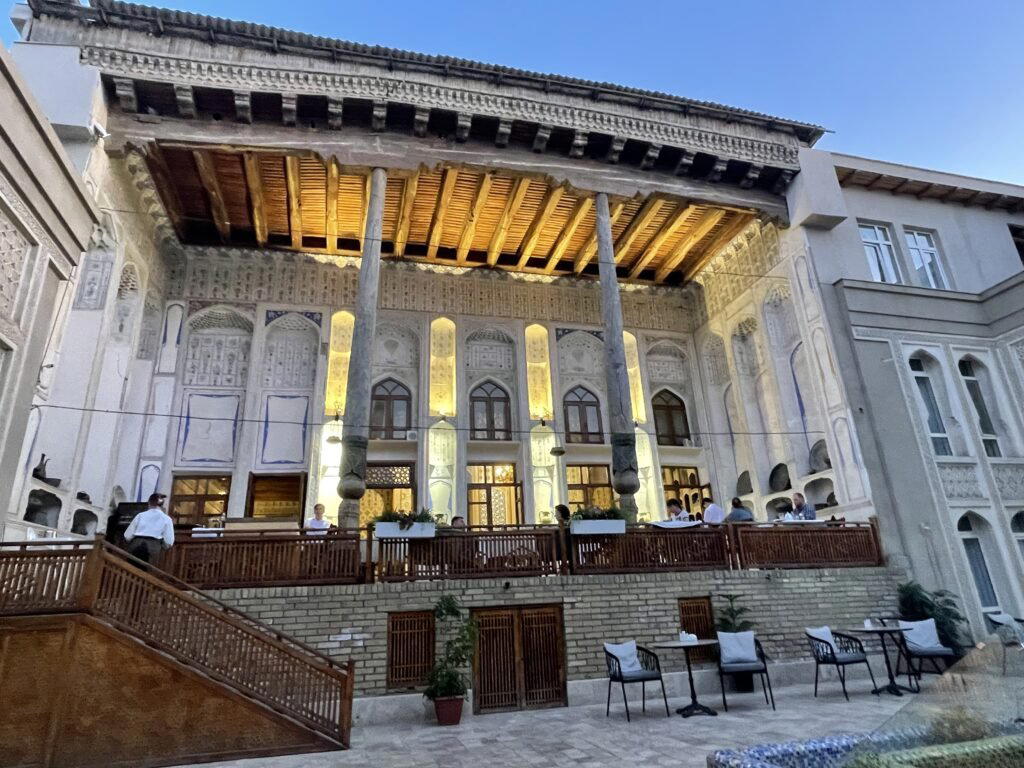
Hotels in Buxoro
All hotels in Buxoro →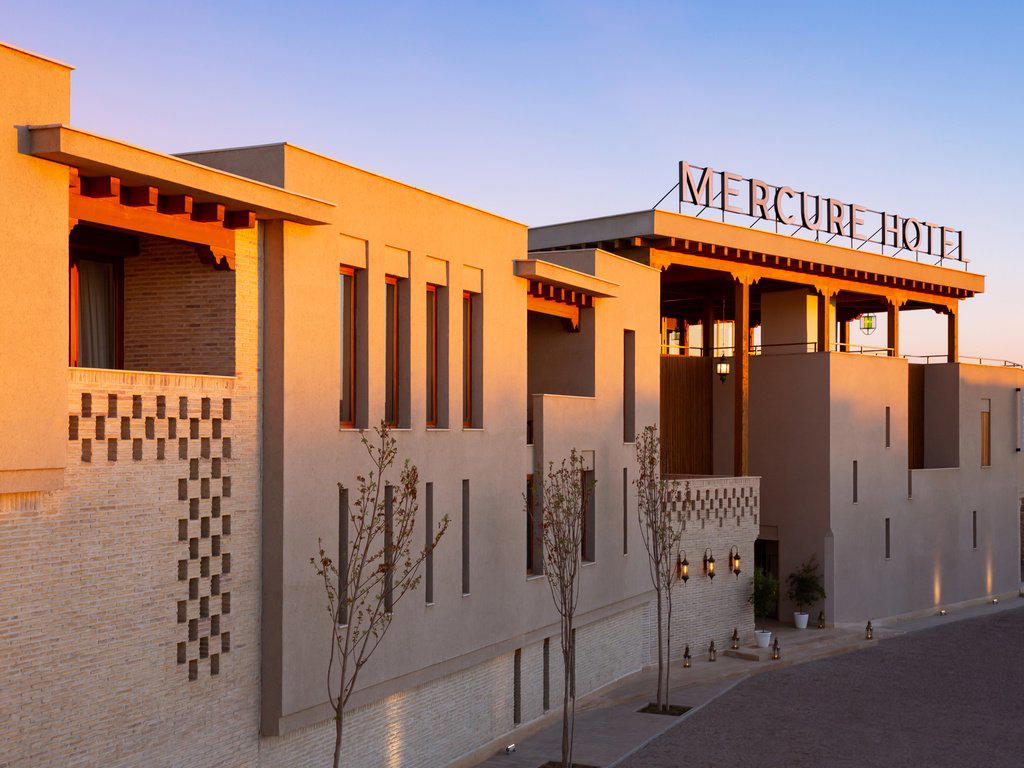
Details
- Romantic
- Classic
- Scenic
- Cozy
- Rustic
- Date Night
- Group Dining
- Family
- Casual Hangout
- Special Occasion
- Rooftop
- Terrace
- Courtyard
- Panoramic View
- Historic Building
- Live Music
- Beer Program
- Local Sourcing
- Street Scene
- A La Carte
- Family Style
- Beer
- Local Spirits
- Vegetarian Friendly
- Vegan Options
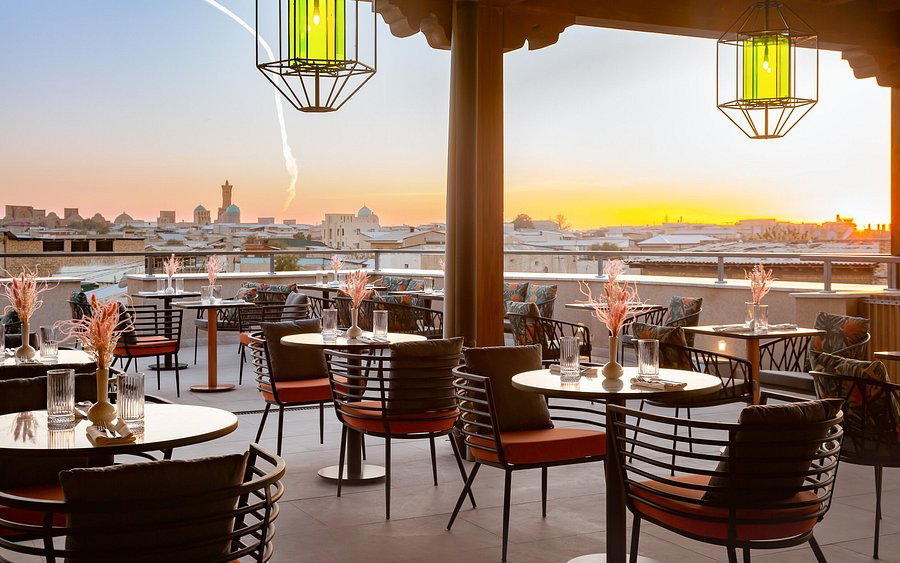
Soft lighting with cozy traditional interior designed in old national style; charming gazebo-like structure with local Uzbek artifacts; warm, inviting atmosphere that evokes historic Bukhara.