Besh Qozon Central Asian Pilaf Centre
Our verdict
Where Tashkent Eats Plov On Amir Temur Avenue, the approach to Besh Qozon Central Asian Pilaf Centre reads like a staging ground rather than a restaurant entrance. The name translates as Five Cauldrons, and that number is not decorative, it...

Pearl is the En Primeur Club membership app, where members save venues, book tables and use the concierge.
The menu
What to order
- Plov
Where Tashkent Eats Plov
On Amir Temur Avenue, the approach to Besh Qozon Central Asian Pilaf Centre reads like a staging ground rather than a restaurant entrance. The name translates as Five Cauldrons, and that number is not decorative, it points directly at the cooking method that defines the entire operation. Large cast-iron qazan pots, the tool around which Uzbek plov culture has organised itself for centuries, are the functional centrepiece of what happens here. The smell reaches you before anything else: rendered cottonseed oil, lamb fat, saffron-tinted rice, and the particular sweetness of slow-cooked carrot that signals plov cooked at proper scale.
The Ingredient Logic Behind Uzbek Plov
To understand what a dedicated pilaf centre represents in Tashkent, it helps to understand what Uzbek plov actually requires at the sourcing level. The dish is not a pantry improvisation. Authentic Fergana-style plov, the dominant reference point in Tashkent, specifies devzira rice, a short-grain variety grown in the Fergana Valley with a capacity to absorb fat and broth without collapsing into mush. Lesser establishments substitute cheaper long-grain alternatives; the texture difference is apparent in the first spoonful. The lamb should come from fat-tailed breeds, where the tail fat itself is rendered into the qazan before any other ingredient enters, establishing the flavour foundation of everything that follows. Yellow carrots, not orange, are the traditional choice in the Tashkent style, contributing a less sweet, more mineral quality to the zirvak, the braised base of meat, onion, and carrot that precedes the rice.
The sourcing chain for these ingredients is not incidental to the dish; it is the dish. A pilaf centre operating at the scale Besh Qozon does, the name implies multi-cauldron volume, either maintains supplier relationships that ensure ingredient consistency, or it does not. In Tashkent's plov economy, reputation is visible and communal: the city's serious pilaf centres are judged publicly, frequently, and without sentimentality by locals who eat plov at least once a week and have strong opinions about every variable. This is the competitive pressure that keeps sourcing disciplined.
The Tashkent Pilaf Centre as a Category
Tashkent has formalised what might elsewhere be called a canteen or a specialist restaurant into its own dining category: the oshxona, or pilaf house. These operate on different logic from conventional restaurants. Service is fast and non-negotiable in its linearity, you arrive, you receive plov, you eat, you leave. There is no extended menu deliberation, no wine pairing, no tasting progression. The plov is ready when it is ready, typically from mid-morning until it runs out, which at a serious establishment often happens before early afternoon. This time-bounded availability is not a quirk; it is intrinsic to the cooking method. Plov made in a large qazan cannot be held and reheated without degrading. It is a single-service product.
Within this category, venues in Tashkent range from street-adjacent neighbourhood operations to larger pilaf centres that draw cross-city audiences. Besh Qozon, positioned on one of Tashkent's main avenues, occupies a more visible tier. The address on Amir Temur Avenue places it in a part of the city that mixes commercial and civic infrastructure, accessible from most central districts. Visitors staying near the historical centre will find it within reasonable reach. Our full Tashkent restaurants guide maps the city's dining zones if you are still orienting yourself.
Atmosphere and Format
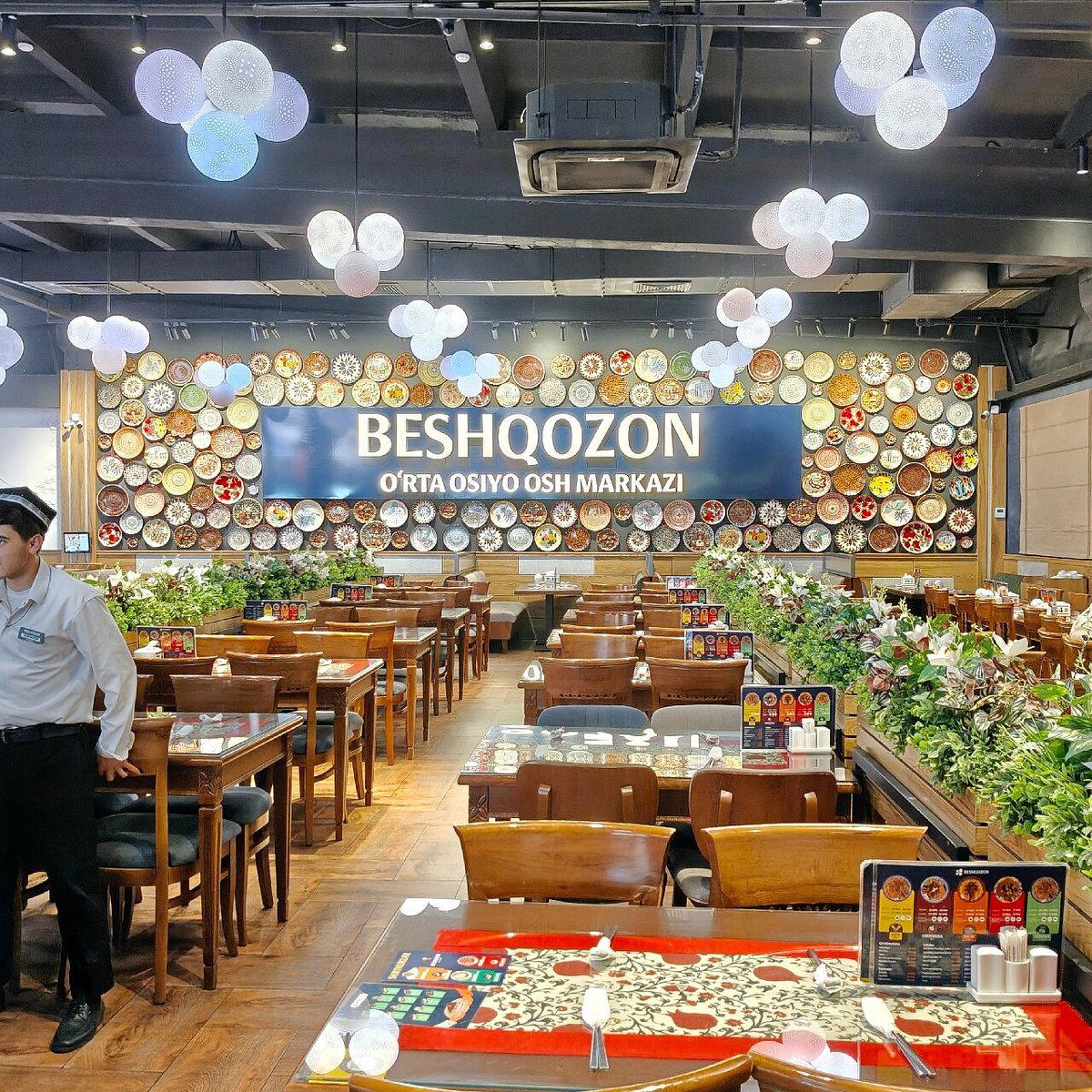
The atmosphere at a Tashkent pilaf centre of this type is communal and efficient. Tables are shared without ceremony. The room fills quickly after opening and the rhythm is set by the kitchen, not by the diner. There is no background music competing with conversation, no lighting designed to soften the experience. What you get instead is the visual spectacle of plov service at scale: the qazan being worked, rice portioned onto large flat plates, accompaniments, typically a sharp onion salad with sumac, fresh herbs, and sometimes a boiled egg, placed alongside without fuss. The atmosphere is a direct expression of the dish's social function. Plov in Uzbek culture is celebratory food, wedding food, communal food; the format of the pilaf centre preserves that register even in a daily dining context.
Families with children fit naturally into this environment. The format is tolerant of noise, the seating is casual, the service is fast enough that waiting does not become a problem for younger diners, and the food itself, rice-forward, mild in spice relative to other Central Asian traditions, tends to work across age groups. In terms of price, plov centres in Tashkent operate at the accessible end of the spectrum relative to sit-down restaurants; a full plate of plov with accompaniments is a working-lunch proposition, not a special-occasion spend.
Plov in Central Asian Context
For readers who have encountered Central Asian cuisine elsewhere in Uzbekistan, the regional variation in plov is worth noting. The version associated with Samarqand differs from the Tashkent style in its rice-to-meat ratio and in the use of whole-head garlic cooked within the rice layer. Bukhara traditions introduce dried fruit and chickpeas in some preparations. Establishments like Afrosiyob Restaurant in Samarqand, Old Bukhara in Buxoro, and Ayvan Restaurant in Bukhara each operate within their own regional reference points. A dedicated pilaf centre in Tashkent represents the Tashkent style in concentrated form, without the broader Uzbek menu that sits around it in generalist restaurants.
If you are building a wider picture of Tashkent dining beyond plov, Jumanji and Khiva Cafe in Toshkent offer different registers of the city's restaurant scene. For Uzbek dining further afield, Mirza Bashi in Xiva and Shayxana Nayman in Kegeyli reflect how the country's hospitality tradition plays out outside the capital. Those planning a trip across multiple Uzbek cities might also consider the dining offer at Yi Palace in Konigil.
Planning Your Visit
Arrive early. This is the single most useful piece of practical advice for any serious Tashkent pilaf centre. The qazan is filled once, cooked once, and served until it is gone. Mid-morning to noon is the window when you are guaranteed a full plate and when the plov is at its finest, the rice still holding its structure, the fat not yet congealing. Arriving after 1pm at a well-regarded pilaf centre in Tashkent is a risk. No reservation is required or typically possible at establishments in this category; it is a walk-in format by definition. Dress informally. The address on Amir Temur Avenue is served by Tashkent's metro network, and the avenue is a main corridor through the city centre, making access direct from most hotels.
Frequently asked questions
Can I bring kids to Besh Qozon Central Asian Pilaf Centre?
The pilaf centre format is well suited to families with children. Besh Qozon's environment on Amir Temur Avenue, Tashkent, is casual, the room is tolerant of noise, and turnaround is quick enough that keeping young children occupied through a long meal is not a concern. The single-dish format also removes any negotiation over what to order.
What is the atmosphere like at Besh Qozon Central Asian Pilaf Centre?
The format is communal and direct. Shared tables fill quickly after opening, service is fast, and the room operates without ceremony, consistent with the oshxona tradition that Tashkent has developed as a distinct dining category. This is a high-volume, single-dish operation on Amir Temur Avenue, not a sit-and-linger setting.
Why does Besh Qozon stop serving before the end of the day, and what time should I arrive in Tashkent?
Besh Qozon, like other dedicated pilaf centres on Amir Temur Avenue and across Tashkent, fills its qazan once and cooks once per service, there is no second batch when the pot empties. In practice, this means the kitchen can sell out well before a conventional lunch hour ends, particularly at a venue whose name and format draw both locals and visitors. Arriving at or shortly after opening is the only way to guarantee access to the plov.
What should I order at Besh Qozon Central Asian Pilaf Centre?
Plov is the only substantive decision on offer. Located on Amir Temur Avenue in Tashkent, Besh Qozon operates without a conventional menu: the kitchen produces one preparation of Uzbek pilaf per day from its cast-iron qazan. The practical choice is whether to eat in at a shared table or take away, and how large a portion you want.
What part of town is Besh Qozon Central Asian Pilaf Centre in?
Besh Qozon Central Asian Pilaf Centre is located at Amir Temur shoh ko'chasi, Tashkent, Toshkent Province, Tashkent.
Do I need a reservation for Besh Qozon Central Asian Pilaf Centre?
No reservation system operates at pilaf centres of this type in Tashkent. Besh Qozon on Amir Temur Avenue functions as a walk-in operation built around a single daily cook: when the qazan runs out, service ends. Arriving early is the only reliable strategy for securing a portion.
What's the defining dish or idea at Besh Qozon Central Asian Pilaf Centre?
The name states the programme directly: besh qozon means five cauldrons, and plov cooked in large cast-iron qazan is the entire offering. Besh Qozon operates as a dedicated pilaf centre, or oshxona, a format Tashkent has formalised as its own dining category. There is no secondary menu, no daily specials rotation, the kitchen's entire output is a single preparation of Uzbek plov, cooked once per service. UNESCO inscribed the social and cultural practices surrounding Uzbek plov preparation on the Intangible Cultural Heritage list, which signals how seriously this dish is treated at the national level.
In Context: Similar Options
| Venue | Cuisine | Price |
|---|---|---|
| Besh Qozon Central Asian Pilaf CentreThis venue (the venue you are viewing) | Central Asian Plov | $1–10 |
| Jumanji | Fusion (European, Asian, Uzbek) | $20–30 |
| Afrosiyob Restaurant | Uzbek / Central Asian | $10–20 |
| Old Bukhara | Traditional Uzbek Grill | $10–20 |
| Khiva Cafe | Traditional Uzbek and International | Not listed |
| Mirza Bashi | Traditional Uzbek | Not listed |
Continue exploring
More in Tashkent
Restaurants in Tashkent
All restaurants in Tashkent →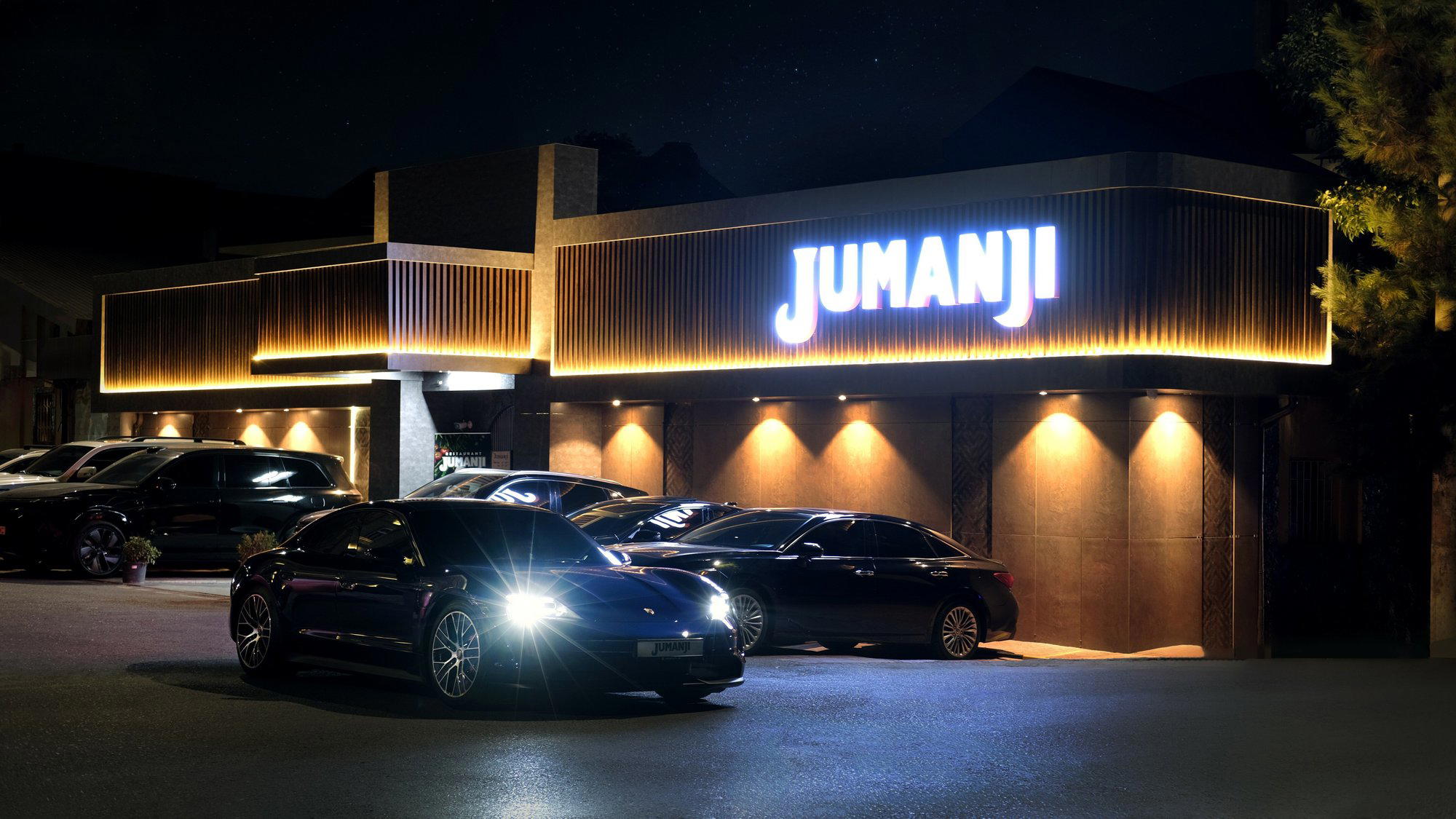
Details
- Lively
- Well Known
- Casual Hangout
- Group Dining
- Open Kitchen
- A La Carte