Ayvan Restaurant
Our verdict
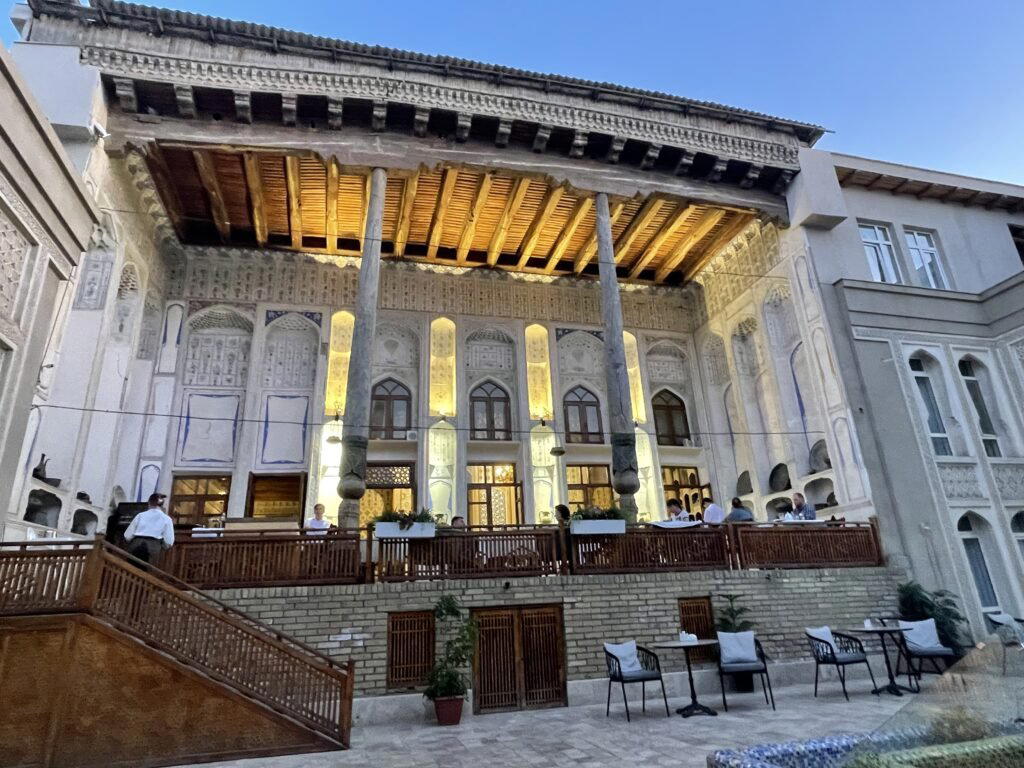
Ayvan Restaurant sits on N. Husainova Street in the heart of Bukhara's old city, where traditional Uzbek hospitality and ingredient-led cooking meet centuries of Silk Road culinary tradition. The setting reflects the ayvan architectural form, an open, shaded terrace built for gathering, and the food follows that same unhurried logic. For anyone tracing Uzbekistan's restaurant scene beyond Tashkent, this address is worth understanding.

Pearl is the En Primeur Club membership app, where members save venues, book tables and use the concierge.
The menu
What to order
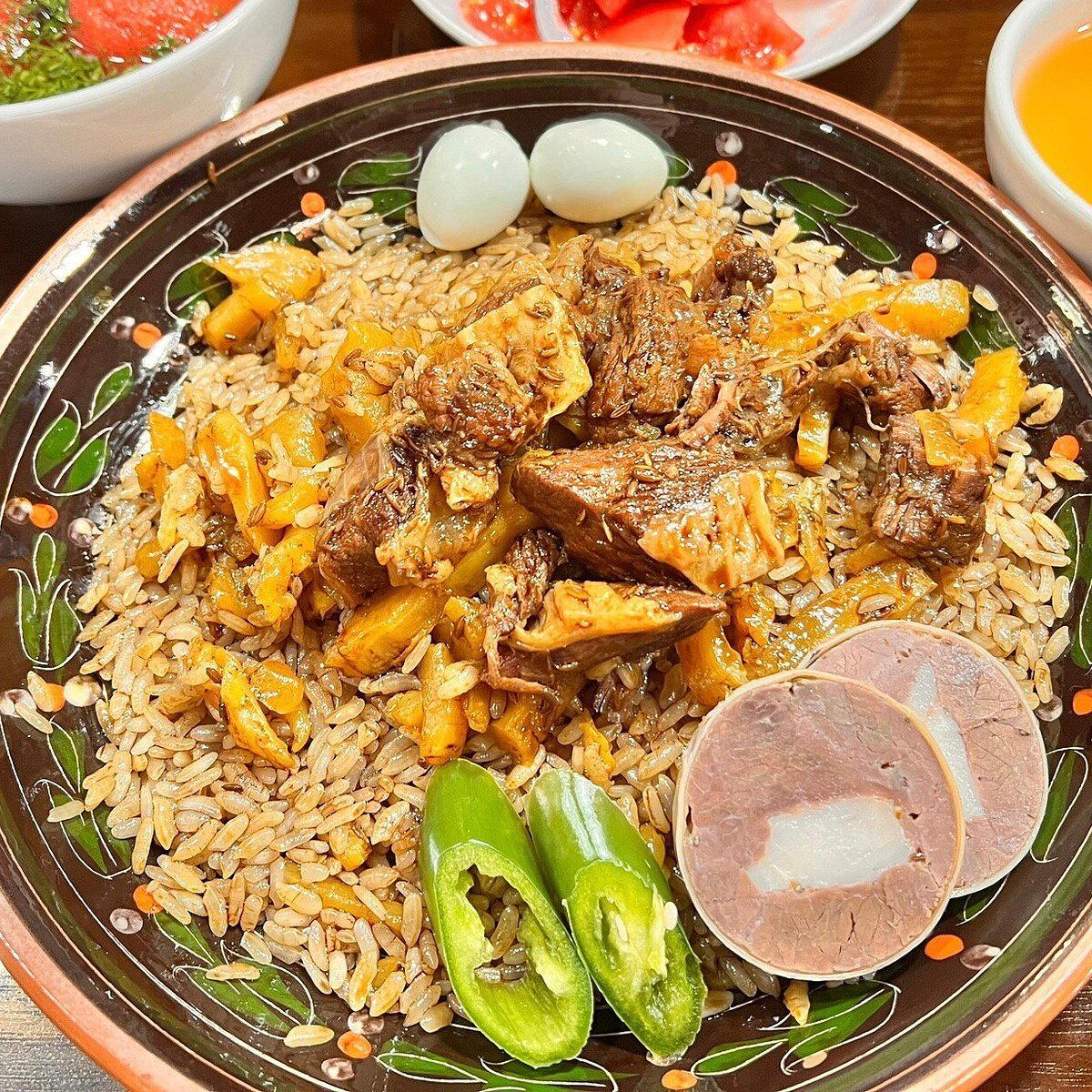
- Bukhara Pilaf
- Shurpa
- Somsa
Where Bukhara's Architecture Shapes the Table
There is a specific quality of light in Bukhara's old quarters during the late afternoon, filtered, amber-toned, slanting across courtyard walls that have stood for centuries. Restaurants that operate within or adjacent to that architectural fabric tend to feel less like dining rooms and more like extensions of the city itself. Ayvan Restaurant, on N. Husainova Street in the 200100 district, occupies exactly that kind of position. The word ayvan refers to a traditional Central Asian architectural element: a shaded, open-fronted terrace or portico designed for communal gathering, positioned to catch a breeze and hold a conversation. That the restaurant takes its name from this form is not incidental, it signals a deliberate orientation toward place, toward the act of sitting together, toward food as a social structure rather than a transaction.
Bukhara's dining scene operates at a different register from Tashkent's. That conservatism, applied to ingredients and technique, is not a limitation. It is a form of discipline.
The Ingredient Logic of Central Asian Cooking
The editorial angle most relevant to understanding any serious Uzbek restaurant is not technique or presentation, it is sourcing. Central Asian cooking, at its core, is an ingredients-first tradition. The quality of the lamb determines the quality of the plov. The fat content of the tail (kurdjuk) shapes the flavour of the rice. The ripeness of the tomatoes at the bazaar on a given morning affects what ends up in the evening's salads. This is not artisanal posturing; it is simply how the cuisine has always functioned, before the concept of farm-to-table was coined anywhere.
Bukhara sits at a geographic advantage for this kind of cooking. The Zerafshan River valley has supported agriculture for millennia, and the region's markets, including the covered bazaars near the Lyabi-Hauz, remain active, seasonal, and tied to local production in ways that few Central Asian cities have preserved. Restaurants drawing from those markets, rather than from wholesale supply chains, are working with materially different inputs. The difference shows in the texture of the bread, the depth of the broth, and the sweetness of the carrots in a properly made osh. The Plov in Bukhara represents one expression of this tradition; Ayvan approaches the same source material from its own position in the neighbourhood.
Across Uzbekistan, the restaurants that have earned sustained attention, whether in Samarqand's old city, where Afrosiyob Restaurant in Samarqand draws on the city's own agricultural hinterland, or in Mirza Bashi in Xiva, which reflects Khorezm's distinct culinary character, tend to be the ones most directly connected to their regional supply chains. That regional specificity is one of the things that differentiates Uzbek dining from the more generic Central Asian restaurant format found in cities further afield.
Bukhara in a Broader Uzbek Context
For travellers moving through Uzbekistan on a structured itinerary, Tashkent arrival, then the Silk Road cities, Bukhara typically occupies two or three nights, which is enough time to understand the city's character but not always enough to find the restaurants that repay closer attention. The well-trafficked options cluster around the Lyabi-Hauz pool and the Kalon Minaret zone, where tourist footfall is highest. Ayvan's address on N. Husainova Street places it within the old city's gravitational field without being on its most obvious circuit.
That positioning matters when thinking about who a restaurant is primarily serving. Bukhara's visitor profile has shifted over the past decade, with more independent and culturally motivated travellers arriving alongside the traditional package-tour market. Restaurants that can speak to both audiences, in terms of setting, food quality, and hospitality register, occupy a more durable position than those calibrated entirely to one segment. Old Bukhara in Buxoro and Ayvan both operate in this middle ground, where the setting is authentically local and the food draws on genuine regional tradition rather than a flattened international version of Uzbek cuisine.
For a wider orientation to eating in the city, our full Bukhara restaurants guide maps the options across price points and neighbourhood contexts.
Planning Your Visit
Bukhara's old city is compact and walkable, and N. Husainova Street is accessible on foot from the principal monuments. The practical advice that applies broadly to Bukhara's restaurant scene applies here: lunch service tends to align with the main visitor movement through the sites, and evening meals are generally quieter, with better conditions for the kind of unhurried eating the ayvan format implies. Dress is casual by default; Bukhara's restaurant culture does not impose formal codes.
Frequently asked questions
Would Ayvan Restaurant be comfortable with kids?
Bukhara's restaurant culture is generally family-oriented, and venues along N. Husainova Street tend to reflect that. Uzbek dining traditions centre on communal eating and shared platters, which typically suits mixed-age groups. Confirm directly with the restaurant on arrival or in advance, as specific seating arrangements are not documented.
What kind of setting is Ayvan Restaurant?
The name 'ayvan' refers to the open-fronted, colonnaded porches characteristic of Central Asian courtyard architecture, which gives a strong indication of the spatial concept. Bukhara's old quarter, where the restaurant sits on N. Husainova Street, is dense with madrasahs and caravanserais built around shaded outdoor spaces. Expect the setting to engage with that architectural tradition rather than operate as a conventional enclosed dining room.
What makes Ayvan Restaurant a relevant stop on a Bukhara itinerary compared to hotel dining?
Ayvan Restaurant sits on N. Husainova Street within Bukhara's 200100 postcode, placing it inside the historic core rather than on the periphery where most mid-range hotels cluster. Eating within the old city means the context of the meal, the courtyard architecture, the proximity to active bazaars, the ambient material culture of a UNESCO-listed urban fabric, is built into the experience in a way that hotel restaurants cannot replicate. For travellers spending two or three nights in Bukhara, that proximity to the monuments matters.
What should I order at Ayvan Restaurant?
Any Bukhara restaurant operating in the old city is likely to follow this sourcing and format logic. Ask staff which dishes are prepared in-house that day, since seasonal ingredient availability shapes the menu in this region.
What's the address for Ayvan Restaurant?
Ayvan Restaurant is located at N. Husainova, 7, 200100 Bukhara, Bukhara Region, Bukhara.
Is Ayvan Restaurant reservation-only?
No booking policy is documented for Ayvan Restaurant. In Bukhara's old city, walk-in dining is common, though peak tourist season, roughly April to June and September to October, can put pressure on seating at restaurants near the principal monuments. Arriving outside the main evening service window reduces the likelihood of a wait.
Comparable Spots, Quickly
| Venue | Cuisine | Price |
|---|---|---|
| Ayvan RestaurantThis venue (the venue you are viewing) | Traditional Uzbek in Historic Setting | $20–30 |
| Afrosiyob Restaurant | Uzbek / Central Asian | $10–20 |
| Jumanji | Fusion (European, Asian, Uzbek) | $20–30 |
| Besh Qozon Central Asian Pilaf Centre | Central Asian Plov | $1–10 |
| Old Bukhara | Traditional Uzbek Grill | $10–20 |
| Khiva Cafe | Traditional Uzbek and International | Not listed |
Continue exploring
More in Bukhara
Restaurants in Bukhara
All restaurants in Bukhara →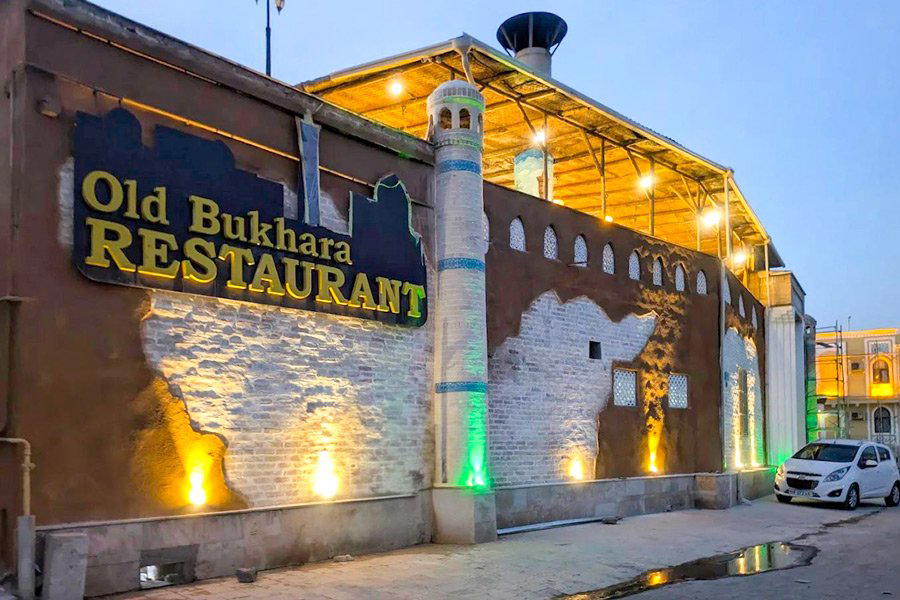
Hotels in Bukhara
Browse all →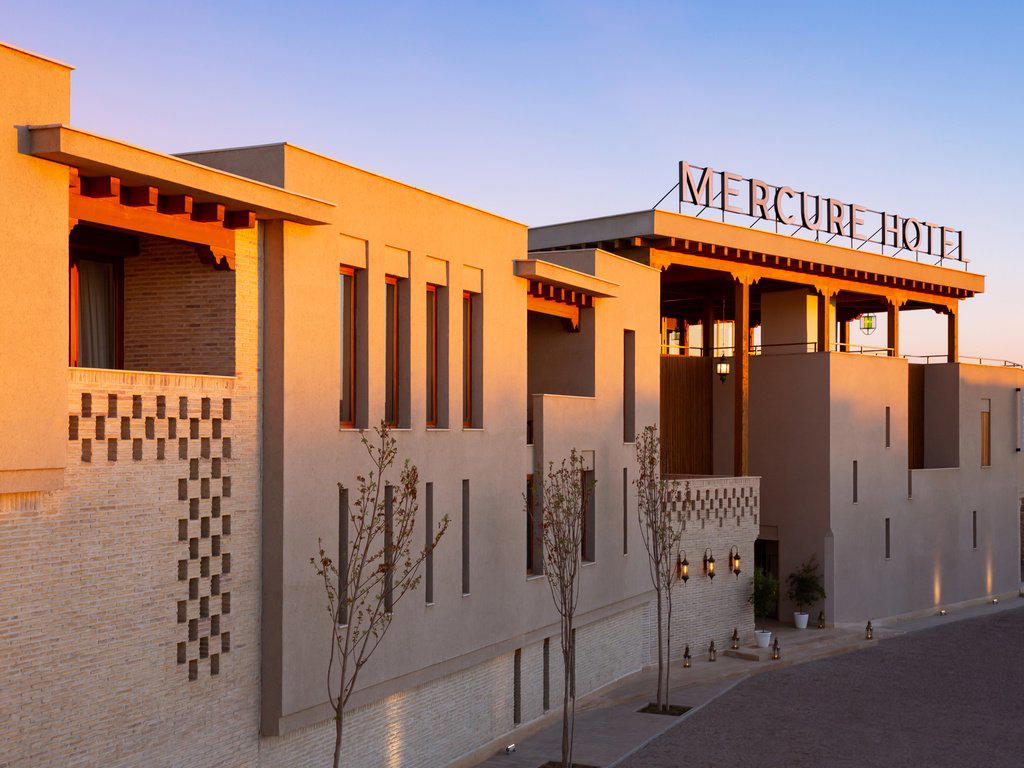
Details
- Classic
- Elegant
- Cozy
- Historic
- Family
- Casual Hangout
- Special Occasion
- Historic Building
- Courtyard
- Hotel Restaurant
- A La Carte
- Vegetarian Friendly
Elegant interior with high ceilings, carved elements, traditional oriental veranda, open courtyard, and authentic decorations blending historical charm with light atmosphere.