Mirza Bashi
Our verdict
Mirza Bashi serves traditional Uzbek dishes in a historic building on Pakhlavon Makhmoud Street, with shivit oshi, osh, and mantı and a street scene view.

Pearl is the En Primeur Club membership app, where members save venues, book tables and use the concierge.

The menu
What to order
- Shivit oshi
- Osh
- Mantı
Where the Old City Feeds Itself
Pakhlavon Makhmoud Street runs through the heart of Khiva's Ichan-Kala, the walled inner city that UNESCO designated a World Heritage Site in 1990. Walking it, you pass madrasas, minarets, and the kind of low-slung merchant architecture that has shaped the Silk Road's visual grammar for centuries. Mirza Bashi sits on this street, which means it operates inside one of Central Asia's most intact medieval urban fabrics. That physical context is not incidental to the food. In Khiva, the walled city is both the attraction and the supply chain: the local market patterns, the proximity to Khorezm's agricultural basin, and the foot traffic of traders and visitors have historically defined what gets cooked and how.
Khorezm on the Plate: What the Region Grows
Uzbek cuisine is often discussed as a single tradition, but regional variation runs deep. Khorezm, the province surrounding Khiva, sits in the Amu Darya delta and has historically produced rice, cotton, and a range of seasonal vegetables shaped by an arid continental climate with reliable irrigation. The Khorezmi variant of plov, the rice dish that anchors Central Asian hospitality, is distinct from its Tashkent or Samarkand counterparts: typically cooked with yellow carrots rather than orange, and with a proportion and seasoning profile that reflects local agricultural output rather than a standardized national recipe.
This matters when reading any Khiva restaurant. Ingredient sourcing in a city like this is not a marketing choice. It is a geographic reality. The markets that supply places like Mirza Bashi on Pakhlavon Makhmoud Street draw from the same Khorezm basin that has fed this corner of Central Asia since antiquity. Lamb raised on semi-arid pasture, flatbreads baked in tandoor ovens using local grain, dried fruits sourced from small orchards near the Amu Darya: these are not curated farm-to-table gestures but the actual mechanics of how food moves through this part of Uzbekistan. For visitors arriving from larger, more internationally supplied cities, this regional specificity is precisely what makes eating in Khiva different from eating in Tashkent or Samarkand, however good those cities' restaurants may be. Compare the approach of Afrosiyob Restaurant in Samarqand or Old Bukhara in Buxoro and you start to see how sharply regional identity marks itself through food across Uzbekistan's heritage cities.
The Structure of a Khorezmi Meal
A full meal in the Khorezmi tradition moves through a logic that reflects the region's hospitality codes as much as its pantry. It typically opens with bread and non-alcoholic or fermented drinks, moves through cold and warm appetizers, and arrives at a central rice or meat dish before finishing with seasonal fruit and tea. This sequence is not arbitrary. It reflects both the agricultural calendar, which determines what is fresh at any given point in the year, and the social rhythm of Uzbek communal eating, in which the table is set gradually and the main dish arrives as a kind of declaration.
For visitors accustomed to shorter, more segmented menus, this pacing can feel slow in the leading sense. The food is arriving; it simply takes time. At a venue positioned on the primary cultural artery of Khiva's old city, that rhythm is likely part of the offer, whether or not it is explicitly framed as such. The street itself draws visitors navigating the Ichan-Kala's dense cluster of monuments, and restaurants along it benefit from both the walk-in traffic of tourists and the deeper custom of locals who eat here because this is where they have always eaten.
Khiva's Dining Scene in Context
Khiva's restaurant scene operates in a different register from Uzbekistan's larger cities. Tashkent now has venues that draw comparison with broader regional standards, places like Jumanji in Tashkent and Khiva Cafe in Toshkent, which signal the capital's more diversified and internationally influenced offer. Khiva, by contrast, has a smaller visitor economy and a more compressed restaurant sector, which means the leading places to eat are typically those embedded in the old city's daily life rather than operating as standalone dining destinations. The competition is local rather than regional, and quality is measured against what Khorezm actually produces rather than against imported standards.
Nearby Terrassa represents Khiva's more terrace-oriented, view-led dining offer, serving visitors who want the visual spectacle of the old city alongside their meal. Mirza Bashi on Pakhlavon Makhmoud operates within the old city fabric itself, which creates a different dynamic: less framed, more embedded. Elsewhere in the region, places like Ayvan Restaurant in Bukhara and Shayxana Nayman in Kegeyli show how heritage-city dining across western Uzbekistan shares a set of common supply-chain and setting logics, even when individual menus differ. The spectrum from Khiva to the broader world of ambitious restaurant dining is wide: at the other end sit venues like Le Bernardin in New York City, Alinea in Chicago, or Alain Ducasse at Louis XV in Monte Carlo, venues that operate with entirely different supply logic and format discipline. That comparison is not an implicit criticism of Khiva; it simply maps the range.
Planning Your Visit
Khiva's old city is compact and navigable on foot, which means reaching Pakhlavon Makhmoud Street requires no transport once you are through the Ichan-Kala's gates. The city sees its highest visitor volume between April and June and again in September and October, when the Central Asian climate is most cooperative. Outside those windows, the old city is quieter and the restaurant sector reflects that. The most reliable approach in Khiva is to walk the street early in your visit, note which venues are open and operational, and return at the meal time that suits your itinerary. Lunch tends to be the primary meal in Uzbek old-city restaurants; evening service hours vary.
For visitors building a fuller picture of Uzbekistan's heritage-city dining circuit, our full Xiva restaurants guide maps the old city's offer across categories and settings. Further afield, Yi Palace in Konigil and 8½ Otto e Mezzo Bombana in Hong Kong represent different points on the global restaurant spectrum that help calibrate what Khiva's scene is doing relative to the wider world. Closer to home, Alléno Paris au Pavillon Ledoyen, Amber in Hong Kong, Lazy Bear in San Francisco, and Emeril's in New Orleans each anchor different traditions in the global dining conversation, and understanding Khiva's food means understanding it as a distinct tradition rather than a lesser version of those international benchmarks.
Frequently asked questions
Where is Mirza Bashi in Xiva?
Mirza Bashi is located at Pakhlavon Makhmoud Street, 1, Xiva, Xorazm viloyati, Xiva.
What makes dining inside Khiva's Ichan-Kala different from eating elsewhere in Uzbekistan?
Khiva's Ichan-Kala, the walled inner city where Mirza Bashi operates on Pakhlavon Makhmoud Street, was designated a UNESCO World Heritage Site in 1990 and functions as a living urban district rather than a museum quarter, residents, traders, and restaurants coexist within its walls. That means venues here serve a genuinely local clientele alongside visitors, which tends to keep cooking grounded in Khorezmi tradition rather than adapted for outside palates. Tashkent's restaurant scene has diversified considerably toward regional and international formats, but Khiva's old city maintains a narrower, more place-specific cooking identity.
What's the best thing to order at Mirza Bashi?
Mirza Bashi sits within Khiva's Ichan-Kala, which means its menu draws from the Khorezm pantry: expect dishes shaped by the region's rice cultivation, slow-cooked lamb, and flatbread traditions. Khorezmi plov is the reference point for any first visit, the regional preparation differs from Tashkent-style in its fat ratios and the use of yellow carrots native to this province. Follow local practice and order it early in the meal when the rice is freshest from the kazan.
How hard is it to get a table at Mirza Bashi?
Khiva's tourist season runs April through October, when the Ichan-Kala fills with visitors to the UNESCO World Heritage Site, and restaurants on Pakhlavon Makhmoud Street see their busiest periods during those months. Arriving off-peak, early morning or after 14:00 on weekdays, typically gives more flexibility than trying to walk in at peak lunch hour during summer. No advance booking platform is publicly listed for Mirza Bashi, so in-person inquiry or hotel concierge contact is the practical approach.
What's Mirza Bashi best at?
Mirza Bashi's address on Pakhlavon Makhmoud Street places it inside the walled city rather than in the modern districts outside the Ichan-Kala gate, which shapes both its clientele and its cooking register. The venue operates in a setting where Khorezmi hospitality codes, sequential courses, communal bread, tea as a structural element, are the framework, not a stylistic choice. That regional specificity is the clearest case for eating here over a more generalist Uzbek restaurant elsewhere in the country.
Can Mirza Bashi adjust for dietary needs?
Khorezmi cooking is built around lamb, beef, and cottonseed or animal fats, with vegetable dishes typically cooked in meat stock, so the menu presents real constraints for strict vegetarians or vegans. Visitors with specific requirements are advised to communicate directly on arrival; dishes like somsa or vegetable lagman can sometimes be prepared without meat if ingredients allow, though this cannot be guaranteed.
Is a meal at Mirza Bashi worth the investment?
Khiva's dining scene operates at a fundamentally different price point from Tashkent or Samarkand, meals inside the Ichan-Kala remain modest by regional tourism standards, and Pakhlavon Makhmoud Street restaurants reflect that. No published price range exists for Mirza Bashi specifically, but the broader Khiva context means a full Khorezmi meal with tea is unlikely to approach the cost of a comparable regional experience in Central Asian capital cities. The value case rests less on price and more on eating this specific cuisine in the city that defines it.
How It Stacks Up
Comparable venues nearby, for context on price, style, and recognition.
| Venue | Cuisine | Price | Notes |
|---|---|---|---|
| Mirza BashiThis venue (the venue you are viewing) | Traditional Uzbek | Not listed | Not listed |
| Terrassa | Uzbek BBQ and Traditional Central Asian | $10–20 | Ichan Qala |
| Khiva Cafe | Traditional Uzbek and International | Not listed | Yunusabad District |
| The Plov | Authentic Uzbek Plov | $10–20 | Mustaqillik Street |
| Besh Qozon Central Asian Pilaf Centre | Central Asian Plov | $1–10 | Near TV Tower |
| Shokhrukh Nur | Traditional Uzbek Shashlik | $1–10 | near Registan Square |
Continue exploring
More in Xiva
Restaurants in Xiva
All restaurants in Xiva →
Details
- Classic
- Rustic
- Casual Hangout
- Historic Building
- Street Scene
- A La Carte
- Vegetarian Friendly
- Vegan Options
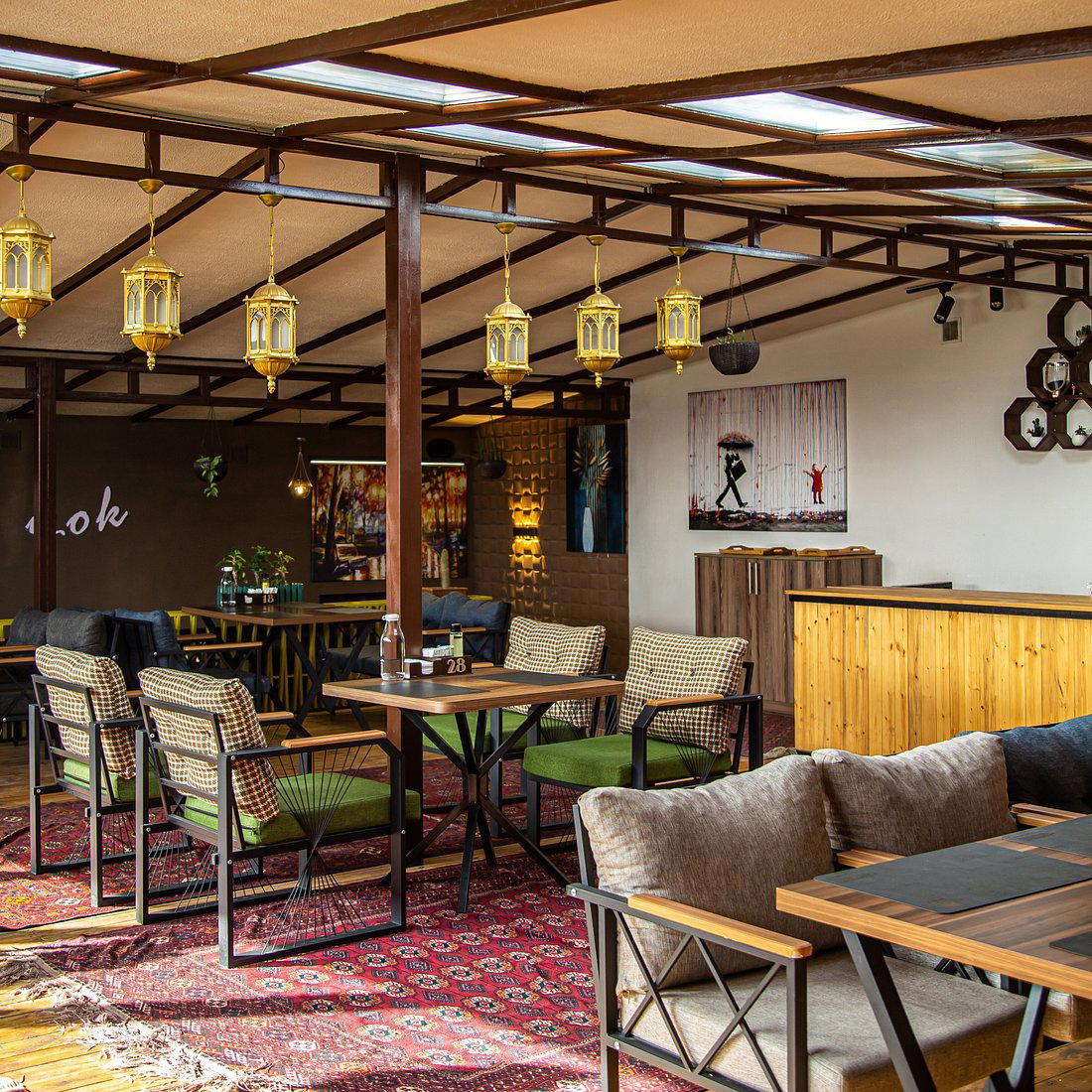
Spacious interior decorated in traditional Uzbek style with quick service.