
Michelin Plate
Our verdict
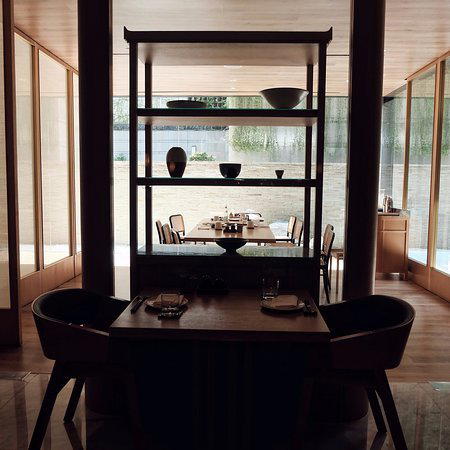
Oku in Osaka's Miyakojima Ward holds a Michelin Plate (2025) for its single-focus counter dedicated entirely to unagi. The format is strict: one set menu, fresh vegetables marking the season, and a closing course of eel over rice steamed in clay pots. The pairing theme of unagi and sake shapes every decision, from ingredients prepared by boiling, frying, or straw-smoking to the considered selection of serving vessels.

Pearl is the En Primeur Club membership app, where members save venues, book tables and use the concierge.
The menu
What to order
- Grilled Unagi
- Unagi Rice Bowl
A Single Subject, Taken Seriously
Counter dining in Japan has long operated on the logic of reduction: the narrower the focus, the deeper the craft. Osaka's specialist counter scene includes rooms dedicated to sushi, tempura, and kappo, but restaurants built entirely around unagi remain comparatively rare in the city. Oku, a compact counter in Miyakojima Ward's Katamachi neighbourhood, occupies that smaller category with deliberate conviction. The premise is uncomplicated: one set menu, one protein, and a sake program positioned as an equal partner rather than an afterthought. The 2025 Michelin Plate recognition places it within the city's recognised dining tier without the multi-course French ambition of HAJIME or the kaiseki formality of Taian. The peer comparison is instructive: Oku sits at ¥¥¥ pricing, closer to Kashiwaya Osaka Senriyama in price bracket than to the ¥¥¥¥ rooms like La Cime or Fujiya 1935. That positioning matters for occasion dining: this is a room where the bill reflects serious craft without requiring the financial commitment of Osaka's most formal addresses.
The Counter Format and What It Demands
Counter restaurants built around a single ingredient put unusual pressure on sequence and variety. Without the structural relief of a broad menu, the kitchen must generate contrast through technique and vessel rather than protein rotation. At Oku, that challenge is addressed through three primary preparations: boiling, frying, and straw-smoking. Each method draws a different character from the eel, and the progression through the set menu creates a kind of internal argument about what unagi can be across a single sitting. Fresh vegetables woven into the menu serve a seasonal calibration function, shifting the mood of the counter across the year without altering the fundamental subject.
The meal closes with unagi over rice steamed in a clay pot, a choice that carries real weight in Japanese dining culture. Clay-pot rice, or donabe-meshi, requires the cook to manage timing and heat precisely; it cannot be batch-produced or held. Serving it as the conclusion of a counter meal signals a kitchen confident enough to commit to a finish that admits no shortcuts. For guests assembling a milestone dinner or a celebratory evening in Osaka, that final act tends to land with appropriate gravity.
Unagi as an Occasion Format
Unagi dining in Japan carries a cultural register that makes it well-suited to deliberate, occasion-framed meals. Historically tied to summer stamina rituals and associated with restorative eating, freshwater eel occupies a position in the Japanese food lexicon that few other ingredients match. A counter dedicated solely to it asks the guest to treat the ingredient with corresponding attention, which is a different contract than ordering unagi as one dish within a larger menu at a general Japanese restaurant.
Within Osaka's specialist unagi scene, Oku's counter format positions it differently from the more traditional donburi-and-lacquerware style of long-established Tokyo houses like Nodaiwa Azabu Iikura Honten or Ginza Yondaime TAKAHASHIYA. Tokyo's unagi tradition leans toward the Edo-style method: steamed before grilling, producing a softer, more yielding texture. Osaka's Kansai tradition typically skips the steaming step, grilling directly for a firmer bite and more pronounced surface char. Oku operates within this regional grammar, and the straw-smoking preparation adds a further local sensibility that would read as distinctly western-Japan to anyone who knows the regional distinctions.
The Vessel Question
One of the quieter distinctions in the Michelin description of Oku is the reference to vessel variety. In Japanese counter dining, tableware selection is understood as part of the overall composition: the weight of a bowl, the texture of a plate, the depth of a cup all shape how an ingredient is perceived. A kitchen that rotates vessels thoughtfully across a set menu is signalling that it treats the full sensory context of each course as part of its craft, not just the cooking. This kind of attention to service object is more commonly associated with high-end kaiseki rooms; finding it at an unagi counter sets the register of the experience above what the price point might initially suggest.
Osaka Beyond This Counter
Miyakojima Ward sits north of central Osaka, slightly removed from the tourist density of Namba and Shinsaibashi. For guests building a broader Osaka itinerary, the ward's relative quietness makes it a reasonable base for a focused evening rather than a destination for daytime exploration. The city's wider dining options range from the formal French innovation of HAJIME to the deep Japanese tradition at Kashiwaya. Our full Osaka restaurants guide covers the range in depth. For those extending the trip, our Osaka hotels guide, bars guide, and experiences guide provide broader context for building an itinerary, and our Osaka wineries guide is available for those interested in regional producers.
Guests exploring the Kansai region more broadly will find comparable specialist-counter ambition at Gion Sasaki in Kyoto and the inventive single-product format at akordu in Nara. Further afield, Harutaka in Tokyo, Goh in Fukuoka, 1000 in Yokohama, and 6 in Okinawa each represent the kind of focused counter dining that Japan continues to produce at a density unmatched elsewhere.
Planning Your Visit
Address: Stork Mansion 1F, 2-1-37 Katamachi, Miyakojima Ward, Osaka 534-0025. Price range: ¥¥¥. Awards: Michelin Plate 2025. Reservations: Booking is strongly advised given the counter format and set-menu structure; contact through local reservation platforms as direct booking details are not publicly listed. Dress: No formal code is documented, but the counter setting and occasion-dining character of the format call for considered dress.
Frequently asked questions
What's the address for Oku?
Oku is located at Japan, 〒534-0025 Osaka, Miyakojima Ward, Katamachi, 2 Chome−1−37 ストークマンション 1F, Osaka.
What's Oku known for in terms of accolades?
Oku has received recognition including: The owner-chef opened a counter restaurant specialising in unagi after studying Japanese cuisine. The theme is ‘unagi and sake’, so the fare consists of the unagi set menu only. The menu uses fresh vegetables to impart seasonal moods. Ingre….
What's the must-try dish at Oku?
Oku operates on a single set menu, so there is no à la carte selection to navigate. The meal closes with unagi over rice steamed in clay pots, a preparation the Michelin Plate 2025 listing specifically highlights as central to the kitchen's identity. Ingredients across the menu are prepared by boiling, frying, or straw-smoking, with fresh vegetables used to mark the season. The closing rice course is where the owner-chef's background in Japanese cuisine registers most clearly.
How It Stacks Up
| Venue | Cuisine | Price | Awards | Notes |
|---|---|---|---|---|
| OkuThis venue (the venue you are viewing) | Unagi and Sake Specialist | $100–150 | Michelin Plate | Not listed |
| HAJIME | Avant-Garde Japanese Fine Dining | $300–500 | 3 Michelin Stars · World's 50 Best #83 | French, Innovative |
| La Cime | Modern French with Japanese Ingredients | $150–200 | 2 Michelin Stars · World's 50 Best #13 | French |
| Kashiwaya Osaka Senriyama | Seasonal Kaiseki Omakase | $200–300 | 3 Michelin Stars · La Liste Top Restaurants | Japanese |
| Taian | Traditional Japanese Kaiseki Omakase | $150–200 | 3 Michelin Stars · La Liste Top Restaurants | Kaiseki, Japanese |
| Fujiya 1935 | Modern Japanese with European influences | $100–150 | 2 Michelin Stars · La Liste Top Restaurants | Innovative |
Recognition history
Dated appearances from independent guides and award organizations, with the underlying list record or original source where available.
Michelin Plate
Michelin
Full recognition history (2 entries)
Michelin Plate
Michelin
Oku
Featured Guides

Continue exploring
More in Osaka
Restaurants in Osaka
All restaurants in Osaka →


Bars in Osaka
All bars in Osaka →

Hotels in Osaka
All hotels in Osaka →




Wineries in Osaka
Browse all →
Details
- Relaxed
- Elegant
- Intimate
- Business Dinner
- Special Occasion
- Sake Program
- Natural Wine
- Set Menu
- Omakase
- Sake
- Wine
Current opening hours
- Monday
- Closed
- Tuesday
- 12–2 PM, 5–10 PM
- Wednesday
- 12–2 PM, 5–10 PM
- Thursday
- 12–2 PM, 5–10 PM
- Friday
- 12–2 PM, 5–10 PM
- Saturday
- 12–2 PM, 5–10 PM
- Sunday
- 12–2 PM, 5–10 PM
Hours can change for holidays and private events. Hours as of .
Calm and relaxing atmosphere with stylish, relaxing space and counter seating.