
Okonomiyaki Sankou belongs to Hiroshima’s serious okonomiyaki culture rather than its tourist-facing snack circuit. The draw is a low-cost, specialist format with Tabelog 100 Okonomiyaki selection history in 2018, 2022, 2023, 2024, and 2025, placing it among the city’s more credible addresses for the dish.
Pearl is the En Primeur Club membership app — saves, bookings, and concierge access live there. Same editors, same standards.
- Address
- Japan, 〒731-0113 Hiroshima, Asaminami Ward, Nishihara, 1 Chome−23−12 カトレア西口
- Phone
- +81 82-871-9111
- Website
- japoncompany.business
 Saves & bookings on Pearl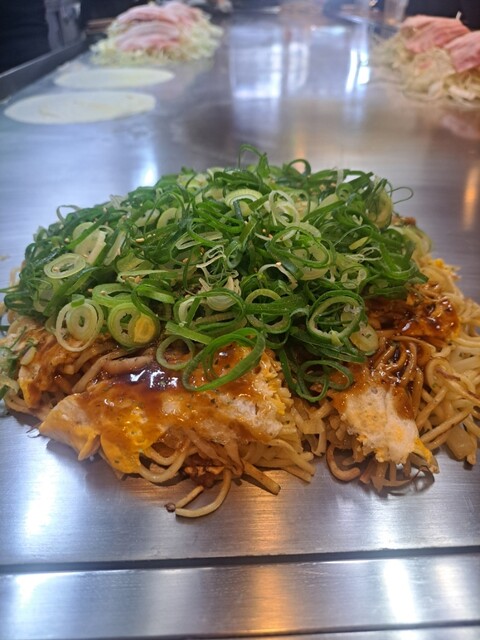
Approaching a Hiroshima okonomiyaki shop, the first cue is not ceremony but rhythm: griddle heat, spatula work, cabbage going soft under pressure, noodles folded into a structure that looks casual only to anyone who has never watched the form closely. Hiroshima’s version is built in layers rather than mixed into a batter-heavy pancake, which makes sourcing and prep matter in a way that is easy to underestimate. Cabbage volume, noodle handling, egg timing, sauce balance, and the speed of the grill all decide whether the dish eats as a stack or as a coherent plate.
Okonomiyaki Sankou sits in that local grammar. Its repeated selection for Tabelog 100 Okonomiyaki in 2018, 2022, 2023, 2024, and 2025 gives it a public signal beyond neighbourhood loyalty, but the more useful reading is category discipline. Hiroshima has plenty of places where okonomiyaki functions as quick fuel; the more serious addresses treat the dish as a controlled sequence, with ingredient moisture and griddle management doing the work usually credited to flourish in higher-priced dining.
Hiroshima okonomiyaki is an ingredient-control dish, not a pancake category
The difference between Hiroshima-style okonomiyaki and Osaka-style okonomiyaki is not a small regional footnote. Osaka’s version usually mixes ingredients into the batter before cooking; Hiroshima’s version stacks them, often with noodles, then binds the layers on the grill. That changes the kitchen logic. Cabbage has to release water without collapsing. Noodles have to carry sauce and heat without turning heavy. Pork, egg, batter, and toppings act less as abundance than as weights in a balance.
This is why a low average spend can still produce a serious meal in Hiroshima. The city’s okonomiyaki culture is democratic in price but unforgiving in execution. A counter seat can be more revealing than a formal dining room because the method is exposed: the cook’s timing is visible, mistakes cannot be hidden under garnish, and the final plate is judged by texture as much as flavour. Sankou’s place in the Tabelog 100 Okonomiyaki list aligns it with that specialist tier rather than with general casual dining.
Ingredient sourcing, in this context, should be understood through function rather than provenance theatre. Hiroshima okonomiyaki depends on everyday ingredients handled with consistency: cabbage cut for volume, noodles matched to the griddle, sauce applied for seasoning rather than cover, and eggs cooked to bind. The point is not luxury sourcing. The point is repeatability across lunch and dinner service, with enough control that a modest dish keeps its shape and pace.
Where it fits in Hiroshima's broader dining map
Hiroshima dining often gets reduced to two public symbols, oysters and okonomiyaki, but the city’s serious food culture is wider and more granular. Creative tasting-menu dining appears at Akai (Creative Cuisine), bakery and café tradition has a different civic role at ANDERSEN, and drinks-led Japanese dining comes into focus at Bishu Bikou Hamai. The city also rewards narrower specialisms, from Butter Cake no Nagasaki Do to CHILAN. Against that range, okonomiyaki is not the casual fallback; it is the civic form that locals and visitors can measure against the city’s own standards.
The comparison set matters. In Hiroshima, Wagyu-focused formats such as 和牛lab K and Wagyu lab K occupy a different lane, while MINOYA sits in a higher dinner spend band than Sankou and Nukazuke Kobo nipote Misasa honten operates at a higher lunch and dinner range. 日本料理 喜多丘 belongs to the Japanese-cuisine side of the map. These are not substitutes for okonomiyaki; they clarify how Sankou’s appeal works. It delivers a specialist, tightly priced Hiroshima staple rather than a multi-course argument about seasonality or premium beef.
For travellers building a city itinerary, that distinction is useful. A meal here makes more sense as a benchmark for Hiroshima’s everyday craft than as a special-occasion anchor. Pairing okonomiyaki with a broader city read gives the day more shape: Our full Hiroshima restaurants guide covers the dining spread, while Our full Hiroshima hotels guide, Our full Hiroshima bars guide, Our full Hiroshima wineries guide, and Our full Hiroshima experiences guide help place the meal inside a wider trip rather than treating it as a standalone tick.
A small-room specialist format with public recognition
The trust signal here is unusually clean for an inexpensive regional dish: repeated Tabelog 100 Okonomiyaki selections across multiple years. That does not turn a neighbourhood-style okonomiyaki meal into luxury dining, and it should not be read that way. It signals consistency in a crowded category where many shops sell a similar format but fewer sustain enough recognition to remain visible beyond local habit.
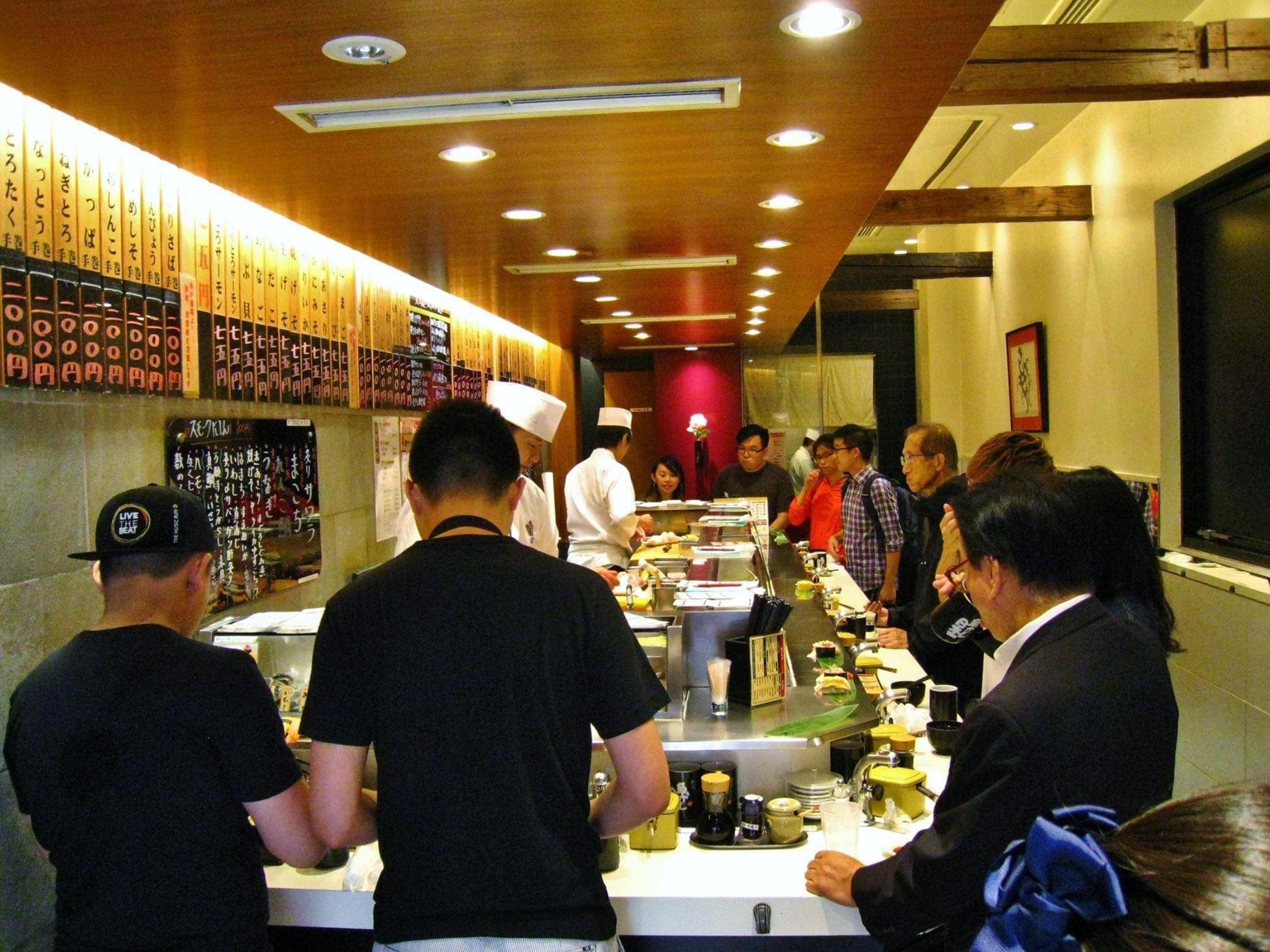
The room format also matters. A small okonomiyaki operation with counter seating keeps the craft close to the diner. That proximity is part of the category’s appeal: the grill is not background equipment but the central stage of production. For solo diners, families, and friends, the format reads differently from tasting-menu Hiroshima or drinks-led izakaya dining. It is quicker, less formal, and more dependent on timing than on tableside explanation.
There is a broader Japan context, too. Regional specialism remains one of the country’s great dining strengths, from curry shops such as [Curry Senmon Ten] Maruyama Kyoju. in Sapporo to rice-focused formats like Onigiri Time in Pasadena and sake-led Japanese dining at Jōdo Saké Bar in Los Angeles. The same principle appears across unrelated categories: focused menus can travel, but the strongest versions stay tied to technique. That is why a Hiroshima okonomiyaki meal should be judged less by novelty than by control.
Readers mapping a wider Japanese-food itinerary may compare this kind of specialization with different formats, from -Grilled beef Sukiyaki- KAMAKURA TANUKIAN 鎌倉 たぬき庵 in Kamakura and. 鮪と炭火焼き うお炭 秋葉原店 in Tokyo to.cafe in Osaka.know in Kumamoto, and (Shoku) Vietnam in Kawasaki. Sankou’s value is narrower and clearer: a Hiroshima staple served in a specialist idiom, with enough recognition to justify attention from travellers who care about regional food on its own terms.
Comparable Spots, Quickly
Nearby venues at a similar price tier for orientation.
| Venue | Cuisine | Price | Notes |
|---|---|---|---|
| Okonomiyaki SankouThis venue — the venue you are viewing | Hiroshima-style okonomiyaki | $ | Not listed |
| Itsukaichi Hassho | Hiroshima-style Okonomiyaki | $ | Saeki |
| Okonomiyaki Hasshou | Hiroshima-style Okonomiyaki | $ | Naka |
| Soba Kiri Gin | Traditional Japanese Soba | $ | Minami |
| Horumon Ryori Senmonjo Toneya | Traditional Hiroshima horumon & yakiniku | $$ | Naka |
| Okonomiyaki Koshida Honten | Hiroshima-style okonomiyaki & teppanyaki | $ | Naka |
Recognition history
Dated appearances from independent guides and award organizations, with the underlying list record or original source where available.
Tabelog 100 #68 · No. 68
Tabelog · Tabelog 100 - Okonomiyaki - 2025
Continue exploring
More in Hiroshima
Restaurants in Hiroshima
Browse all →
Bars in Hiroshima
Browse all →
At a Glance
- Lively
- Cozy
- Casual Hangout
- Family
- Group Dining
- Solo
- Standalone
Current opening hours
- Monday
- Closed
- Tuesday
- Closed
- Wednesday
- 11 AM–2 PM, 5–8:30 PM
- Thursday
- 11 AM–2 PM, 5–8:30 PM
- Friday
- 11 AM–2 PM, 5–8:30 PM
- Saturday
- 11 AM–2 PM, 5–8:30 PM
- Sunday
- 11 AM–2 PM, 5–8:30 PM
Hours can change for holidays and private events. Last verified .