
Tabelog 100 #55
Our verdict
Oka Joki sits in Nakano’s izakaya belt, where fish, smoke, sake and shochu matter more than polished formality. Its Tabelog 100 Izakaya EAST 2025 selection places it in a serious local tier, with seafood and robatayaki shaping the appeal for travelers who want Tokyo dining outside the Ginza-Shibuya circuit.

Pearl is the En Primeur Club membership app, where members save venues, book tables and use the concierge.
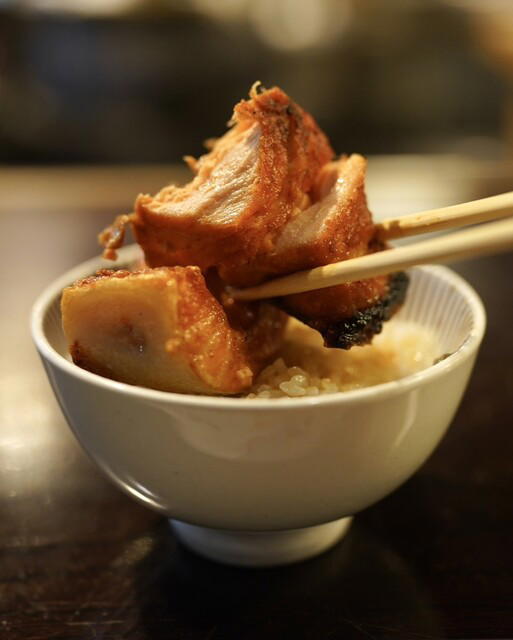
The menu
What to order
- Grilled fish teishoku lunch set
- Robatayaki grilled seafood
- Sashimi selection
In Tokyo, the register can change quickly: department-store convenience gives way to narrow drinking streets, compact counters, upstairs rooms and the clipped rhythm of after-work dining. This is not tasting-menu ceremony but izakaya decision-making: what is good with drinks, what came off the grill, and how long the table can hold the evening. Oka Joki belongs to that older grammar, with seafood, robatayaki and Japanese tavern cooking carrying the room rather than chef mythology.
Tokyo matters. For travelers building the city around sushi counters, French dining or wine bars, this kind of meal may read as a detour. That is the point. Tokyo’s dining culture is denser and more varied than its most polished addresses suggest: repeat customers, purposeful drinking food, and a directness that formal luxury settings often smooth away. Oka Joki’s selection for Tabelog Hyakumeiten 2025 signals recognition within a crowded category, not a shift into formal destination dining.
Tokyo's izakaya code: fish, grill smoke and sake before ceremony
Tokyo izakaya culture is often flattened for visitors into “casual pub food,” missing its range. At the stronger end, it can be as disciplined as any counter restaurant: ingredients move quickly, the grill is managed in real time, and drinking becomes part of the meal’s architecture. Oka Joki sits in the fish-and-robata lane, rewarding groups who order across categories rather than diners seeking a single plated narrative.
The award context matters. Tabelog’s Hyakumeiten lists reflect a Japanese restaurant prestige built not only on luxury, but on local approval, category strength and consistency within a genre. In izakaya, the bar differs from Tokyo’s ramen, yakitori or sushi hierarchies. A place can be serious without being quiet, and recognized without adopting fine-dining etiquette. Compared with specialized formats, such as ramen rooms like Kagari or meat-focused venues such as Horumon Jinsei Taro Chan, this izakaya asks for broader appetite and a looser evening.
The cooking category tells travelers how to read the meal. Seafood and robatayaki suggest a table built around heat, smoke, salt, texture and drink pairing rather than elaborate saucing or tasting progression. Drinks are part of the center of gravity, placing the experience closer to Tokyo’s working social dining tradition than to the internationalized Japanese cuisine of omakase counters and hotel restaurants.
Why Tokyo changes the value equation
Tokyo’s most familiar dining zones can make mid-priced meals feel like a reservation sport. The city offers another bargain too: access to serious food culture with fewer lifestyle signals. Its everyday dining streets can be practical, compact and socially mixed, which is why izakaya work so well here. The format depends on movement between station, table and second round; it needs neither grand architecture nor a hotel lobby.
Oka Joki is strongest for travelers who understand that Tokyo’s restaurant hierarchy is not linear. A higher-spend sushi counter and a recognized izakaya are not competing for the same evening. The former concentrates attention into a controlled sequence; the latter disperses it across shared plates, drink rhythm and room energy. An izakaya night can sit between formal meals as a corrective, especially on itineraries heavy with counter dining.
There is useful contrast within the city’s casual spectrum. Daily Chico represents a low-cost pleasure of another kind, while other Tokyo dining rooms show how the city’s informal eating splinters into visual novelty, specialization or neighborhood drinking. Oka Joki belongs to the more traditional branch: a tavern format recognized enough to justify crossing town, but not a luxury reservation trophy.
That makes the venue especially relevant for repeat Tokyo travelers. First trips often orbit obvious districts; later trips reward reading the city by rail line, station exit and category. Oka Joki sits comfortably in that second-trip Tokyo, efficient enough to plan around and textured enough to change the night’s tempo. For broader planning, Our full Tokyo restaurants guide is the natural companion, while Our full Tokyo bars guide, Our full Tokyo hotels guide, Our full Tokyo wineries guide and Our full Tokyo experiences guide place the meal inside a wider itinerary.
How to use it in a Tokyo itinerary
The strongest use case is a social dinner rather than a hushed solo meal. The format favors conversation, shared ordering and drinks that stretch the table. It suits travelers who want a Tokyo izakaya evening without turning the meal into a formal ceremony. Make it a deliberate Tokyo night rather than squeeze it between unrelated stops.
The rhythm differs from a polished hotel dining room. Shared ordering, drinking-food culture and the tavern setting shape expectations. Arrive with flexibility, order in the spirit of the category, and let fish, grill and drinks set the pace. This is a place to understand Tokyo through drinking-food tradition, not to chase a chef biography or named dish.
For readers mapping comparable casual and specialist meals across Japan, the thread is category clarity. Tokyo options such as Kagari, Daily Chico, Horumon Jinsei Taro Chan, sanka and 松㐂 each solve a different dining problem. Beyond those named peers, other dining in Tokyo can be understood the same way: by matching format, appetite and tempo to the night. The editorial decision is not whether every meal is grand, but whether the format matches the occasion.
Peers in This Market
Comparable venues for orientation by cuisine and category.
| Venue | Cuisine | Price | Awards | Notes |
|---|---|---|---|---|
| Oka JokiThis venue (the venue you are viewing) | Traditional Japanese Izakaya & Robatayaki | $50–100 | Tabelog 100 #55 | Not listed |
| Horumon Jinsei Taro Chan | Yakiniku & horumon (offal) izakaya | $50–100 | Tabelog 100 #35 | JPY 8,000 - JPY 9,999 |
| Kagari | Traditional Japanese Cuisine | $50–100 | Not listed | Ramen |
| Daily Chico | Soft serve ice cream shop | $1–10 | Tabelog 100 #87 | JPY 999 - JPY 999 |
| 松㐂 | Provençal French Bistro | $50–100 | Not listed | Not listed |
| sanka | Modern French | $50–100 | Michelin Plate | Not listed |
Recognition history
Dated appearances from independent guides and award organizations, with the underlying list record or original source where available.
Tabelog 100 #55 · No. 55
Tabelog · Tabelog 100 - Izakaya - EAST - 2025
Continue exploring
More in Tokyo
Restaurants in Tokyo
All restaurants in Tokyo →




Bars in Tokyo
All bars in Tokyo →







Details
- Lively
- Cozy
- Rustic
- Well Known
- Energetic
- After Work
- Group Dining
- Casual Hangout
- Celebration
- Late Night
- Chefs Counter
- Open Kitchen
- Standalone
- Sake Program
- Beer Program
- A La Carte
- Small Plates
- Counter Dining
- Sake
- Shochu
- Beer
- Pescatarian Friendly
Traditional, bustling izakaya with a rustic irori grill, counter seating and simple wooden interiors; the space feels cozy yet energetic, with a casual, old-fashioned Tokyo tavern vibe that centers on the open robata and display of fresh fish.