
1 Michelin Star
Our verdict
Oizumi Sushi holds consecutive Michelin stars (2024 and 2025) and sits inside São Paulo's tightest tier of Japanese dining, where the kaiseki-influenced multi-course format shapes both what arrives at the table and what the city has come to expect from serious Japanese cooking. Located in Cidade Monções, it is among the handful of addresses that have redefined São Paulo's relationship with Japan's seasonal culinary traditions.

Pearl is the En Primeur Club membership app, where members save venues, book tables and use the concierge.
The menu
What to order
- Toro nigiri
- Sea bass sushi
- Bluefin akami
- Sea urchin with salmon roe
Japanese Precision in São Paulo's Southern Belt
Cidade Monções sits south of Itaim Bibi and well clear of the tourist circuit, which means the restaurants that draw destination diners there are doing so on the strength of the food alone. The neighbourhood has quietly accumulated some of the city's most concentrated Japanese dining, and Oizumi Sushi belongs to its upper register: a two-consecutive-year Michelin star holder (2024 and 2025) that has become a reference point for the form rather than just another entry on a list.
The address at Rua Califórnia, 785 places it within a stretch of São Paulo that has been shaped by successive waves of Japanese-Brazilian culture, from the mid-20th-century migration patterns that seeded Liberdade's markets to the later, more technique-driven diaspora that produced the city's current generation of Japanese kitchens. Oizumi Sushi connects to that longer arc while operating at a level of refinement that separates it from neighbourhood staples.
The Kaiseki Framework and What It Demands
Understanding what Oizumi Sushi is requires understanding what kaiseki is, and what it asks of both kitchen and guest. The tradition originated in Kyoto as an adjunct to the tea ceremony, a sequence of small courses designed to express the season through ingredients, vessels, and the progression of the meal itself. By the time it migrated into formal restaurant settings, kaiseki had evolved into one of the most demanding formats in professional cooking: each course must justify its place in a sequence, the aesthetic relationship between the food and its presentation is as significant as the flavour, and the calendar governs the menu rather than the other way around.
In Brazil, applying that framework to sushi involves a productive tension. The country's climate doesn't map onto the four seasons that structure classical kaiseki, and the local fish supply, though deep in tropical species, diverges from the cold-water fish that anchor the Japanese canon. The kitchens that resolve this tension most credibly, São Paulo's Michelin-starred Japanese restaurants among them, have tended to do so not by approximating Japan but by developing a parallel seasonal logic grounded in Brazil's own agricultural calendar and coastal ecology. That resolution is harder than it looks, and the sustained Michelin recognition that Oizumi Sushi carries is partly a record of how consistently it has been achieved here.
Where Oizumi Sits in São Paulo's Japanese Tier
São Paulo's Japanese dining has been stratified more sharply in recent years. At the entry level, neighbourhood sushi bars and delivery-oriented Japanese remain abundant and affordable. In the mid-range, a generation of more technically conscious kitchens has raised the standard for precision without necessarily committing to the full kaiseki framework.
Oizumi Sushi holds its Michelin star alongside a small group of peers. Kinoshita has been the longest-running reference in São Paulo's premium Japanese tier; Jun Sakamoto operates in the same $$$ bracket with a sushi-focused approach that emphasises the fish itself over elaborate sequences. Kuro and KANOE represent more recent entrants into São Paulo's considered Japanese dining. Huto and Kan Suke extend the city's range further. What distinguishes Oizumi Sushi within that cohort is the sustained double Michelin endorsement and a 4.9 guest rating that suggests the quality floor is held consistently, not just on inspection nights.
Chef Baptiste Denieul leads the kitchen. In the context of São Paulo's Japanese dining, a French name at the helm of a kaiseki-influenced operation is less surprising than it might appear from outside Brazil. The city's culinary culture has long been defined by cross-cultural fluency, and São Paulo's most technically rigorous Japanese kitchens have drawn from European fine dining's discipline for mise en place and service as much as from Japan's aesthetic principles. What matters in evaluating a kitchen like Oizumi Sushi is not the passport of the chef but the coherence of the resulting plate, and the consecutive Michelin endorsements indicate that coherence has been maintained.
The Broader Michelin Map and What It Means for This Address
The 2025 Michelin São Paulo selection has been one of the more consequential iterations of the guide's regional expansion in South America. Across Brazil, Michelin-starred addresses now span multiple cities: Lasai in Rio de Janeiro operates at the two-star level in the creative Brazilian register; Manga in Salvador has brought the Northeast into the conversation; Mina in Campos do Jordão and Primrose in Gramado have confirmed that the guide's Brazilian coverage has moved well beyond the major metro areas. Orixás in Itacaré and Castelo Saint Andrews in Gramado extend that national picture further.
Within São Paulo specifically, the guide has been calibrated against a city whose restaurant density rivals many European capitals. The $$$ bracket Oizumi occupies places it below the highest-ticket creative tasting menus, which in São Paulo include $$$$ operations like Evvai and D.O.M. while holding a price point above the city's more casual Japanese dining. That positioning, mid-premium rather than ceiling, makes the Michelin recognition more commercially significant: it pulls serious diners at a price point that a wider cohort of visitors can actually consider booking.
For a comparison in pure Japanese terms, the multi-course kaiseki format at this level in Tokyo can be found at addresses like Azabu Kadowaki and Myojaku, where the same seasonal-sequence logic operates with a different regional ingredient base. The São Paulo iteration represents a distinct culinary argument rather than a copy of those models.
Planning a Visit: What to Know
The address at Rua Califórnia, 785, Cidade Monções is accessible by taxi or rideshare from both Itaim Bibi and Vila Olímpia. The neighbourhood does not have a high foot-traffic dining strip, so the visit is purposeful by design. For hotels, our full São Paulo hotels guide covers properties near both Itaim Bibi and Paulista that position well for this part of the city. Anyone building a São Paulo dining itinerary should also consult our full São Paulo restaurants guide. For pre- or post-dinner drinks, our full São Paulo bars guide covers the relevant neighbourhood options, and our full São Paulo experiences guide and our full São Paulo wineries guide round out a multi-day itinerary.
Know Before You Go
- Address: R. Califórnia, 785, Cidade Monções, São Paulo, SP 04566-061
- Cuisine: Japanese (kaiseki-influenced sushi)
- Price Range: $$$
- Awards: Michelin 1 Star (2024 and 2025)
- Guest Rating:
- Chef: Baptiste Denieul
- Booking: Advance reservations recommended given Michelin recognition; walk-in availability is limited at this tier
- Getting There: Rideshare or taxi from Itaim Bibi or Vila Olímpia; not a walk-in neighbourhood
Frequently asked questions
What's Oizumi Sushi known for in terms of accolades?
Oizumi Sushi has received recognition including: Michelin 1 Star (2025); Michelin 1 Star (2024).
What should I eat at Oizumi Sushi?
The kitchen operates in a kaiseki-influenced multi-course format, meaning the menu is structured as a sequence rather than a selection of individual dishes. Ordering is not a decision guests make at the table, the progression is set by the kitchen. That structure is, in large part, what earned Oizumi consecutive Michelin stars in 2024 and 2025.
What's the price range at Oizumi Sushi?
Pricing at Oizumi Sushi is listed as $$$.
What's the address for Oizumi Sushi?
Oizumi Sushi is located at R. Califórnia, 785 - Cidade Monções, São Paulo - SP, 04566-061, Brazil, São Paulo.
Who is the chef connected to Oizumi Sushi?
The chef associated with Oizumi Sushi is Baptiste Denieul.
Can I walk in to Oizumi Sushi?
At the $$$ price point and with back-to-back Michelin recognition in 2024 and 2025, Oizumi Sushi operates in a São Paulo tier where walk-in access is unlikely. Advance reservations are the expected route, particularly on weekends and in the periods following each new Michelin São Paulo announcement.
Comparison Snapshot
| Venue | Cuisine | Price | Awards | Notes |
|---|---|---|---|---|
| Oizumi SushiThis venue (the venue you are viewing) | Modern Japanese Omakase | $100–150 | 1 Michelin Star | Not listed |
| Evvai | Modern Italian-Brazilian Fusion | $200–300 | 3 Michelin Stars · World's 50 Best #95 | Contemporary Italian, Modern Cuisine |
| D.O.M. | Modern Brazilian Amazonian Fine Dining | $150–200 | 2 Michelin Stars · World's 50 Best #74 | Modern Brazilian, Creative |
| Maní | Modern Creative Brazilian | $50–100 | 1 Michelin Star · World's 50 Best #67 | Brazilian - International, Creative |
| Jun Sakamoto | Japanese Omakase | $100–150 | 1 Michelin Star · La Liste Top Restaurants | Sushi, Japanese |
| A Casa do Porco | Modern Brazilian Pork-Centric | $30–50 | Michelin Bib Gourmand · World's 50 Best #25 | Regional Brazilian, Brazilian |
Recognition history
Dated appearances from independent guides and award organizations, with the underlying list record or original source where available.
Michelin 1 Star
Michelin
Full recognition history (3 entries)
Michelin 1 Star
Michelin
Michelin 1 Star
Michelin
Continue exploring
More in São Paulo
Restaurants in São Paulo
All restaurants in São Paulo →
Bars in São Paulo
All bars in São Paulo →
Details
- Intimate
- Elegant
- Sophisticated
- Date Night
- Special Occasion
- Solo
- Chefs Counter
- Private Dining
- Sake Program
- Omakase
- Counter Dining
Current opening hours
- Monday
- 7–10 PM
- Tuesday
- 12–2 PM, 7–10 PM
- Wednesday
- 12–2 PM, 7–10 PM
- Thursday
- 12–2 PM, 7–10 PM
- Friday
- 12–2 PM, 7–10 PM
- Saturday
- 12–2 PM, 7–10 PM
- Sunday
- Closed
Hours can change for holidays and private events. Hours as of .
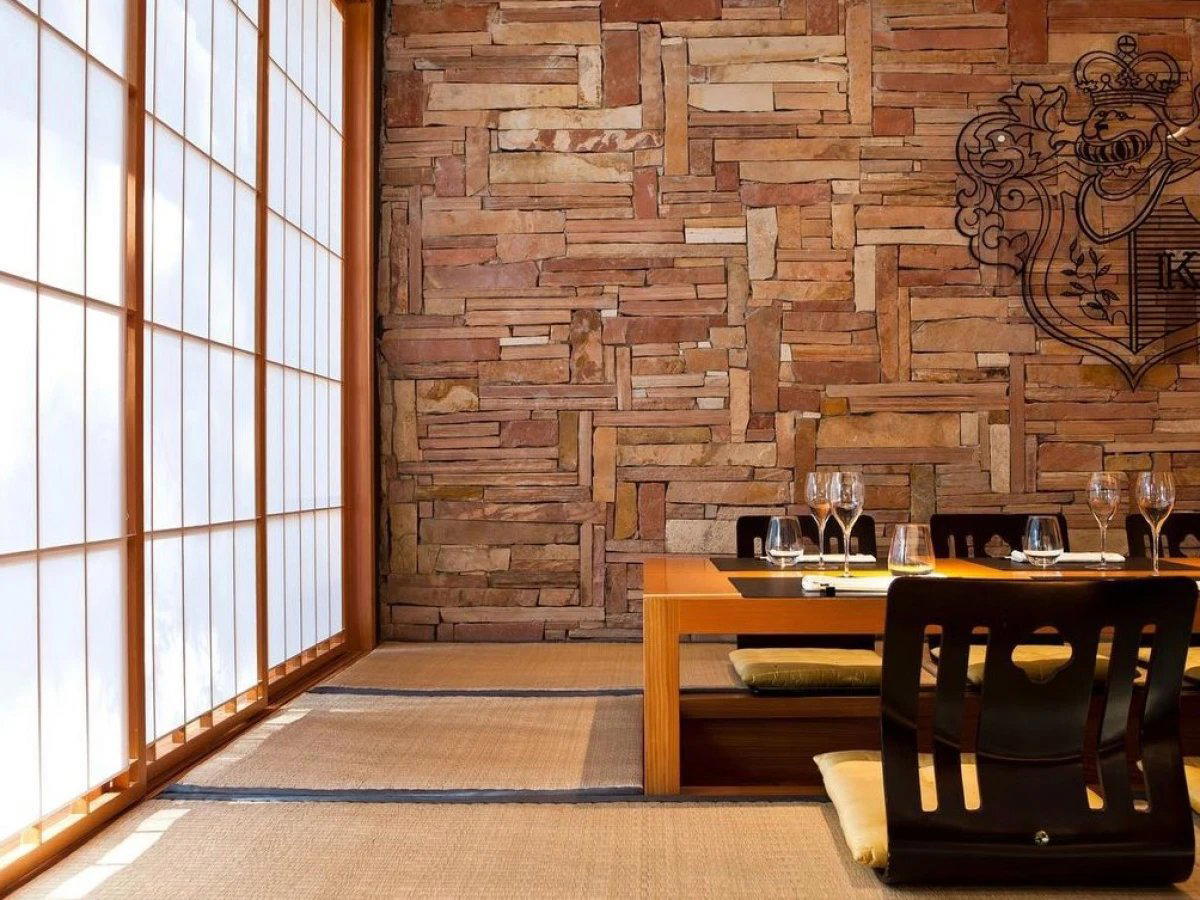
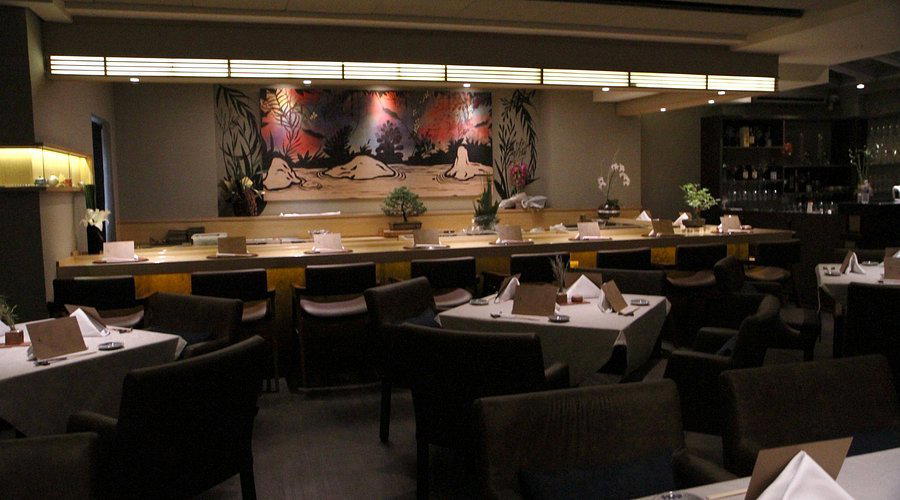
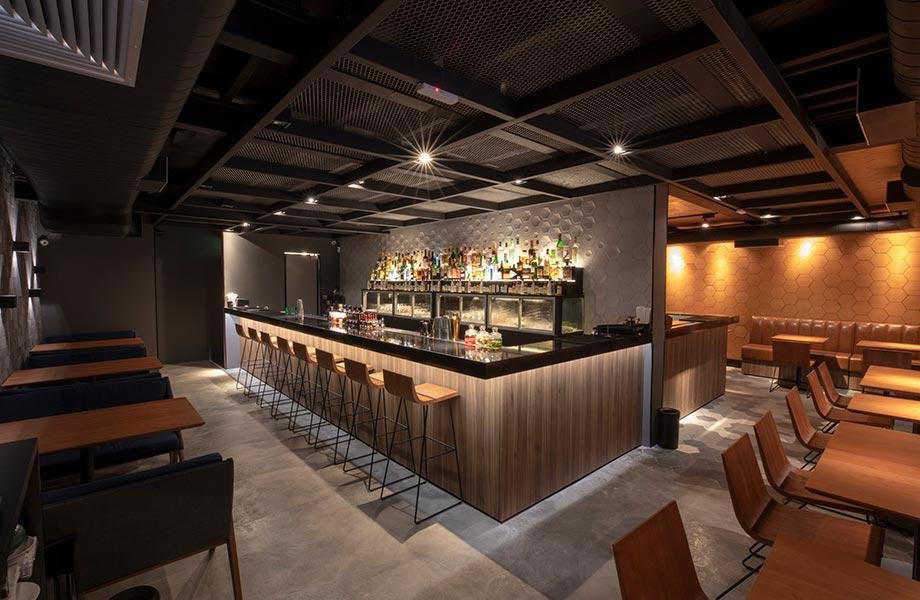
Modest, intimate setting with sushi bar and small private dining rooms, focused on high-quality, meticulously prepared sushi in a serene atmosphere.