
Tabelog 100 #23
Our verdict
Kyoto’s sweets culture is often framed through wagashi and tea ceremony, but OHAYO biscuit belongs to a smaller Western-style pastry current with serious local traction. Its Tabelog Sweets WEST “Tabelog 100” 2023 selection, compact counter format, and take-out focus place it in the city’s low-cost, high-attention dessert tier rather than the café-as-lounge category.

Pearl is the En Primeur Club membership app — saves, bookings, and concierge access live there. Same editors, same standards.
Approaching a sweets shop in Kyoto changes the pace of a day. The city trains visitors to look for lacquered tea rooms, temple-adjacent wagashi shops, and ceremonial matcha, but the more interesting modern dessert map is broader than that. Western-style cakes, biscuits, and café sweets have become part of Kyoto’s everyday food grammar, especially in a city where a focused pastry stop may feel more immediate than a full restaurant meal.
OHAYO biscuit sits inside that sweets-led current. The emphasis is dessert-driven, and the recognition comes from a category that matters in Japan’s consumer dining culture: selection for Tabelog Sweets WEST “Tabelog 100” 2023. That badge does not make the shop a luxury pâtisserie in the hotel sense. It signals something more useful for a traveler: this is a sweets address competing in a crowded Kansai-West Japan field where small shops are judged against specialist peers, not merely against neighborhood cafés.
Western-style sweets in a city still read through wagashi
Kyoto dessert habits are often described through tradition, but the city’s sweet tooth has long made room for imported forms. Sponge cake, custard, butter pastry, and coffee-counter culture sit beside mochi, yokan, and seasonal namagashi. The distinction matters because Western-style sweets in Kyoto are rarely just foreign replicas. They are filtered through Japanese preferences for portion control, textural precision, restrained sweetness, and high turnover from small production runs.
That is the context in which OHAYO biscuit makes sense. Its listed categories, cake, café, and Western-style sweets, place it away from the formal kaiseki-dessert register and closer to the city’s everyday patisserie circuit. The category mix suggests a sweets-first identity, with café elements supporting the pastry side rather than turning the visit into a full restaurant occasion. In Kyoto, that distinction separates a serious purchase stop from a broader sit-down meal.
The comparison set is revealing. cafe de corazon belongs to a related café-and-sweets lane, while Onkashi Tsukasa Shioyoshiken sits closer to the Japanese confectionery tradition. Komatsu Cucina Italiana, Sakaba Ikura Mokuzai, and Mankamerou belong to different dining occasions entirely. Against that field, the value of a sweets specialist is not breadth. It is clarity: a defined category, a dessert-led purpose, and a product range that can carry the visit without the machinery of a full restaurant.
A sweets-focused format that changes how the menu is used
Sweets shops create a different kind of ordering discipline. In a pastry-led setting, the rhythm belongs to Kyoto’s practical snack economy as much as its leisurely café circuit. This is not necessarily the format for building an entire afternoon around table service. It is better understood as a focused stop: arrive with the expectation that the sweets are the point, not the room.
That focus also explains why the menu can be read as architecture rather than abundance. Cake, café, and Western-style sweets cover a clear set of decisions: something to carry, something to eat during a break, something that works as a small gift, or something to pair with coffee. The appeal is less about a long catalogue than about a clear category identity. That kind of focused format is common in dense Japanese cities, where the meal or snack often extends across multiple moments rather than being contained in one venue.
Kyoto travelers often overbuild meals around reservations and tasting menus. A shop like this rewards the opposite approach. Slot it between walks, cultural stops, or a broader Kyoto route, then let it carry a small but specific role in the day. The visit works best when treated as part of a lived-in Kyoto itinerary rather than as a grand destination requiring elaborate planning.
The Tabelog score of 3.65 adds another piece of evidence. In Japan, especially on Tabelog, scores in the mid-3 range can indicate strong performance in a competitive niche; the platform’s ratings tend to be compressed compared with international review sites. Combined with a 2023 Hyakumeiten sweets selection, the signal is not hype. It is durable category recognition.
How to fit it into a Kyoto food day
The smarter itinerary treats OHAYO biscuit as a calibrated pause, not a destination that needs a full afternoon. Kyoto rewards sequencing: a cultural visit, a short walk, a specialist sweets stop, then a later dinner elsewhere in the city. For a wider restaurant day, EP Club’s Kyoto map can move from casual city staples to more formal dining rooms, depending on the occasion. The point is not to make every stop compete for the same role, but to let a sweets specialist do what it does best.
For broader planning, use Our full Kyoto restaurants guide alongside Our full Kyoto hotels guide, Our full Kyoto bars guide, Our full Kyoto wineries guide, and Our full Kyoto experiences guide. Travelers linking Kyoto to other Japanese food cities can compare the casual-specialist lane with unnamed cafés, snack counters, and sweets shops elsewhere. The same focused-menu logic appears outside Japan too, where small menus often do the heavy lifting without requiring the infrastructure of a full restaurant.
The editorial case for OHAYO biscuit is not that it replaces Kyoto’s older confectionery traditions. It sharpens the picture. The city’s sweets culture now runs on parallel tracks: ceremonial wagashi, temple-side snacks, hotel pastry, and Western-style specialists. This shop belongs to the last of those, where the attraction is a concise category identity, Tabelog recognition, and a sweets-led purpose that keeps the visit focused.
Frequently asked questions
What's the price range at OHAYO biscuit?
Pricing at OHAYO biscuit is listed as JPY 1,000 - JPY 1,999 View spending breakdown.
How do I find OHAYO biscuit?
OHAYO biscuit is located in Kyoto.
Do I need a reservation for OHAYO biscuit?
Plan for OHAYO biscuit as a Kyoto sweets stop rather than a long seated meal, and check current arrangements before you go.
What is OHAYO biscuit known for?
OHAYO biscuit is known for cake, café, and Western-style sweets in Kyoto, with Tabelog Sweets WEST “Tabelog 100” recognition in 2023.
City Peers
Comparable venues at the same tier for side-by-side context.
| Venue | Cuisine | Price | Awards | Notes |
|---|---|---|---|---|
| OHAYO biscuitThis venue (the venue you are viewing) | Japanese-style bakery cafe / sweets shop | $10–20 | Tabelog 100 #23 | Not listed |
| Komatsu Cucina Italiana | Contemporary Italian with Seasonal Ingredients | $50–100 | Michelin Plate | Italian |
| cafe de corazon | Not listed | $10–20 | Tabelog 100 #67 | JPY 1,000 - JPY 1,999 |
| Sakaba Ikura Mokuzai | Japanese stand-up izakaya bar | $50–100 | Tabelog 100 #57 | JPY 6,000 - JPY 7,999 View spending breakdown |
| Onkashi Tsukasa Shioyoshiken | Traditional Kyoto Wagashi (Japanese confectionery) | $10–20 | Tabelog 100 #91 | JPY 1,000 - JPY 1,999 - JPY 999 View spending breakdown |
Recognition history
Dated appearances from independent guides and award organizations, with the underlying list record or original source where available.
Tabelog 100 #23 · No. 23
Tabelog · Tabelog 100 - Sweets - WEST - 2023
Continue exploring
More in Kyoto
Restaurants in Kyoto
All restaurants in Kyoto →
Bars in Kyoto
All bars in Kyoto →
Hotels in Kyoto
All hotels in Kyoto →
Wineries in Kyoto
Browse all →
Details
- Quiet
- Cozy
- Classic
- Solo
- Family
- Casual Hangout
- Standalone
- Counter Dining
- A La Carte
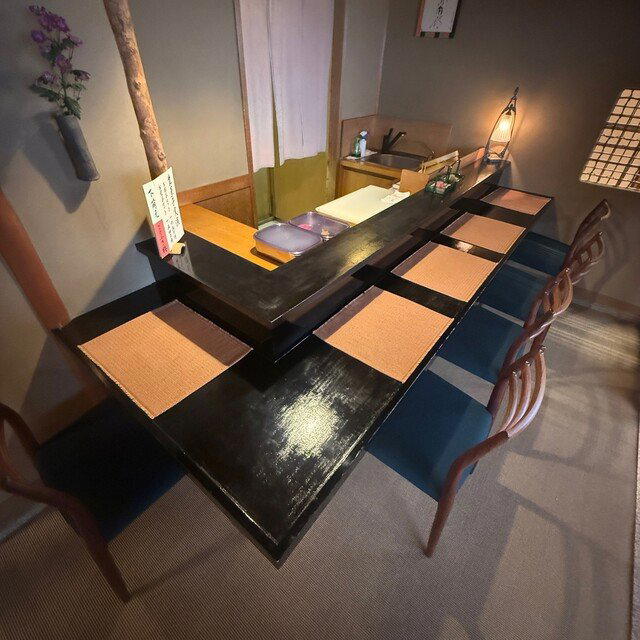
Small, quiet, and low-key, with a simple counter-seating setup that feels intimate rather than formal.